


Italian handbag trends 2026: timeless styles & expert tips
TL;DR:
- Authentic Italian handbags feature full-grain leather and meticulous hand-stitching for lasting quality.
- Woven leather and understated designs are key trends for 2025, emphasizing craftsmanship and longevity.
- Genuine craftsmanship and provenance are more valuable than logos, ensuring better resale and timeless appeal.
Choosing an Italian handbag is never a simple errand. For women who understand that a well-made bag is both a daily companion and a long-term investment, the decision carries real weight. The 2025 and 2026 seasons have brought fresh energy to the Italian leather scene, blending centuries-old artisanal traditions with quietly modern silhouettes. Whether you are drawn to the sculptural minimalism of Prada or the sensuous weave of Bottega Veneta, knowing how to separate genuine quality from polished imitation is what separates a smart purchase from an expensive regret. This article walks you through the key trends, the benchmarks of authentic Italian craftsmanship, and a practical framework for choosing a piece that will still feel relevant a decade from now.
Table of Contents
- How to recognise true Italian craftsmanship in handbags
- Top Italian handbag trends for 2025: styles redefining luxury
- Comparison: signature brands and their standout 2025 designs
- How to choose: investing in the right Italian handbag for your style
- Why authentic craftsmanship, not logos, will shape future handbag value
- Explore timeless Italian handbags with authentic craft
- Frequently asked questions
Key Takeaways
| Point | Details |
|---|---|
| Craftsmanship is key | Opt for handbags made with full-grain leather and hand-finished stitching for lasting value. |
| Woven leather leads | Intrecciato and other artisanal techniques headline Italian handbag trends for 2025. |
| Investment potential | Italian handbags hold strong resale value when sourced from authentic, artisanal brands. |
| Neutral tones dominate | Nature-inspired shades in creams and browns remain timeless and versatile across seasons. |
How to recognise true Italian craftsmanship in handbags
Authentic Italian handbags are not simply expensive. They are the product of a disciplined process that begins with the selection of raw materials and ends with a finisher checking every millimetre of stitching by hand. Understanding that process gives you the power to evaluate any bag on its own merits, regardless of the label.
The single most important material indicator is full-grain leather. This is the top layer of the hide, left largely intact, which means it retains the natural grain pattern and develops a rich patina over years of use. Corrected-grain or bonded leather, by contrast, has been sanded and coated to hide imperfections, producing a uniform surface that looks appealing in the shop but cracks and peels within a few years. When you run your fingers across full-grain leather, it feels subtly uneven in the best possible way.
Beyond the leather itself, look for these hallmarks of genuine Italian artisanship:
- Hand-stitching with waxed linen or nylon thread, which is stronger and more supple than machine stitching
- Consistent stitch spacing, typically eight to twelve stitches per centimetre on quality pieces
- Burnished or painted edges rather than raw, glued, or folded edges
- Solid brass or sterling hardware that feels heavy and moves smoothly
- A clean, fully lined interior with reinforced stress points at handles and straps
- Provenance markings such as “Made in Italy” stamped on the leather itself, not merely on a removable tag
Luxury houses such as Prada, Valentino Garavani, and Furla prioritise full-grain leather with meticulous hand-stitching, avoiding mass production for enduring quality. That commitment to process is precisely what you are paying for.
Mass-produced bags, even those assembled in Italy from imported components, often cut corners at the lining, the zip pulls, and the base feet. Turn the bag upside down. Are the feet solid metal, or hollow plastic coated in chrome? Press the sides gently. Does the structure hold, or does it collapse? These small tests reveal more than any marketing copy.
“A bag that has been made well does not need to announce itself. The leather speaks, the stitching speaks, and the weight in your hand speaks.”
For a deeper look at how Italian makers approach quality from hide to hardware, the Italian craftsmanship guide is worth reading before you shop. If longevity is your priority, the research on artisan durability offers practical evidence for why handmade construction outperforms factory alternatives over time.
Pro Tip: Ask the retailer for the name of the tannery or the region where the leather was processed. Reputable Italian makers are proud of this information. Hesitation or vagueness is a red flag.
Top Italian handbag trends for 2025: styles redefining luxury
Once you know what defines real Italian craftsmanship, the next step is to identify the top trends leading the luxury scene. The current season is characterised by a fascinating tension: buyers want pieces that feel fresh, but they are also demanding longevity. The trends that are winning right now are the ones that resolve that tension elegantly.
Woven leather is the standout story of the season. The Intrecciato technique, long associated with Bottega Veneta, has moved well beyond a single house to influence the broader Italian leather market. As Vogue Italia reports, the Intrecciato woven leather technique exemplifies exceptional craftsmanship and is evolving into a boho luxury aesthetic for summer 2025, with neutral tones at the forefront. Cream, warm sand, and olive are the colours appearing most consistently across runway presentations and boutique floors.
The key trends shaping Italian handbag design right now include:
- Structural minimalism: Clean-lined totes and boxy shoulder bags with no visible logos, relying entirely on proportion and leather quality
- Nature-inspired palettes: Creams, taupes, olives, and deep browns replacing the brighter accent colours of previous seasons
- Mixed textures: Smooth calf leather paired with suede panels or woven inserts for tactile contrast
- Statement hardware: Oversized clasps, sculptural rings, and chunky chain straps that function as jewellery
- Understated branding: Tonal embossing or small interior stamps replacing large external logos
For a broader view of where Italian style is heading, the 2025 Italian style trends overview captures the full picture. If you prefer a focused breakdown, the key trends for 2025 article distils the most important shifts into a concise format.
What is particularly interesting about this moment is that the move toward quieter design is not a retreat. It is a statement of confidence. A woman who carries a beautifully structured bag in warm caramel leather with no visible logo is signalling that she does not need external validation. That shift in attitude is driving real purchasing decisions, and Italian makers are responding with their finest work.
Comparison: signature brands and their standout 2025 designs
Understanding the defining trends, it is crucial to compare the key players and their hero pieces for 2025. Name recognition matters less than most people think. What matters is understanding what each house actually does well, and whether that aligns with your lifestyle and taste.
| Brand | Signature material | Key 2025 design | Price range | Resale strength |
|---|---|---|---|---|
| Bottega Veneta | Intrecciato woven leather | Andiamo tote | £2,800 to £4,500 | Very high |
| Prada | Saffiano and nappa leather | Re-Edition 2000 | £1,100 to £2,800 | High |
| Furla | Full-grain calf leather | Metropolis and 1927 | £250 to £600 | Moderate to high |
| Valentino Garavani | Quilted nappa leather | Rockstud Alcove | £1,400 to £3,200 | High |
Each of these houses approaches Italian leather heritage differently. Bottega Veneta’s entire identity rests on the Intrecciato weave, which requires weavers to spend years mastering the technique before producing a finished bag. Prada’s Saffiano leather, a cross-hatched finish applied to calf leather under heat and pressure, is extraordinarily resistant to scratches and moisture, making it one of the most practical luxury choices available. Prada, Valentino Garavani, and Furla all prioritise full-grain leather with meticulous hand-stitching, avoiding mass production for enduring quality.
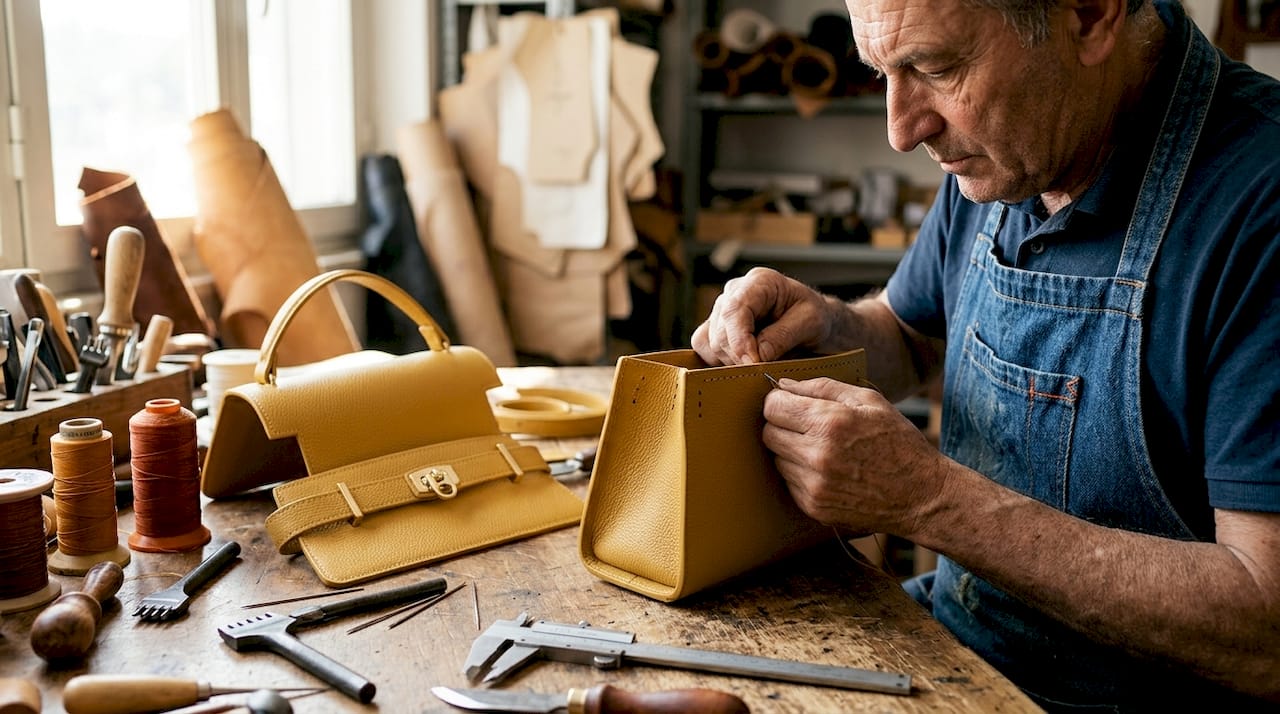
Furla occupies a compelling position in the market. Its price point is accessible relative to the other houses, yet its construction standards remain genuinely artisanal. The 1927 bag, with its structured silhouette and polished clasp, is one of the best-value Italian leather pieces currently available. For buyers entering the luxury category for the first time, Furla offers a credible starting point.
On the question of investment value, Italian leather handbags priced between $136 and $1,000 provide high resale value due to artisanal techniques, and Prada Group’s 9% revenue growth in 2025 underscores the sustained demand for authentic Italian manufacturing. That growth is not driven by trend-chasing. It is driven by buyers who have decided that quality is worth the premium.
For a thorough side-by-side breakdown, the 2025 expert comparison goes deeper into each brand’s construction methods. The leather expert insights resource is particularly useful for understanding material differences at a technical level.
Pro Tip: When assessing resale value, check completed listings on platforms such as Vestiaire Collective before you buy. Bags with consistent resale prices across multiple years are the safest long-term investments.
How to choose: investing in the right Italian handbag for your style
With leading designer options outlined, how can you narrow down the perfect Italian bag for both your style and return on investment? The answer lies in a structured approach that balances personal preference with objective quality indicators.
- Define your primary use case. A structured tote works for professional settings. A crossbody or small shoulder bag suits travel and weekends. A clutch is an occasional piece. Be honest about how often each format will actually leave your wardrobe.
- Choose a neutral base colour first. Camel, cognac, black, and warm white integrate with the widest range of wardrobes and age gracefully. Reserve bolder colours for a second or third purchase.
- Prioritise material over silhouette. Trends in shape change faster than trends in leather quality. A beautifully made bag in full-grain leather will outlast any silhouette cycle.
- Assess the hardware honestly. If a bag has prominent hardware, touch it. Solid brass feels cold and heavy. Lightweight or hollow hardware is a cost-saving measure that will show its age.
- Consider the interior as seriously as the exterior. A well-made bag has a structured base, quality lining, and reinforced pocket seams. An interior that collapses or frays quickly undermines the entire piece.
“The best handbag you will ever own is the one you reach for every single day without thinking about it. That ease comes from design that has been refined over generations, not seasons.”
The data below provides a practical reference for aligning budget with expected longevity and resale performance:
| Material | Average price range | Estimated resale value | Expected lifespan |
|---|---|---|---|
| Full-grain calf leather | £300 to £4,500 | 40% to 80% of retail | 15 to 30 years |
| Saffiano leather | £900 to £3,000 | 35% to 70% of retail | 10 to 20 years |
| Suede | £250 to £1,800 | 20% to 40% of retail | 5 to 10 years |
| Woven leather (Intrecciato) | £1,500 to £4,500 | 50% to 85% of retail | 20 to 30 years |
As artisanal techniques drive high resale value for Italian leather handbags across the $136 to $1,000 range and beyond, the message is consistent: craftsmanship is the variable that determines long-term worth. For guidance on making purchases that align with both style and ethics, the sustainable investment tips resource offers a thoughtful framework. If durability is your primary concern, the article on durability and timelessness is an excellent companion read.
Why authentic craftsmanship, not logos, will shape future handbag value
There is a quiet revolution happening in the luxury handbag market, and it is one that rewards the most discerning buyers. For years, the prevailing logic was simple: a large logo meant a large price tag meant a large resale value. That logic is unravelling.
The women driving the most interesting purchasing decisions right now are not asking “which brand is this?” They are asking “who made this, and how?” That shift is not a passing trend. It reflects a deeper change in how luxury is understood and communicated.
We have seen this play out in our own experience at San Rocco Italia. Customers who once gravitated toward the most recognisable names are returning to ask about provenance, tannery origins, and the specific artisans behind a piece. They want to know the story of the leather before they commit to carrying it every day.
The houses that will hold and grow their value over the next decade are those that can answer those questions with confidence. Prada, Valentino Garavani, and Furla have built their reputations on full-grain leather and meticulous hand-stitching, and that foundation is precisely what insulates them from trend volatility.
A vintage Bottega Veneta bag from the 1990s, with no logo and a slightly worn weave, now commands prices that rival new pieces. That is not nostalgia. That is the market recognising genuine craft. If you want to understand what high-end investment pieces look like over a lifetime, look at what has held its value across decades, not just seasons.
Explore timeless Italian handbags with authentic craft
If this article has clarified what you are looking for in an Italian leather handbag, the next step is finding a source you can trust. At San Rocco Italia, every handbag in our collection is made in Italy by skilled artisans using premium full-grain leather and traditional techniques. We are a woman-owned boutique, and we have built our selection around the principle that timeless design and exceptional craftsmanship are never in conflict.
We do not chase seasonal novelty for its own sake. Every piece we offer has been chosen because it will look and feel as good in ten years as it does today. Whether you are building your first serious collection or adding a considered piece to an established wardrobe, our curated Italian collection is a trusted starting point. Browse at your own pace, and let the quality speak for itself.
Frequently asked questions
What makes full-grain Italian leather handbags superior?
Full-grain Italian leather retains the natural hide surface, which means it develops a distinctive patina over time rather than cracking or peeling. Prada, Valentino Garavani, and Furla all prioritise this material with hand-stitching for enduring quality that mass-produced alternatives simply cannot replicate.
Are woven leather handbags out of style for 2025?
Not at all. The Intrecciato woven leather technique is one of the defining trends for 2025, particularly in neutral-toned, bohemian-inspired designs that feel both current and enduring.
Do Italian handbags hold their value over time?
Yes. Well-crafted Italian leather handbags maintain strong resale values, with artisanal techniques cited as the primary driver of high resale performance across a wide price range.
How can I tell if an Italian handbag is authentic?
Examine the leather grain, check for even hand-stitching, test the weight and movement of the hardware, and look for a “Made in Italy” stamp on the leather itself. Purchasing from reputable boutiques that can speak to provenance is the most reliable safeguard, as established houses avoid mass production entirely.


