


Discover the top high end leather handbags in 2026
Selecting a truly high end leather handbag involves far more than recognising a prestigious brand name. For discerning women seeking timeless elegance, the decision requires evaluating craftsmanship, material quality, ethical sourcing, and lasting design. Italian artisanal handbags consistently set the benchmark for luxury, combining centuries of leatherworking tradition with contemporary sophistication. This guide reveals essential criteria for identifying exceptional leather handbags and presents a curated selection of Italy’s finest artisanal brands for 2026. You will learn how to assess quality markers, compare leading options, and make an informed choice that reflects your values and style.
Table of Contents
- Criteria For Selecting High End Leather Handbags
- Top Artisanal Italian Handbag Brands In 2026
- Comparing The Best Italian High End Leather Handbags
- How To Care For Your High End Leather Handbag
- Explore Exclusive High End Leather Handbags At San Rocco Italia
Key takeaways
| Point | Details |
|---|---|
| Selection criteria matter | Evaluate leather quality, craftsmanship, timeless design, and ethical sourcing beyond brand recognition. |
| Italian artisans lead | Top Italian handbag brands exemplify centuries of leatherworking expertise and enduring style. |
| Comparison aids decisions | Side by side analysis reveals differences in materials, techniques, and value propositions. |
| Proper care extends longevity | Strategic maintenance preserves beauty and functionality for decades. |
| Informed choices empower | Understanding quality markers helps affluent women invest wisely in ethical luxury. |
Criteria for selecting high end leather handbags
Choosing an exceptional leather handbag requires understanding what separates genuine luxury from marketing hype. The foundation begins with leather quality itself. Full grain leather, the highest grade available, retains the hide’s natural surface and develops a distinguished patina over time. Vegetable tanning, a traditional process using natural tannins from tree bark, produces supple leather free from harsh chemicals whilst supporting environmental sustainability. Italian leather quality and style sets the global standard through these time honoured methods.
Craftsmanship reveals itself in meticulous details that machine production cannot replicate. Hand stitching creates stronger, more durable seams than industrial techniques. Artisan finishing touches, including hand painted edges and carefully burnished surfaces, demonstrate the maker’s dedication to excellence. Look for consistent stitch spacing, perfectly aligned hardware, and seamless construction at stress points. These hallmarks indicate hours of skilled labour rather than rushed assembly.
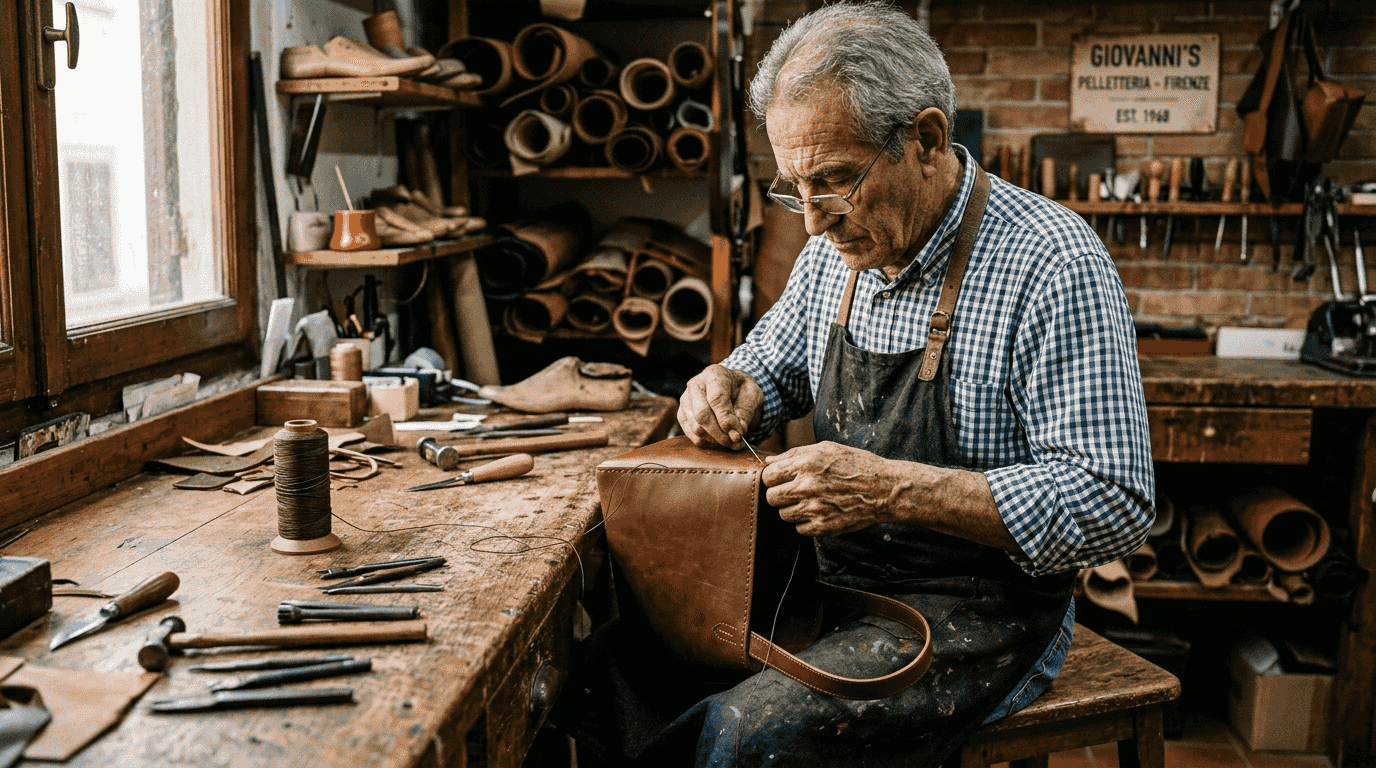
Timeless design transcends seasonal trends, ensuring your investment remains relevant for decades. Classic silhouettes, balanced proportions, and restrained embellishment characterise pieces that age gracefully. Avoid logos that dominate the design or overly trendy details that date quickly. The most sophisticated handbags whisper their quality rather than shouting their price.
Ethical sourcing increasingly matters to conscious consumers. Transparent supply chains, fair labour practices, and environmentally responsible tanning processes reflect a brand’s integrity. Many Italian artisans maintain multi generational workshops where craftspeople earn dignified wages whilst preserving traditional skills. Sustainability and luxury need not conflict when makers prioritise both excellence and ethics.
Practical considerations complete the assessment:
- Interior organisation that accommodates daily essentials without bulk
- Comfortable strap length and weight distribution for extended wear
- Versatile colour palettes that complement multiple outfits
- Secure closures protecting valuables whilst remaining accessible
Pro tip: examine the bag’s interior finishing as carefully as its exterior. Quality makers line their pieces with premium materials and finish seams invisibly, demonstrating commitment to excellence in unseen details.
Top artisanal Italian handbag brands in 2026
Italy’s leatherworking heritage produces brands that embody generations of expertise. These makers distinguish themselves through unwavering commitment to traditional techniques and timeless aesthetics. Understanding their unique strengths helps you identify which aligns best with your preferences.
San Rocco Italia curates exclusive Italian leather handbag lines showcasing artisanal craftsmanship from renowned workshops. Their woman owned approach emphasises pieces that balance sophistication with everyday functionality. Each handbag features full grain leather, hand finished details, and classic silhouettes that transcend fleeting fashion cycles. The brand prioritises ethical production, partnering exclusively with artisans who maintain fair labour practices and sustainable methods.
Established Florentine workshops continue centuries old traditions of vegetable tanned leather production. These family operated businesses pass techniques through generations, ensuring continuity of expertise. Their handbags feature rich, natural colours that deepen beautifully with age. Hand tooled details and traditional closures reflect Renaissance era craftsmanship adapted for contemporary use. Many workshops welcome visitors, offering transparency rare in luxury markets.
Milanese design houses blend architectural precision with Italian flair. Clean lines, geometric hardware, and structured silhouettes characterise their aesthetic. These brands excel at creating pieces that transition seamlessly from professional settings to evening occasions. Their leather selection emphasises consistent grain and colour matching, resulting in flawlessly uniform finishes.
Tuscan artisan collectives preserve regional leatherworking traditions whilst embracing modern sustainability standards. Small batch production ensures individual attention to each piece. Natural dyes derived from local plants create unique colour variations that celebrate rather than hide leather’s organic nature. These makers often source hides from nearby farms, maintaining complete supply chain transparency.
Key distinguishing features across top brands include:
- Heritage workshops with multi generational expertise
- Exclusive leather selection from premium Italian tanneries
- Hand executed construction techniques throughout
- Limited production maintaining quality control
- Transparent ethical sourcing and fair labour practices
Comparing the best Italian high end leather handbags
Direct comparison illuminates how different brands balance various quality factors. This analysis helps prioritise features matching your specific needs and values. The following table presents leading options across key evaluation criteria.
| Brand approach | Leather type | Design style | Craftsmanship highlights | Ethical practices | Approximate price range |
|---|---|---|---|---|---|
| San Rocco Italia curated | Full grain vegetable tanned | Timeless classic | Hand stitched, artisan finished | Transparent sourcing, fair wages | £800 to £2,200 |
| Florentine workshop | Traditional vegetable tanned | Renaissance inspired | Hand tooled, multi generational | Family workshops, local sourcing | £1,200 to £3,500 |
| Milanese design house | Premium full grain | Architectural modern | Precision construction, geometric | Certified sustainable tanneries | £1,500 to £4,000 |
| Tuscan artisan collective | Natural dyed vegetable tanned | Organic rustic | Small batch hand crafted | Complete supply transparency | £900 to £2,800 |
Analysing these differences reveals distinct value propositions. Top Italian leather bags comparison demonstrates how investment level correlates with production scale, finishing complexity, and brand heritage. Florentine workshops command premium pricing reflecting centuries of reputation and tourist destination status. Milanese houses price for architectural design innovation and fashion week visibility. Tuscan collectives offer exceptional value through direct artisan relationships and simplified distribution.
Leather treatment significantly impacts character development over time. Vegetable tanned leather develops rich patina, darkening and softening with use. This natural ageing process appeals to those valuing individuality and visible history. Chrome tanned alternatives maintain consistent appearance longer but lack the organic evolution many collectors prize.
Design philosophy determines versatility. Classic structured shapes transition across occasions whilst maintaining professional appropriateness. Softer, unstructured styles offer casual elegance better suited to relaxed settings. Consider your lifestyle balance between formal commitments and leisure activities when selecting silhouette.
Pro tip: evaluate cost per wear rather than absolute price. A £2,000 handbag used daily for 15 years costs approximately 36 pence per day, whilst a £400 trendy piece discarded after two seasons costs 55 pence daily. Quality becomes economical through longevity.
Craftsmanship complexity justifies pricing variations. Hand tooled decorative elements require hours of skilled labour beyond basic construction. Exotic hardware finishes and custom developed colours add material costs. Understanding these factors helps assess whether premium pricing reflects genuine value or merely brand positioning.
How to care for your high end leather handbag
Proper maintenance preserves your investment’s beauty and functionality for decades. Italian leather responds beautifully to attentive care whilst punishing neglect. Establishing simple routines protects against premature wear and environmental damage.
Cleaning requires gentle approaches respecting leather’s organic nature. Wipe surfaces weekly with slightly dampened soft cloth, removing dust and surface oils before they penetrate. For deeper cleaning, use products specifically formulated for vegetable tanned leather, testing inconspicuously first. Avoid household cleaners, which contain harsh chemicals stripping natural oils. Address spills immediately by blotting rather than rubbing, preventing stains from setting.
Storage significantly impacts longevity. Always use the provided dust bag when not carrying your handbag, protecting against light exposure and airborne particles. Stuff interiors with acid free tissue paper maintaining shape without stretching. Store in cool, dry locations away from direct sunlight, which fades colour and dries leather. Avoid plastic bags, which trap moisture encouraging mould growth. Proper leather handbag care tips extend beauty across generations.
Conditioning replenishes natural oils that evaporate over time. Apply quality leather conditioner every three to six months, adjusting frequency based on climate and use intensity. Dry environments require more frequent conditioning than humid ones. Massage conditioner thoroughly into leather using circular motions, allowing complete absorption before buffing excess. This process maintains suppleness whilst preventing cracking.
Common mistakes to avoid include:
- Hanging bags by straps, which stretches leather and distorts shape
- Exposing to extreme temperatures in car boots or near radiators
- Overloading beyond intended capacity, stressing seams and structure
- Using generic shoe polish or petroleum based products
- Ignoring hardware maintenance, allowing tarnish and corrosion
Hardware deserves attention alongside leather. Polish metal components with appropriate cleaners maintaining lustre. Tighten loose screws promptly preventing further damage. Lubricate zips occasionally with beeswax ensuring smooth operation.
Explore exclusive high end leather handbags at San Rocco Italia
After understanding selection criteria and care requirements, discovering pieces that embody these principles becomes essential. San Rocco Italia offers carefully curated collections representing Italy’s finest artisanal traditions. Each handbag reflects the brand’s commitment to timeless design, exceptional craftsmanship, and ethical production values that resonate with discerning women.
The San Rocco Italia selection showcases full grain leather pieces hand finished by skilled Italian artisans. Their woman owned perspective ensures designs balance sophistication with practical functionality for modern lifestyles. Transparent sourcing practices and fair labour commitments align luxury with conscience. Explore their expert Italian handbag collection to discover pieces worthy of your investment and values.
FAQ
What defines a handbag as ‘high end’ leather?
High end leather designation requires full grain material retaining the hide’s natural surface and character. Vegetable tanning using organic compounds rather than harsh chemicals indicates quality processing. Artisan finishing techniques including hand burnished edges and carefully applied patinas demonstrate skilled craftsmanship. The leather must exhibit exceptional durability, supple texture, and ability to develop unique character through years of use.
Which Italian leather handbag brands are considered the most timeless?
San Rocco Italia leads through classic silhouettes and artisan partnerships emphasising lasting design over seasonal trends. Florentine workshops with multi generational expertise create pieces referencing Renaissance era craftsmanship. Tuscan artisan collectives preserve regional traditions whilst embracing contemporary sustainability. These makers prioritise enduring elegance that transcends fashion cycles, ensuring relevance across decades.
How can I ensure my leather handbag remains in pristine condition?
Store your handbag in its dust bag away from direct sunlight and moisture when not in use. Clean weekly with slightly dampened soft cloth removing surface dust and oils. Condition every three to six months using products formulated for vegetable tanned leather. Stuff interiors with acid free tissue maintaining shape without stretching. Address spills immediately by blotting rather than rubbing.
Are ethical practices common among high end Italian handbag makers?
Many Italian artisans prioritise sustainable sourcing and fair labour as core values rather than marketing strategies. Family workshops maintaining multi generational expertise naturally embrace ethical production through community relationships. Vegetable tanning processes using organic compounds reflect environmental consciousness. Transparent supply chains and workshop visits demonstrate commitment to responsible luxury. Consumer demand increasingly rewards brands proving ethical integrity through actions rather than claims.



