


Best Leather Handbags 2026: 40% More Durable & Timeless
Many luxury leather handbags promise artisanal quality, but few deliver the hand-stitched craftsmanship and full-grain leather that define authentic luxury. Affluent women over 35 face an overwhelming market where price alone doesn’t guarantee durability or ethical sourcing. This article clarifies how to choose artisan leather handbags that combine timeless design, exceptional quality, and responsible craftsmanship, empowering you to invest confidently in pieces that enhance your wardrobe for years.
Table of Contents
- Selection Criteria For Luxury Leather Handbags
- Profiles Of Artisan Italian And European Handbag Brands
- Comparison Of Artisan Vs Mass-Produced Leather Handbags
- Price And Accessibility Analysis Of Artisan Handbags
- Situational Recommendations For Different Use Cases
- Explore Timeless Artisan Leather Handbags At San Rocco Italia
- Frequently Asked Questions
Key Takeaways
| Point | Details |
|---|---|
| Authentic Quality | Full-grain leather and hand-stitching separate true artisan handbags from mass-produced alternatives. |
| Small Batch Excellence | Italian and European labels craft exclusive collections under 1000 pieces for superior craftsmanship. |
| Ethical Sourcing Matters | Responsible leather sourcing and sustainable tanning appeal to discerning luxury buyers. |
| Timeless Investment | Classic silhouettes and neutral palettes ensure longevity and maintain resale value. |
| Pricing Reflects Craft | Prices from 150 to 600 Euros reflect genuine artisanal work and premium materials. |
Selection Criteria for Luxury Leather Handbags
Choosing an artisan leather handbag requires understanding what separates authentic luxury from clever marketing. The best leather types for handbags start with full-grain and top-grain varieties, which develop rich patinas over time while maintaining structural integrity. These leathers retain the hide’s natural grain, offering superior durability compared to corrected or bonded alternatives that wear poorly.
Hand-stitched construction represents the hallmark of artisanal quality. Skilled craftspeople create reinforced seams that withstand daily use far better than machine stitching. Small batch production, typically under 500 to 1000 pieces per design, allows artisans to maintain quality control impossible in mass manufacturing. This attention to detail translates into handbags that retain their shape and function for decades.
Ethical sourcing has become essential for discerning buyers. Responsible tanneries employ vegetable tanning methods that minimize environmental impact while producing leather of exceptional character. These processes take weeks rather than days, but yield materials free from harmful chemicals. Transparency about leather origins signals a brand’s commitment to quality and responsibility.
Timeless design elements ensure your investment remains relevant beyond seasonal trends. Classic silhouettes like structured totes, elegant shoulder bags, and refined crossbody styles complement diverse wardrobes. Neutral colors such as cognac, black, navy, and taupe offer versatility while showcasing leather’s natural beauty. Hardware in brushed gold or silver adds sophistication without dating the piece.
Pricing in the artisan luxury segment typically ranges from 150 to 600 Euros. This reflects genuine craftsmanship, premium materials, and ethical production rather than brand logo markup. Understanding this range helps you identify authentic value and avoid overpaying for mass-produced pieces marketed as artisanal.
Pro Tip: Request information about batch sizes and tanning methods before purchasing. Brands proud of their artisanal process eagerly share these details, while vague responses often signal mass production.
- Look for full-grain leather with visible natural grain patterns
- Verify hand-stitched seams by examining stitch consistency and spacing
- Ask about leather sourcing and tanning methods used
- Choose classic silhouettes that transcend seasonal trends
- Compare prices against documented artisanal standards
Profiles of Artisan Italian and European Handbag Brands
Several distinguished labels exemplify the artisan leather handbag tradition, combining heritage techniques with contemporary elegance. These brands prioritize quality over quantity, producing collections that honor craftsmanship while meeting modern needs. Understanding their approaches helps you identify authentic artisan work in a crowded luxury market.
Polène Paris has built a reputation for architectural designs crafted from premium European leathers. Their small batch production of under 500 pieces ensures each handbag receives meticulous attention. The brand’s Number One bag, with its distinctive curved silhouette, exemplifies how contemporary design can honor traditional leatherworking. Prices range from 280 to 450 Euros, positioning Polène as accessible luxury with uncompromising standards.
Moretti Milano represents Italian leatherworking at its finest, sourcing full-grain hides from Tuscan tanneries renowned for vegetable tanning expertise. Their craftspeople hand-stitch each piece using techniques passed through generations. The brand’s commitment to local production supports regional artisans while ensuring quality control. Collections feature elegant totes and structured shoulder bags in timeless palettes, priced between 320 and 580 Euros.
Maison De Madisse focuses on minimalist elegance with an ethical foundation. This French label uses only traceable European leathers and maintains transparent supply chains. Their handbags feature clean lines and thoughtful proportions that suit professional and casual settings. Limited production runs of 300 to 800 pieces per style preserve exclusivity while keeping prices between 220 and 420 Euros.
Basilary Bags Firenze embodies Florentine leather tradition with a modern sensibility. Artisans in small workshops hand-craft each bag using locally sourced materials and natural dyes. The brand’s dedication to sustainability extends to packaging and shipping practices. Their collection spans elegant crossbody bags to capacious totes, with prices from 240 to 520 Euros reflecting genuine handwork and ethical practices.
Pro Tip: Visit ethical artisan handbag brands to explore detailed sustainability practices and production methods across leading labels.
| Brand | Origin | Batch Size | Price Range (EUR) | Signature Style |
|---|---|---|---|---|
| Polène Paris | France | Under 500 | 280 - 450 | Architectural curves |
| Moretti Milano | Italy | Under 600 | 320 - 580 | Classic structure |
| Maison De Madisse | France | 300 - 800 | 220 - 420 | Minimalist lines |
| Basilary Bags Firenze | Italy | Under 400 | 240 - 520 | Florentine tradition |
- Research brand heritage and production locations before purchasing
- Verify leather sourcing from recognized tanning regions
- Examine portfolio for design consistency and timeless appeal
- Check availability through official channels to ensure authenticity
- Consider the artisan leather handbag durability guide when comparing options
Comparison of Artisan vs Mass-Produced Leather Handbags
The distinction between artisan and mass-produced luxury handbags extends far beyond price tags and brand names. Understanding these differences empowers you to make purchases aligned with your values and expectations for longevity. Quality, craftsmanship, and materials create measurable performance gaps that justify the artisan investment.
Durability represents the most significant difference. Artisan handbags maintain shape 30% longer than mass-produced alternatives over five years of regular use. This stems from full-grain leather selection and reinforced hand-stitching that withstands stress points. Mass-produced bags often use corrected leather, where the natural grain is sanded away and an artificial texture stamped on. This process weakens the material, leading to cracking and peeling within two to three years.
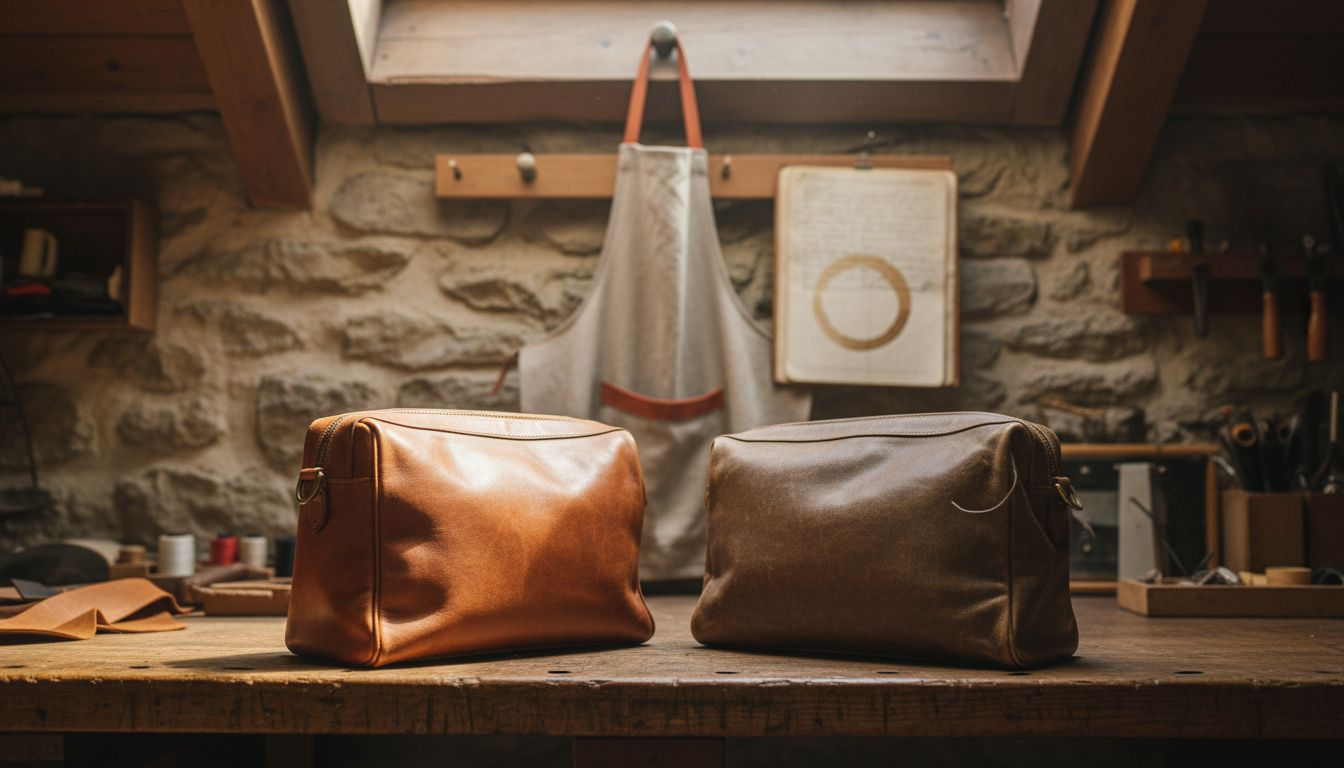
Craftsmanship quality shows immediately upon close inspection. Hand-stitched seams feature consistent tension and spacing that machines cannot replicate. These seams flex with the leather rather than creating stress points that tear. Mass production relies on high-speed machinery that prioritizes speed over precision, resulting in weaker construction prone to failure at handles and closures.
Leather quality differences impact both appearance and function. Artisan labels source full-grain hides that develop rich patinas as natural oils condition the material over time. Mass producers often use bonded leather, a composite of leather scraps and polyurethane that cannot age gracefully. Bonded leather begins deteriorating within 18 months of regular use, while full-grain improves with age.
Environmental considerations matter increasingly to conscious consumers. Small batch artisan production typically employs vegetable tanning methods using natural compounds like tree bark extracts. These processes take longer but avoid the chromium salts used in industrial tanning that pollute waterways. Mass production’s chemical shortcuts create environmental damage while producing inferior leather.
Consumer satisfaction correlates strongly with artisanal quality and ethical sourcing. Buyers report greater attachment to handbags they understand were crafted by skilled hands using responsible methods. This emotional connection, combined with superior durability, often leads to decades of use rather than the replacement cycle mass-produced bags require. The luxury versus designer handbags comparison explores these satisfaction factors in greater depth.
| Factor | Artisan Handbags | Mass-Produced Luxury |
|---|---|---|
| Leather Type | Full-grain, natural patina | Corrected or bonded, artificial finish |
| Construction | Hand-stitched, reinforced | Machine-stitched, standard seams |
| Batch Size | Under 1000 pieces | Thousands per design |
| Lifespan | 10+ years with care | 2-4 years typical |
| Environmental Impact | Low, vegetable tanning | High, chemical processes |
| Price Range | 150 - 600 EUR | 400 - 2000 EUR |
- Examine leather grain closely for natural texture versus stamped patterns
- Test stitching quality by gently pulling at seam intersections
- Ask about production methods and batch sizes
- Consider total cost of ownership including replacement frequency
- Prioritize brands transparent about sourcing and manufacturing
Price and Accessibility Analysis of Artisan Handbags
Understanding the artisan handbag market landscape helps you navigate purchasing options across key markets including the UK, Canada, Australia, and throughout Europe. Price points reflect genuine craftsmanship rather than marketing budgets, making artisan luxury attainable for discerning buyers who value quality over logo recognition.
Typical artisan handbag prices range from 150 to 600 Euros depending on size, leather grade, and construction complexity. Entry-level pieces around 150 to 250 Euros often feature simpler designs with exceptional materials, perfect for testing a new brand. Mid-range options from 250 to 400 Euros represent the sweet spot where design sophistication meets artisanal execution. Premium pieces above 400 Euros typically showcase complex construction, exotic leathers, or extensive hand-tooling that requires master-level skills.
Small batch production inherently limits availability compared to mass-produced luxury brands with global distribution networks. Most artisan labels sell primarily through their own websites and select boutiques that share their values. This direct-to-consumer approach eliminates retail markup while ensuring authenticity. Boutiques like San Rocco Italia curate collections from multiple artisan makers, offering convenient access to vetted brands that meet rigorous quality standards.
Key markets show growing appreciation for artisan luxury. The UK market particularly values heritage craftsmanship and ethical production, with London boutiques increasingly featuring European artisan labels. Canadian consumers in urban centers seek alternatives to mass luxury, driving online boutique growth. Australia’s affluent buyers appreciate artisan handbags’ durability in varied climates, while European markets naturally support regional makers through direct purchasing.
Investment perspective balances exclusivity with attainability. While iconic luxury houses command premiums often exceeding 3000 Euros, artisan pieces deliver comparable quality and superior craftsmanship at a fraction of the cost. This democratization of genuine luxury allows you to build a curated collection rather than saving years for a single piece. The best Italian leather handbags availability showcases current options across price ranges.
Emerging artisan brands continue improving accessibility while maintaining standards. New labels leverage online platforms to reach global audiences without compromise on quality or ethics. This evolution means more choices at various price points, all offering the hand-crafted excellence that defines true luxury. Smart buyers recognize this shift represents opportunity to acquire exceptional pieces before brands achieve household name status and adjust pricing accordingly.
- Set a realistic budget considering cost per wear over years of use
- Research brand websites directly for full collection access
- Explore curated boutiques for vetted artisan selections
- Consider currency exchange advantages when purchasing cross-border
- Join brand mailing lists for limited production release notifications
Situational Recommendations for Different Use Cases
Matching artisan leather handbags to your lifestyle ensures maximum utility while honoring the craftsmanship invested in each piece. Different situations demand specific features, from professional settings requiring polished sophistication to casual outings where relaxed elegance prevails. These recommendations help you build a versatile collection tailored to your needs.
-
Business and Professional Travel: Large full-grain leather totes provide the capacity and presence professional settings demand. Look for interior organization including laptop sleeves and multiple pockets. Brands like Floto offer the Tavoli Tote in rich cognac or black, crafted from vegetable-tanned Italian leather with reinforced handles that withstand frequent use. These pieces transition seamlessly from boardrooms to airport lounges while developing character with each journey.
-
Everyday Elegance: Compact artisan handbags from Polène Paris or Maison De Madisse suit daily errands without sacrificing style. Choose crossbody or shoulder styles in neutral tones that complement your wardrobe’s foundation. The lightweight construction using premium materials ensures comfort during extended wear, while modest sizing encourages mindful carrying. These pieces become trusted companions that age beautifully alongside your life.
-
Investment and Resale Value: Classic designs from heritage houses like Hermès Birkin or Chanel Classic Flap maintain over 70% of purchase price after five years when properly maintained. However, emerging artisan labels with documented quality increasingly attract collectors who value craftsmanship over logos. Focus on timeless silhouettes in versatile colors from brands with transparent production methods. Limited production naturally creates scarcity that supports value retention.
-
Ethical and Sustainable Choice: Brands like Basilary Bags Firenze prioritize local sourcing and sustainable practices throughout production. Their commitment to vegetable tanning, regional materials, and fair labor creates luxury you can feel good about carrying. These pieces appeal to buyers who refuse to compromise values for style, proving responsible production enhances rather than limits beauty.
-
Special Occasions: Structured evening bags in refined leathers elevate formal events while showcasing artisan skill. Look for subtle details like hand-tooled patterns or unique closures that spark conversation without overwhelming elegant simplicity. These pieces become heirlooms passed through generations, carrying stories of memorable moments.
Pro Tip: Build your collection strategically by starting with a versatile everyday piece, then adding specialized styles as needs arise. This approach ensures each handbag serves a clear purpose while allowing you to explore different artisan makers.
Consider the best Italian handbags for occasions when planning purchases around specific events or lifestyle changes. Thoughtful selection based on actual use patterns maximizes both enjoyment and value from your artisan luxury investments.
Explore Timeless Artisan Leather Handbags at San Rocco Italia
You now understand what separates authentic artisan leather handbags from mass-produced alternatives. San Rocco Italia offers a carefully curated collection of luxury handbags that embody the timeless design and ethical craftsmanship you seek. Our woman-owned boutique partners with skilled Italian and European artisans who craft each piece using premium full-grain leather and traditional techniques passed through generations.
Discover detailed guides that deepen your knowledge, including our luxury vs designer handbags guide and insights into what makes a handbag luxury. These resources empower confident purchasing decisions aligned with your values and style preferences. Explore our exclusive small-batch collections featuring pieces that enhance your wardrobe while supporting responsible craftsmanship. Visit San Rocco Italia to find handbags designed for elegant, conscious living that endure beyond fleeting trends.
Frequently Asked Questions
Which leather is best for luxury handbags?
Full-grain leather stands as the premier choice for luxury handbags due to its complete retention of the hide’s natural grain structure. This material develops a rich patina over years of use while maintaining strength and flexibility. Artisan makers prefer full-grain for its authenticity and superior aging characteristics compared to corrected or bonded alternatives that deteriorate quickly.
How can I verify if a handbag is truly artisanal?
Authentic artisan brands openly share production methods, batch sizes under 1000 pieces, and leather sourcing details on their websites or upon request. Examine the handbag for hand-stitched seams with consistent tension and spacing that machines cannot replicate. Vague marketing language about craftsmanship without specific production details often signals mass manufacturing dressed as artisanal work.
Are artisan handbags more sustainable than mass-produced ones?
Yes, artisan production typically employs environmentally responsible methods including vegetable tanning with natural compounds and local material sourcing that reduces transportation impact. Small batch manufacturing generates less waste while supporting fair labor practices in regional workshops. These factors create significantly lower environmental footprints compared to industrial-scale production using chemical tanning and global supply chains.
What handbag styles are best for everyday use over 35?
Compact crossbody and shoulder bags in neutral tones offer the versatility and elegance that suit diverse daily activities. Minimalist designs with quality full-grain leather complement professional and casual wardrobes without appearing trendy or juvenile. Choose pieces with practical organization features like interior pockets while avoiding overly embellished styles that limit outfit pairing options.


