


Artisan Leather Handbags 2026: 40% More Durable Guide
Not all leather handbags are created equal. Many women assume luxury leather bags harm the environment or that any label reading “genuine leather” guarantees quality. The truth is that full-grain artisan leather stands apart in durability, ethics, and timeless style. This guide shows you how to identify authentic artisan leather handbags crafted with sustainable methods and traditional techniques that deliver lasting elegance for your sophisticated wardrobe.
Table of Contents
- Understanding Full-Grain Leather Excellence
- The Art of Traditional Artisan Leather Craftsmanship
- Ethical Sourcing and Sustainable Practices in Leather Goods
- European Artisan Heritage: Italy and UK as Premier Makers
- Common Misconceptions About Artisan Leather Handbags
- Caring for Your Artisan Leather Handbag: Longevity and Beauty
- Making the Right Choice: Selecting Your Artisan Leather Handbag
- Discover Timeless Artisan Leather Handbags at San Rocco Italia
- Frequently Asked Questions
Key Takeaways
| Point | Details |
|---|---|
| Full-grain leather longevity | Lasts 3 to 5 times longer than corrected leather and develops a unique patina over time. |
| Hand-stitched durability advantage | Artisan hand-stitched bags are 40% more durable than machine-stitched alternatives. |
| Ethical vegetable tanning impact | Reduces toxic waste by over 80% compared to conventional chrome tanning methods. |
| European artisan leadership | Italy and the UK produce over 35% of European artisan leather handbags as of 2026. |
| Care extends lifespan | Proper maintenance preserves beauty and enhances the natural patina of your handbag. |
Understanding Full-Grain Leather Excellence
Full-grain leather represents the highest quality material available for luxury handbags. Unlike corrected grain or bonded leather, full-grain retains the outermost layer of the hide with all its natural markings intact. This means every bag displays unique texture, character, and beauty that cannot be replicated.
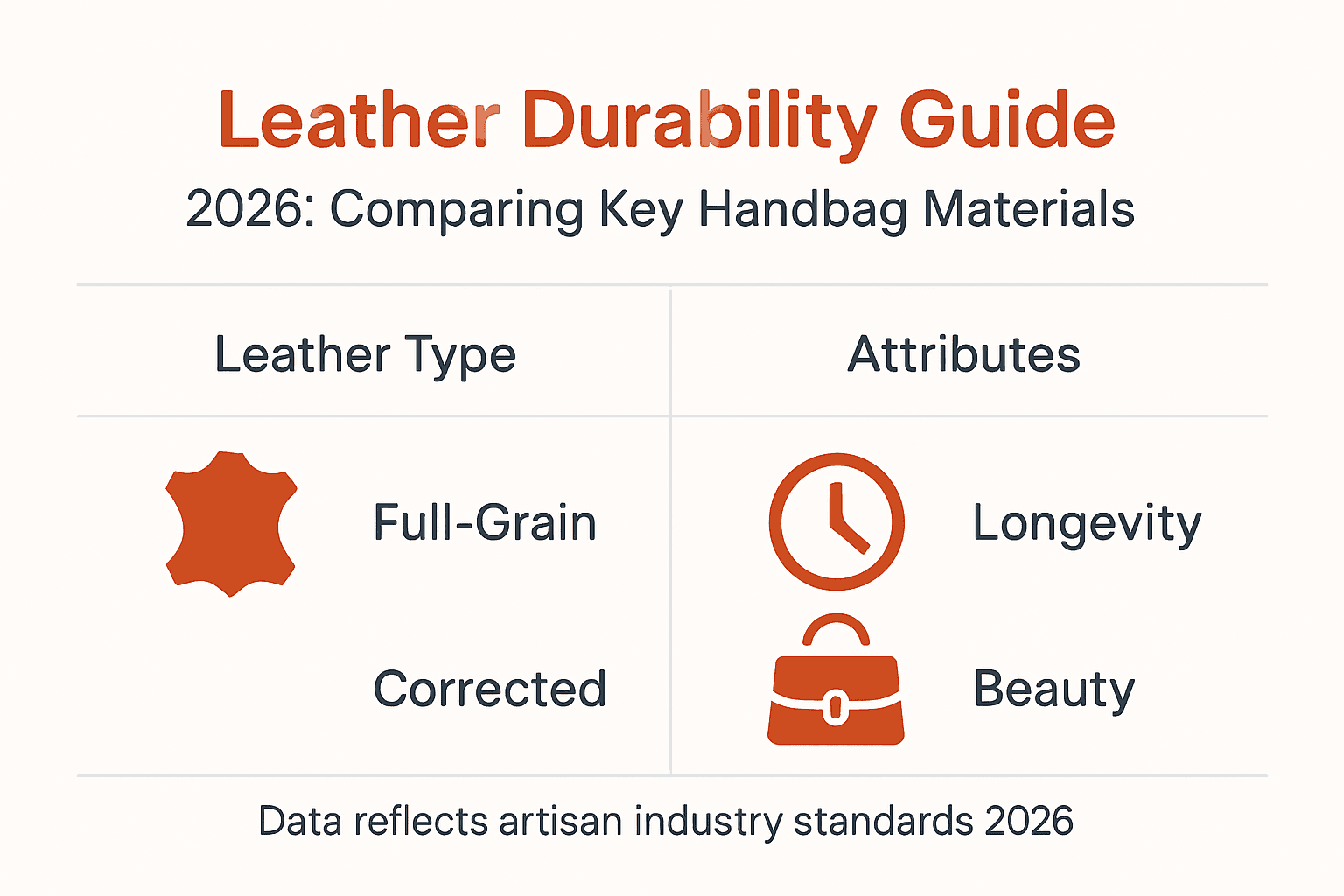
The durability advantages are substantial. Full-grain leather lasts 3 to 5 times longer than corrected leathers and develops a distinctive patina that adds depth and richness over the years. Corrected grain leather undergoes sanding and artificial embossing to hide imperfections, weakening the fiber structure. Bonded leather is essentially leather scraps glued together with polyurethane, offering minimal durability or aesthetic appeal.
Full-grain leather feels supple yet firm to the touch. Its surface shows natural grain patterns, occasional marks, and slight variations that prove authenticity. These imperfections are actually signs of quality, not defects. The material breathes naturally, resists moisture better than lower grades, and ages gracefully rather than deteriorating.
Leather Type Comparison:
| Leather Type | Durability | Aesthetic Quality | Sustainability |
|---|---|---|---|
| Full-Grain | Exceptional, 3 to 5 times longer lifespan | Natural texture, unique patina development | High, minimal processing |
| Corrected Grain | Moderate, prone to surface wear | Uniform but artificial appearance | Lower, chemical intensive |
| Bonded | Poor, limited lifespan | Synthetic look, no patina | Very low, relies on adhesives |
Pro Tip: Run your hand across the leather surface. Authentic full-grain feels slightly uneven with visible pores and natural grain. If it looks perfectly smooth and uniform, it’s likely corrected or synthetic.
Investing in understanding full-grain leather ensures you select a handbag that becomes more beautiful with age rather than simply wearing out.
The Art of Traditional Artisan Leather Craftsmanship
Artisan craftsmanship transforms premium leather into heirloom-quality handbags. Skilled artisans employ traditional techniques passed down through generations, each method contributing to exceptional durability and aesthetic refinement. The difference between handcrafted and mass-produced bags becomes immediately apparent when you examine the details.
Hand-stitching stands as the gold standard in leather bag construction. Hand-stitched seams increase durability by 40% compared to machine stitching because each stitch locks independently. If one stitch breaks on a hand-sewn bag, the others hold firm. Machine stitching uses a continuous thread that can unravel completely from a single break point.
Vegetable tanning represents another cornerstone of artisan leather work. This ancient process uses natural tannins from tree bark, taking weeks or months to complete. The result is leather with superior strength, breathability, and environmental safety. Chrome tanning, the industrial alternative, finishes in days but relies on toxic chemicals that pollute waterways.
Edge painting and burnishing are finishing touches that reveal true craftsmanship. Artisans hand-paint and polish raw leather edges to create smooth, sealed surfaces that resist fraying. Mass-produced bags often leave edges raw or apply cheap plastic coating that cracks quickly.
Key Artisan Techniques:
- Saddle stitching by hand for maximum seam strength and repair capability
- Vegetable tanning using natural materials for durability and eco-friendliness
- Edge burnishing to seal and polish cut leather surfaces
- Hand-applied dyes and finishes that penetrate deep into the leather fibers
Pro Tip: Flip your handbag inside out and examine the stitching. Hand-sewn stitches appear slightly irregular in spacing and sit deeper in the leather. Machine stitches look perfectly uniform and often sit on the surface.
Exploring traditional artisan craftsmanship reveals why these bags command premium prices and deliver decades of service.
Ethical Sourcing and Sustainable Practices in Leather Goods
Ethical leather production addresses environmental and animal welfare concerns through transparent sourcing and sustainable processing. Understanding these practices helps you make purchasing decisions aligned with your values without compromising on quality or style.
Leather is a by-product of the meat industry. Hides come from animals raised primarily for food consumption, meaning leather production utilizes materials that would otherwise become waste. This reality significantly reduces the animal welfare concerns compared to industries that raise animals solely for their skins. Responsible leather makers source from certified suppliers with humane farming practices and full traceability.
Vegetable tanning dramatically reduces environmental impact. Vegetable tanning reduces toxic waste by over 80% compared to chrome tanning methods. Chrome tanning introduces heavy metals into the ecosystem, contaminating soil and water sources. Vegetable tanning uses renewable plant materials and produces biodegradable effluent that poses minimal environmental risk.
Sustainable practices extend beyond tanning methods. Ethical producers minimize water usage, invest in renewable energy for their workshops, and ensure fair wages and safe working conditions for artisans. Transparency becomes crucial because it allows you to verify these claims rather than accepting marketing language at face value.
Sustainable Sourcing Benefits:
- Waste reduction by utilizing meat industry by-products rather than creating new demand
- Chemical minimization through vegetable tanning processes with natural materials
- Water conservation via closed-loop systems and efficient processing techniques
- Ethical transparency allowing customers to verify sourcing and production methods
Brands committed to ethical leather sourcing provide detailed information about their tanneries, processing methods, and supply chain partners. This transparency builds trust and confirms that your luxury handbag purchase supports responsible practices.
European Artisan Heritage: Italy and UK as Premier Makers
Europe, particularly Italy and the United Kingdom, maintains unrivaled leadership in artisan leather handbag production. These countries combine centuries of craftsmanship tradition with contemporary design sensibilities, creating bags that balance heritage and modernity.
Italy and the UK account for over 35% of European artisan leather handbag exports as of 2026. This dominance reflects deep-rooted expertise, access to premium materials, and cultural appreciation for craftsmanship excellence. Both countries support thriving communities of skilled artisans who maintain traditional techniques while innovating with contemporary aesthetics.
Italian artisan handbags emphasize elegant lines, architectural structure, and refined minimalism. Italian makers source the finest full-grain leather from Tuscany and other renowned tanneries, then craft bags with meticulous attention to proportion and finish. The Italian artisan heritage spans generations, with many workshops operating for over a century.
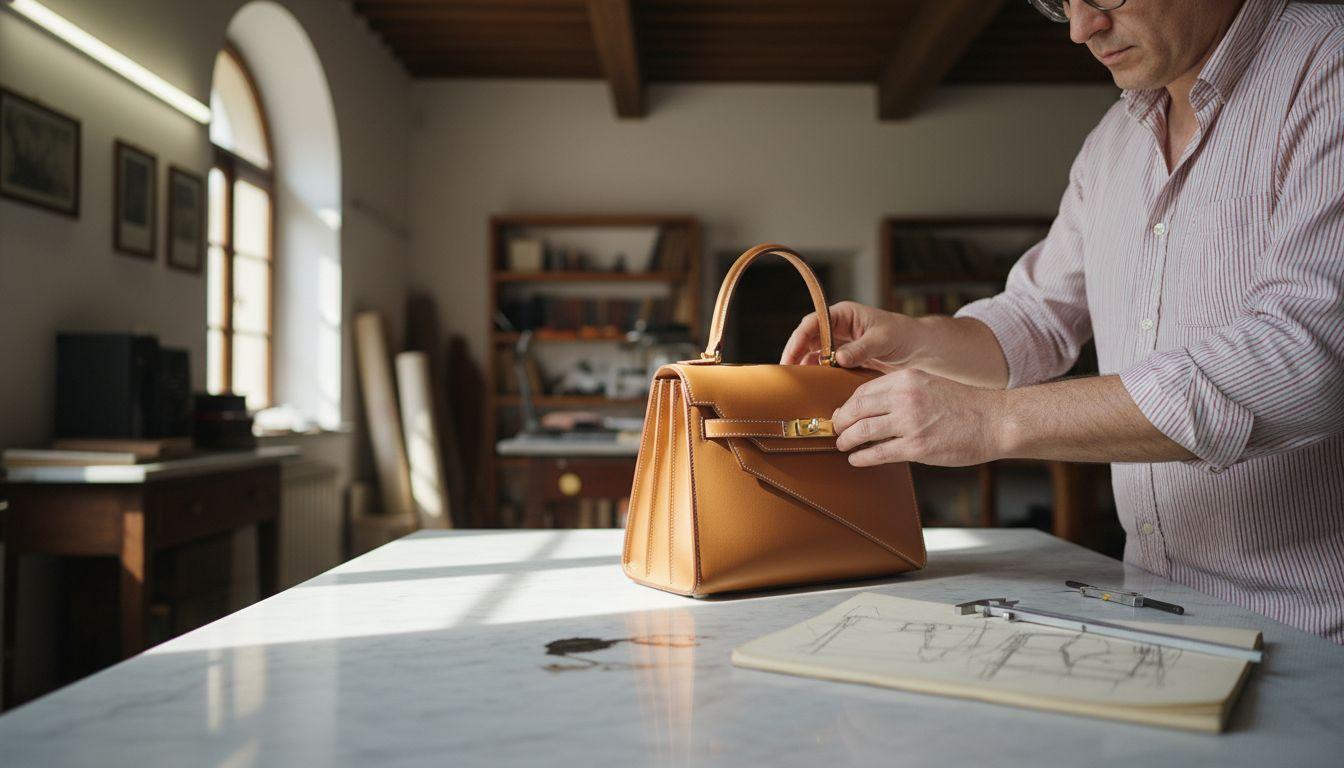
British artisan handbags showcase classic design with practical functionality. UK makers favor structured silhouettes, durable hardware, and timeless colour palettes that complement professional and casual wardrobes. British craftsmanship emphasizes longevity and versatility, creating bags designed for daily use across decades.
Italian vs UK Artisan Handbag Characteristics:
| Feature | Italian Artisan Bags | UK Artisan Bags |
|---|---|---|
| Design Philosophy | Elegant minimalism, architectural lines | Classic structure, practical functionality |
| Typical Techniques | Tuscan vegetable tanning, hand-burnished edges | Traditional saddle stitching, bridle leather work |
| Heritage Focus | Renaissance craft traditions, family workshops | Victorian era techniques, saddlery expertise |
| Material Sources | Tuscan full-grain leather, Italian hardware | British hides, heritage tanneries |
Exploring top Italian artisan brands and UK artisan leather handbag heritage reveals the distinctive character each country brings to luxury leather goods. Both offer exceptional quality with unique aesthetic signatures that appeal to different style preferences.
Common Misconceptions about Artisan Leather Handbags
Several persistent myths confuse consumers and obscure the true value of artisan leather handbags. Clearing up these misconceptions empowers you to make informed decisions based on facts rather than marketing hype or unfounded concerns.
Myth one: All leather production harms the environment. Reality shows that vegetable-tanned leather from ethical sources actually minimizes waste by utilizing meat industry by-products. The tanning process uses renewable plant materials and produces minimal toxic effluent, especially compared to synthetic alternatives derived from petroleum.
Myth two: “Genuine leather” signals premium quality. Not all leather labeled genuine leather is high quality; only full-grain leather guarantees premium durability. “Genuine leather” is actually a grade designation for lower-quality splits and corrected grain leather. It’s a marketing term that misleads consumers into believing they’re purchasing top-tier material.
Myth three: Machine stitching matches hand-stitching in durability. Hand-stitched seams use a saddle stitch technique where two needles pass through each hole from opposite directions. This creates independent stitches that hold even if one breaks. Machine stitching forms a chain that unravels from a single failure point.
Myth four: Leather requires high maintenance and constant care. Quality full-grain leather actually needs minimal intervention. A simple wipe with a damp cloth handles most dirt, and conditioning every few months maintains suppleness. The leather’s natural oils and proper construction do most of the preservation work.
Correcting Common Misunderstandings:
- Ethical leather exists through by-product sourcing and vegetable tanning processes
- Genuine leather is a low-quality grade; full-grain is the premium standard
- Hand-stitching provides structural advantages machine stitching cannot match
- Proper leather care is straightforward and requires minimal time investment
Understanding leather quality misconceptions helps you evaluate bags based on material reality rather than false assumptions. This knowledge protects you from overpaying for inferior products marketed with misleading terms.
Caring for Your Artisan Leather Handbag: Longevity and Beauty
Proper care preserves your artisan leather handbag’s beauty and extends its functional lifespan for decades. Full-grain leather responds beautifully to simple maintenance routines that protect the material and enhance its natural aging process.
Proper care preserves leather, prevents drying and cracking, and enhances patina development over time. Neglected leather dries out, develops surface cracks, and loses its supple texture. Regular attention keeps the material flexible and resilient while allowing the characteristic patina to emerge gradually.
Natural leather care products work best because they contain oils and waxes that absorb into the leather fibers. Avoid silicone-based products that sit on the surface, creating a barrier that prevents the leather from breathing. Look for conditioners made with beeswax, lanolin, or plant oils specifically formulated for full-grain leather.
Environmental factors affect leather condition significantly. Direct sunlight fades color and dries out natural oils. Excessive moisture promotes mold growth and weakens fiber structure. Store your handbag in a cool, dry location away from windows and heating vents. Use the dust bag provided to protect against scratches and dust accumulation.
Step-by-Step Leather Handbag Care Routine:
- Wipe surface weekly with a soft, slightly damp cloth to remove dust and light dirt.
- Apply natural leather conditioner every 8 to 12 weeks, massaging gently in circular motions.
- Allow conditioner to absorb for 20 minutes, then buff with a clean cloth to restore sheen.
- Address spills immediately by blotting with an absorbent cloth; never rub vigorously.
- Stuff handbag with acid-free tissue paper when storing to maintain shape and prevent creasing.
Patina development represents one of full-grain leather’s most appealing characteristics. As you use your bag, natural oils from your hands, subtle color variations from light exposure, and gentle wear create a unique finish that reflects your lifestyle. This patina adds depth and character impossible to achieve with synthetic materials or lower-grade leathers.
Pro Tip: Store your handbag upright on a shelf rather than hanging it by the straps. Hanging stretches the strap attachment points and distorts the bag’s shape over time. If shelf space is limited, lay the bag flat with stuffing inside.
Following leather care and patina tips ensures your investment becomes more beautiful with age rather than simply showing wear.
Making the Right Choice: Selecting Your Artisan Leather Handbag
Selecting an artisan leather handbag requires evaluating material quality, craftsmanship details, and ethical credentials. Armed with the knowledge from previous sections, you can confidently identify authentic quality and avoid paying premium prices for inferior products.
Check for authentic full-grain leather, artisan craftsmanship signs, and ethical certification or brand transparency. Full-grain leather shows natural grain patterns, slight imperfections, and a characteristic smell. Press the surface gently; it should yield slightly then spring back, displaying natural flexibility. Corrected grain and bonded leather feel stiffer and show uniform, artificial texture.
Examine stitching quality closely. Hand-sewn seams appear slightly irregular with stitches that sit deep in channels carved into the leather. The thread should be thick and waxed, visible on both interior and exterior surfaces. Machine stitching looks perfectly uniform and often uses thin synthetic thread that sits on the surface.
Look for brand transparency about sourcing and production. Reputable makers provide information about their tanneries, artisan workshops, and materials. They share their story openly because ethical practices represent a competitive advantage. Vague marketing language about “premium materials” or “expert craftsmanship” without specifics often signals mass production dressed up as artisan work.
Balance aesthetic preferences with practical considerations. A bag’s timeless design ensures relevance across changing fashion trends. Classic silhouettes, neutral colors, and minimal hardware remain stylish for decades. Consider your lifestyle needs regarding size, compartments, and carrying options. An artisan bag should enhance your daily routine, not complicate it.
Practical Buyer Checklist:
- Verify full-grain leather through texture, natural markings, and characteristic smell
- Confirm hand-stitching by examining seam depth, stitch irregularity, and thread quality
- Research brand transparency regarding tanneries, artisan workshops, and sourcing practices
- Assess timeless design elements that transcend temporary fashion trends
- Evaluate practical features matching your lifestyle needs and daily use patterns
Approach your purchase as a mindful investment rather than an impulse buy. Quality artisan leather handbags cost more upfront but deliver superior value through decades of service. The cost per use drops dramatically over time, making them more economical than replacing cheap bags every few years.
Learning to select artisan leather handbags transforms shopping from guesswork into confident decision-making. You’ll recognize authentic quality instantly and appreciate the craftsmanship that justifies premium pricing.
Discover Timeless Artisan Leather Handbags at San Rocco Italia
San Rocco Italia curates an exclusive collection of artisan leather handbags that embody the principles explored throughout this guide. Each piece combines full-grain leather excellence with traditional Italian craftsmanship and ethical sourcing practices. Our woman-owned boutique focuses on timeless design that transcends fleeting trends, offering bags that become treasured wardrobe staples for decades.

Explore our expert guides to deepen your understanding of what makes a handbag luxury and the specific benefits of full-grain leather explained in accessible detail. Our collection showcases skilled Italian artisans who hand-stitch every seam, hand-burnish every edge, and apply finishes using time-honored techniques. Visit San Rocco Italia to browse handbags that combine lasting elegance with responsible luxury, designed specifically for sophisticated women who value quality and ethical craftsmanship.
Frequently Asked Questions
Are full-grain leather handbags suitable for daily use?
Full-grain leather excels in daily use situations. Its exceptional durability withstands regular handling, weather exposure, and the wear that comes with active lifestyles. The natural patina that develops through daily use adds character and beauty rather than diminishing appearance.
How can I verify if a handbag is ethically sourced?
Check brand websites for detailed information about tanneries, artisan workshops, and sourcing practices. Ethical brands openly share their vegetable tanning methods and explain how leather comes from meat industry by-products. Look for certifications or third-party verification of environmental and labor practices.
What are the best practices to maintain my artisan leather handbag?
Clean your bag weekly with a soft, damp cloth to remove surface dirt. Apply natural leather conditioner every two to three months to maintain suppleness. Avoid prolonged exposure to direct sunlight and store properly with acid-free tissue stuffing to preserve shape and prevent cracking.
Recommended
- How Long Do Leather Bags Last: Complete Guide – San Rocco Italia
- How to Store Leather Handbags for Longevity and Care – San Rocco Italia
- Clean Cream Leather Handbag: 25% Longer Lifespan Guide – San Rocco Italia
- 7 Key Tips for Choosing High Quality Leather Handbags – San Rocco Italia
- Luxury Handbag Investment Guide 2026: Maximize Your Returns - BVPRIVE


