


Protect luxury leather: expert care for timeless elegance
TL;DR:
- Proper care and storage extend the lifespan of luxury leather handbags.
- Use tailored products like sprays and conditioners specific to each leather type.
- Professional help is essential for deep damage or persistent wear signs.
You remember the moment you first held it. The weight of it, the scent of the leather, the quiet confidence it gave you as you carried it out of the boutique. A luxury leather handbag is not simply a purchase. It is a commitment to quality, a reflection of your taste, and in many cases, a piece that can outlast trends by decades. Yet without the right care, even the finest full-grain Italian leather can crack, fade, or stain beyond repair. This guide walks you through everything you need to know: understanding your leather, choosing the right products, building daily and seasonal routines, avoiding costly mistakes, and recognising when professional help is the wisest choice.
Table of Contents
- Understanding luxury leather: types and vulnerabilities
- Tools and products for ultimate leather protection
- Step-by-step guide: daily and periodic protection routines
- Common mistakes and how to fix them
- Signs of wear: when to seek professional restoration
- Our view: why luxury leather preservation is an act of self-respect
- Elevate your care routine with San Rocco Italia
- Frequently asked questions
Key Takeaways
| Point | Details |
|---|---|
| Know your leather type | Understanding the leather type is crucial for selecting the proper care and protection method. |
| Invest in quality products | Choosing the right protectors and storage solutions prevents damage and extends item lifespan. |
| Stay consistent | Regular, gentle care routines are key to preserving beauty and value. |
| Avoid common pitfalls | Steer clear of harsh cleaners or over-conditioning to prevent long-term issues. |
| Know when to seek experts | Recognising damage early and consulting professionals ensures your pieces last for years. |
Understanding luxury leather: types and vulnerabilities
With an understanding of the importance of protection, let us explore the materials you are investing in. Not all luxury leather is created equal, and knowing what you own is the single most important step before applying any product or attempting any care routine.
Calfskin is the most widely used leather in luxury handbags. It is smooth, supple, and relatively durable, but it scratches more easily than you might expect and absorbs oils from your hands over time. Lambskin is softer and more delicate, prized for its buttery texture, but it dents, scuffs, and stains with very little provocation. Even placing it on a rough surface can leave a mark. Patent leather has a lacquered finish that resists water well but is highly susceptible to colour transfer, particularly from dark fabrics or denim. Exotic leathers, such as crocodile, python, or ostrich, are among the most resilient but require specialist care products and should never be treated with standard conditioners.
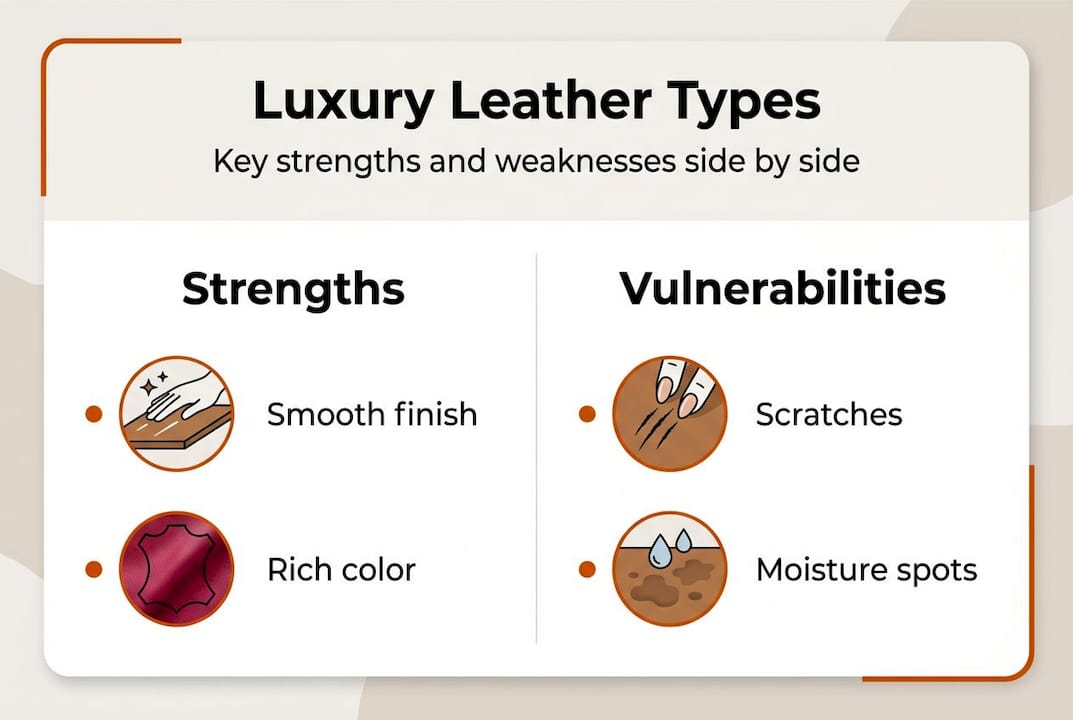
As different leathers require tailored protection, using a one-size-fits-all approach is one of the most common and damaging errors owners make. A conditioner perfect for calfskin can cloud patent leather. A waterproofing spray ideal for smooth leather can clog the natural texture of exotic skins.
Here is a quick reference to help you understand what each leather type faces:
| Leather type | Key strengths | Main vulnerabilities |
|---|---|---|
| Calfskin | Smooth, versatile, durable | Scratches, oil absorption, fading |
| Lambskin | Soft, luxurious texture | Dents, scuffs, staining, moisture |
| Patent leather | Water-resistant finish | Colour transfer, cracking in cold |
| Exotic leathers | Distinctive texture, resilient | Drying out, specialist care needed |
Beyond the leather type itself, environmental factors play a significant role in deterioration. UV light fades colour gradually, often so slowly you do not notice until the damage is done. Humidity encourages mould growth inside the bag and along seams. Dry air causes leather to lose its natural oils and crack. Even the inside of a poorly ventilated wardrobe can create the wrong conditions.
Key vulnerabilities to keep in mind for any luxury leather item:
- Moisture and rain: Can cause watermarks, swelling, and mould
- Direct sunlight: Fades dye and dries out the leather over time
- Heat sources: Radiators and car interiors accelerate drying and cracking
- Chemical exposure: Perfume, hand cream, and alcohol-based products can strip finishes
- Friction and pressure: Overfilling bags distorts shape; rough surfaces cause surface abrasion
Understanding these vulnerabilities is not about creating anxiety around your collection. It is about making informed, confident choices every time you use, store, or care for your pieces.
Tools and products for ultimate leather protection
Now you know the unique needs of each leather type, it is time to gather the right equipment. Walking into a leather care aisle without a plan is a fast route to buying the wrong products, and using the wrong product on a luxury bag can cause damage that no amount of conditioning will reverse.
Protective sprays, creams, and conditioners each serve different needs for luxury leather, and understanding the difference between them is essential before you spend a penny.
Protective sprays create an invisible barrier on the surface of the leather, repelling water and light stains. They are best applied to clean, dry leather before use and reapplied every few months. Conditioners work differently. They penetrate the leather to restore moisture and flexibility, preventing the drying and cracking that comes with age. Leather creams sit somewhere between the two, offering mild conditioning alongside a degree of surface protection. Waterproofing treatments are more intensive and are particularly useful for bags you carry in variable weather.
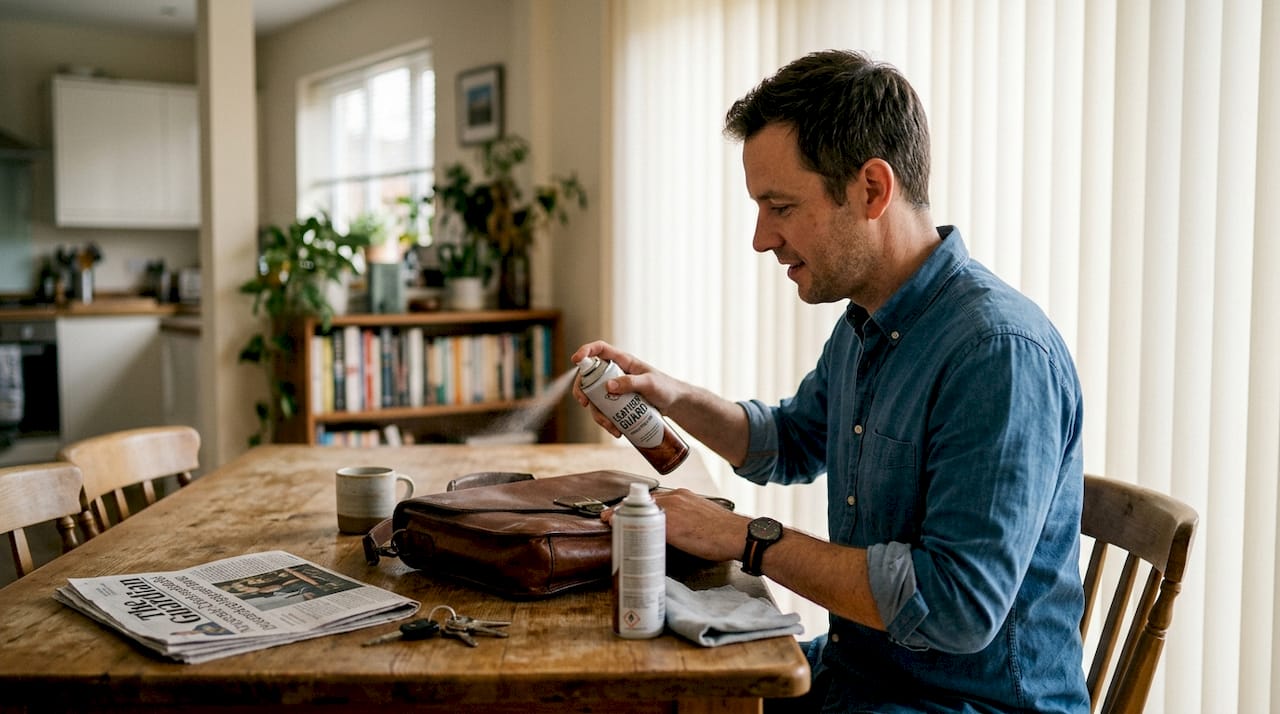
Here is a comparison of the four most commonly recommended products:
| Product type | Pros | Cons | Best for |
|---|---|---|---|
| Protective spray | Easy to apply, invisible finish | Needs regular reapplication | Calfskin, smooth leather |
| Leather conditioner | Restores suppleness, prevents cracking | Can darken some leathers | Calfskin, lambskin |
| Leather cream | Conditions and protects in one step | Heavier application needed | Aged or dry leather |
| Waterproofing treatment | Strong moisture barrier | Can affect texture | Everyday-use bags |
For a well-rounded home care kit, you will want to have the following items to hand:
- Soft, lint-free cloths (microfibre is ideal)
- A soft-bristled brush for removing dust from textured leathers
- A leather-specific protective spray suited to your bag’s finish
- A quality conditioner appropriate for the leather type
- Breathable dust bags for storage
- Silica gel sachets to manage humidity inside storage spaces
When it comes to cleaning leather at home, the same principle applies: use products formulated specifically for leather, not general household cleaners.
A survey of professional leather care specialists consistently shows that over 80% recommend applying a protective treatment before the first use of any new luxury leather item, not after the first sign of damage.
Pro Tip: Always patch-test any new product on a hidden area of your bag, such as the base or inside a pocket, and wait 24 hours before applying it to the full surface. This simple step can save you from an irreversible mistake.
Step-by-step guide: daily and periodic protection routines
With your products ready, follow these routines for best results. Consistency is what separates a bag that looks beautiful after ten years from one that looks tired after two.
Daily habits:
- Empty your bag at the end of the day to relieve pressure on the structure and seams.
- Wipe the exterior gently with a dry, soft cloth to remove surface dust and any light residue.
- Avoid placing your bag on the floor, particularly in restaurants or public spaces where surfaces can transfer grime and moisture.
- Keep your bag away from direct sunlight when not in use, even briefly on a windowsill.
Weekly care:
- Inspect the bag for any new marks, scuffs, or areas of dryness.
- Use a soft brush or cloth to clean the lining and remove any debris from inside.
- Check hardware such as clasps and zips for any tarnishing or stiffness, and address promptly.
Seasonal protection:
- Apply a leather conditioner every three to six months, or more frequently if you live in a dry climate.
- Reapply your protective spray at the start of each season, particularly before autumn and winter when rain and cold are more likely.
- Store bags you are not using in breathable dust bags, stuffed lightly with tissue paper to maintain their shape. Avoid plastic bags, which trap moisture.
- Review your handbag storage techniques to ensure your wardrobe conditions are suitable, particularly if you live in a humid environment.
Pro Tip: If your bag gets caught in the rain, blot the moisture immediately with a clean cloth. Never rub. Allow it to dry naturally at room temperature, away from radiators or hairdryers, which can cause the leather to shrink and crack.
For more detailed handbag cleaning tips tailored to specific finishes and styles, it is worth building your knowledge base before an issue arises rather than searching in a panic after one.
‘Always air your handbag after use to prevent odour and mould. Even five minutes of ventilation before storing makes a meaningful difference to the long-term condition of the leather.’
As regular routines such as wiping and proper storage are crucial for preventing damage, building these habits into your daily rhythm is far more effective than intensive restoration sessions every few years.
Common mistakes and how to fix them
Even with a solid routine, mistakes happen. Here is how to avoid and address the most frequent ones.
The most damaging errors are rarely dramatic. They are the small, well-intentioned actions that accumulate over time and quietly degrade your leather. Improper cleaning techniques and wrong product usage can permanently damage leather, even when the intention is to help.
Here are the top five mistakes and what to do instead:
- Over-conditioning: Applying conditioner too frequently saturates the leather, causing it to become greasy, attract dirt, and in some cases, weaken the fibres. Fix: condition every three to six months only, and use a minimal amount each time.
- Using the wrong cleaners: Household products such as washing-up liquid, vinegar, or alcohol-based wipes strip the leather’s natural oils and damage the finish. Fix: use only products specifically formulated for luxury leather.
- Poor storage choices: Storing bags in plastic covers, stacked on top of one another, or in direct sunlight causes shape distortion, colour fading, and moisture build-up. Fix: use breathable dust bags, stuff bags with tissue, and store upright.
- Ignoring sun and moisture exposure: Many owners only think about care after visible damage appears. Fix: apply protective spray proactively and keep bags out of direct light.
- Neglecting regular care: Weeks without any attention allow dust, oils, and environmental residue to build up and penetrate the surface. Fix: build a simple weekly wipe-down into your routine.
‘Baby wipes are not suitable for leather cleaning. Despite being gentle on skin, they contain surfactants, fragrance, and moisture levels that can strip the finish from luxury leather and cause long-term discolouration.’
One of the most common misconceptions is that any mild, gentle product is safe for leather. This is not true. Luxury leather has specific pH requirements and surface finishes that react poorly to many everyday products. When in doubt, do nothing until you have the right product, and explore natural purse cleaning methods that are both effective and safe for high-quality leather.
Signs of wear: when to seek professional restoration
Finally, recognise when it is time to call on expert help for your cherished items. Home care is powerful, but it has limits, and knowing those limits protects you from making damage worse with well-meaning intervention.
Some signs of leather wear are cosmetic and manageable at home. Others signal that the leather’s structure has been compromised and needs professional attention.
Look out for these indicators that it is time to consult a specialist:
- Deep scratches or gouges that do not respond to gentle buffing or conditioning
- Persistent stains from ink, oil, or dye transfer that remain after careful cleaning
- Loss of suppleness where the leather feels stiff, brittle, or papery despite conditioning
- Visible cracking along fold lines, handles, or corners
- Discolouration or fading across large areas of the surface
- Peeling or delamination of the surface layer, particularly on coated leathers
- Mould growth that has penetrated beyond the surface
Industry estimates suggest that a significant proportion of luxury leather bags, upwards of 60%, will require some form of professional restoration or specialist cleaning at least once during their lifetime. This is not a sign of poor ownership. It is simply the reality of using beautiful things.
When choosing a restoration specialist, look for someone who works specifically with luxury leather goods rather than a general cobbler or dry cleaner. Ask to see examples of previous work, particularly on the same leather type as your item. Reputable specialists will always assess the piece before quoting and will be transparent about what is and is not achievable.
Persistent stains, cracks, and drying cannot always be resolved at home and may require professionals with specialist tools, dyes, and techniques unavailable to the general consumer. Accepting this is not defeat. It is wisdom.
Our view: why luxury leather preservation is an act of self-respect
There is a perspective worth sharing here, one that goes beyond product recommendations and care schedules. At San Rocco Italia, we believe that how you care for your leather pieces says something meaningful about how you value the things and the people behind them.
Every bag crafted by skilled Italian artisans represents hours of labour, generations of knowledge, and a commitment to materials that will outlast fast fashion by decades. When you condition your leather, store it properly, and seek expert help when needed, you are not just maintaining an object. You are honouring the craft that went into it.
There is also a contrarian point worth making. We sometimes see clients who are so protective of their finest pieces that they never use them. The bag sits in its dust bag, unworn, unloved, slowly drying out from lack of use. This is not preservation. Leather needs to be used. It needs the natural flex of being carried, the gentle conditioning that comes from handling. A bag that is used and cared for will always age more beautifully than one that is hidden away.
Longevity, in our view, is a form of legacy. Choosing quality over quantity, maintaining what you own, and passing pieces down through generations is one of the most genuinely sustainable choices available to us. It is also, quietly, an act of self-respect. You invested in something exceptional. Give it the attention it deserves.
Elevate your care routine with San Rocco Italia
For those seeking expert-level results, the right support makes every difference. At San Rocco Italia, we have built our brand around the belief that exceptional leather deserves exceptional care, and that the women who invest in quality deserve guidance they can trust.
Our carefully curated San Rocco Italia collection features handbags and accessories crafted in Italy from premium full-grain leather, alongside a wealth of expert resources to help you protect your investment for years to come. From in-depth care guides to thoughtfully selected accessories, everything we offer is designed with longevity in mind. Whether you are building your first care kit or refining a routine you have followed for years, we invite you to explore our collection and guides. Your leather deserves nothing less.
Frequently asked questions
What is the best way to store luxury leather handbags?
Store luxury leather bags in breathable dust bags, away from direct sunlight and humidity. As proper storage prolongs handbag life, keeping bags stuffed with tissue paper and stored upright is the most effective long-term approach.
Can I use baby wipes to clean leather products?
Avoid baby wipes entirely, as they contain surfactants and moisture levels that damage luxury leather finishes. Improper products cause irreparable harm to the surface and colour of fine leather.
How often should I condition my luxury leather items?
Condition luxury leather every three to six months, adjusting based on your climate and how frequently you use the item. Routine conditioning maintains suppleness and is the single most effective way to prevent cracking.
When should I consult a professional for leather restoration?
Seek professional help when your item shows deep scratches, severe stains, or persistent dryness that home care cannot resolve. Home methods cannot address all damage, and early professional intervention often prevents more costly repairs later.
Recommended
- How to Clean Leather Handbag for Long-Lasting Luxury Care – San Rocco Italia
- Leather Handbag Cleaner: Expert Guide to Pristine Luxury Bags – San Rocco Italia
- Best leather protector for luxury bags: expert guide – San Rocco Italia
- Leather polish for bags: preserve luxury style in 2026 – San Rocco Italia
- How design shapes luxury jewelry elegance: 5 insights – Diamonds
