


How to Clean Designer Purses for Timeless Elegance
Spotting a faint scratch or a hint of discolouration on your cherished designer handbag can be unsettling, especially when you remember the investment made in each carefully chosen piece. Regular assessment of your handbag’s unique material composition is key for preserving its elegance and safeguarding its future value. By understanding your purse’s individual characteristics and current condition, you lay the groundwork for thoughtful maintenance that truly respects your luxury accessory.
Table of Contents
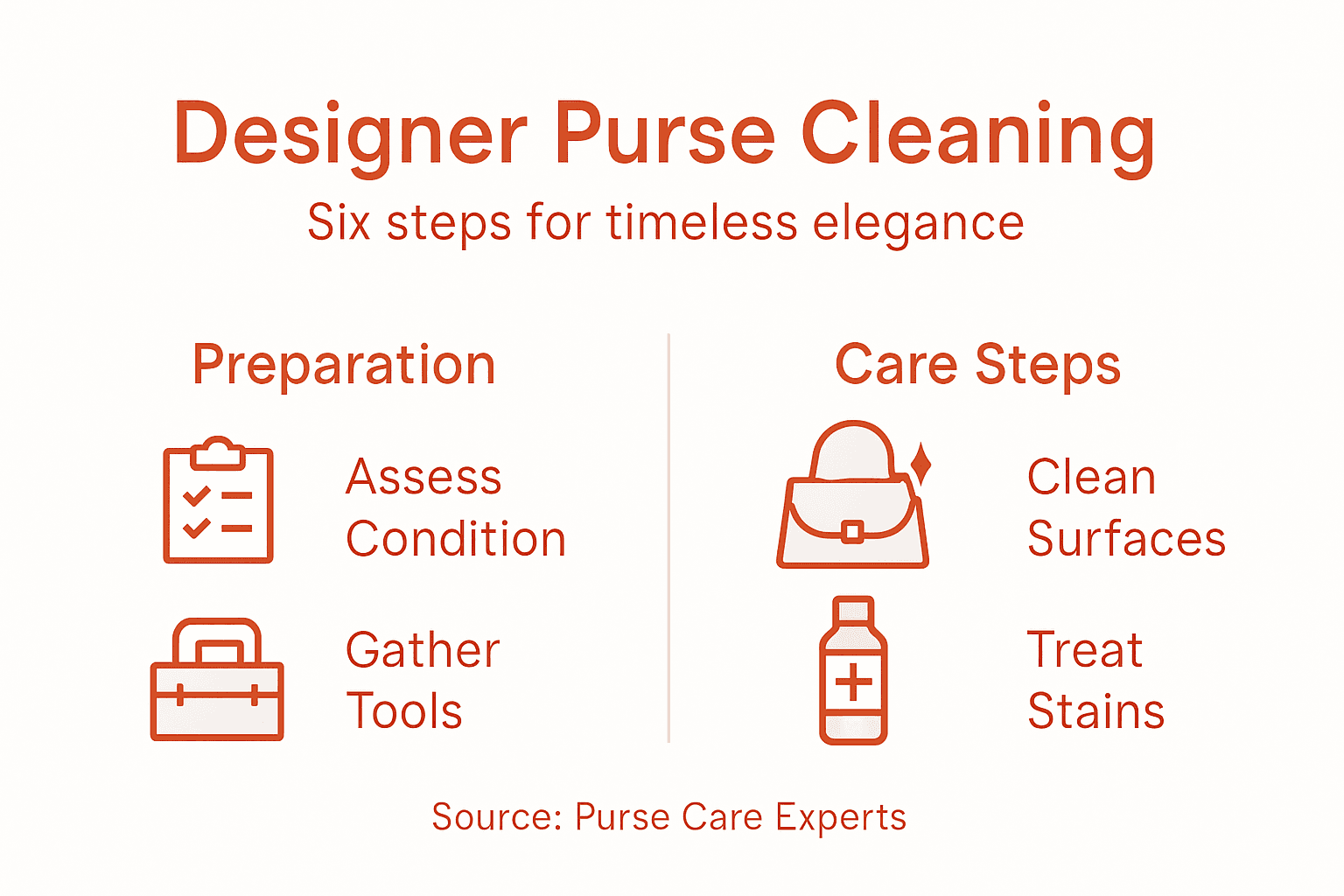
- Step 1: Assess Designer Purse Materials And Condition
- Step 2: Gather Essential Cleaning Tools And Products
- Step 3: Prepare Purse For Cleaning And Protect Details
- Step 4: Clean Exterior Surfaces With Proper Technique
- Step 5: Treat Stains And Restore Leather Finish
- Step 6: Verify Results And Store Purse Safely
Quick Summary
| Key Point | Explanation |
|---|---|
| 1. Assess materials and condition | Understand your purse’s materials to choose the correct cleaning method and avoid damage during restoration activities. |
| 2. Prepare a specialised cleaning kit | Gather tools like microfibre cloths and pH-neutral cleaners specific to the material, ensuring effective yet gentle maintenance of your purse. |
| 3. Protect details while cleaning | Safeguard delicate hardware and lining with preparatory steps, such as covering metal with painter’s tape before cleaning. |
| 4. Follow best cleaning techniques | Clean sections gradually using appropriate techniques tailored to the material, ensuring thorough and gentle removal of dirt without damage. |
| 5. Store purse correctly post-cleaning | Proper storage in a cool, dry place with breathable bags maintains the purse’s shape and prevents mould and discolouration over time. |
Step 1: Assess designer purse materials and condition
Identifying the specific materials and current condition of your designer purse is the crucial first step in determining the most appropriate cleaning approach. Understanding your handbag’s unique composition helps prevent potential damage during maintenance and ensures a targeted, safe restoration process.
To conduct a comprehensive assessment, you’ll need to carefully examine the purse’s primary material, noting specific characteristics that influence cleaning techniques. Textile material assessment frameworks recommend evaluating key factors like texture, potential vulnerabilities, and existing wear patterns. Start by checking these specific elements:
- Leather type: Full-grain, top-grain, or genuine leather each require distinct care strategies
- Surface finish: Smooth, pebbled, patent, or suede leather demand different cleaning methods
- Hardware details: Examine metal clasps, zips, and decorative elements for signs of tarnishing or corrosion
- Existing damage: Look for scratches, discolouration, or structural weaknesses
Documenting your findings through detailed condition reporting can help track your purse’s evolving condition over time. Take clear, well-lit photographs from multiple angles, capturing both overall appearance and specific areas of concern.
Here is a summary comparing common designer purse materials and their cleaning considerations:
| Material Type | Cleaning Challenge | Damage Risk | Special Care Advice |
|---|---|---|---|
| Full-grain leather | Absorbs stains easily | High if over-wetted | Use minimal moisture, gentle products |
| Patent leather | Prone to surface marks | Surface cracking possible | Avoid alcohol-based solutions |
| Suede | Attracts dust quickly | Easily discoloured | Brush gently, never saturate |
| Textile blend | May pill or fray | Fading or distortion | Spot clean, avoid scrubbing |
Expert tip: Always test cleaning methods on a small, inconspicuous area first to ensure compatibility with your designer purse’s unique material composition.
Step 2: Gather essential cleaning tools and products
Preparing the right cleaning toolkit is crucial for safely maintaining your designer purse’s pristine condition. By selecting appropriate cleaning supplies and equipment, you’ll protect your investment and ensure gentle, effective restoration.
Your essential cleaning kit should include the following specialised items:
- Soft microfibre cloths: Lint-free and non-abrasive for delicate surfaces
- Specialised leather cleaner: pH-neutral and designed for your specific leather type
- Soft-bristled brushes: Varied sizes for gentle surface and crevice cleaning
- White cotton gloves: Prevent oil transfer while handling delicate materials
- Distilled water: Minimises mineral residue during cleaning
When selecting cleaning products, prioritise gentle, non-toxic solutions that match your purse’s specific material characteristics. Avoid harsh chemicals or all-purpose cleaners that might damage sensitive leather or decorative elements.
Carefully review manufacturer recommendations and always test cleaning products on a small, inconspicuous area before full application.
Expert tip: Create a dedicated cleaning station with all tools organised and easily accessible before beginning the purse restoration process.
Step 3: Prepare purse for cleaning and protect details
Before diving into the cleaning process, you’ll need to meticulously prepare your designer purse to safeguard its delicate features and ensure a thorough yet gentle restoration. Systematic cleaning preparation involves a strategic approach that protects your handbag’s intricate components.
Begin with these essential preparatory steps:
- Empty the purse completely: Remove all contents, including hidden pockets and compartments
- Protect metal hardware: Cover zippers, clasps, and decorative elements with painter’s tape
- Check internal lining: Inspect for stains, loose threads, or potential weak points
- Create a clean workspace: Use a white, soft towel as your cleaning surface
- Gather protective gear: Put on white cotton gloves to prevent oil transfer
When handling your designer purse, remember that careful cleaning procedures are crucial for maintaining its original beauty. Pay special attention to fragile embellishments and avoid applying direct pressure to delicate areas.
Patience and methodical preparation are the keys to successfully restoring your designer purse without causing inadvertent damage.
Expert tip: Take photographs of your purse before cleaning to document its initial condition and track any improvements during the restoration process.
Step 4: Clean exterior surfaces with proper technique
Cleaning the exterior of your designer purse requires precision, patience, and a gentle touch to preserve its original beauty and integrity. Leather cleaning standards provide critical guidance for maintaining the delicate surface without causing unintended damage.
Follow these detailed cleaning techniques for optimal results:
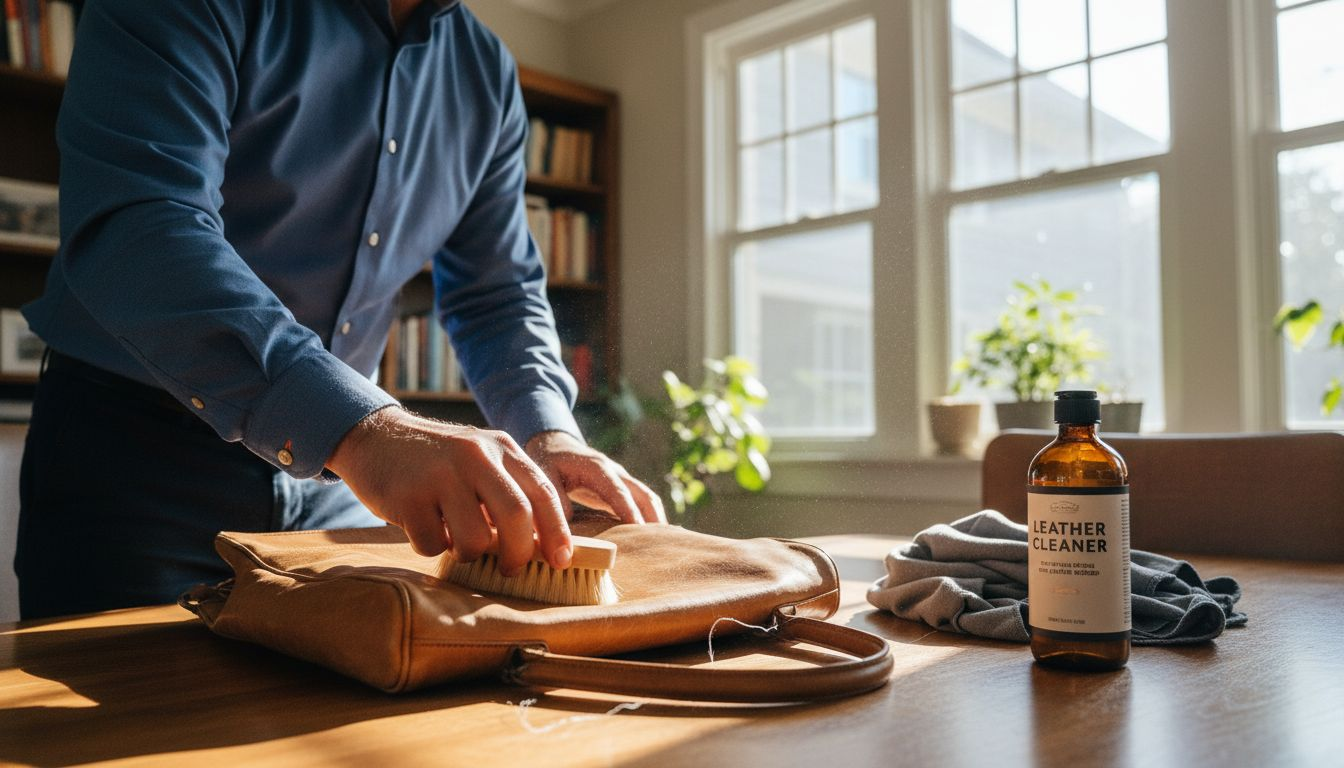
- Use specialised leather cleaner: Select a product matched to your specific leather type
- Work in small sections: Clean one area at a time to ensure thorough yet controlled treatment
- Apply cleaner with soft cloth: Use light, circular motions to lift dirt gently
- Avoid saturating leather: Dampen cloth slightly - never drench the surface
- Check colour transfer: Test cleaner on inconspicuous area first
Gentle mechanical cleaning techniques are essential for removing dirt while maintaining your purse’s pristine condition. Always use minimal pressure and allow each section to dry naturally before moving to the next area.
The key to successful leather cleaning is patience, precision, and a delicate touch.
Expert tip: Work in a well-lit, clean environment and turn your purse periodically to ensure you clean every surface evenly and systematically.
Step 5: Treat stains and restore leather finish
Restoring your designer purse’s leather finish requires careful attention and targeted techniques to eliminate stains while preserving the material’s natural beauty. Leather conditioning techniques play a crucial role in rejuvenating and protecting your precious accessory after cleaning.
Address different stain types with these specialised approaches:
- Oil-based stains: Gently blot with talcum powder to absorb excess oil
- Water stains: Use a clean, slightly damp microfibre cloth to even out moisture marks
- Ink marks: Apply specialised leather cleaning solution with minimal pressure
- Dirt and grime: Use a soft leather cleaner with gentle circular motions
- Colour restoration: Select a leather conditioner matching your purse’s original shade
Leather finishing processes highlight the importance of careful, methodical restoration. Apply leather conditioner sparingly, working in thin layers to rebuild the protective coating and maintain your purse’s luxurious appearance.
Patience and precision are paramount when treating leather stains and restoring its original lustre.
Expert tip: Allow each treatment stage to dry completely before applying the next layer of product, preventing potential product interaction or uneven absorption.
Step 6: Verify results and store purse safely
The final stage of your designer purse restoration involves meticulously verifying the cleaning results and implementing strategic storage techniques that preserve your handbag’s pristine condition. Cleaning effectiveness verification ensures every detail has been carefully addressed and protected.
Conduct a comprehensive post-cleaning inspection using these key criteria:
- Check overall surface: Examine leather for uniform colour and texture
- Inspect hardware: Ensure metal elements remain untarnished
- Validate stain removal: Confirm complete elimination of previous marks
- Assess leather finish: Verify restored sheen and suppleness
- Examine internal lining: Check for cleanliness and structural integrity
Safe storage practices are crucial for maintaining your purse’s long-term elegance. Store your handbag in a cool, dry environment away from direct sunlight, using a breathable dust bag that prevents moisture accumulation.
Below is a reference table for post-cleaning storage techniques to maintain condition:
| Storage Factor | Why It Matters | Effective Practice |
|---|---|---|
| Humidity control | Prevents mould and odours | Store in cool, dry place |
| Sunlight exposure | Avoids fading and cracking | Keep away from windows and lamps |
| Structural support | Retains purse shape | Use acid-free tissue paper stuffing |
| Protection bag | Shields from dust, damp | Select breathable, not plastic, bags |
Proper storage is as important as cleaning - it protects your investment and preserves your purse’s timeless beauty.
Expert tip: Stuff your purse lightly with acid-free tissue paper to help maintain its shape during storage, preventing unwanted creasing or structural distortion.
Preserve Timeless Elegance with Expertly Crafted Designer Handbags
Cleaning and maintaining a designer purse requires understanding the delicate materials and careful restoration steps highlighted in this guide. If you value expert craftsmanship and want to avoid common pitfalls like leather damage or hardware tarnishing, choosing a handbag designed with longevity and quality in mind is essential. At San Rocco Italia, each handbag is made with premium full-grain leather and traditional Italian techniques that inherently resist wear and age gracefully, sparing you from intensive restoration.

Discover how investing in a truly timeless accessory can simplify your care routine while enhancing your style. Explore our carefully curated collection of luxury handbags, accessories, and leather goods crafted by skilled European artisans. Visit San Rocco Italia today and select a piece that combines enduring beauty with exceptional durability. Start your journey to owning a purse that remains elegant without the stress of constant upkeep.
Frequently Asked Questions
How do I assess the materials and condition of my designer purse?
To assess the materials and condition of your designer purse, examine the primary material, leather type, and surface finish. Look for any existing damage, such as scratches or discolouration, and document your findings with clear photographs before cleaning.
What cleaning tools do I need for my designer purse?
You will need soft microfibre cloths, specialised leather cleaner, soft-bristled brushes, white cotton gloves, and distilled water. Assemble these items into a dedicated cleaning kit to ensure you have everything necessary for proper maintenance.
How should I prepare my purse for cleaning?
To prepare your purse for cleaning, empty it completely, check the internal lining for stains, and protect any metal hardware with painter’s tape. Setting up a clean workspace with a soft, white towel will also help avoid any potential damage during the cleaning process.
What technique should I use to clean the exterior of my designer purse?
Use a specialised leather cleaner suited to your purse’s specific leather type and apply it with a soft cloth using light, circular motions. Clean one small section at a time to ensure thorough treatment without saturating the leather, allowing it to dry before moving to the next area.
How can I effectively treat stains on my designer purse?
To treat stains, identify the type of stain and apply the appropriate method, such as using talcum powder for oil stains or a slightly damp cloth for water stains. Always test treatments on an inconspicuous area first and allow each treatment to dry fully before proceeding to prevent product interaction.
What storage methods will maintain the condition of my cleaned purse?
Store your cleaned purse in a cool, dry environment, away from direct sunlight, using a breathable dust bag. Stuff the purse lightly with acid-free tissue paper to help retain its shape and prevent unwanted creasing.
Recommended
- Best 6 Italian Handbags 2025 – Expert Comparison – San Rocco Italia
- How to Clean a White Leather Purse at Home Effectively – San Rocco Italia
- How to Clean a Leather MK Purse for Lasting Elegance – San Rocco Italia
- How to Clean Kate Spade Leather Purse for Lasting Luxury – San Rocco Italia
- Understanding Why Choose Designer Dresses for Your Event - DressMeUpNY


