


Italian home accents: Timeless craft meets modern allure
TL;DR:
- Modern Italian home accents in 2026 emphasize craftsmanship, heritage techniques, and timeless materials that develop character over time. Murano glass, sculptural lighting, and decorative porcelain exemplify these trends, offering versatility, authenticity, and visual storytelling. Prioritizing human-made imperfections and provenance ensures lasting beauty and adds genuine atmosphere to refined interiors.
There is a particular kind of satisfaction that comes from standing in a beautifully appointed room and knowing that every piece within it was chosen with intention. Today’s most admired interiors do not simply follow trends. They tell a story about the people who inhabit them, drawing on the deep wells of Italian artisanal heritage while embracing the freshest currents of contemporary design. If you are seeking home accents that hold their beauty across decades rather than seasons, the convergence of cutting-edge 2026 design thinking and centuries-old Italian craft provides a remarkably compelling starting point.
Table of Contents
- How to choose contemporary home accents with timeless Italian style
- Murano glass: The renaissance of blown glass in elegant interiors
- Quiet luxury and sculptural lighting: 2026’s statement lamps
- Modern maximalism: Playful motifs in porcelain and mixed media
- Summary comparison: Key trends and how to integrate them in your home
- Why craftsmanship remains the true luxury behind every trend
- Explore authentic Italian home accents with San Rocco Italia
- Frequently asked questions
Key Takeaways
| Point | Details |
|---|---|
| Murano glass resurgence | Handblown glass with unique finishes remains the epitome of luxury and craftsmanship in 2026. |
| Sculptural statement lighting | Marbled, artisan-crafted lamps embody quiet luxury and elevate elegant interiors. |
| Maximalist porcelain accents | Playful, hand-decorated porcelain brings personality and storytelling while staying rooted in Italian tradition. |
| Seamless trend integration | Blend heritage textures and bold statements for a curated space that feels both contemporary and timeless. |
| Craftsmanship is key | True elegance arises from visible artistry, not mass uniformity, ensuring every piece resonates with authenticity. |
How to choose contemporary home accents with timeless Italian style
To make sense of 2026’s evolving home accent world, it is vital to start with the values and standards that matter to discerning homeowners. The question is rarely “what is fashionable?” but rather “what will still feel extraordinary in ten years?” Selecting accents with that longer view in mind changes everything about the process.
Begin by looking for pieces that fuse innovation with heritage. The finest Italian makers have never treated tradition as a constraint. Techniques like incamiciato (layering glass to create a sheathed effect), rugiada (a dewdrop surface texture), and traditional glassblowing are being reinterpreted with fresh vision at events like Salone del Mobile.Milano, where the world’s most influential designers gather to signal what matters next. These ancient methods, applied to contemporary forms, produce objects that carry genuine soul.
Artisanal quality leaves traces you can perceive with your eyes and fingertips. Seek out subtle hand-finishing marks, slight irregularities in surface texture, and the kind of variation in colour or form that only a skilled craftsperson can produce. These are not flaws. They are the very indicators of work done by human hands, and they are precisely what distinguishes a true luxury accent from a mass-produced approximation.
Versatility deserves serious consideration too. The most rewarding accents work across different moods and evolving décor directions. For practical guidance on choosing home decor style, it helps to identify the emotional register you want a room to carry, then select pieces that will serve that feeling regardless of how your taste shifts over time.
Here is a useful framework for evaluating any potential home accent:
- Heritage techniques: Is the piece made using a named or recognised craft method with a documented Italian or European legacy?
- Hand-finishing evidence: Can you see or feel evidence of human involvement in the making process?
- Material integrity: Does the material itself carry inherent beauty? Glass, fine ceramics, and noble metals age gracefully.
- Provenance clarity: Does the maker openly communicate where and how the piece was made?
- Formal longevity: Will the silhouette or form still feel considered in five or ten years, or is it purely seasonal?
For a broader guide on accessory selection tips that balance comfort and visual impact, it is worth understanding that a room’s character is built cumulatively. Each addition either strengthens the whole or dilutes it.
Pro Tip: Before purchasing a statement piece, live with a photograph of it on your phone for three days. If you are still drawn to it, it is likely more than a passing impulse.
Murano glass: The renaissance of blown glass in elegant interiors
With this refined set of criteria in place, let us explore the first major trend of 2026: the luminous resurgence of Murano glass. There is something almost theatrical about the way a well-placed piece of Murano glass behaves in a room. It catches light differently at every hour of the day, casting colours and shadows that shift with the sun or the flicker of candles.
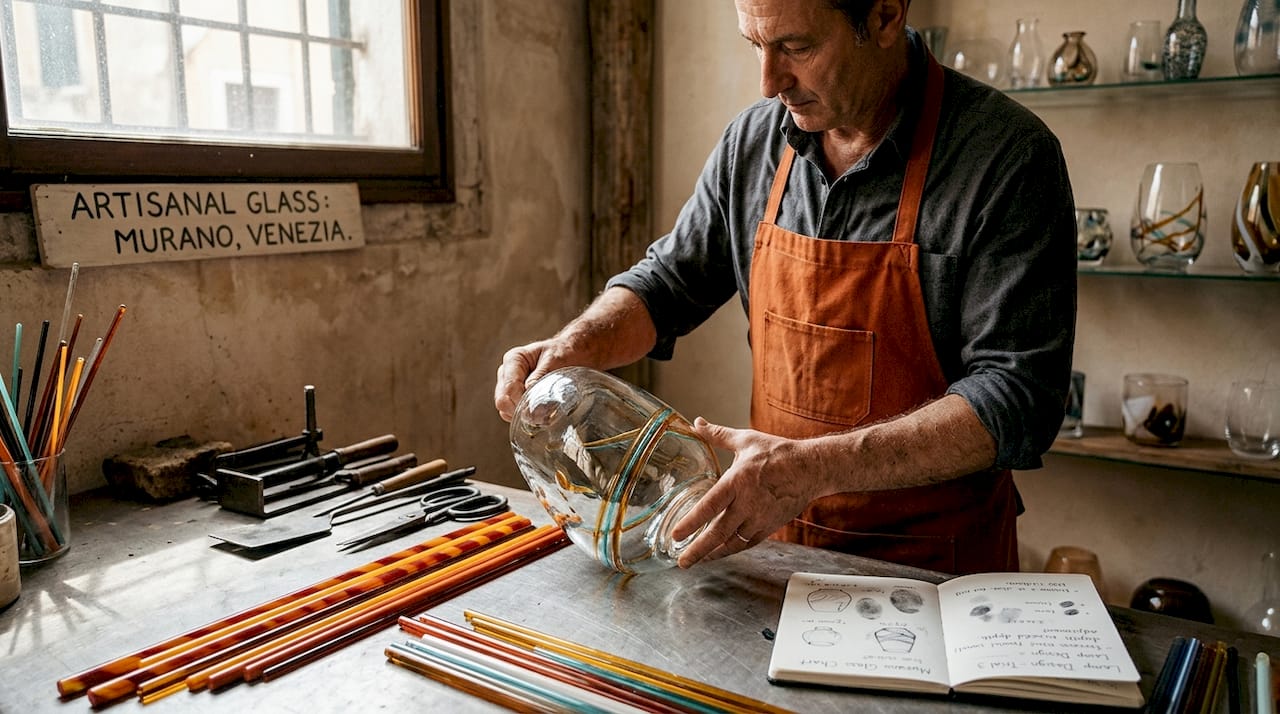
Milan Design Week 2026 confirmed what many collectors had already sensed: handblown glass is experiencing a genuine cultural renaissance. Murano glass reinterpretations in vases, pendant lamps, and architectural elements were celebrated precisely for their technique, their embrace of imperfection, and what critics described as their “poetry.” This is not merely decorative language. It captures the experience of encountering a piece that holds genuine individuality.
Barovier&Toso, one of the oldest glassmaking houses on the island of Murano, presented their 2026 Chapter 1 collection with pieces that demonstrate exactly this spirit. The Etime glass cubes are modular and architectural, the Agave vases employ the rugiada dewdrop technique for extraordinary surface texture, and the Lithos vases mimic the layered patterns of geological strata. Each piece is a study in making the natural and the crafted feel inseparable.
New finishes are expanding what Murano glass can do aesthetically. Satin treatments soften the surface so that light diffuses rather than dazzles. Gradient colouring moves from dense, saturated hues through to near-transparency. Bubbled textures introduce a three-dimensional quality that photographs cannot fully capture. These innovations keep the tradition vital without abandoning what made it extraordinary in the first place.
| Murano glass accent | Best placement | Key visual effect |
|---|---|---|
| Handblown pendant lamp | Above dining table or kitchen island | Warm, dispersed light with colour cast |
| Rugiada-textured vase | Console, sideboard, or mantelpiece | Tactile focal point, soft reflection |
| Gradient bowl | Coffee table or library shelf | Colour depth that changes with light |
| Modular glass cubes | Open-plan living or architectural niches | Contemporary geometric presence |
| Satin-finished candleholder | Bedroom or bathroom | Diffused glow, intimate atmosphere |
Layering multiple glass accents in a single space rewards careful thought. Mixing a pendant lamp with a surface-placed vase and a small bowl creates what interior designers refer to as a “light ecosystem”: each piece interacts with the others to animate the entire room. When exploring cohesive home themes, Murano glass offers a uniquely forgiving foundation because its organic forms rarely clash with other quality materials.
Consider also the top décor trends for 2026 more broadly. Glass is appearing alongside natural stone, warm plaster finishes, and raw linen in ways that feel genuinely sophisticated rather than trend-led.
“The best glass is not simply beautiful to look at. It is beautiful to live with, offering something new each time the light shifts.”
Quiet luxury and sculptural lighting: 2026’s statement lamps
In the realm of lighting, Italian artisans have elevated sculptural glass to new heights. The phrase “quiet luxury” has become somewhat overused, but in its truest sense it describes something precise: objects that do not announce themselves loudly but reveal their quality through material excellence, restrained form, and visible craft.
Versace Home’s 2026 collection demonstrates this perfectly. Their handcrafted Murano glass Medusa lamps use traditional glassblowing to achieve a marbled, sculptural form that is immediately recognisable as exceptional without relying on logos or branding to communicate its value. The result is a lamp that anchors a room’s atmosphere without dominating its conversation.
How does quiet luxury differ from ornamental maximalism in practice? The comparison table below offers clarity:
| Quality | Quiet luxury | Ornamental maximalism |
|---|---|---|
| Colour palette | Subdued, tonal, earthy neutrals | Rich, contrasting, jewel tones |
| Form | Bold but restrained silhouette | Complex, layered, storytelling shapes |
| Surface finish | Tactile, matte, satin | Decorative, gilded, patterned |
| Statement level | Whispered, discovered over time | Announced immediately |
| Examples | Versace Medusa glass lamps | Fornasetti figurative porcelain |
Both approaches can coexist in a refined home, and the most interesting interiors tend to draw on both registers. A room anchored in quiet luxury benefits enormously from one or two more animated pieces that invite curiosity. The key is ensuring that every piece, regardless of its register, shares the same underlying commitment to materials and making.
For positioning statement lamps effectively, consider these principles:
- Place sculptural lamps at eye level when seated rather than standing, so they remain in your field of vision throughout an evening.
- Allow a statement lamp to be the only visually complex piece on its immediate surface, giving it room to breathe.
- Position blown glass lamps so natural light can pass through them during the day, creating a secondary daytime function.
- In open-plan spaces, use a trio of pendants at varying heights to define zones without walls.
For a deeper look at timeless luxury trends and how they translate across different interior styles, the principles of material quality and considered form remain constant across all of them.
Pro Tip: If you are investing in a sculptural glass lamp, commission it in a neutral glass tone first. This allows you to introduce stronger colour accents elsewhere in the room without creating visual competition.
Looking back at luxury décor for 2025, the trajectory towards artisan lighting has been building steadily. What 2026 adds is a greater confidence in letting a single lamp carry significant aesthetic weight, rather than relying on an ensemble of smaller accents to fill a room.
Modern maximalism: Playful motifs in porcelain and mixed media
Not all contemporary trends lean towards restraint. Maximalist accents introduce playfulness and cultural intrigue into spaces that might otherwise feel too composed. The challenge is doing this with enough sophistication that the result feels curated rather than cluttered.
Fornasetti is the master of this territory. Their Spring 2026 novelties include porcelain vases and candles decorated with owls, octopuses, and butterflies, each motif hand-decorated and layered with the kind of narrative richness that rewards close inspection. These are not novelty items. They are genuine works of applied art that happen to be functional objects.
What makes maximalism work at a high level is the integrity of its foundations. Fornasetti’s whimsy is printed on fine porcelain and finished with the same precision that characterises their entire body of work. The storytelling is bold, but the craft beneath it is impeccable. This is the crucial distinction between maximalism that feels luxurious and maximalism that feels chaotic.
“A maximalist accent should prompt curiosity, not confusion. If a guest asks about the story behind a piece, it has done its job beautifully.”
Mixed media combinations are expanding the vocabulary of this trend. Pairing porcelain with brushed brass, or combining a ceramic motif piece with a Murano glass bowl nearby, creates dialogue between different making traditions. The quiet luxury versus maximalism tension that runs through 2026 Italian design is unified by a single shared value: craftsmanship. Whether the aesthetic register is restrained or exuberant, the finest pieces from both camps are made by skilled hands using premium materials.
Here is how to introduce bold accents into an elegant, grown-up space:
- Limit statement figurative pieces to one or two per room to maintain visual hierarchy.
- Treat a bold porcelain vase as you would a small sculpture, giving it a plinth, shelf, or dedicated surface.
- Pair playful motifs with materials that have inherent gravitas, such as natural stone, aged brass, or heavy linen.
- Use figurative candles on a dining table to introduce personality without permanent commitment.
- Draw on the foyer decor inspiration principle that the entrance to a home sets its entire emotional tone. A single extraordinary piece there communicates everything.
For practical décor ideas that translate these concepts into real rooms, the key is always restraint in quantity but generosity in quality.
Summary comparison: Key trends and how to integrate them in your home
To bring subtle cohesion to your interiors, understanding how each trend fits your aesthetic and lifestyle is essential. The three major threads of 2026 Italian home accent design, Murano glass, sculptural lighting, and decorative porcelain, each serve different functions and suit different environments.
Handblown glass accents including vases, pendants, and bowls are celebrated in 2026 for their imperfections, tactility, and capacity to manipulate light in layered interiors. They are arguably the most versatile of the three trends because they complement both quiet luxury and maximalist directions with equal grace.
| Trend | Best room | Room size | Primary function |
|---|---|---|---|
| Murano glass vases and bowls | Living room, dining room | Any | Light manipulation, focal surface accent |
| Sculptural glass lamps | Living room, bedroom, study | Medium to large | Ambient lighting, architectural presence |
| Decorative porcelain | Dining room, library, foyer | Any | Storytelling, personality, collectible display |
Here are the key integration steps, in order of priority:
- Assess your existing palette. Identify the dominant tones in your room and choose glass or ceramic pieces that either deepen those tones or introduce a considered counterpoint.
- Identify your anchor piece. Select one item per room that will carry the most visual weight, whether a pendant lamp, a statement vase, or a large porcelain vessel.
- Build supporting layers. Add two or three smaller accents that share at least one quality with the anchor piece, whether material, finish, or provenance.
- Edit ruthlessly. Remove any existing accent that does not contribute to the room’s story. Quality requires space to register.
- Light deliberately. Position lamps, whether Murano or otherwise, so that they illuminate other accent pieces as well as providing ambient light.
| Takeaway | Application |
|---|---|
| Imperfection signals quality | Embrace variation in handblown glass, not uniformity |
| Provenance adds meaning | Choose pieces with documented Italian craft heritage |
| Restraint enables impact | Let each piece have room to breathe and be discovered |
| Material hierarchy matters | Anchor rooms with noble materials, add personality with motif pieces |
For a thorough complete décor style guide covering the full breadth of Italian interior principles, it is worth understanding that these trends do not exist in isolation. They represent a coherent conversation about what Italian design does best: honour making while embracing the new.
Understanding modern style features within a UK context also helps, because British interiors have their own particular strengths in layering and restraint that pair beautifully with Italian exuberance.
Why craftsmanship remains the true luxury behind every trend
Here is an observation worth sitting with: every trend we have explored in this article is ultimately about the same thing. It is not about glass, or porcelain, or lighting. It is about the human mark. The slightly irregular edge of a blown vase. The variation in surface texture left by a craftsperson’s breath and touch. The painted line that wobbles imperceptibly because a real hand drew it.
Machine-made uniformity has its place. It serves scale and accessibility. But it cannot replicate the particular quality of an object made by someone who has devoted their working life to a single material or technique. The rugiada and Lithos vases from Barovier&Toso are not beautiful despite their irregularity. They are beautiful because of it. The surface variations are the record of a skilled pair of hands, and no algorithm can reproduce that record authentically.
There is a certain confidence required to choose this kind of beauty. It means resisting the pull of trend-led, mass-produced pieces that photograph well but feel empty in person. It means valuing what you can feel with your fingertips as much as what you can see with your eyes. It means understanding that a home filled with genuinely made objects carries a quality of atmosphere that no amount of styling can manufacture.
We believe this passionately, because it is the same logic that drives everything we do at San Rocco Italia. Whether the context is a leather handbag or a curated home accent, the question is always the same: was this made with skill, intention, and integrity? If the answer is yes, the piece will carry its value for a very long time.
The essential luxury accessories that endure are never the ones that arrived with the most fanfare. They are the ones that quietly deepened in meaning over years of living with them.
Selecting hand-made or hand-finished pieces is not merely trend-following. It is the creation of a personal legacy, a home that reflects genuine discernment and a relationship with the long history of Italian making. That is worth pursuing with care.
Explore authentic Italian home accents with San Rocco Italia
For those inspired to curate their own enviable collection, San Rocco Italia offers a considered next step. Our boutique brings together the best of contemporary Italian and European design, chosen by a team with a genuine passion for craftsmanship, provenance, and enduring elegance.
Whether you are drawn to the luminous poetry of Murano glass, the sculptural authority of artisan lighting, or the storytelling richness of hand-decorated porcelain, our carefully curated collection reflects exactly the values explored throughout this article. Each piece in our range is selected for its material quality, its design integrity, and its capacity to elevate a room over the long term. We would love to help you find the pieces that feel most authentically yours.
Frequently asked questions
What makes Murano glass so desirable for modern interiors?
Murano glass is prized for its artisan imperfections, vibrant finishes, and ability to diffuse light beautifully, creating unique visual effects that shift throughout the day and make every piece genuinely one-of-a-kind.
How can I blend quiet luxury and maximalism in my home décor?
Combine understated, quality materials like blown glass with a few playful or ornate accents, ensuring all pieces share an obvious level of craftsmanship, following the example set by Versace Home’s 2026 approach of marrying bold form with exceptional making.
Are hand-decorated porcelain vases still relevant in 2026 home décor?
Yes, artisanal porcelain vases with whimsical motifs are a key 2026 trend, with Fornasetti Spring 2026 leading the way with owls, octopuses, and butterflies that add personality and storytelling depth to refined spaces.
Which Italian brands are leading the home accent trends in 2026?
Versace Home and Barovier&Toso lead with innovative Murano glass, while Fornasetti captivates with playful porcelain and candle designs that demonstrate the enduring vitality of Italian applied craft.
How do I know which home accent trends best suit my taste and space?
Evaluate your existing décor, your desired room atmosphere, and how much you value bespoke craftsmanship, then select pieces that align with your personal aesthetic and your appreciation for the Italian artisanal tradition.
Recommended
- Cultural Influence on Italian Design: Timeless Impact – San Rocco Italia
- Italian decor style guide for timeless elegance – San Rocco Italia
- Traditional Italian Artisans – Why Craftsmanship Matters – San Rocco Italia
- Italian Home Décor Trends: Complete Guide to Style – San Rocco Italia
- How to create artful interiors with diamond painting



