


Cultural Influence on Italian Design: Timeless Impact
Choosing the perfect Italian leather handbag or home accent is about more than style alone, it is a way to surround yourself with objects that carry generations of artistry and meaning. In every stitch and curve, Italian design tells a story, woven from a rich blend of tradition, innovation, and regional diversity. Explore the world of cultural heritage and craftsmanship where each piece is both a testament to Italy’s creative spirit and an invitation to live beautifully, every day.
Table of Contents
- Foundations of Italian Design and Culture
- Historic Movements Shaping Italian Aesthetics
- Key Characteristics of Italian Luxury Craftsmanship
- Artisanal Techniques and Their Cultural Origins
- Modern Trends: Tradition Meets Innovation
- Risks of Imitation and Common Misconceptions
Key Takeaways
| Point | Details |
|---|---|
| Cultural Depth | Italian design is not just about aesthetics; it reflects deep cultural narratives and historical significance. |
| Artisanal Excellence | Luxury craftsmanship in Italy emphasises precision and heritage, transforming products into powerful cultural expressions. |
| Innovation Blend | Modern Italian design integrates sustainable materials and digital advancements while respecting traditional craftsmanship. |
| Authenticity Matters | Understanding the cultural context behind Italian design is essential to appreciate its true value and to avoid misconceptions. |
Foundations of Italian Design and Culture
Italian design represents far more than aesthetic expression - it embodies a profound cultural narrative deeply rooted in historical creativity and innovation. Cultural heritage shapes design principles that transcend mere visual appeal, transforming everyday objects into extraordinary experiences.
The foundations of Italian design emerge from several critical cultural dimensions:
- Artistic Innovation: Tracing roots back to Renaissance creativity
- Craftsmanship Excellence: Prioritising meticulous detail and skill
- Emotional Expression: Designing products that evoke feelings and connections
- Technological Integration: Blending traditional techniques with modern capabilities
Particular movements like Futurismo fundamentally transformed design thinking, introducing radical perspectives that challenged conventional aesthetic boundaries. Celebrated designers such as Gio Ponti and Ettore Sottsass pioneered approaches that merged functionality with profound emotional resonance, establishing Italy’s global design reputation.
Regional Cultural Diversity plays a significant role in shaping design perspectives. Different Italian regions - from Tuscany’s artisanal traditions to Milan’s industrial design prowess - contribute unique perspectives that collectively define the national design identity.
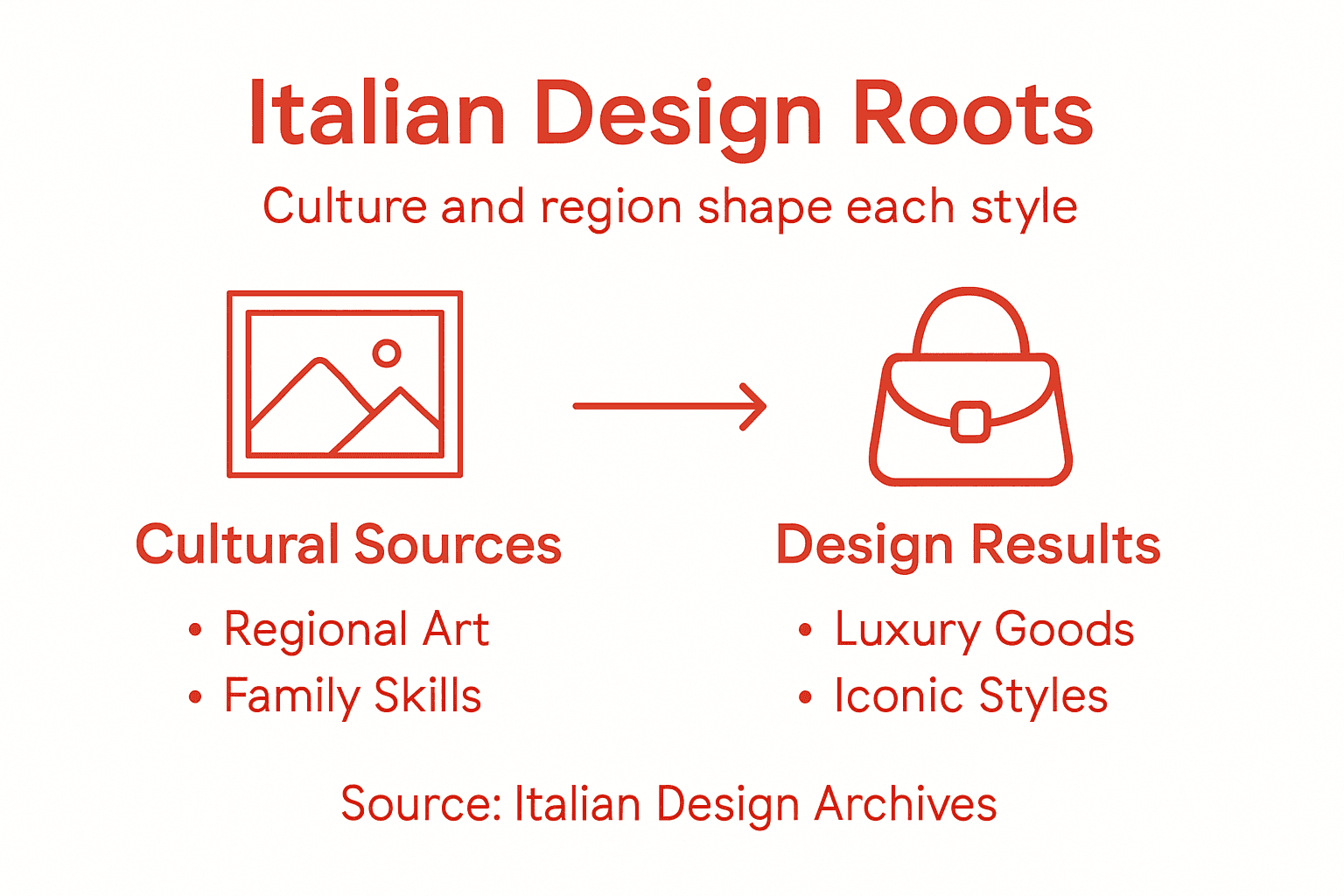
Pro Tip: When appreciating Italian design, look beyond surface aesthetics and explore the rich cultural narrative embedded within each carefully crafted object.
Historic Movements Shaping Italian Aesthetics
Italian design history represents a vibrant tapestry of artistic and intellectual movements that dramatically reshaped aesthetic perspectives throughout the 20th century. Radical design approaches challenged conventional thinking, transforming design from a purely functional discipline into a profound cultural expression.
Several transformative movements fundamentally influenced Italian design aesthetics:
- Futurism: Embracing technological progress and dynamic energy
- Radical Design: Challenging traditional design paradigms
- Postmodernism: Rejecting modernist minimalism
- Memphis Group: Introducing playful, unconventional design languages
Futurism, emerging in the early 20th century, represented a revolutionary approach that celebrated mechanical innovation and rejected historical artistic traditions. Designers and artists associated with this movement sought to capture motion, speed, and technological dynamism through bold visual languages that deliberately disrupted established aesthetic norms.
Italian Radical Design of the 1960s emerged as a particularly influential movement, emphasising experimental approaches that integrated critical thinking into design processes. These designers viewed their work not merely as product creation, but as a form of social and cultural commentary, challenging existing design methodologies and consumer expectations.
Here is a comparison of how historic Italian design movements influenced global design values:
| Movement | Main Focus | Global Impact |
|---|---|---|
| Futurism | Dynamic innovation | Inspired modernist energy |
| Radical Design | Conceptual rethinking | Challenged design conventions |
| Postmodernism | Playful anti-minimalism | Fuelled expressive freedom |
| Memphis Group | Unconventional forms | Popularised vibrant styling |
Pro Tip: Explore design museums and archives to understand how these historic movements transformed Italian aesthetic thinking and continue to inspire contemporary designers.
Key Characteristics of Italian Luxury Craftsmanship
Italian luxury craftsmanship represents a sophisticated blend of cultural heritage, technological innovation, and unparalleled artisanal expertise. This extraordinary approach transforms luxury products from mere objects into profound expressions of national identity and creative excellence.
The core characteristics of Italian luxury craftsmanship include:
- Precision: Meticulous attention to minute details
- Heritage: Deep-rooted traditional techniques
- Innovation: Seamless integration of modern technologies
- Sustainability: Commitment to responsible material selection
- Emotional Storytelling: Creating products with cultural significance
At the heart of Italian craftsmanship lies an unwavering commitment to quality that transcends generations. Artisans carefully select premium materials, applying generations of accumulated knowledge to transform raw resources into extraordinary pieces that reflect both technical mastery and artistic vision.
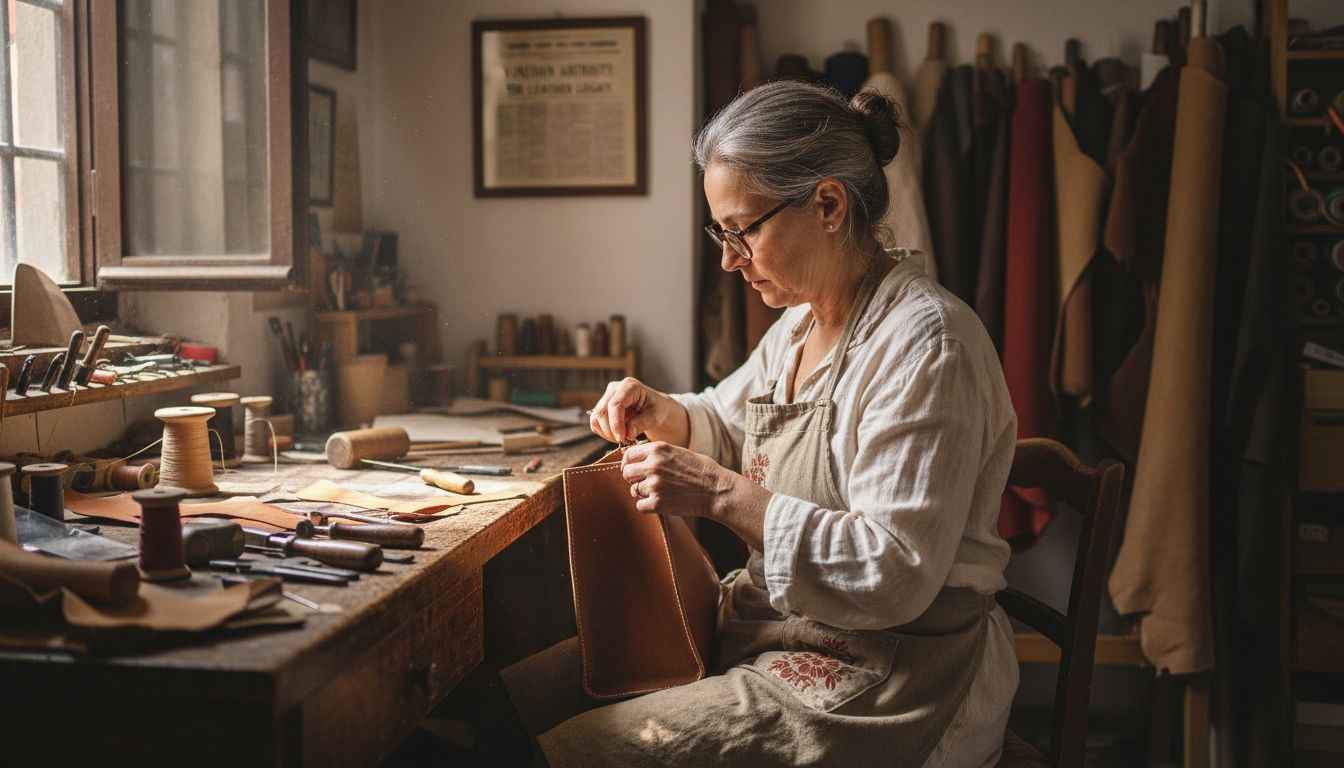
The emotional dimension distinguishes Italian luxury from mere product manufacturing. Each creation tells a story, capturing cultural nuances and personal narratives through exceptional design and immaculate construction. These items are not simply accessories or objects, but living representations of Italian cultural sophistication.
Pro Tip: Examine the stitching, material texture, and finishing details to truly appreciate the depth of Italian luxury craftsmanship.
Artisanal Techniques and Their Cultural Origins
Traditional artisanal techniques represent a profound connection between cultural heritage and contemporary design innovation. These time-honoured methods transform raw materials into extraordinary expressions of creativity, carrying generations of knowledge and regional identity.
Key regional artisanal techniques include:
- Leather Crafting: Tuscany’s renowned tanning traditions
- Ceramics: Sophisticated techniques from Umbria and Sicily
- Textile Production: Intricate weaving methods from Lombardy
- Metalworking: Precision engineering from Northern Italian workshops
- Woodcarving: Delicate sculptural traditions from Alpine regions
Each technique embodies a unique narrative of cultural transmission, where skills passed through generations maintain their authenticity while adapting to contemporary design challenges. Artisans carefully balance preservation of traditional methods with innovative approaches, ensuring that cultural heritage remains dynamic and relevant.
The profound depth of these techniques extends beyond mere manufacturing. Artisanal fashion skills represent living cultural archives, where every stitch, curve, and finish communicates a rich story of regional identity, familial knowledge, and artistic expression.
The table below maps notable Italian regions to their renowned artisanal techniques and cultural influences:
| Region | Key Artisanal Technique | Unique Cultural Influence |
|---|---|---|
| Tuscany | Leather crafting | Renaissance legacy |
| Umbria | Ceramics | Spiritual and artistic heritage |
| Lombardy | Textile weaving | Industrial innovation traditions |
| Alpine | Woodcarving | Folk artistic expression |
Pro Tip: Observe the subtle variations in craftsmanship across different Italian regions to appreciate the nuanced cultural diversity embedded in traditional techniques.
Modern Trends: Tradition Meets Innovation
Modern Italian design represents a profound dialogue between heritage and contemporary innovation, where cultural roots inform cutting-edge creativity. This dynamic approach transforms design from a mere aesthetic practice into a sophisticated cultural dialogue that respects tradition while boldly embracing future possibilities.
Key contemporary design trends include:
- Sustainable Materials: Environmentally conscious production methods
- Digital Integration: Advanced technological approaches
- Cultural Storytelling: Design as narrative experience
- Research-Driven Innovation: Evidence-based design strategies
- Social Responsibility: Design addressing societal challenges
The contemporary Italian design philosophy transcends traditional boundaries, viewing innovation not as a replacement for heritage, but as an evolutionary extension. Designers carefully weave technological advancements with time-honoured craftsmanship, creating products that are simultaneously rooted in history and forward-looking.
Design innovation now encompasses broader considerations beyond aesthetic and functional parameters. Modern Italian designers approach their craft as a holistic practice, embedding social, environmental, and cultural narratives within each creation, ensuring that design remains a powerful medium for expressing contemporary experiences.
Pro Tip: Observe how contemporary Italian designers blend technological innovation with cultural storytelling to create truly meaningful design experiences.
Risks of Imitation and Common Misconceptions
Italian design misconceptions extend far beyond surface-level misunderstandings, representing profound challenges to the cultural authenticity and intrinsic value of design heritage. Imitations risk reducing complex cultural expressions to mere aesthetic commodities, stripping away the rich narrative and emotional depth inherent in genuine craftsmanship.
Common misconceptions about Italian design include:
- Superficial Beauty: Focusing on appearance over substance
- Mass Production: Confusing artisanal craft with industrial manufacturing
- Historical Stereotyping: Reducing design to romantic, nostalgic imagery
- Technical Simplification: Overlooking intricate design processes
- Cultural Misrepresentation: Extracting design from its contextual roots
The most significant risk lies in disconnecting design from its cultural narrative. Genuine Italian design is not merely about creating beautiful objects, but about communicating complex stories of heritage, innovation, and human creativity. Imitations that replicate form without understanding context fundamentally misrepresent the profound intellectual and emotional labour embedded in each piece.
Authentic Italian design transcends visual mimicry, representing a sophisticated dialogue between tradition and contemporary expression. True appreciation requires understanding the nuanced cultural, technological, and emotional dimensions that transform design from a product into a living cultural artefact.
Pro Tip: Learn the historical and cultural context behind design pieces to distinguish authentic craftsmanship from superficial imitations.
Discover Authentic Italian Craftsmanship That Tells a Story
The challenge many face when seeking luxury accessories today is distinguishing genuine artisan craftsmanship from superficial beauty. As highlighted in the article, Italian design is deeply rooted in cultural heritage, emotional storytelling, and meticulous artisanal techniques that cannot be replicated through mass production or imitation. At San Rocco Italia, we understand these values and bring you a curated collection of luxury handbags and accessories that celebrate precision, tradition, and innovation.

Experience the timeless impact of Italian design first hand by exploring our selection, where every piece is proudly crafted in Italy by skilled artisans using premium full-grain leather and traditional methods. Embrace the rich cultural narrative embedded in each creation and own a product that transcends mere fashion. Visit San Rocco Italia to shop authentic Italian leather goods today and bring home the true essence of Italian luxury craftsmanship. Start your journey now and transform your style with pieces that tell a profound cultural story.
Frequently Asked Questions
What are the key characteristics of Italian luxury craftsmanship?
Italian luxury craftsmanship is characterised by precision, heritage, innovation, sustainability, and emotional storytelling. These elements combine to elevate products beyond mere objects into expressions of national identity and creative excellence.
How do historical movements influence modern Italian design?
Historical movements like Futurism and Radical Design have shaped modern Italian design by challenging conventional aesthetics and introducing innovative thinking. This continues to influence contemporary designers’ approaches, integrating cultural narratives into their work.
What role does emotional expression play in Italian design?
Emotional expression is crucial in Italian design as it seeks to evoke feelings and connections through products. Designers aim to create items that resonate with users on a deeper level, transforming everyday objects into extraordinary experiences.
How can one appreciate the depth of Italian design and craftsmanship?
To appreciate Italian design and craftsmanship, examine the details such as stitching and material quality, and understand the cultural narratives and historical context behind the piece. This holistic perspective reveals the intricate relationship between design and cultural heritage.
Recommended
- Best 6 Italian Handbags 2025 – Expert Comparison – San Rocco Italia
- The Influence of Italian Design on Global Fashion Trends – San Rocco Italia
- Italian Home Décor Trends: Complete Guide to Style – San Rocco Italia
- Understanding Why Choose Made in Italy for Quality Style – San Rocco Italia
- Lã Italiana: Elegância e Durabilidade na Alfaiataria – Bellucci
