


Traditional Italian Artisans – Why Craftsmanship Matters
Selecting a handbag that truly reflects your values can be a challenge when mass production often sacrifices tradition for convenience. For women who cherish both ethical luxury and enduring style, the story behind every handcrafted piece is just as important as its appearance. Discover how Italian artisans blend generations of skill with modern sensibilities to produce timeless leather craftsmanship rooted in regional heritage, meticulous technique, and a deep respect for sustainable practice.
Table of Contents
- Traditional Italian Artisans Defined and Debunked
- Distinct Artisanal Techniques and Regional Styles
- Full-Grain Leather Craftsmanship Explained
- Ethical Production, Sustainability and Innovation
- Risks of Counterfeits and Choosing Authenticity
Key Takeaways
| Point | Details |
|---|---|
| Cultural Heritage | Traditional Italian artisans embody complex cultural narratives, showcasing generational knowledge and sophisticated skills that transcend mere craftsmanship. |
| Balancing Tradition and Innovation | Contemporary artisans must integrate modern production techniques while preserving the essence of their traditional crafts. |
| Sustainability and Ethics | Italian artisanal practices increasingly focus on sustainable methods, local sourcing, and minimising environmental impacts while maintaining quality. |
| Authenticity Matters | Consumers should seek detailed provenance and authenticity markers to ensure they support genuine craftsmanship and cultural heritage. |
Traditional Italian Artisans Defined and Debunked
Traditional Italian artisans represent far more than simple craftspeople - they are living repositories of cultural heritage and sophisticated skill. Historical research challenges common perceptions about artisans as mere laborers, revealing their complex social and economic significance.
These skilled professionals operate within a nuanced ecosystem that balances ancient techniques with contemporary market demands. Their craft involves several critical characteristics:
- Generational knowledge transmission
- Meticulous attention to detail
- Deep understanding of material properties
- Commitment to manual production techniques
- Preservation of regional cultural traditions
Modern Italian artisans face significant challenges in maintaining their craft. Sustainability research highlights the delicate balance between preserving traditional methods and adapting to technological innovations. Contemporary artisans must strategically integrate new materials and production approaches while retaining the essence of their cultural craftsmanship.
Unlike mass production environments, Italian artisan workshops prioritise quality over quantity. Each piece represents a narrative of skill, cultural identity, and personal dedication. The artisan doesn’t merely create an object - they breathe life into materials through generations of accumulated wisdom.
Pro-tip: When purchasing artisan-crafted items, ask about the specific techniques and family history behind the piece to truly appreciate its unique value.
Distinct Artisanal Techniques and Regional Styles
Italian artisanal craftsmanship represents an intricate tapestry of regional techniques, each area developing unique methodologies that reflect local cultural and economic landscapes. Central Italian craft production reveals remarkable territorial diversity, demonstrating how geographical context profoundly shapes artisanal traditions.
The regional variations in craftsmanship are particularly evident in several key domains:
- Wood carving techniques specific to mountain regions
- Leather working methods unique to Tuscan workshops
- Textile production styles characteristic of northern territories
- Metal fabrication approaches developed in industrial districts
- Ceramic crafting traditions tied to specific provincial landscapes
Historical Context and Technological Evolution
Panel-making techniques in central Italy exemplify how artisanal practices evolved through complex interactions between economic conditions, climatic influences, and cultural traditions. These techniques were not static but dynamically adapted to changing market demands and technological innovations.
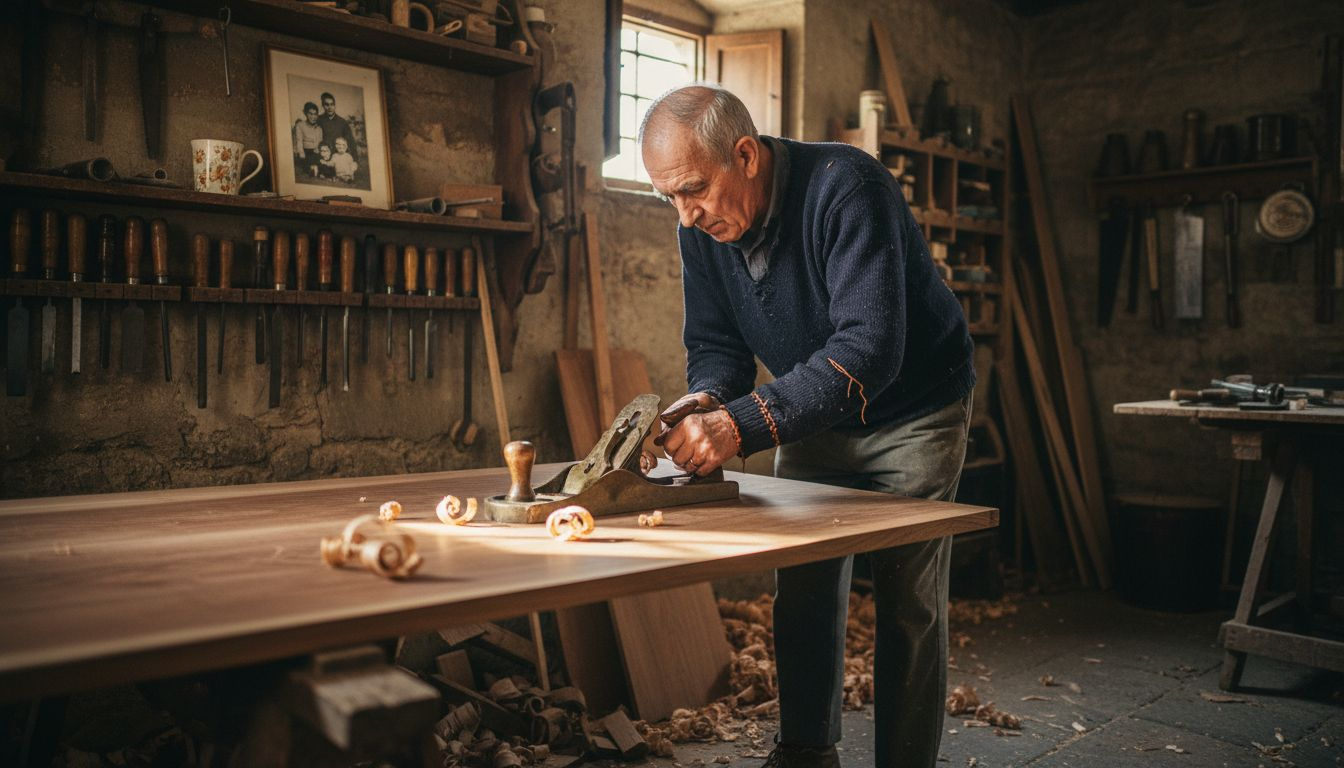
Each regional style represents more than mere technical proficiency - it embodies a profound narrative of local identity, familial knowledge, and generational skill transmission. The nuanced differences between Venetian glassmaking and Sicilian ceramics, for instance, reflect deeply rooted cultural expressions that transcend simple manufacturing processes.
Here’s how key Italian regional crafts compare:
| Region | Signature Craft | Distinctive Approach | Cultural Importance |
|---|---|---|---|
| Tuscany | Fine leatherworking | Vegetable-tanned, hand-dyed | Family-linked, known globally |
| Veneto | Artistic glassmaking | Hand-blown, elaborate designs | Venetian identity symbol |
| Sicily | Decorative ceramics | Bright colours, intricate patterns | Reflects island festivals |
| Lombardy | Textile weaving | Silk blends, artisanal looms | Tied to Milan fashion heritage |
| Umbria | Wood carving | Local woods, ornate motifs | Preserves rural traditions |
Pro-tip: When exploring Italian artisanal products, examine the subtle regional details that reveal the unique story behind each crafted piece.
Full-Grain Leather Craftsmanship Explained
Full-grain leather represents the pinnacle of artisanal leather production, embodying a rich tradition of meticulous craftsmanship that transforms raw material into extraordinary objects. Traditional leather craftsmanship in Italian fashion reveals a complex interplay between historical techniques and contemporary design sensibilities.
The characteristics that distinguish full-grain leather craftsmanship include:
- Preservation of the leather’s entire natural grain surface
- Minimal processing to maintain original texture and strength
- Careful selection of premium animal hides
- Precision cutting and stitching techniques
- Advanced treatment processes that enhance durability
Artisanal Techniques and Skill Transmission
Leather crafting requires intricate knowledge and expert skills, passed down through generations of artisan workshops. The process involves multiple sophisticated stages, each demanding extraordinary precision and understanding of material properties. Skilled craftspeople must assess hide quality, understand grain patterns, and execute complex techniques that transform raw leather into refined products.
Beyond technical mastery, full-grain leather craftsmanship represents a profound cultural narrative. Each piece tells a story of regional expertise, familial knowledge, and an uncompromising commitment to quality that transcends mere manufacturing. The nuanced approach of Italian leather artisans transforms a simple material into an expression of cultural heritage and aesthetic excellence.
Pro-tip: When selecting full-grain leather items, examine the leather’s natural grain and subtle imperfections that demonstrate authentic handcrafted quality.
Ethical Production, Sustainability and Innovation
Italian artisanal craftsmanship stands at the forefront of a profound transformation, where traditional practices intersect with contemporary ethical and environmental considerations. Sustainable approaches are reshaping European craft production, challenging artisans to balance heritage preservation with innovative ecological practices.
Key strategies for ethical and sustainable artisanal production include:
- Local sourcing of raw materials
- Minimising carbon footprint through efficient production
- Implementing circular economy principles
- Prioritising long-lasting, repairable product design
- Reducing waste through precise crafting techniques
- Investing in eco-friendly material alternatives
Innovative Production Models
Craftsmanship increasingly integrates sustainable industrial practices, demonstrating that traditional skills can coexist with modern environmental responsibility. Contemporary artisans are not merely preserving techniques but actively reimagining them through technological innovation, digital tools, and environmentally conscious approaches.
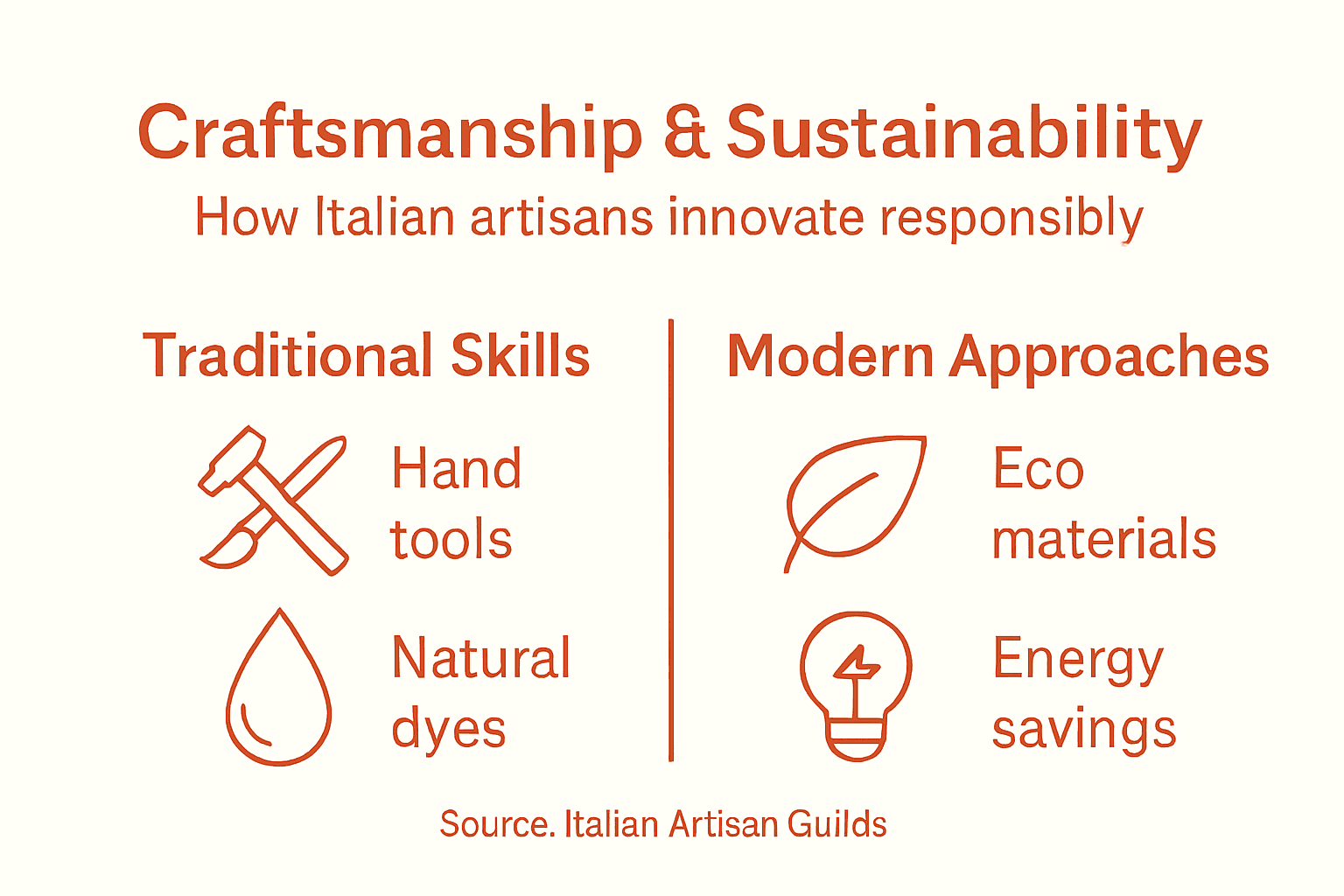
The transformation goes beyond production methods. It represents a philosophical shift where artisans become stewards of cultural heritage and environmental sustainability, creating products that honour traditional craftsmanship while meeting the ethical expectations of modern consumers.
Pro-tip: When selecting artisan-crafted items, investigate the maker’s commitment to sustainable and ethical production practices.
The table below summarises how artisanal techniques balance tradition with modern demands:
| Challenge | Traditional Response | Modern Adaptation |
|---|---|---|
| Resource sourcing | Use of local materials | Ethical, eco-certified suppliers |
| Production methods | Manual, time-intensive | Selective mechanisation |
| Market changes | Slow, bespoke creation | Limited edition runs |
| Skill preservation | Generational teaching | Digital masterclasses |
| Environmental impact | Minimal waste focus | Circular economy initiatives |
Risks of Counterfeits and Choosing Authenticity
Counterfeit artisan products represent a profound threat to traditional craftsmanship, undermining both economic sustainability and cultural heritage. Intellectual property frameworks protect artisanal traditions by safeguarding the unique characteristics of authentic handcrafted goods.
Critical indicators to identify authentic artisan products include:
- Detailed provenance documentation
- Unique maker’s marks or signatures
- Traceable material sourcing
- Consistent craftsmanship quality
- Transparent production processes
- Individually numbered or certified items
Cultural and Economic Implications
Traditional craft heritage faces significant risks from counterfeits, which not only exploit artisan skills but also diminish the economic viability of genuine craftsmanship. Counterfeit products create a complex ecosystem of deception that threatens entire artisan communities, eroding generations of accumulated skill and cultural knowledge.
Authentic artisan products are more than mere objects - they represent living cultural narratives, embodying generations of skill, regional identity, and artistic expression. By consciously choosing genuine handcrafted items, consumers become active participants in preserving cultural heritage and supporting sustainable artisan economies.
Pro-tip: Always request detailed provenance information and verify the artisan’s background before purchasing handcrafted items.
Experience Authentic Italian Craftsmanship with San Rocco Italia
The article highlights how traditional Italian artisans face the challenge of preserving their cultural heritage while adapting to modern demands. You value pieces that tell a story of genuine skill, full-grain leather expertise, and ethical production but worry about counterfeits and loss of authenticity. At San Rocco Italia, we share your passion for timeless design created through trusted artisan methods that honour generations of craftsmanship.
Every luxury handbag and leather good in our collection is proudly handmade in Italy using premium full-grain leather and traditional techniques. Discover how our carefully curated accessories and home décor embody the cultural richness described in the article by visiting our boutique collection.

Indulge in authentic artisan quality that transcends mass production. Explore our exquisite selection today at San Rocco Italia. Support craftsmanship that preserves tradition and embraces sustainability for a lasting legacy you can cherish.
Frequently Asked Questions
What defines traditional Italian craftsmanship?
Traditional Italian craftsmanship is characterised by meticulous attention to detail, the preservation of cultural traditions, and the transmission of generational knowledge. Artisans combine ancient techniques with contemporary demands to create unique, high-quality goods.
How can I assess the authenticity of artisan-crafted items?
To determine the authenticity of artisan-crafted products, look for details such as provenance documentation, unique maker’s marks, traceable material sourcing, and consistent craftsmanship quality. Authentic items often come with certificates or are individually numbered.
What are the benefits of choosing full-grain leather over other types?
Full-grain leather is prized for its durability and natural beauty, maintaining the leather’s entire natural grain surface. It undergoes minimal processing, preserving its strength and texture, which ensures that each piece is unique and high-quality.
How do traditional artisans balance sustainability with craftsmanship?
Traditional artisans are increasingly integrating sustainable practices by sourcing local materials, minimising carbon footprints, and prioritising long-lasting designs. This approach allows them to preserve their heritage while meeting the ethical expectations of modern consumers.
Recommended
- What Is Italian Craftsmanship? Complete Guide – San Rocco Italia
- Understanding Why Choose Made in Italy for Quality Style – San Rocco Italia
- Understanding Italian Handbag Craftsmanship Explained – San Rocco Italia
- Best 6 Italian Handbags 2025 – Expert Comparison – San Rocco Italia
- Why Personalize Your Watch: Expression, Value, Style – Ottoman Prieur
