


Discover aged natural leather: timeless elegance in handbags
You’ve likely admired a beautifully worn leather handbag and wondered what makes it so captivating. That distinctive character comes from aged natural leather, a material that transforms over time into something uniquely yours. Many people confuse leather types or misunderstand how ageing actually enhances quality rather than diminishes it. This article reveals the truth about aged natural leather in luxury handbags, exploring what makes full-grain vegetable-tanned leather exceptional, how the patina develops its signature beauty, and why Italian craftsmanship combined with proper care creates heirloom pieces that appreciate in character for decades.
Table of Contents
- Key takeaways
- What is aged natural leather and why does it matter?
- Full-grain versus top-grain: quality distinctions and durability
- Vegetable tanning versus chrome tanning: effects on ageing and eco impact
- Italian craftsmanship and care: ensuring heirloom handbag quality
- Explore timeless aged natural leather handbags
- Frequently asked questions about aged natural leather
Key Takeaways
| Point | Details |
|---|---|
| Full grain durability | Full grain vegetable tanned leather retains natural grain and the strongest fibres, delivering decades of longevity and rich patina. |
| Patina uniqueness | Your bag’s patina reflects how you use it, making each piece genuinely one of a kind. |
| Patina depth and character | The ageing process adds colour variations and lustre that cannot be matched by new leather. |
| Italian craftsmanship | Italian craftsmanship creates heirloom quality handbags that can mature in character over decades. |
| Care preserves ageing beauty | Proper care keeps the ageing beauty intact and prolongs the handbag’s life. |
What is aged natural leather and why does it matter?
Aged natural leather represents the pinnacle of leather artistry. Aged natural leather refers to full-grain vegetable-tanned leather that develops a rich patina over time through natural ageing. This isn’t simply old leather. It’s a living material that responds to your touch, the oils from your hands, sunlight exposure, and environmental conditions, creating a one-of-a-kind surface that tells your story.
The ageing process involves several natural phenomena working together. Oxidation occurs as the leather interacts with air, gradually deepening its colour. Natural oils from your hands migrate into the leather’s surface, creating darker areas where you frequently touch the bag. UV exposure from sunlight adds warm honey tones to the leather. These elements combine to produce what collectors call patina, that coveted depth and lustre that makes vintage leather so desirable.
Full-grain leather differs fundamentally from top-grain in how it ages. Full-grain retains the hide’s complete natural surface, including all the fibres that provide strength and the natural grain patterns that create visual interest. Top-grain leather has its surface sanded down to remove imperfections, which also removes the densest, most durable fibres. This sanding process creates a uniform appearance but sacrifices the leather’s ability to develop a rich patina.
Full-grain leather contains the strongest fibres and natural oils that allow it to develop character over decades, whilst top-grain’s processed surface can only achieve subtle colour changes.
Why does patina matter so much to handbag connoisseurs? Three compelling reasons stand out:
- Uniqueness: Your bag’s patina reflects your specific usage patterns, making it genuinely one-of-a-kind
- Depth: Aged leather develops complex colour variations and lustre that new leather simply cannot match
- Personality: The leather becomes a visual record of your experiences, creating emotional connection and meaning
This transformation explains why experienced collectors often prefer leather aging patina italian handbags over pristine new pieces. The patina represents authenticity and quality that cannot be artificially replicated.
Full-grain versus top-grain: quality distinctions and durability
Understanding the structural differences between full-grain and top-grain leather reveals why one commands premium prices whilst the other offers more accessible luxury. Full-grain leather preserves every layer of the hide from the hair follicles down through the dense fibre network. Top-grain removes the outermost surface through sanding or buffing, then applies artificial grain patterns and protective coatings to create uniform appearance.
These structural differences create dramatic variations in performance and longevity:
| Characteristic | Full-grain leather | Top-grain leather |
|---|---|---|
| Surface treatment | Natural grain intact | Sanded and embossed |
| Thickness | 1.8-2.2mm typical | 1.2-1.6mm typical |
| Expected lifespan | 25-50+ years | 10-20 years |
| Patina development | Rich, deep, complex | Subtle, limited |
| Water resistance | Improves with age | Decreases over time |
| Repair potential | Excellent | Limited |
Full-grain retains natural grain, offering highest durability at 25-50+ years with rich patina, whilst top-grain is sanded for uniform appearance, lasting 10-20 years with subtle patina. This durability gap stems from fibre density. The outermost layer of hide contains the tightest, strongest fibres. Removing this layer through sanding weakens the entire structure.
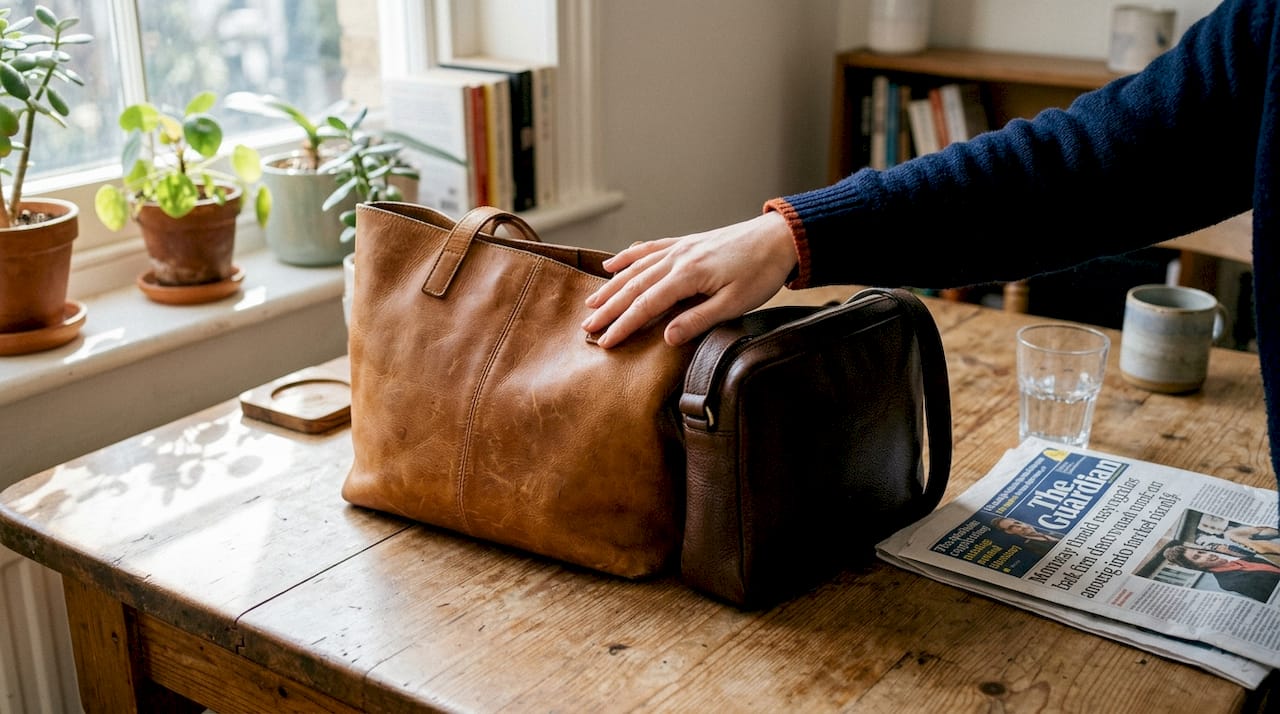
Pro Tip: When examining a handbag, look for natural grain texture with subtle variations and occasional markings. Perfect uniformity often indicates top-grain leather with artificial embossing, whilst authentic full-grain shows nature’s irregularities.
The ageing potential difference becomes particularly evident after five years of use. Full-grain develops increasingly rich colour depth, with high-touch areas like handles and corners showing darker, glossier patina. The leather becomes more supple yet stronger as natural oils penetrate deeper. Top-grain handbags may show wear in the form of coating cracks or colour fading rather than the desirable patina effect.
Thickness matters more than many buyers realise. That extra half-millimetre in full-grain leather translates to significantly better structure retention. Your handbag maintains its shape rather than collapsing or wrinkling. The best leather for handbags balances thickness with suppleness, allowing elegant drape whilst providing lasting durability.
Consider the mathematics of investment. A quality full-grain handbag costing £800 that lasts 40 years costs £20 per year. A top-grain alternative at £300 lasting 12 years costs £25 per year, whilst delivering less satisfaction and requiring replacement. This calculation excludes the appreciation in character that makes aged full-grain increasingly valuable over time.
Vegetable tanning versus chrome tanning: effects on ageing and eco impact
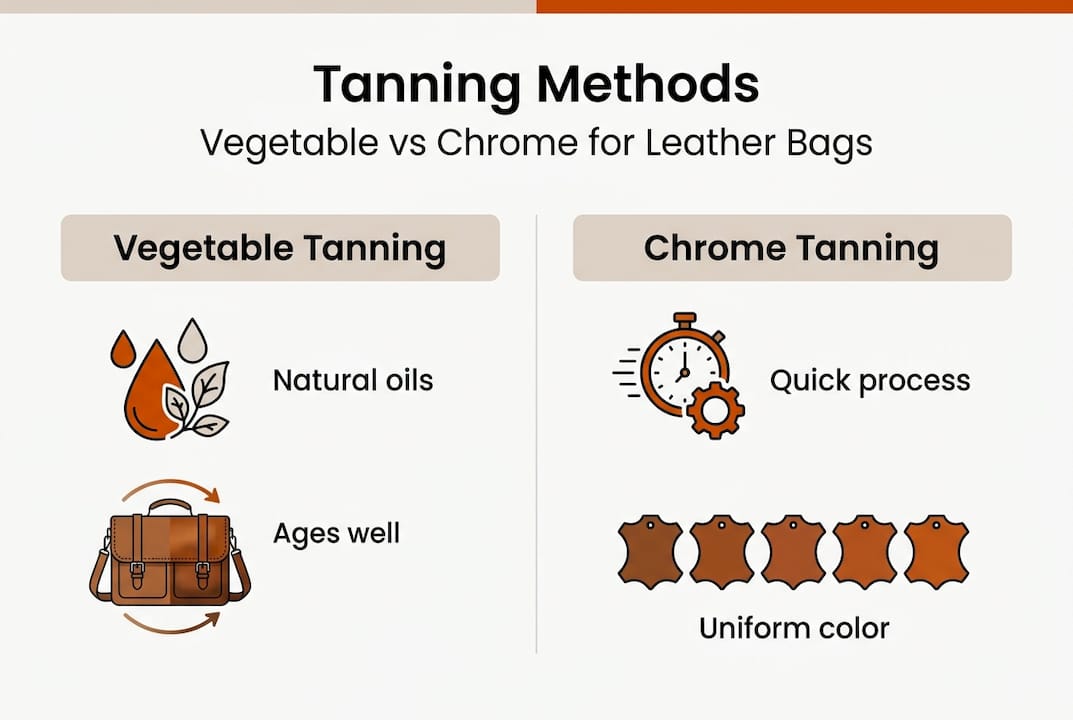
The tanning method fundamentally determines how your leather ages and its environmental footprint. Vegetable tanning represents humanity’s oldest leather preservation technique, using tannins extracted from tree bark, leaves, and other plant materials. This process requires patience, typically taking 30-60 days as the leather slowly absorbs natural tannins. Chrome tanning emerged in the 19th century, using chromium salts to tan leather in just 1-2 days.
Vegetable tanning creates leather that breathes, absorbs oils naturally, and develops that coveted patina. The tannins penetrate deeply into the hide’s structure, creating leather that becomes more beautiful as it ages. Chrome-tanned leather resists water and stains more effectively when new but develops minimal patina because the chromium salts create a barrier preventing natural oil absorption.
The environmental and aesthetic trade-offs become clear when examining the data:
| Factor | Vegetable tanning | Chrome tanning |
|---|---|---|
| Processing time | 30-60 days | 1-2 days |
| Environmental impact | Biodegradable, minimal toxins | Heavy metals, water pollution |
| Ageing appearance | Rich patina, deepening colour | Minimal change, potential cracking |
| Initial cost | Higher (£40-80/sq metre) | Lower (£15-30/sq metre) |
| Tactile quality | Firm, becomes supple | Soft initially, stays consistent |
| Colour options | Natural tan tones | Any colour possible |
Chrome tanning is faster at 1-2 days, producing softer leather with uniform colour but higher eco-impact, whilst vegetable tanning is biodegradable, ages better, takes longer, and costs more. This explains why authentic Italian artisanal handbags command premium prices. The tanning alone requires two months of careful monitoring.
Pro Tip: When shopping for high quality leather bags selection expert insights, ask specifically about vegetable tanning. Authentic vegetable-tanned leather has a distinctive natural scent, slightly waxy feel, and tan or cognac base colour before any dyeing.
The environmental considerations matter increasingly to conscious luxury consumers. Chrome tanning produces wastewater containing hexavalent chromium, a known carcinogen requiring expensive treatment. Many tanneries in developing countries discharge this directly into waterways, creating serious health hazards. Vegetable tanning produces biodegradable waste that can safely return to the environment.
Your choice of tanning method affects your handbag’s entire lifecycle. Vegetable-tanned leather can be composted at end of life, returning nutrients to soil. Chrome-tanned leather persists in landfills for decades, slowly releasing heavy metals. For buyers valuing sustainability alongside beauty, vegetable tanning represents the responsible choice.
The initial firmness of vegetable-tanned leather surprises some first-time buyers. This stiffness gradually yields to supple flexibility as you use the bag, creating a personalised fit. Chrome-tanned leather feels softer immediately but maintains consistent feel rather than adapting to you. This break-in period for vegetable-tanned pieces creates part of the bonding experience between owner and handbag.
Italian craftsmanship and care: ensuring heirloom handbag quality
Italian leather artisans have perfected their craft over centuries, developing techniques that maximise aged natural leather’s potential. These craftspeople understand how leather behaves, where to reinforce stress points, and how stitching patterns affect longevity. Their expertise transforms premium materials into handbags designed to serve multiple generations.
Traditional Italian construction methods include hand-stitching with waxed linen thread, edge painting with multiple layers of natural resins, and hardware attachment that distributes weight across reinforced areas rather than creating stress concentration. These details seem minor but prove crucial over decades of use. Machine stitching eventually works loose. Hand stitching with proper tension maintains integrity indefinitely.
Proper care amplifies your handbag’s natural ageing beauty whilst preventing damage. Follow these essential steps:
- Clean regularly with appropriate products: Use leather-specific cleaners designed for aniline or semi-aniline finishes, avoiding harsh soaps that strip natural oils
- Condition every 3-6 months: Apply leather conditioner containing natural oils and waxes to replenish moisture and enhance patina development
- Store properly between uses: Keep handbags stuffed with acid-free tissue in breathable cotton bags, never plastic, in cool dry locations away from direct sunlight
- Address spills immediately: Blot liquids with absorbent cloth, never rub, and allow natural air drying rather than applying heat
- Polish high-touch areas monthly: Buff handles and corners with soft cloth to distribute oils evenly and accelerate desirable patina formation
Pro Tip: Regular care doesn’t prevent patina; it enhances it by ensuring the leather remains healthy enough to age beautifully. Neglected leather becomes dry and cracks rather than developing rich colour depth.
Italian full-grain veg-tanned handbags last decades and develop personal patina, with brands like WaterField and Saddleback demonstrating 100-year warranty quality. These warranties aren’t marketing gimmicks. They reflect genuine confidence in construction methods and materials that improve rather than deteriorate over time.
Consider your handbag a living investment requiring minimal but consistent attention. The fifteen minutes spent conditioning quarterly pays dividends in preserved beauty and extended lifespan. Many owners find this care ritual meditative, an opportunity to appreciate their bag’s evolving character whilst maintaining its condition.
The relationship between owner and aged leather handbag deepens through this care routine. You become attuned to the leather’s needs, noticing when it feels dry or when the patina reaches particularly beautiful stages. This attention creates emotional connection that mass-produced accessories simply cannot match.
For detailed guidance on maintenance, explore resources on caring for leather handbags italian elegance, proper techniques for how to store leather handbags naturally, and selecting appropriate products through guides like leather polish bags preserve luxury style 2026. These resources help you develop the knowledge to maintain your investment properly.
Explore timeless aged natural leather handbags
Now that you understand what distinguishes exceptional aged natural leather, you’re ready to discover handbags embodying these qualities. San Rocco Italia specialises in Italian full-grain vegetable-tanned leather handbags crafted by skilled artisans using traditional techniques passed through generations. Each piece begins its journey with carefully selected hides and meticulous construction designed for decades of use.
Our collection features handcrafted handbags reflecting the timeless elegance and patina potential discussed throughout this article. We’re committed to offering only authentic artisanal leather goods that meet the exacting standards for quality, durability, and ageing beauty that discerning collectors demand. Every handbag represents an investment in lasting style that improves with time rather than following fleeting trends. Visit our website to explore pieces that will become treasured companions developing unique character alongside your own life story.
Frequently asked questions about aged natural leather
What factors affect the development speed of patina on leather?
Patina development speed depends primarily on usage frequency, natural oil exposure from your hands, sunlight levels, and humidity. Handbags used daily in sunny climates develop patina faster than occasionally used pieces stored in dark locations. The leather’s initial tannin content and thickness also influence how quickly visible changes appear, with vegetable-tanned full-grain showing changes within months whilst chrome-tanned leather may take years.
How to distinguish genuine full-grain vegetable-tanned leather from imitation?
Authentic full-grain vegetable-tanned leather displays natural grain variations, occasional markings from the animal’s life, and a distinctive earthy scent. Press your fingernail gently into the surface; genuine full-grain shows a temporary mark that disappears as oils redistribute. Imitations often feel uniformly textured, smell chemical or plastic-like, and show no response to pressure. The leather’s edges reveal truth as well; genuine full-grain shows fibrous structure whilst imitations display laminated layers.
Can aged natural leather be restored once damaged?
Minor damage like scratches and scuffs often buff out with leather conditioner and gentle rubbing, actually enhancing patina character. Professional leather restoration can address more serious issues including tears, deep gouges, and structural damage. However, prevention through proper care proves far easier than restoration. Severely neglected leather that has dried and cracked extensively may be beyond practical repair, emphasising the importance of regular conditioning.
How frequently should I condition my aged natural leather handbag?
Condition your handbag every three to six months under normal conditions, adjusting frequency based on climate and usage. Dry environments or frequent use may require monthly conditioning, whilst humid climates or occasional use extends intervals to six months. The leather itself provides cues; if it feels dry, looks dull, or shows fine surface cracks, condition immediately. Quality leather polish for handbags contains natural oils and waxes that penetrate deeply without creating surface buildup.
Are vegetable-tanned leather handbags more expensive and why?
Vegetable-tanned leather handbags typically cost 40-60% more than chrome-tanned alternatives due to longer processing time, premium hide selection, and specialised artisan skills required. The tanning alone takes 30-60 days versus 1-2 days for chrome tanning, tying up materials and facilities. Additionally, vegetable tanning requires higher-quality hides since imperfections cannot be hidden through sanding and coating. This investment delivers superior longevity, patina development, and environmental responsibility that justify the premium for buyers valuing authentic luxury.
