


Leather Ageing and Patina – The Allure of Timeless Handbags
Finding a handbag that grows more captivating with time is a pursuit many European women share. When it comes to handcrafted Italian leather, the journey from pristine to beautifully aged reveals true artistry. Understanding the distinct processes of leather ageing and patina is vital for appreciating how these luxurious pieces transform. You will discover how environmental influences and careful use combine to create a unique story for every bag, elevating both its elegance and your investment in sustainable luxury.
Table of Contents
- Leather Ageing And Patina Defined Clearly
- Types Of Leather And Patina Development
- Natural Factors Shaping Leather’s Patina
- Caring For Aged Leather Handbags At Home
Key Takeaways
| Point | Details |
|---|---|
| Understanding Ageing and Patina | Leather ageing refers to the natural softening and darkening of leather over time, while patina develops as a protective layer on the surface. Recognising this distinction is essential for investing in long-lasting handbags. |
| Influence of Leather Type | The type of leather significantly impacts patina development, with full-grain leather producing the most dramatic changes, especially when vegetable-tanned. Selecting the right leather is crucial for the desired aesthetic. |
| Environmental Factors | Natural elements like sunlight, moisture, and daily use play an important role in shaping leather’s patina. Regular use encourages the most beautiful transformation, enhancing both character and appearance. |
| Caring for Aged Handbags | Gentle cleaning and moderate conditioning are essential for maintaining aged leather without hindering its patina development. Thoughtful care helps preserve the leather’s unique narrative while preventing damage. |
Leather Ageing and Patina Defined Clearly
Leather ageing and patina are often used interchangeably, but they’re actually distinct processes that work together to create that coveted vintage aesthetic. Understanding the difference matters when you’re investing in a handbag meant to last decades.
Leather ageing is the natural darkening and softening that occurs as your leather handbag interacts with light, moisture, air, and daily use. Think of it as the leather’s biography—every mark, every crease tells a story of where you’ve carried it and what you’ve experienced together.
Patina is the protective layer that develops on the leather’s surface over time. It’s a subtle sheen or finish that emerges from oils, handling, and oxidation. The difference? Ageing changes the leather throughout; patina is the visible surface transformation.
Here’s what actually happens:
- Natural oils in full-grain leather rise to the surface and oxidise
- Exposure to sunlight causes gradual colour shifts—usually warming and deepening
- Moisture penetrates the leather, making it more supple and pliable
- Small scratches and scuffs blend together into an overall weathered look
- The leather develops character marks that are completely unique to your bag
The process varies dramatically depending on leather type. Vegetable tanned leather patina develops differently than chrome-tanned varieties—vegetable tanned tends to show richer, more dramatic colour shifts over months and years.
Your handbag’s patina isn’t damage—it’s proof of authenticity and careful use over time.
This is why luxury handbags actually become more beautiful as they age. A five-year-old Italian leather bag with visible patina often commands more admiration than a pristine new version. The patina proves the leather is genuine full-grain quality that responds to life being lived.
For women in Central Europe seeking investment pieces, recognising these natural processes is crucial. You’re not buying a bag that will look unchanged in a decade. You’re acquiring something that improves with age, like fine wine or quality furniture.
Pro tip: Don’t fear the first scratches and marks—they’re the beginning of your bag’s unique patina story, and they’ll disappear into the overall character within months of regular use.
Types of Leather and Patina Development
Not all leather ages the same way. The type of leather you choose fundamentally determines how your handbag will develop its patina over time. This is where understanding tanning methods and leather grades becomes genuinely useful for investment decisions.
Full-grain leather is the premium choice for patina development. It retains the leather’s natural surface, including all its characteristics—small marks, colour variations, everything. Because nothing masks the surface, patina develops visibly and beautifully. Every scratch becomes part of the narrative.
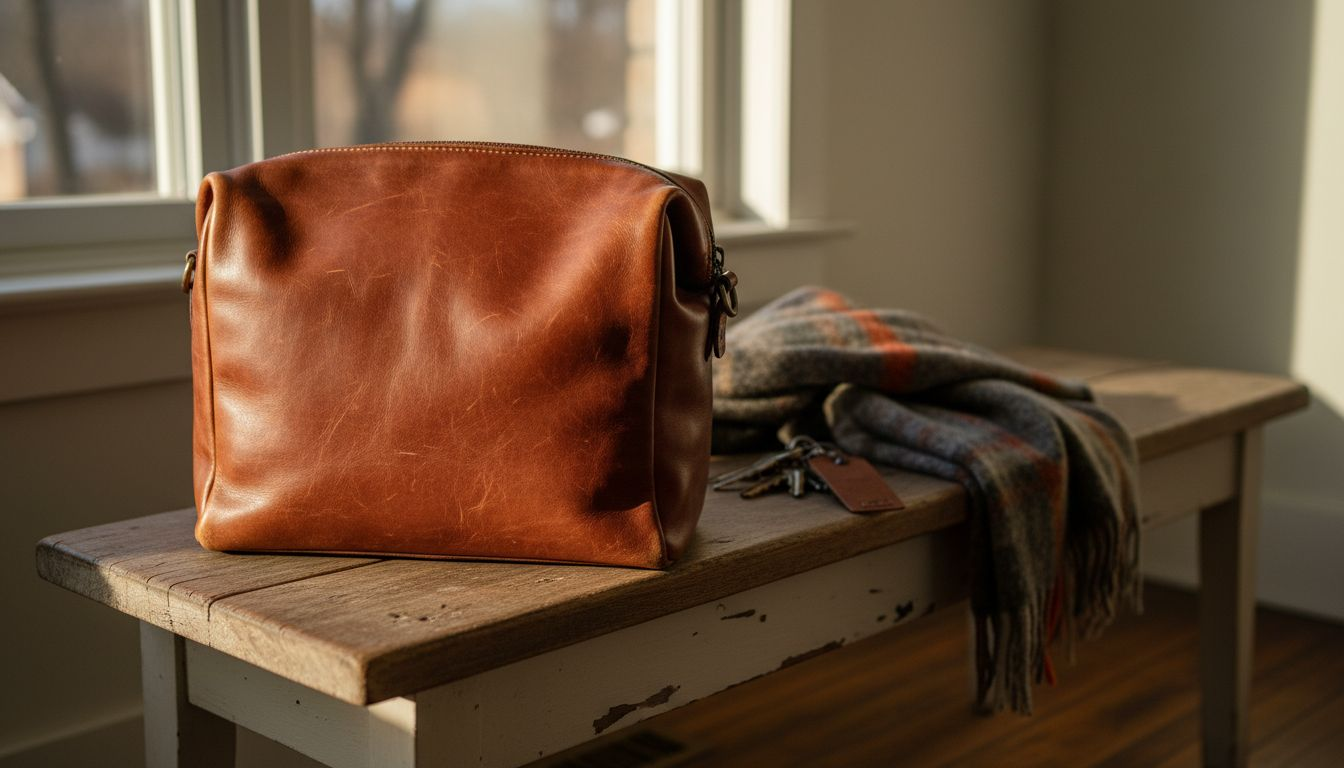
Top-grain leather has been lightly sanded to remove imperfections. It develops patina too, but slightly less dramatically than full-grain because some natural texture is lost during processing. Still, quality top-grain pieces age wonderfully.
Corrected-grain leather undergoes heavy processing where the surface is sanded down and artificial grain is applied. Leather patina development varies significantly based on tanning method—corrected-grain shows minimal patina because the processing removes the natural responsiveness that creates character.
Tanning method matters as much as leather grade:
- Vegetable-tanned leather: Develops rich, warm colour shifts and deepens dramatically over months and years. This is what creates those stunning honey and caramel tones you see in vintage Italian bags.
- Chrome-tanned leather: Ages more subtly with gentler colour changes. It’s more resistant to water damage but doesn’t develop the same depth of patina.
- Combination-tanned leather: Blends benefits of both methods for balanced ageing and durability.
You’ll notice that Italian artisanal makers typically favour vegetable-tanned leather because it responds beautifully to life being lived. Artisanal leather crafting techniques emphasise this responsiveness—the leather becomes a canvas for your experiences.
The best patina develops on leather that hasn’t been over-processed or overly protected with artificial finishes.
Dyeing also affects patina. Natural dyes create subtle, evolving colour shifts. Synthetic dyes can show colour fading or inconsistent ageing. This is why examining a bag’s provenance and production methods matters when you’re investing in something meant to last decades.
Pro tip: When shopping for a handbag meant to develop beautiful patina, ask whether it’s vegetable-tanned full-grain leather—this combination creates the most dramatic and visually rewarding ageing process.
Here’s a comparison of how different leather types and tanning methods influence patina development:
| Leather Type / Tanning Method | Patina Intensity | Typical Colour Change | Best Suited For |
|---|---|---|---|
| Full-grain, vegetable-tanned | Very dramatic | Rich honey tones | Collectors, vintage lovers |
| Top-grain, chrome-tanned | Moderate | Subtle, even fading | Everyday use, durability |
| Corrected-grain, synthetic-dyed | Minimal | Little visible change | High-traffic bags, casual users |
| Combination-tanned, natural dyes | Balanced | Warm, evolving shades | Balanced needs, investment pieces |
Natural Factors Shaping Leather’s Patina
Your handbag doesn’t age in isolation. It develops patina through a combination of environmental forces and daily interactions that work together over months and years. Understanding these natural factors helps you appreciate—and even encourage—the ageing process.
Sunlight exposure is perhaps the most visible force. UV rays gradually warm and deepen leather tones, creating those gorgeous honey and amber hues you see in well-loved vintage pieces. The effect isn’t uniform though. Areas exposed to more sun develop richer colour than those kept in shadow, adding natural variation and character.
Natural oils from your hands are your leather’s best friend. Every time you carry your bag, oils from your skin penetrate the surface, enriching the colour and creating a subtle sheen in the areas you handle most. This is why the handle of a five-year-old Italian leather bag often gleams while the back stays slightly less developed.
Moisture and humidity affect how leather fibres swell and contract. Environmental exposure and interaction with daily use transform the leather’s texture and deepens its colour naturally. Seasonal changes in your Central European climate—from dry winters to humid summers—contribute to this subtle but continuous transformation.
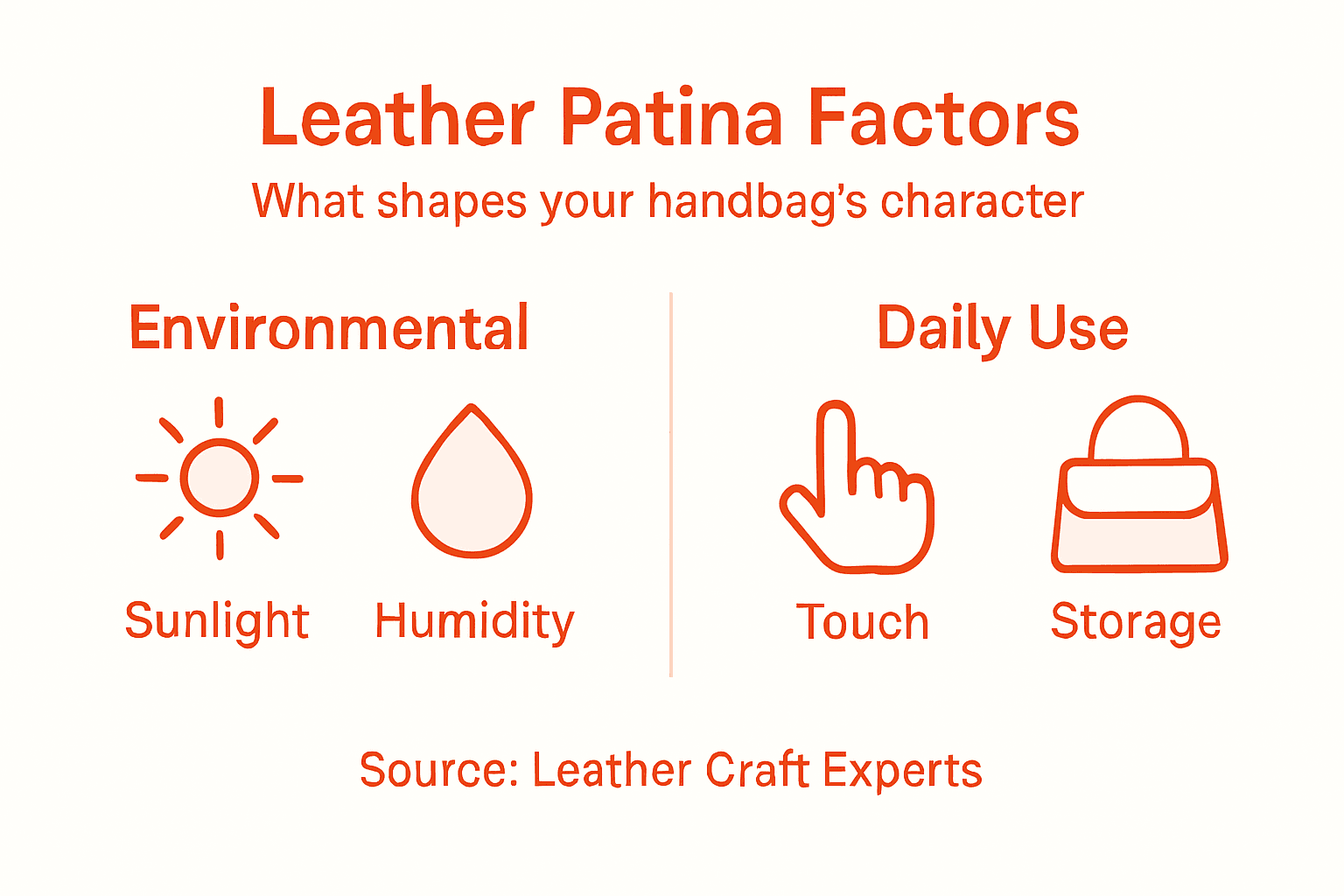
Friction from daily wear polishes the leather’s surface through constant contact. Edges of handles, corners, and areas where your bag rubs against clothing develop a beautiful burnished sheen. This isn’t damage; it’s the leather responding to being genuinely used.
Other natural forces at work:
- Oxidation gradually darkens and warms the leather’s tone
- Dust and environmental particles settle into the leather’s grain, adding subtle patina layers
- Temperature fluctuations cause minor expansions and contractions, influencing texture
- Air exposure naturally ages the leather over time
The combination of oils from human skin and environmental exposure creates unique patterns specific to your life. Your bag becomes a record of where you’ve been, what you’ve carried, and how you’ve lived.
The most beautiful patina develops when you use your leather bag regularly—not when it’s protected from life.
This is why those show-piece handbags stored in dust bags develop muted patina compared to bags carried daily. The leather needs interaction, exposure, and use to transform into something truly stunning.
Pro tip: Don’t fear environmental exposure—a handbag carried through sunshine, seasons, and daily adventures will develop far more character and beauty than one kept pristine indoors.
Caring for Aged Leather Handbags at Home
Aged leather requires thoughtful care, but not the kind that stops patina from developing. The goal is maintenance that preserves character whilst preventing genuine damage. Your Italian leather handbag will tell you what it needs if you know what to listen for.
Gentle cleaning is your first line of defence. Use a soft, dry cloth to remove dust and surface dirt regularly. Never use water directly on leather—instead, slightly dampen your cloth and wipe gently. This keeps the bag looking fresh without disrupting the natural patina you’ve spent years cultivating.
Conditioning nourishes aged leather and keeps it supple, but moderation matters enormously. Over-conditioning darkens leather and creates a plastic-like sheen that masks the authentic patina. Proper leather care for bags requires understanding your specific leather type and climate needs.
When conditioning becomes necessary:
- Use products specifically designed for full-grain or vegetable-tanned leather
- Apply sparingly—a little goes surprisingly far
- Test on an inconspicuous area first
- Condition only when leather feels noticeably dry or stiff
- Avoid conditioning more than 1-2 times yearly for most climates
Storage matters more than most people realise. Aged leather is more vulnerable to environmental extremes than new leather. Store your bag in a cool, dry place away from direct sunlight and heating vents. Avoid plastic bags, which trap moisture and encourage mould—use breathable cotton storage instead.
Stain management requires immediate but gentle action. Blot liquid spills instantly with a soft cloth; never rub. Let the leather dry naturally—not near heat sources. For stubborn stains, a barely damp cloth with mild soap works, but always test first on hidden areas.
Scratches and small scuffs are part of the story. Light surface scratches often fade naturally as leather oils redistribute. Deep gouges need professional repair, but don’t rush—many develop character with time.
Aged leather doesn’t need constant attention; it needs respect and occasional thoughtfulness.
Common mistakes to avoid include using harsh chemicals, over-conditioning, exposing leather to extreme heat or cold, and storing bags in plastic enclosures. These damage the leather’s ability to age beautifully.
Pro tip: Store aged leather handbags standing upright or gently stuffed with acid-free tissue to maintain their shape and allow air circulation, checking them seasonally for any signs of moisture or environmental stress.
Below is a summary of effective home care techniques for aged leather handbags:
| Care Practice | Purpose | Result |
|---|---|---|
| Gentle cleaning | Remove dust, prevent buildup | Maintains patina and freshness |
| Moderate conditioning | Nourish, restore suppleness | Prevents drying, preserves character |
| Proper storage | Avoid climate extremes | Retains shape, prevents mould |
| Swift stain response | Minimise long-term marks | Reduces permanent damage |
| Occasional inspection | Check for issues early | Ensures longevity and aesthetics |
Discover the Beauty of Ageing Italian Leather Handbags
Embracing the natural processes of leather ageing and patina allows you to own a handbag that gains character and charm over time. If you seek a timeless accessory crafted from premium full-grain leather and traditional Italian techniques, San Rocco Italia offers exquisite options that will develop their unique stories alongside you. Each piece is designed to age gracefully, with rich patinas that reflect your lifestyle and journeys.
Explore our collection today and invest in a handbag that grows more beautiful with every use. Experience true craftsmanship and capture the essence of authentic leather ageing by visiting San Rocco Italia. To understand why vegetable-tanned full-grain leather makes the best canvas for your bag’s patina, learn more about our artisanal leather crafting techniques and how we care for leather bags. Choose a handbag that tells your story and embraces the allure of timeless elegance now.
Frequently Asked Questions
What is the difference between leather ageing and patina?
Leather ageing refers to the natural darkening and softening of leather over time due to exposure to light, moisture, and daily use, while patina is the protective layer that forms on the leather’s surface, resulting in a subtle sheen from handling and oxidation.
How can I encourage the patina development on my leather handbag?
To encourage patina development, use your handbag regularly, expose it to natural light, and allow your skin’s natural oils to penetrate the leather. Avoid keeping it in storage for long periods.
What type of leather develops the best patina?
Full-grain leather, particularly vegetable-tanned leather, develops the most dramatic and visually appealing patina due to its natural surface characteristics, which allow for rich colour shifts over time.
How should I care for an aged leather handbag?
Care for an aged leather handbag by gently cleaning it with a soft cloth, conditioning it sparingly, storing it in a cool, dry place away from direct sunlight, and responding quickly to any stains to minimise damage.
Recommended
- How to Store Leather Handbags for Longevity and Care – San Rocco Italia
- How Long Do Leather Bags Last: Complete Guide – San Rocco Italia
- How to Clean Designer Purses for Timeless Elegance – San Rocco Italia
- How to Care for Leather Bags: A Complete Guide for Longevity – San Rocco Italia
- Geschenke nachhaltig verpacken: Kreative Ideen für 2025 – Herzensprojekt Manufaktur
