


Leather Goods NYC 2026: 95% Ethical Craftsmanship Guide
New York City’s luxury leather market attracts discerning women worldwide, yet many believe all Italian leather goods are fully handmade. In reality, only 30-40% of Italian leather production is fully handmade, with mechanization supporting many artisanal processes. This guide clarifies misconceptions and empowers you to select authentic, ethically sourced Italian leather goods in NYC boutiques, ensuring your investment delivers timeless value and exceptional craftsmanship.
Table of Contents
- Introduction To Luxury Leather Goods In NYC
- Understanding Italian Full-Grain Leather And Crafting Techniques
- Common Misconceptions About Leather Quality And Italian Craftsmanship
- Criteria To Evaluate Authentic Luxury Leather Goods From NYC Boutiques
- Caring For Your Timeless Italian Leather Goods
- Why Investing In Timeless Italian Leather Goods Matters
- Discover Authentic Italian Luxury Leather At San Rocco Italia
- Frequently Asked Questions
Key Takeaways
| Point | Details |
|---|---|
| NYC boutiques prioritize Italian-inspired luxury leather with artisanal quality and ethical sourcing | Traceability and sustainable practices define the city’s luxury leather market. |
| Full-grain vegetable-tanned leather offers superior durability and beautiful aging | This premium material choice ensures longevity and distinctive patina development. |
| Mechanization complements craftsmanship in most Italian leather production | Authentic handwork details remain visible despite efficiency tools. |
| Transparency on leather origin and tanning validates authenticity | Brand honesty about sourcing distinguishes genuine luxury from mass production. |
| Proper conditioning and storage extend leather lifespan beyond a decade | Regular care every 3-6 months preserves suppleness and prevents damage. |
Introduction to Luxury Leather Goods in NYC
New York City stands as a premier global destination where Italian artisanal leather craftsmanship meets the sophisticated demands of affluent international women. The city’s boutiques curate collections emphasizing heritage, exclusivity, and sustainable practices that resonate with buyers seeking traceable quality.
The luxury leather market in NYC has evolved dramatically. By 2025, 95% of NYC artisanal boutiques integrated traceability and sustainable tanning, responding to buyer demand for ethical sourcing. This transformation reflects a broader shift where luxury means more than aesthetics; it encompasses environmental responsibility and artisan welfare.
Several factors distinguish NYC’s luxury leather landscape:
- Italian craft influence defines boutique offerings through traditional techniques and premium materials
- Heritage storytelling connects each piece to centuries of artisanal tradition
- Exclusivity ensures limited production runs and unique design elements
- Sustainable practices from sourcing to finishing align with modern luxury values
- Transparent supply chains allow buyers to verify craftsmanship authenticity
These boutiques cater specifically to women who understand that what makes a handbag luxury extends beyond brand recognition. You seek pieces that tell stories, age beautifully, and reflect personal values about sustainability and craftsmanship. The city’s boutique owners respond by offering curated selections where each item meets rigorous standards for material quality, construction excellence, and ethical production.
Pro Tip: When visiting NYC leather boutiques, ask specific questions about tanning methods and artisan workshops. Reputable sellers enthusiastically share sourcing details and craftsperson backgrounds.
Understanding Italian Full-Grain Leather and Crafting Techniques
Full-grain leather represents the highest quality tier, preserving the hide’s natural grain with all its unique characteristics intact. This material choice ensures superior durability because the dense fiber structure remains undisturbed, unlike corrected or split leathers that undergo surface manipulation.
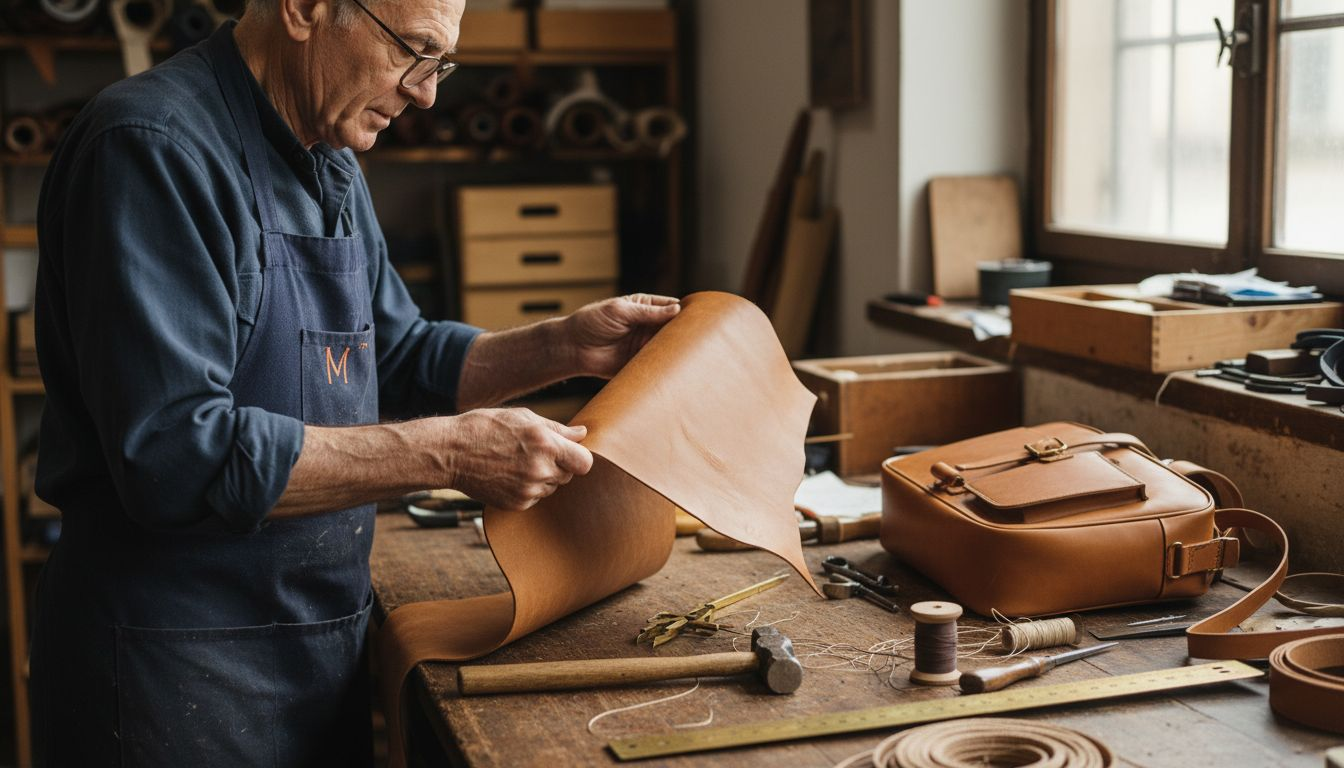
Vegetable tanning uses natural tannins from tree bark, creating leather that develops a rich patina over time. This eco-friendly process takes weeks compared to chemical tanning’s days, but the results justify the patience. Chemical tanning accelerates production using chromium salts, producing softer leather that lacks the environmental benefits and aging beauty of vegetable-tanned alternatives.
| Tanning Method | Duration | Environmental Impact | Aging Characteristics |
|---|---|---|---|
| Vegetable Tanning | 30-60 days | Low; uses natural tannins | Develops rich patina and character |
| Chemical Tanning | 1-2 days | Higher; uses chromium salts | Limited patina; may crack prematurely |
Authentic Italian craftsmanship involves distinct artisanal techniques:
- Hand-stitching using waxed linen thread creates stronger seams than machine stitching
- Precise cutting follows leather grain patterns to maximize strength and minimize waste
- Edge finishing involves hand-burnishing and waxing for smooth, polished borders
- Hardware attachment uses secure riveting and hand-set closures
- Final inspection ensures every stitch, fold, and finish meets exacting standards
Yet mechanization plays a supporting role in most production. Traditional leatherwork techniques often incorporate machinery for cutting precision or initial assembly, with artisans completing detailed handwork. This hybrid approach maintains quality while improving consistency.
Pro Tip: Examine stitching closely under good light. Hand-stitched leather shows slight irregularities in stitch tension and spacing, which actually indicate superior craftsmanship compared to machine perfection.
The distinction between Italian vs French leathercraft often centers on finishing philosophy. Italian artisans celebrate natural leather characteristics, while French traditions may emphasize refinement. Both approaches deliver exceptional quality when executed with integrity.
Common Misconceptions About Leather Quality and Italian Craftsmanship
Several persistent myths mislead buyers seeking authentic luxury leather goods. Understanding these misconceptions helps you make informed purchasing decisions based on facts rather than marketing narratives.
The most widespread myth claims all Italian leather goods are entirely handmade from start to finish. As noted earlier, only about 30-40% of Italian leather production is fully handmade, with mechanized processes supporting efficiency without sacrificing artisanal quality. Authentic pieces still display visible handcraft details in stitching, edge finishing, and assembly.
Another common misconception assumes all full-grain leather delivers equal quality regardless of origin or processing. In reality, leather quality varies dramatically based on:
- Hide selection and animal husbandry practices
- Tanning methods and chemical choices
- Artisan skill in cutting and construction
- Environmental conditions during production
- Quality control standards throughout manufacturing
Many buyers mistakenly view ethical sourcing as a luxury afterthought rather than a core value. Modern luxury consumers prioritize sustainability, with 95% of NYC artisanal boutiques emphasizing traceability and sustainable tanning by 2025. This shift reflects growing awareness that true luxury respects both craftsmanship and environmental responsibility.
Mass-produced corrected grain leather represents another area of confusion. Manufacturers sand away natural imperfections and emboss artificial grain patterns onto lower-quality hides. These products lack the durability and aging characteristics of genuine full-grain leather, yet deceptive marketing often obscures these differences.
Pro Tip: Request documentation about leather origin and tanning methods. Reputable boutiques provide transparency through certifications and artisan profiles, while evasive answers signal potential quality concerns.
Understanding what is Italian leather requires looking beyond geographic labels to examine actual material quality, craftsmanship techniques, and ethical sourcing practices.
Criteria to Evaluate Authentic Luxury Leather Goods from NYC Boutiques
Applying objective standards helps you verify authenticity and craftsmanship quality before making significant purchases. These criteria transform abstract luxury concepts into concrete evaluation points.
Follow this systematic approach:
- Verify leather origin through certifications documenting Italian sourcing and full-grain quality
- Examine stitching under magnification for hand-sewn irregularities indicating artisan work
- Assess brand transparency by requesting detailed sourcing and production information
- Evaluate design timelessness through classic silhouettes and versatile styling
- Confirm sustainability claims using third-party certifications and traceability documentation
- Test leather suppleness and weight as indicators of full-grain quality
| Evaluation Factor | What to Look For | Red Flags |
|---|---|---|
| Material Certification | Full-grain vegetable-tanned documentation | Vague origin claims or generic leather terms |
| Craftsmanship Markers | Visible hand-stitching and burnished edges | Perfect machine uniformity throughout |
| Brand Transparency | Detailed artisan and sourcing information | Reluctance to discuss production methods |
| Sustainability | Third-party certifications and traceability | Greenwashing language without proof |
The difference between Made in Italy vs Product of Italy significantly impacts authenticity. Made in Italy requires substantial manufacturing within the country, while Product of Italy may involve minimal Italian involvement. Understanding these distinctions protects you from misleading labels.
Brand honesty about sourcing practices has become essential, with 95% of NYC boutiques emphasizing transparency and sustainability. This commitment manifests through detailed origin stories, artisan profiles, and environmental impact disclosures.
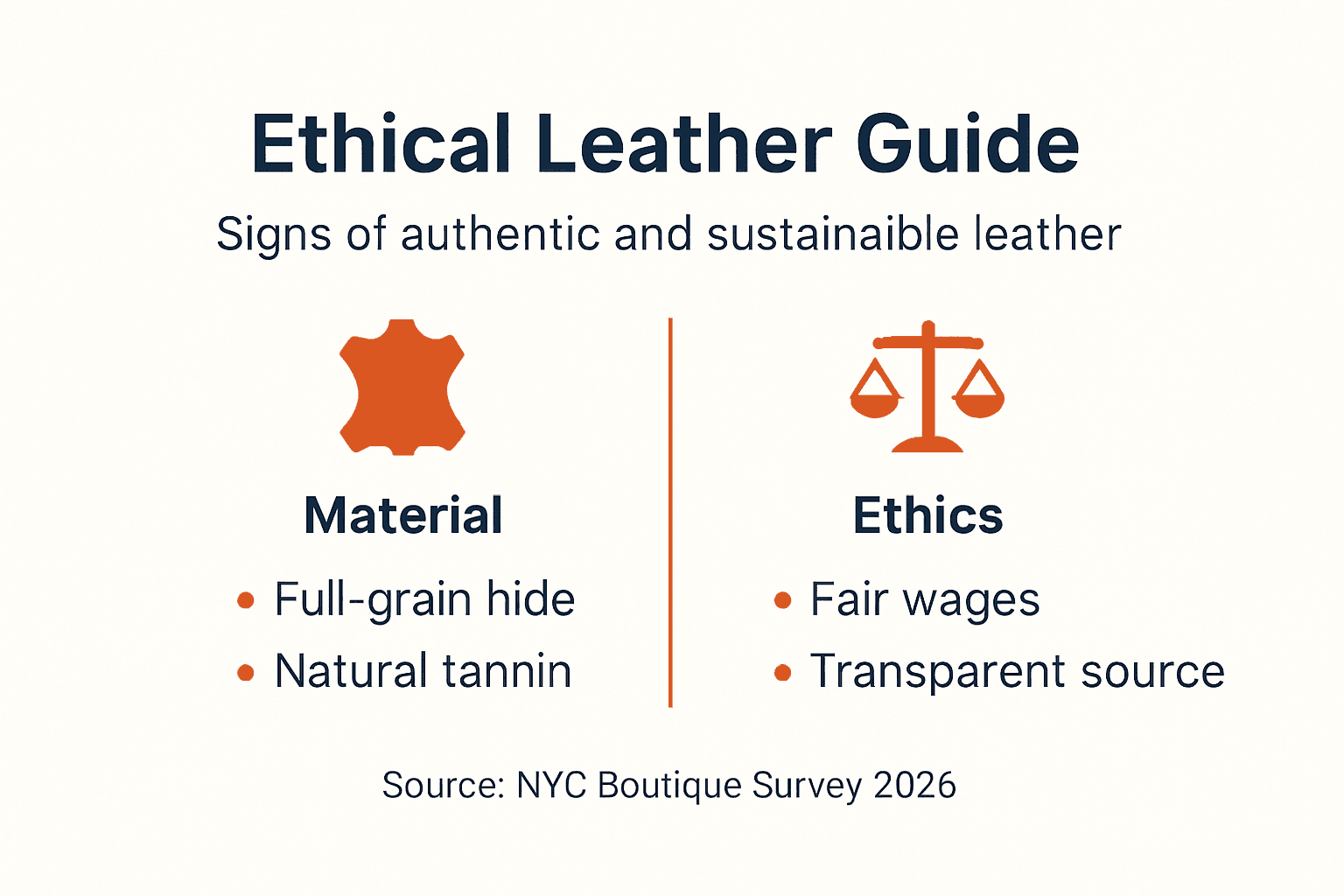
Look for transparency badges confirming ethical production. Resources like ethical leather certification examples demonstrate how legitimate certification validates sustainability claims.
Durability assessment involves examining construction quality beyond surface aesthetics. Check hardware attachment security, lining integrity, and structural reinforcement at stress points. These details determine whether your investment withstands daily use for decades.
Caring for Your Timeless Italian Leather Goods
Proper maintenance preserves your leather investment’s beauty and functionality far beyond initial purchase. Regular care prevents damage while enhancing the natural aging process that gives quality leather its distinctive character.
Conditioning represents the most critical maintenance task. Conditioning every 3-6 months can reduce leather dryness by up to 70%, preserving suppleness and preventing cracking. Apply conditioner sparingly using circular motions, allowing complete absorption before use.
Storage practices significantly impact leather longevity:
- Use breathable cotton dust bags rather than plastic that traps moisture
- Maintain shape with acid-free tissue stuffing for handbags
- Store in cool, dry locations away from direct sunlight and heat sources
- Avoid humid environments that encourage mold growth
- Keep leather items separated to prevent color transfer
Environmental extremes cause irreversible damage. Prolonged sun exposure fades color and dries leather, while excessive humidity promotes mold and structural weakening. Temperature fluctuations accelerate deterioration through expansion and contraction cycles.
Regular cleaning maintains appearance without harsh chemicals. Use slightly damp soft cloths for surface dust removal, addressing spills immediately with blotting rather than rubbing. Specialized leather cleaners handle stubborn stains, but always test products on inconspicuous areas first.
Pro Tip: Rotate handbag use seasonally to allow leather rest periods. This practice distributes wear evenly and extends overall lifespan while letting each piece breathe and recover its shape.
Detailed guidance on how to store leather handbags covers natural preservation methods using household materials. Additional insights from how to care for your leather purse address specific maintenance challenges.
Selecting appropriate products matters tremendously. Resources like best leather conditioners help you choose formulations matching your leather type and tanning method. Vegetable-tanned leather requires different care than chemically tanned alternatives.
Why Investing in Timeless Italian Leather Goods Matters
Authentic Italian leather goods represent more than fashion accessories; they embody cultural heritage, sustainable practices, and enduring value that transcends fleeting trends. Understanding these deeper benefits reinforces the wisdom of investing in quality craftsmanship.
Resale value retention distinguishes luxury Italian leather from mass-produced alternatives. Luxury Italian leather goods retain resale value better than mass-produced alternatives, with well-maintained pieces often selling for 40-60% of original retail price after years of use. This economic reality transforms purchases into investments rather than disposable consumption.
Heritage and craftsmanship confer significance beyond monetary value:
- Each piece connects you to centuries of Italian artisanal tradition
- Traditional techniques preserve cultural knowledge for future generations
- Supporting authentic craftsmanship sustains artisan communities and specialized skills
- Timeless design ensures relevance across changing fashion cycles
- Quality construction delivers functionality that improves with age
Ethical sourcing aligns luxury purchases with personal values about sustainability and responsibility. Modern consumers increasingly demand transparency, driving the industry shift toward traceable supply chains and environmental stewardship. Your purchasing choices influence market trends, encouraging broader adoption of sustainable practices.
“True luxury honors both the artisan’s hands that create beauty and the earth that provides materials. When you invest in authentic Italian leather crafted with integrity, you participate in preserving traditions while supporting sustainable futures.”
The history of Italian leather bags reveals how regional expertise developed over centuries, creating distinctive approaches to leatherwork. This heritage informs contemporary design while maintaining connection to traditional methods.
Timeless design ensures your investment maintains style relevance decades after purchase. Classic silhouettes and refined details transcend seasonal trends, making quality leather goods suitable for diverse occasions and evolving personal aesthetics. This versatility maximizes cost-per-wear calculations that justify premium pricing.
For comprehensive understanding, explore the complete Italian leather guide covering material selection, production methods, and quality indicators in depth.
Discover Authentic Italian Luxury Leather at San Rocco Italia
Your journey toward owning authentic Italian leather goods deserves expert guidance and curated selections that honor traditional craftsmanship. San Rocco Italia offers precisely this combination, connecting you with pieces embodying the quality standards and ethical values explored throughout this guide.
Explore collections where each handbag and accessory reflects genuine Italian artisanship, crafted from premium full-grain leather using time-honored techniques. Our woman-owned boutique prioritizes transparency, providing detailed sourcing information and artisan backgrounds that validate authenticity. Whether seeking personal indulgence or refined gifts for discerning recipients, you’ll find timeless designs meeting rigorous sustainability standards. Discover insights from our What Makes a Handbag Luxury guide, access expert leather purse care guidance, and verify Made in Italy authenticity information as you select pieces that align with your values and aesthetic vision.
Frequently Asked Questions
What are the key signs of authentic Italian full-grain leather?
Authentic full-grain leather displays natural grain patterns with slight variations and imperfections that prove the surface remains unaltered. Look for certifications documenting vegetable tanning and Italian origin, along with visible hand-stitching irregularities indicating artisan construction.
How often should I condition my Italian leather handbag?
Condition your handbag every 3-6 months using products specifically formulated for vegetable-tanned leather. Avoid over-conditioning, which saturates leather fibers and attracts dirt while compromising the material’s natural breathability.
Why is ethical sourcing important in luxury leather goods?
Ethical sourcing supports environmental sustainability through responsible tanning methods and transparent supply chains. It ensures traceability that validates craftsmanship claims while supporting artisan communities, directly influencing long-term value and consumer trust in luxury purchases.
What differentiates NYC boutiques in luxury leather offerings?
NYC boutiques combine access to authentic Italian artisanship with the city’s sophisticated luxury market expectations. They emphasize exclusivity, sustainability, and supply chain traceability at rates significantly higher than mass-market retailers, with 95% integration of ethical practices by 2025.
Recommended
- Italian vs. French Leathercraft: Complete Comparison Guide – San Rocco Italia
- Complete Guide to Artisan Leather Craftsmanship – San Rocco Italia
- Top Ethical Leather Bags – Expert Comparison 2025 – San Rocco Italia
- Artisanal Bag Making – The Craft Behind Ethical Luxury – San Rocco Italia
- Complete Guide to Fair Trade Women’s Clothing – WorkWearComfort
