


Artisanal Bag Making – The Craft Behind Ethical Luxury
Finding a handbag that truly reflects your values and aesthetic can feel unsatisfying when mass-produced options lack character or heritage. For affluent women in Central Europe who appreciate slow fashion, artisanal bag making offers more than exquisite style—it preserves skill, history, and environmental mindfulness. This article reveals how European artisans transform premium leather into sophisticated accessories, clarifies common misconceptions about craftsmanship, and highlights the qualities that set ethical luxury handbags apart.
Table of Contents
- Defining Artisanal Bag Making And Misconceptions
- Traditional Leatherworking Techniques Explained
- Materials Selection And Full-Grain Leather Quality
- Skilled Artisan Roles In Each Production Stage
- Challenges, Costs And Common Mistakes To Avoid
Key Takeaways
| Point | Details |
|---|---|
| Artisanal Versus Mass Production | Artisanal bag making focuses on handcrafted techniques, premium materials, and cultural significance, contrasting with the uniformity and lower quality of mass production. |
| Importance of Quality Materials | Full-grain leather is essential for durability and aesthetic appeal, showcasing the artisan’s skill in selecting superior hides. |
| Collaborative Craftsmanship | Each artisan plays a crucial role in the production process, ensuring that the final product reflects a blend of skills and traditional expertise. |
| Addressing Common Challenges | Artisans must manage material inconsistencies and production timelines while maintaining quality to avoid inferior products. |
Defining Artisanal Bag Making and Misconceptions
Artisanal bag making represents far more than a manufacturing process; it is a profound cultural expression deeply rooted in heritage, skill, and personal craftsmanship. Unlike mass production techniques, this specialised approach transforms leather into sophisticated accessories through meticulous hand techniques passed down through generations of European craftspeople.
Understanding artisanal bag making requires dispelling several prevalent misconceptions. Many people incorrectly assume that artisanal production is outdated or economically irrelevant. However, European crafts sector research demonstrates that these practices are dynamic, innovative systems balancing cultural authenticity with contemporary market demands.
Key characteristics of authentic artisanal bag making include:
- Handcrafted production using traditional techniques
- Premium full-grain leather selection
- Personalised design approaches
- Minimal environmental impact
- Preservation of generational craft knowledge
- Emphasis on quality over quantity
The artisan’s work goes beyond mere object creation; it represents a nuanced dialogue between material, maker, and cultural tradition. Each bag becomes a narrative object, carrying within its carefully stitched seams stories of skill, patience, and artistic integrity.
To clarify the differences between artisanal and mass-produced bag making, here is a side-by-side comparison:
| Aspect | Artisanal Bag Making | Mass-Produced Bag Making |
|---|---|---|
| Production Method | Manual, heritage techniques | Automated, industrial machines |
| Material Quality | Selects premium full-grain leather | Uses lower-cost, mixed materials |
| Uniqueness | Every bag is one of a kind | Products are nearly identical |
| Environmental Footprint | Minimal, small-batch processing | Larger, due to high output |
| Cultural Value | Strong link to tradition and craft | Little to no cultural context |
Pro tip: When evaluating an artisanal leather bag, examine the stitching, leather grain, and finishing details to understand the true craftsmanship behind the piece.
Traditional Leatherworking Techniques Explained
Traditional leatherworking represents a sophisticated art form that blends centuries of cultural expertise with intricate manual skills. European craftspeople have developed a remarkable repertoire of techniques that transform raw leather into exquisite, durable accessories through meticulous hand processes that honour generational knowledge.
The foundation of exceptional leather craftsmanship lies in time-tested techniques and cultural methods, which involve multiple precise stages of preparation and fabrication. These methods include complex processes such as:
- Natural vegetable tanning using plant-based extracts
- Hand-cutting leather with precision tools
- Saddle stitching for superior durability
- Detailed hand-tooling and engraving
- Carefully selected leather grain selection
- Traditional edge finishing techniques
Each technique requires extraordinary skill and patience. Craftspeople spend years perfecting their approach, understanding how different leather types respond to specific treatments, and developing an intuitive sense of material manipulation that mechanised processes cannot replicate.
Modern artisans continue to preserve these traditional techniques, recognising that true craftsmanship transcends mere production. Their work represents a delicate balance between honouring historical methods and meeting contemporary design expectations, creating leather goods that are both functionally superior and aesthetically remarkable.
Pro tip: When examining a high-quality leather accessory, look for consistent, tight hand-stitching and smooth, naturally finished leather edges as indicators of authentic craftsmanship.
Materials Selection and Full-Grain Leather Quality
Selecting the right leather is a nuanced art that separates exceptional artisanal bags from mass-produced accessories. The cornerstone of this selection process is understanding full-grain leather, the most premium and sophisticated leather grade available to discerning craftspeople.
Leather selection involves intricate scientific analysis, examining each hide’s unique characteristics with extraordinary precision. The most exceptional full-grain leather demonstrates remarkable qualities:
- Retains the entire top skin layer with natural grain
- Preserves visible pores and characteristic markings
- Offers superior strength and remarkable elasticity
- Develops a beautiful patina over time
- Reflects the hide’s original natural texture
- Indicates minimal processing and maximum authenticity
Researchers have discovered that leather’s physical properties vary dramatically depending on the specific location of the hide. Mechanical properties such as tensile strength, thickness, and density can differ substantially, requiring expert knowledge to select the most suitable sections for bag construction.
True craftsmanship emerges in the delicate process of transforming these raw materials. European artisans meticulously select hides, understanding that each piece tells a unique story through its grain, colour, and inherent characteristics. The tanning process involves natural dyes and careful milling, ensuring the leather maintains its structural integrity while becoming supple and luxurious.
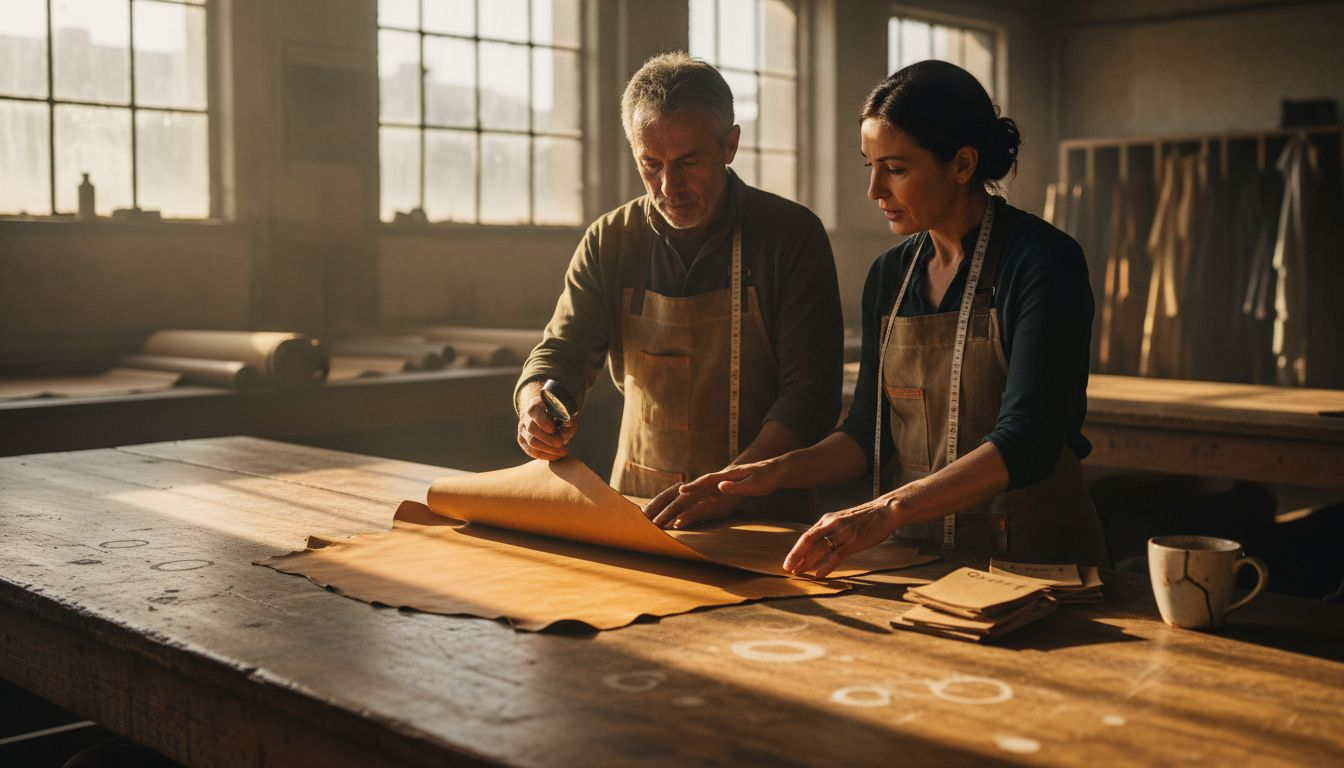
Pro tip: Always examine leather against natural light to assess its true grain quality, looking for consistent colour, subtle natural markings, and a soft, rich texture.
The following table summarises key quality indicators to identify superior artisanal leather bags at a glance:
| Indicator | What to Look For | Why It Matters |
|---|---|---|
| Stitching | Even, tight, hand-done seams | Indicates durable construction |
| Leather Surface | Visible natural grain and light markings | Shows authenticity and quality |
| Bag Edges | Smoothly finished, never rough | Reflects craftsmanship skill |
| Patina Development | Subtle sheen and colour evolution with age | Confirms use of full-grain |
Skilled Artisan Roles in Each Production Stage
Artisanal bag production represents an intricate symphony of specialised skills, where each craftsperson contributes unique expertise to transform raw materials into extraordinary accessories. Bag-making involves complex collaborative craftsmanship that demands remarkable precision and deep traditional knowledge.
The primary artisan roles in leather bag production include:
- Tanners: Preparing and treating leather hides
- Pattern Makers: Designing intricate bag blueprints
- Cutters: Precisely selecting and cutting leather sections
- Hand Stitchers: Creating durable, aesthetically perfect seams
- Embellishment Artists: Adding decorative tooling and details
- Quality Control Specialists: Ensuring final product excellence
Each role requires years of dedicated training and an almost intuitive understanding of materials. A skilled hand stitcher, for instance, doesn’t merely join leather pieces; they create structural integrity through carefully selected thread types, stitch lengths, and tension techniques that determine the bag’s longevity and aesthetic appeal.
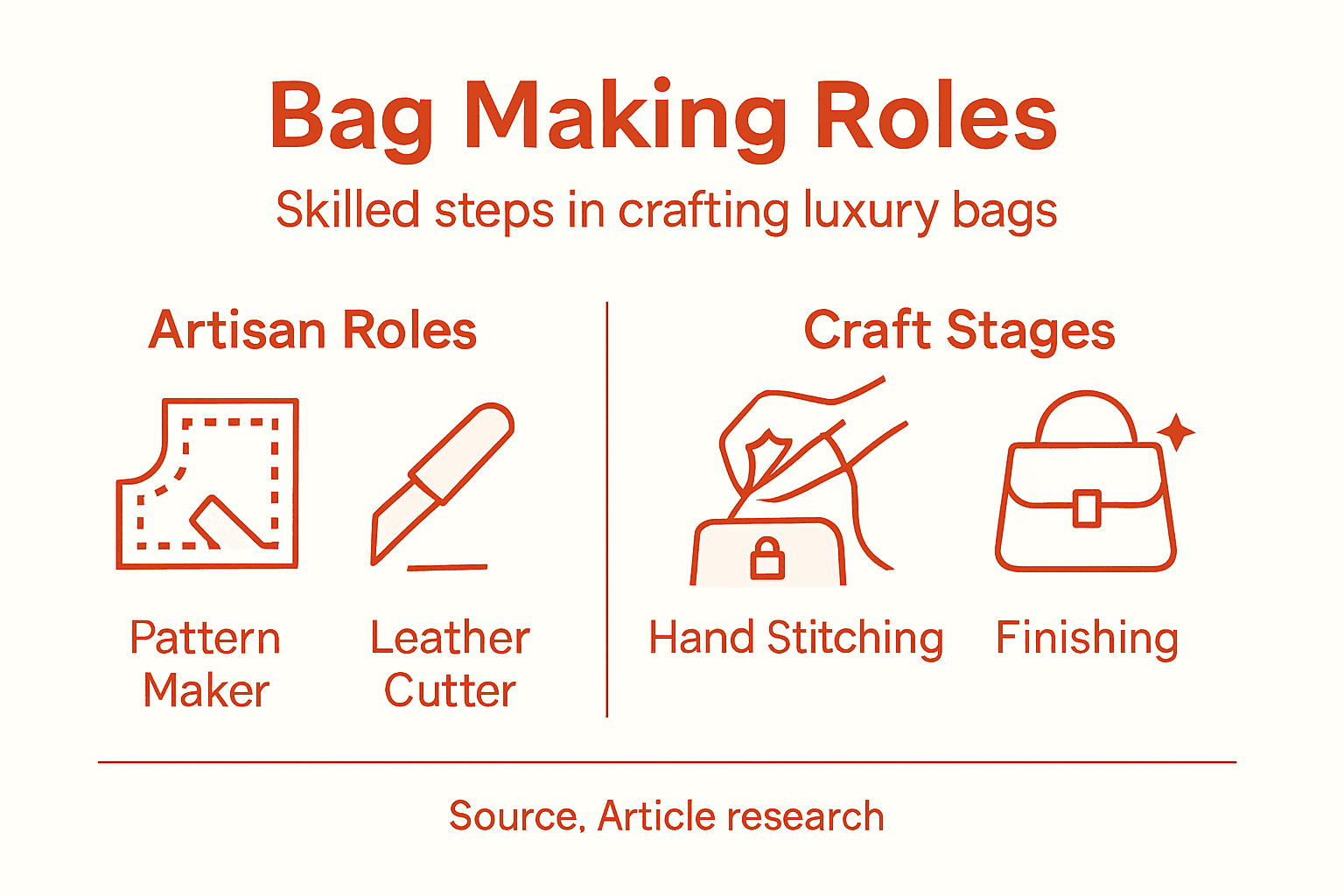
True artisanal craftsmanship transcends individual technical skills. These specialists collaborate seamlessly, transforming individual contributions into a unified masterpiece that reflects generations of accumulated knowledge and passion for leather crafting.
Pro tip: When purchasing an artisan-made leather bag, ask about the specific craftspeople involved in its creation to understand the human story behind the accessory.
Challenges, Costs and Common Mistakes to Avoid
Artisanal bag making represents an extraordinary craft, but it is not without significant challenges that can undermine even the most well-intentioned production processes. Handbag manufacturing involves complex quality control challenges that require meticulous attention and strategic planning.
Common challenges in artisanal bag production include:
- Material Inconsistencies: Variations in leather quality
- Stitching Precision: Maintaining uniform seam standards
- Hardware Integration: Ensuring seamless component compatibility
- Production Time Management: Meeting design and delivery timelines
- Cost Control: Balancing premium materials with affordable pricing
- Skill Preservation: Maintaining traditional crafting techniques
Financial considerations play a critical role in sustainable artisanal production. The investment required for high-quality full-grain leather, specialised tools, and skilled artisan labour means that each bag represents a significant monetary and creative commitment. Experienced makers understand that cutting corners leads to inferior products, making strategic investment in quality a non-negotiable principle.
Understanding potential pitfalls allows artisans to develop robust quality control mechanisms. This involves rigorous material testing, multiple production stage inspections, and maintaining open communication channels between design, production, and quality assurance teams.
Pro tip: Always allocate an additional 15-20% in your production budget for unexpected material or crafting challenges to maintain product excellence.
Discover Timeless Artisanal Luxury Crafted for You
The art of artisanal bag making demands exceptional skill, premium full-grain leather, and a firm commitment to traditional European craftsmanship. You want more than just a handbag; you seek a truly authentic accessory that honours this heritage while meeting modern standards of quality and style. At San Rocco Italia, we understand the challenges of maintaining craftsmanship excellence with materials selected for their strength, unique grain, and durability.

Explore our collection of luxury handbags and leather goods proudly made in Italy by skilled artisans who live the very values detailed in this article. Every piece reflects meticulous hand-stitching, authentic natural grain, and ethical production practices that align perfectly with your desire for timeless elegance and responsible luxury. Visit San Rocco Italia today and own a bag that tells a story of heritage and artistry. Elevate your style now with accessories designed to last a lifetime.
Frequently Asked Questions
What distinguishes artisanal bag making from mass-produced options?
Artisanal bag making focuses on manual, heritage techniques with an emphasis on high-quality materials, resulting in unique, one-of-a-kind products. In contrast, mass-produced bags are made using automated processes and often feature lower-quality materials, leading to a lack of uniqueness.
What is full-grain leather, and why is it important in artisanal bag making?
Full-grain leather is the highest quality leather, retaining the entire top skin layer. It is important because it preserves the natural grain and markings, offers superior strength and elasticity, and develops a beautiful patina over time, enhancing the bag’s aesthetic appeal and durability.
How can I assess the craftsmanship of an artisanal leather bag?
To assess craftsmanship, examine the stitching for evenness and tightness, check for a natural leather surface with visible grain patterns, and look at the bag’s edges to ensure they are smoothly finished. Additionally, observe the bag’s patina development as it ages for quality indicators.
What challenges do artisans face in the bag-making process?
Artisans encounter various challenges, including material inconsistencies, precision in stitching, integration of hardware, production time management, and cost control. These factors can significantly affect the quality and sustainability of their products.



