


Traditional Leatherwork Techniques – Why Craftsmanship Matters
Finding genuine beauty in everyday accessories is a pleasure that echoes through time. Traditional leatherwork stands apart, pairing skilled craftsmanship with enduring artistry that transforms raw hides into elegant, meaningful objects. The satisfaction of discovering a handbag crafted with hand saddle stitching or leather treated using natural vegetable tannins offers more than style. It brings an authentic connection to European artisans and their time-honoured techniques, promising quality, sophistication, and sustainable luxury that tells a story with every touch.
Table of Contents
- Defining Traditional Techniques In Leatherwork
- Types Of Leather And Regional Variations
- Essential Processes: Tanning, Stitching, Tooling
- Artisan Skills And Signature Characteristics
- Preserving Heritage And Avoiding Common Pitfalls
Key Takeaways
| Point | Details |
|---|---|
| Traditional Techniques | Traditional leatherwork is an art form, employing techniques like saddle stitching and vegetable tanning that emphasise craftsmanship and sustainability. |
| Regional Variations | Different European regions produce distinct leather types, each showcasing unique qualities that reflect local cultural heritage. |
| Artisan Skills | Master artisans combine technical skill with cultural elements, integrating historical narratives into their handcrafted pieces. |
| Heritage Preservation | Maintaining traditional leathercraft requires addressing demographic and economic challenges, promoting education and support for artisans. |
Defining Traditional Techniques in Leatherwork
Traditional leatherwork represents an extraordinary craft that transforms raw materials into exquisite products through centuries-old methods. These time-honoured techniques are far more than simple manufacturing processes; they are living art forms that connect contemporary artisans with generations of skilled craftspeople. Traditional leathercraft techniques embody a profound commitment to quality, durability, and aesthetic excellence.
At the heart of traditional leatherworking lie several foundational techniques that distinguish handcrafted goods from mass-produced alternatives. These methods include:
- Saddle Stitching: A hand-sewn technique creating stronger, more resilient seams
- Hand Tooling: Intricate decorative embossing and pattern creation using specialised tools
- Vegetable Tanning: A natural process producing leather with rich colour and unique character
- Edge Finishing: Carefully treating leather edges for a refined, professional appearance
- Pattern Cutting: Precise manual techniques for creating complex leather shapes
European leatherworking traditions, particularly those from Italy and France, have long been celebrated for their extraordinary precision and artistic approach. Traditional leatherworking methods emphasise not just the technical skills required, but also the aesthetic sensibilities that transform a simple leather piece into a timeless work of art.
Vegetable tanning stands out as a quintessential traditional technique, representing a profound connection between natural materials and skilled craftsmanship. This slow, meticulous process uses natural tannins extracted from tree bark, creating leather that develops a beautiful patina over time. Unlike industrial chrome tanning, vegetable tanning produces leather with depth, character, and environmental responsibility.
Traditional leatherwork is not merely a manufacturing process, but a dialogue between artisan, material, and history.
Pro tip: When selecting leather goods, look for signs of hand-stitching and natural vegetable-tanned leather, which indicate authentic traditional craftsmanship.
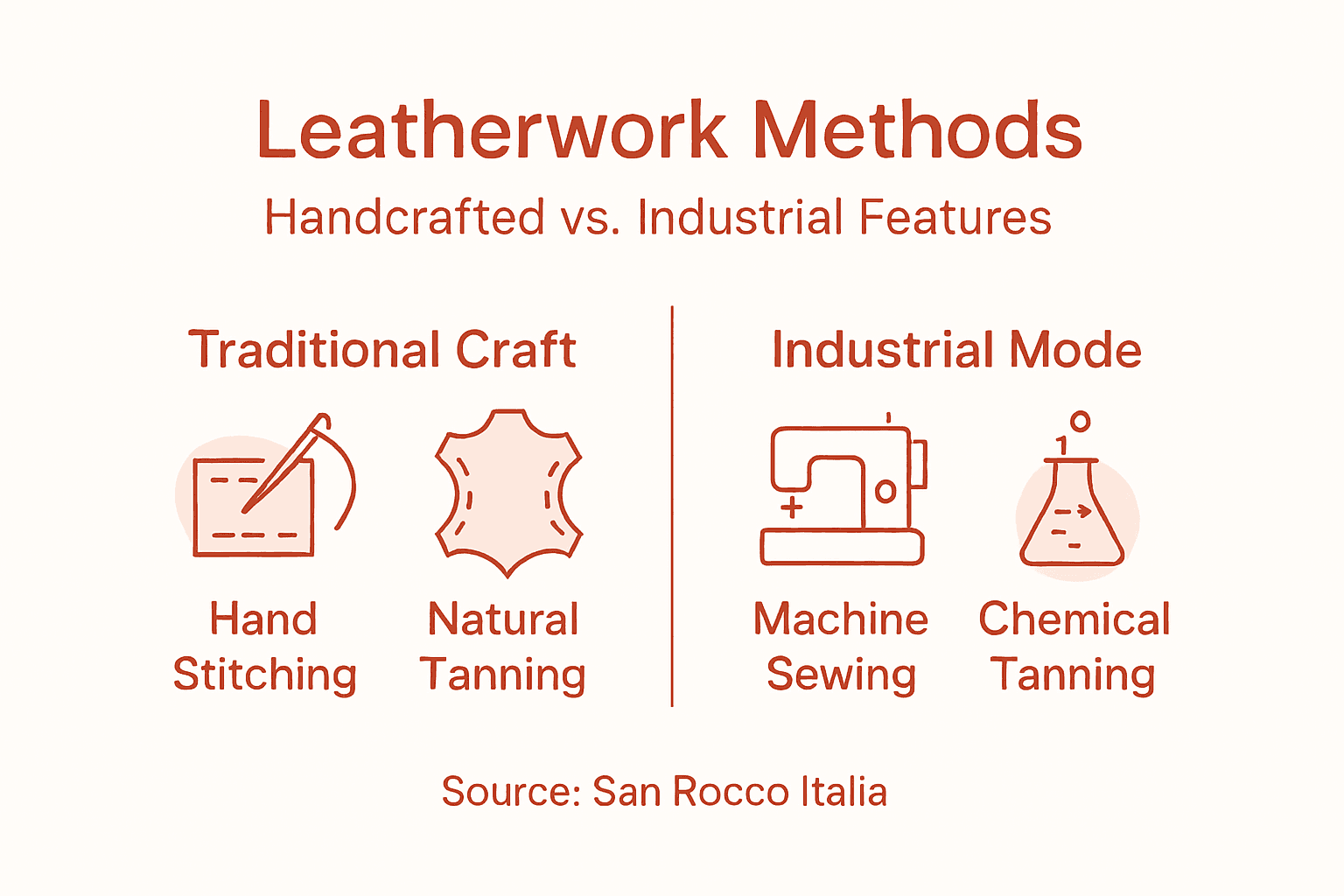
Here is a comparison of traditional and industrial leatherworking methods:
| Aspect | Traditional Leatherwork | Industrial Leatherwork |
|---|---|---|
| Production Speed | Slow, hand-crafted | Fast, machine-driven |
| Material Sourcing | Focus on local, natural materials | Mass-sourced, often global |
| Environmental Impact | Lower, uses natural tannins | Higher, uses chemicals |
| Product Uniqueness | Each piece is unique | Products are uniform |
| Skill Requirement | High level of craftsmanship | Lower, standardised training |
| Longevity and Patina | Ages beautifully, gains character | May degrade or crack over time |
Types of Leather and Regional Variations
The diverse world of leather production reflects rich cultural traditions and geographical nuances across Europe. European leather industry predominantly focuses on bovine leather, which comprises over 80% of total production, with significant regional variations influenced by local livestock and traditional manufacturing techniques.
Key leather types vary across European regions:
-
Bovine Leather: Most common, used in multiple applications
- Italian: Soft, supple, high-quality
- Spanish: Often used in fashion and accessories
- German: Known for precision and durability
-
Sheep Leather: Lightweight and soft
- Scottish: Fine, delicate texture
- Spanish: Smooth, often used in glove-making
-
Goat Leather: Durable and flexible
- Portuguese: Excellent for clothing
- Greek: Traditionally used in sandal production
Vegetable tanning techniques represent a critical aspect of regional leather production, particularly in Central Europe. This ancient method uses natural plant tannins, creating leather with exceptional durability and environmental sustainability. Northwestern European regions especially have maintained these traditional processes since Roman times, preserving craftsmanship that transforms raw animal hides into exquisite materials.
Regional leather variations are not just about production, but about preserving cultural heritage and artisanal expertise.
Pro tip: When selecting leather goods, examine the origin and tanning method to understand the unique characteristics of different regional leather traditions.
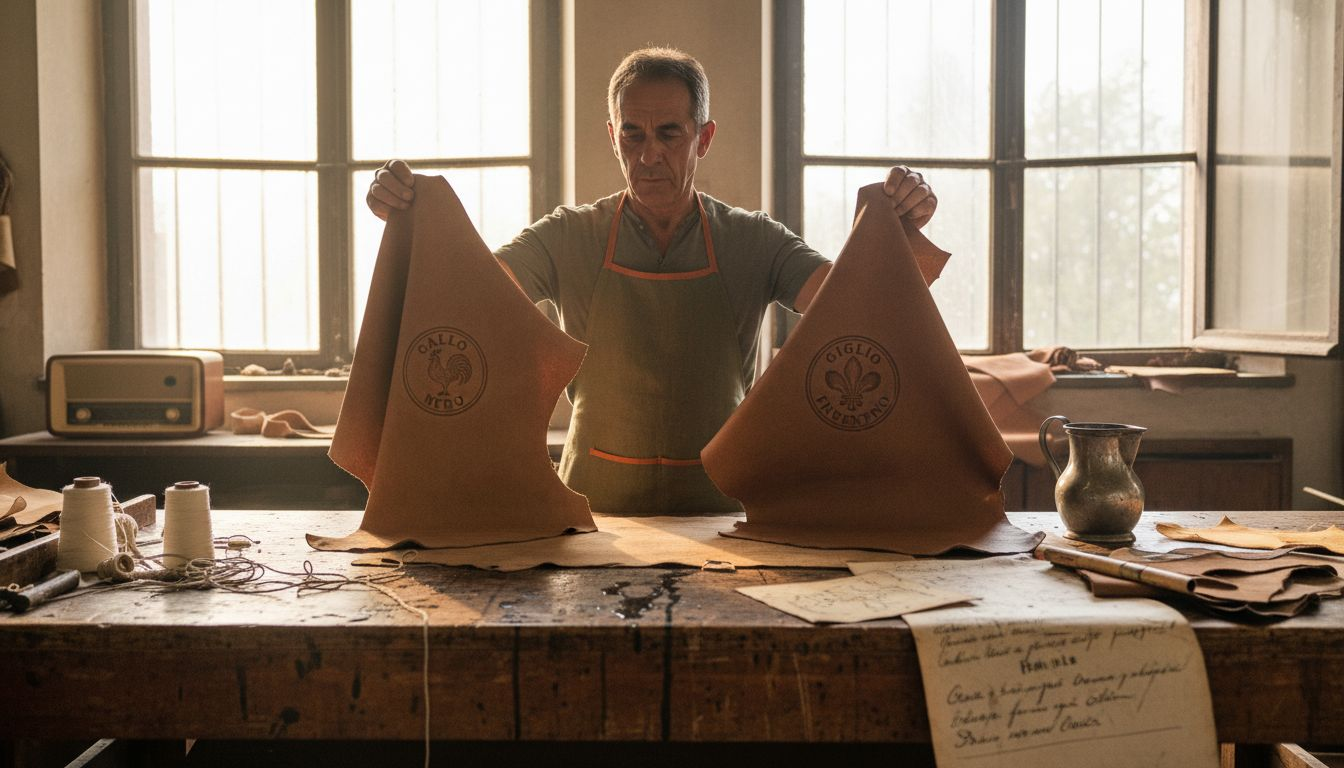
The following table outlines common European leather types, their regional features, and typical uses:
| Leather Type | Region Noted For | Distinctive Qualities | Typical Products |
|---|---|---|---|
| Bovine | Italy, Spain, Germany | Supple, precise, durable | Bags, belts, furniture |
| Sheep | Scotland, Spain | Lightweight, fine texture | Gloves, garments |
| Goat | Portugal, Greece | Flexible, resilient surface | Clothing, footwear |
Essential Processes: Tanning, Stitching, Tooling
Leather production processes represent a complex journey of transforming raw animal hides into sophisticated, durable materials. Each stage requires meticulous craftsmanship and deep understanding of traditional techniques that have been perfected over centuries.
The essential processes in leathermaking include:
-
Tanning: Stabilising and preserving hide materials
- Vegetable tanning: Uses natural plant extracts
- Chrome tanning: Faster industrial method
- Combination tanning: Blending traditional and modern approaches
-
Stitching: Joining leather components
- Hand saddle stitching: Most durable technique
- Machine stitching: Faster, less intricate
-
Tooling: Decorative leather modification
- Embossing: Creating raised design patterns
- Carving: Intricate hand-cut designs
- Stamping: Adding textural elements
Leather production stages involve multiple sophisticated steps beyond simple processing. The preparatory stages include soaking to clean and rehydrate hides, followed by liming to remove hair, and bating to soften the material. These intricate processes transform raw animal skins into supple, workable leather that can be crafted into extraordinary pieces.
Craftsmanship in leathermaking is about understanding the conversation between material, technique, and human skill.
Pro tip: Always inspect the stitching and tooling details to truly appreciate the quality of a handcrafted leather item.
Artisan Skills and Signature Characteristics
Traditional leatherworking techniques represent a profound dialogue between human skill and material excellence. European artisans have cultivated these craft skills over generations, transforming raw leather into objects of extraordinary beauty and functional precision.
Signature characteristics of master leather artisans include:
-
Precision Techniques
- Hand-stitched seams with consistent tension
- Perfectly aligned edge treatments
- Intricate decorative embellishments
-
Material Understanding
- Deep knowledge of leather types
- Ability to select ideal hide for specific projects
- Understanding leather’s natural grain and characteristics
-
Cultural Design Elements
- Incorporating regional motifs
- Respecting traditional aesthetic principles
- Creating pieces with historical narrative
The true essence of artisan leatherwork lies not just in technical skill, but in the ability to communicate stories through tactile craftsmanship. Each piece becomes a testament to generations of knowledge, with subtle details revealing the maker’s expertise and cultural heritage.
An artisan’s hands do not simply create objects; they translate centuries of accumulated wisdom into tangible form.
Pro tip: Learn to recognise hand-stitched details by observing the subtle variations and personal touches that machine production cannot replicate.
Preserving Heritage and Avoiding Common Pitfalls
Preserving traditional leather crafts requires a delicate balance between honouring historical techniques and embracing contemporary innovations. European artisans face significant challenges in maintaining the vitality of their centuries-old craft, navigating complex economic and cultural landscapes that threaten traditional leatherworking practices.
Key challenges in preserving leathercraft heritage include:
-
Demographic Challenges
- Aging artisan population
- Declining interest among younger generations
- Limited apprenticeship opportunities
-
Economic Pressures
- Competition from mass-produced goods
- Higher production costs for handmade items
- Reduced market value of traditional crafts
-
Skills Transmission
- Lack of formal training programmes
- Diminishing knowledge transfer
- Limited documentation of traditional techniques
Sustainable craft preservation demands strategic interventions that go beyond nostalgic preservation. Modern approaches increasingly integrate digital documentation, cross-border collaboration, and educational initiatives that position traditional leatherworking as a dynamic, evolving cultural practice rather than a static museum piece.
Heritage is not about maintaining a fossil, but keeping a living tradition alive and relevant.
Pro tip: Support local artisans by seeking out workshops, apprenticeship programmes, and educational initiatives that actively document and transmit traditional leathercraft skills.
Experience Authentic Craftsmanship with San Rocco Italia
The article highlights the challenges of preserving traditional leatherwork techniques such as vegetable tanning and hand saddle stitching while maintaining quality and authenticity. If you value expertly crafted leather goods that tell a story through their unique character and meticulous artisan skills, our collection at San Rocco Italia offers the perfect solution. Discover handbags and accessories made in Italy by skilled artisans using premium full-grain leather and time-honoured methods that honour generations of craftsmanship.

Elevate your style with pieces that age beautifully and embody cultural heritage. Shop now at San Rocco Italia and explore how traditional leatherworking meets luxury design. Let your next purchase support the artistry and sustainability discussed in the article by choosing products that proudly showcase hand-stitched seams, vegetable tanning, and regional authenticity. Visit our handbags and leather goods collection to experience this living tradition today.
Frequently Asked Questions
What are traditional leatherwork techniques?
Traditional leatherwork techniques include hand stitching, hand tooling, vegetable tanning, edge finishing, and pattern cutting. These methods highlight craftsmanship, durability, and aesthetic excellence in leather goods.
Why is vegetable tanning significant in leather production?
Vegetable tanning is significant as it uses natural tannins from plant materials, resulting in environmentally friendly leather that develops a rich patina over time, enhancing its character and longevity.
What is the difference between traditional and industrial leatherworking methods?
Traditional leatherworking is slow and hand-crafted, focusing on quality and uniqueness, whereas industrial leatherworking is fast and machine-driven, often resulting in uniform products with a higher environmental impact due to chemical processes.
How can I identify quality craftsmanship in leather goods?
You can identify quality craftsmanship in leather goods by looking for hand-stitched seams, well-finished edges, and unique tooling details that reflect the artisan’s skill and attention to detail.
