


Luxury handbag terminology guide: elevate your shopping
TL;DR:
- Understanding handbag terminology helps assess quality, durability, and authenticity during shopping.
- Leather type and construction methods significantly influence a bag’s appearance, longevity, and value.
- Mastering advanced terms like patina and condition grade empowers smarter luxury handbag buying decisions.
There is a quiet confidence that separates a knowledgeable handbag buyer from one who simply follows a label. Most people assume that owning a luxury handbag is about status, about the logo embossed on the clasp or the name printed on the dust bag. But genuine luxury runs far deeper than that. The women who shop most wisely in boutiques and online auctions alike share one advantage: they understand the language of fine bags. From the anatomy of a gusset to the nuance of vegetable-tanned patina, knowing your terminology means you can assess quality with your own eyes and hands, ask the right questions, and avoid costly mistakes. This guide is your passport into that world.
Table of Contents
- Essential anatomy and construction terms
- Types of leather and luxury materials explained
- Craftsmanship details: what sets true luxury apart
- Decoding advanced terms: grades, patina, investment value
- Why terminology isn’t just for collectors: what most buyers miss
- Discover true Italian luxury: your next step
- Frequently asked questions
Key Takeaways
| Point | Details |
|---|---|
| Master handbag anatomy | Knowing terms like gusset, edge binding, and hardware helps you spot quality instantly. |
| Understand luxury materials | Identifying different leathers reveals much about durability, care, and investment value. |
| Appreciate true craftsmanship | Hand-stitching, careful reinforcements, and patina indicate genuine Italian excellence. |
| Decipher advanced lingo | Understanding grading, patina, and closure types helps you buy and care for bags wisely. |
Essential anatomy and construction terms
Now that you know why terminology matters, let’s uncover what experts and sellers really mean when they describe a handbag’s anatomy and build. A luxury handbag is not simply a container. It is an engineered object, and every part has a name, a purpose, and a quality indicator hiding in plain sight.
The bag construction vocabulary used by makers and retailers covers a precise set of structural parts: panels (the front and back faces of the bag), gussets (the side sections that give the bag its depth), the bottom (often reinforced with protective feet), the flap (the covering that closes the opening), handles and straps, edge binding (the finishing along seams and raw edges), and hardware including rings, clasps, chains, eyelets, and drawstrings. Each element contributes to both function and beauty.
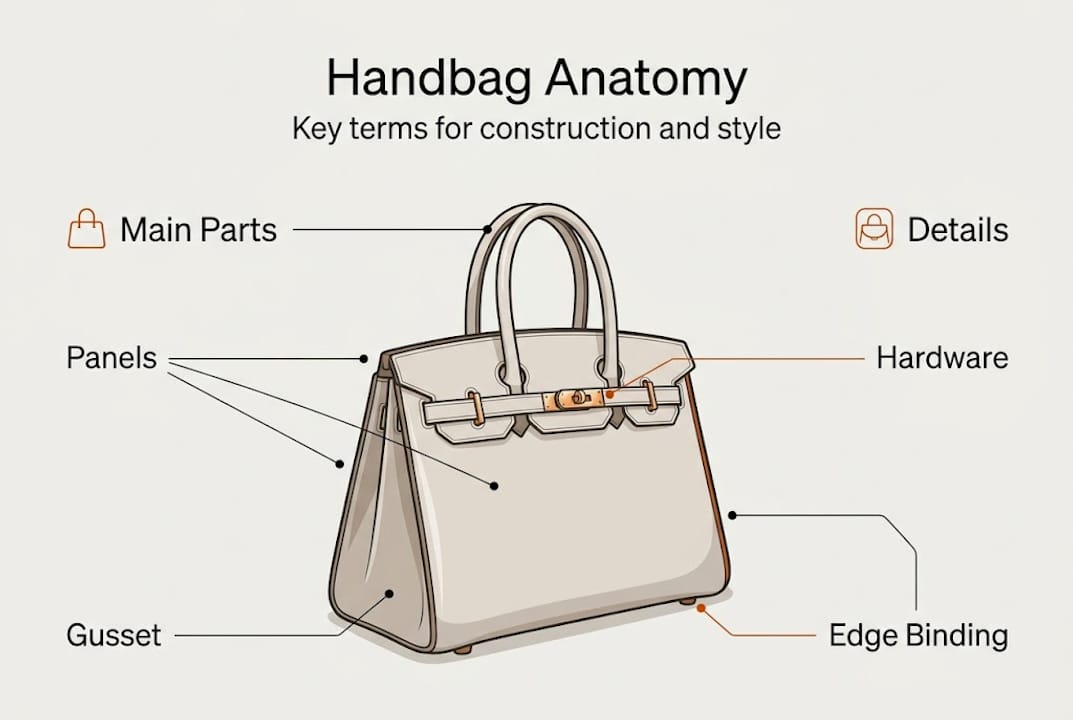
Why does this matter when you are shopping? Because a seller who says “hand-stitched gusset” or “reinforced base” is telling you something specific about quality and longevity. Understanding those words lets you hold the bag with purpose rather than admiration alone.
| Term | What it means | Why it signals quality |
|---|---|---|
| Panel | Front or back face of the bag | Single-cut panels show premium leather use |
| Gusset | Side panel adding depth | Reinforced gussets hold shape over years |
| Edge binding | Finishing along seams and raw edges | Painted or wrapped edges resist fraying |
| Hardware | Clasps, rings, chains, eyelets | Weight and finish reveal metal grade |
| Bottom feet | Metal studs on the base | Protect leather from surface wear |
Construction methods matter just as much as materials. The key construction methods used in fine bags include glued-edge stitching, tooth construction, and the use of rigid or flexible reinforcements depending on where structure is needed. Rigid reinforcements appear in structured bags like top-handle styles, while flexible reinforcements allow softer, slouchy silhouettes to move naturally without losing their form.
- Glued-edge stitching: adhesive bonds layers before stitching for a clean, durable seam
- Tooth construction: interlocking layers create strength without bulk
- Rigid reinforcements: internal frames or stiffeners that hold the bag’s shape
- Flexible reinforcements: softer internal layers that allow movement while preserving structure
“A beautifully finished seam is not decoration. It is the maker’s signature, proof that every millimetre was considered.”
Pro Tip: When evaluating a bag in person, turn it over and examine the base feet and edge binding first. Uneven painting, loose threads, or lightweight hardware are the fastest indicators of compromised construction, regardless of the brand name on the lining. You can learn even more by reading our handbag materials guide before your next shopping trip.
Types of leather and luxury materials explained
With a handle on handbag construction, it is vital to know the materials that make each piece unique and enduring. Leather is not a single thing. It is a spectrum, and where a hide sits on that spectrum affects how a bag looks, feels, ages, and holds its value.
The most common luxury leathers include calfskin, Epsom, Taurillon, Togo, and Chevre, alongside exotic skins like crocodile, and coated canvas for lightweight practicality. Each has a distinct personality.
| Leather type | Texture | Durability | Weight | Patina potential |
|---|---|---|---|---|
| Calfskin | Smooth, fine grain | High | Light | Excellent |
| Epsom | Cross-hatched, structured | Very high | Medium | Minimal |
| Togo | Pebbled, soft | High | Medium | Good |
| Taurillon | Grained, supple | High | Medium | Very good |
| Chevre (goatskin) | Fine, tight grain | Very high | Light | Good |
| Exotic (crocodile) | Scaled, distinctive | Exceptional | Heavy | Minimal |
| Coated canvas | Fabric-based, treated | High | Very light | None |
- Calfskin is prized for its buttery surface and versatility. It scratches more easily than structured leathers but develops a gorgeous patina over time.
- Epsom is cross-hatched and holds its shape beautifully. It resists scratches and moisture, making it a practical choice for daily use.
- Togo is a pebbled calfskin that is both soft and resilient, a favourite for larger structured bags.
- Taurillon is a single-layer calf leather with a natural grain. It is supple yet strong, and it ages exceptionally well.
- Chevre (goatskin) has a fine, tight grain that resists scratching better than most calfskins.
- Exotic skins command the highest prices and require specialist care, but they are extraordinarily durable and visually striking.
Italian tanneries are widely regarded as the global benchmark for leather quality. The combination of centuries-old techniques, mineral-rich regional water sources, and rigorous quality control means Italian-sourced leather consistently outperforms alternatives in finish, consistency, and longevity. Understanding how a leather ages, and what leather patina and ageing actually looks like over years of use, helps you choose a material that suits your lifestyle rather than simply your taste today.
Canvas deserves a mention too. High-quality coated canvas, when properly made, is not a compromise. It is an engineering choice: lightweight, water-resistant, and highly durable. The key is in the coating quality and the canvas weave beneath it.
Pro Tip: When comparing leathers in a boutique, ask to see a swatch or older sample of the same leather. Seeing how it has aged tells you far more than a brand description ever will.
Craftsmanship details: what sets true luxury apart
Once you can spot materials, the final step is to appreciate the craftsmanship details that make true luxury bags an investment. This is where the gap between a well-made bag and a genuinely exceptional one becomes visible, if you know what to look for.
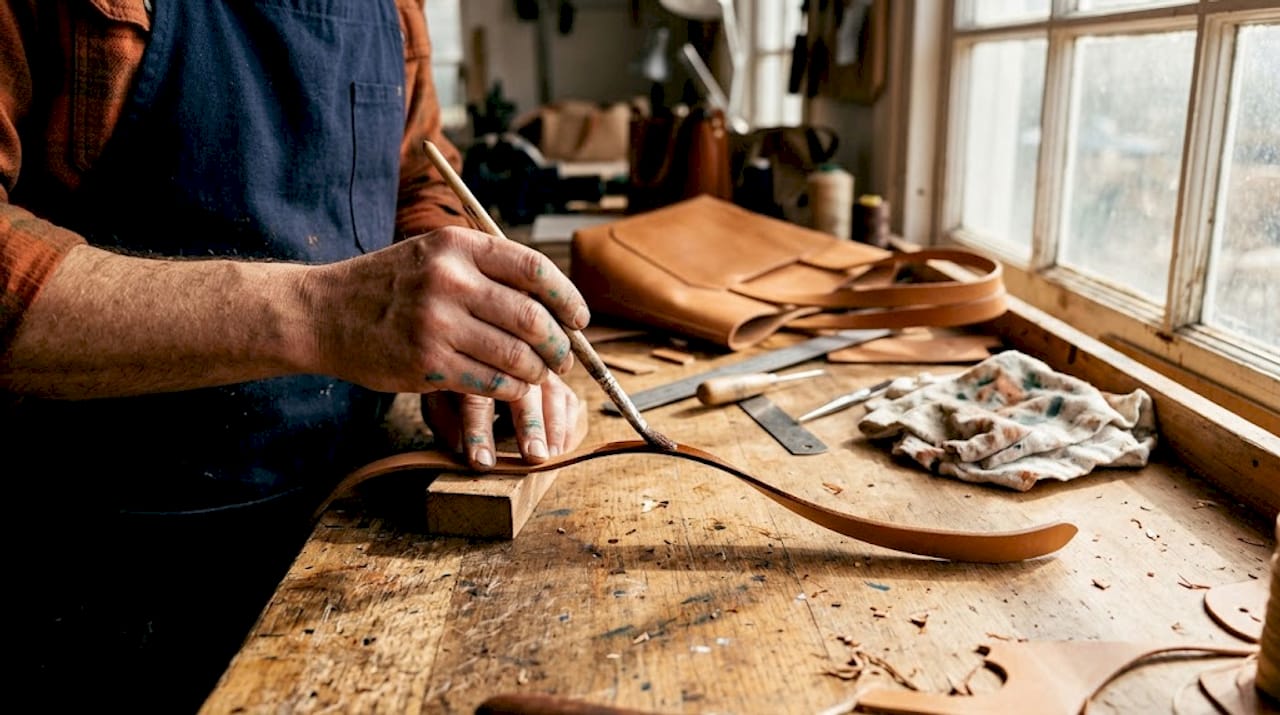
The stitching debate is real. Hand-stitching is preferred for luxury seams because it creates a stronger, more flexible join than machine-stitching. Each stitch is placed individually, which means the thread tension is consistent and the seam is far less likely to unravel if a single stitch breaks. Machine-stitching, by contrast, uses a chain-link method where one broken stitch can cause the seam to run. In a luxury bag, you will often see saddle-stitching: two needles working simultaneously from opposite sides of the leather, creating a seam that is both beautiful and structurally superior.
- Saddle-stitching: two-needle technique, strongest hand-stitch method
- Lockstitch (machine): efficient but less durable under stress
- Whip-stitching: decorative edge technique, common on gussets
- Blanket stitch: visible edge finishing, often used on straps
Reinforcements are equally telling. A bag that holds its shape after years of daily use does so because of internal structure, not just thick leather. Rigid reinforcements (often thermoplastic or card-based) appear in the base and sides of structured styles. Flexible reinforcements allow softer bags to recover their shape after being filled and emptied repeatedly.
Tanning method is a term you will hear increasingly as you move into more specialist territory. Vegetable tanning uses natural plant-based tannins and produces leather that develops a rich patina over time. It requires more maintenance but rewards you with a bag that becomes more beautiful with age. Chrome tanning is faster, more uniform, and produces leather that is more resistant to moisture and colour change, but it does not develop the same character. For leather bag maintenance and choosing the right best leather conditioner for bags, knowing your tanning method is essential.
“The difference between a bag that lasts a season and one that lasts a lifetime is almost always found in the details you cannot see at first glance.”
Pro Tip: Examine the edge painting on straps and handles. A luxury bag will have smooth, even edge paint with no bubbling or cracking. The lining should be neatly stitched at every corner, and the hardware should feel weighty and turn smoothly without resistance.
Decoding advanced terms: grades, patina, investment value
Beyond basics and materials, the final layer of confidence comes from mastering specialist terms you will hear in boutiques and among collectors. These words shape how bags are described, priced, and valued, particularly in the pre-owned market.
Advanced handbag vocabulary includes terms like patina (the natural darkening and sheen leather develops with use), condition grade (a standardised assessment of pre-owned wear), investment bag (a style with proven resale value), turn-lock closure (a rotating clasp mechanism), and top handle drop (the measurement from the top of the handle to the bag body, indicating how it sits when carried).
Condition grades are particularly important if you shop pre-owned. Here is how most reputable sellers grade their stock:
- Pristine or mint: unworn, often with original tags and packaging
- Excellent: minimal signs of use, no visible flaws
- Very good: light wear on corners or base, no structural issues
- Good: visible wear, possible fading or light scratches, fully functional
- Fair: significant wear, may require restoration
Patina is one of the most misunderstood terms in the luxury world. Many buyers initially see darkening leather as damage. Collectors see it as proof of a life well-lived. A genuine handbag patina develops evenly, deepening in colour and developing a subtle sheen that no new bag can replicate. It is the leather’s biography.
If investment value matters to you, focus on classic silhouettes from heritage houses, limited production runs, and bags in excellent or pristine condition. Exotic leathers and rare colourways tend to hold value better than standard leathers in common colours, though both can appreciate significantly.
- Verify hardware markings: investment-grade bags have consistent, legible engravings
- Check date codes or serial numbers where applicable
- Retain all original packaging, cards, and receipts
- Store correctly from day one: proper storing luxury handbags practice preserves condition grade
- Address marks promptly: knowing how to approach cleaning luxury handbags prevents minor issues becoming permanent
“The most expensive mistake a buyer can make is purchasing a bag without understanding the terms used to describe it. Terminology is not gatekeeping. It is protection.”
Why terminology isn’t just for collectors: what most buyers miss
With a toolkit of terms at your disposal, here is what our years navigating showrooms and ateliers have taught us about putting knowledge into action. Most buyers assume that terminology is the domain of collectors, resellers, or fashion insiders. In our experience, that assumption is exactly what leads to regret.
We have spoken with women who paid full boutique price for bags with machine-stitched seams they did not notice, or who stored calfskin in plastic and watched it crack within a year because no one explained vegetable tanning to them. Knowledge is not elitism. It is self-protection.
When you walk into a boutique armed with the right vocabulary, the dynamic shifts. You ask about the tanning method. You check the edge binding. You understand what the sales assistant means when they mention a rigid reinforcement or a saddle-stitched gusset. That fluency signals to everyone in the room that you cannot be oversold or misled.
There is also an emotional dimension that is easy to overlook. When you truly understand what went into a bag, the pride of ownership deepens. You are not just carrying a label. You are carrying the result of a craftsperson’s hours, a tannery’s expertise, and a design tradition that may stretch back generations. That understanding transforms a purchase into a relationship.
Pro Tip: Before committing to any significant purchase, build a quick checklist of three terms to verify: the stitching method, the leather type, and the condition grade if pre-owned. Those three alone will protect you from the most common buying mistakes. And if you want to feel equally confident in how you care for leather bags once you own them, that knowledge is just as valuable as the buying stage.
Discover true Italian luxury: your next step
Armed with confidence and insight, you are ready to take the next step in your luxury journey.
You now understand the language that separates a truly exceptional bag from one that merely looks the part. You can read a product description with a critical eye, assess construction in person, and ask questions that reveal a maker’s real commitment to quality. That knowledge belongs to you, and it changes every shopping experience from this point forward.
At San Rocco Italia, every handbag and leather good is made in Italy by skilled artisans using premium full-grain leather and time-honoured techniques. When you explore Italian craftsmanship on our site, you will find pieces you can evaluate with your new vocabulary: the stitching, the leather grade, the hardware weight, the edge finishing. Our collection is built for women who appreciate the difference between beautiful and genuinely exceptional. We invite you to look closely, because we are confident in what you will find.
Frequently asked questions
What is a gusset in a luxury handbag?
A gusset is the side panel that adds depth and structure to a handbag, directly affecting its shape and carrying capacity. As noted in bag anatomy vocabulary, gussets are one of the core structural components that define how a bag performs.
What is the difference between hand-stitching and machine-stitching?
Hand-stitching, particularly saddle-stitching, creates a stronger and more durable seam than machine-stitching because each stitch is individually placed and independently secure. The preferred method for luxury seams is hand-stitching, as it signals authentic artisanal construction.
Which leather types are most common in luxury bags?
Calfskin, Epsom, Togo, Taurillon, and Chevre are the most frequently used leathers in high-end bags, with exotic options like crocodile reserved for the most exclusive pieces. These common luxury leathers each offer distinct textures, durability levels, and ageing characteristics.
What does ‘patina’ mean in luxury handbags?
Patina is the natural darkening and lustrous sheen that leather develops through regular use and exposure over time, and it is highly prized by collectors. This natural darkening process is considered a mark of authenticity and beauty rather than wear.



