


How Long Do Leather Bags Last: Complete Guide
A leather bag can last as little as two years or as long as several decades, depending on choices often overlooked. The real difference lies not just in what meets the eye but in how the bag is made, cared for, and used every day. Full-grain leather bags often outlive lesser types by decades, yet daily routines and simple mistakes can quietly shorten that promise. Learn what truly determines leather bag lifespan and how to make your investment last.
Table of Contents
- What Determines Leather Bag Lifespan
- Key Types of Leather and Their Durability
- Craftsmanship and Its Role in Longevity
- Care, Maintenance, and Common Mistakes
- Signs of Aging and When to Replace
Key Takeaways
| Point | Details |
|---|---|
| Leather Type Matters | The durability of a leather bag varies significantly among types; full-grain leather lasts decades, while genuine leather may only last 2-5 years. |
| Craftsmanship is Key | High-quality craftsmanship, including proper stitching and material selection, enhances the longevity of leather bags. |
| Regular Maintenance is Essential | Proactive care routines, such as conditioning and appropriate storage, are crucial for extending a leather bag’s lifespan. |
| Recognize When to Replace | Signs of significant wear, such as structural damage or loss of shape, indicate when it may be time to invest in a new leather bag. |
What Determines Leather Bag Lifespan
The longevity of a leather bag isn’t just about the material’s quality but a complex interplay of multiple factors. According to jetir, leather’s strength and durability are fundamentally influenced by its source and tanning processes, creating significant variations in potential lifespan.
The type of leather emerges as the most critical determinant of a bag’s durability. Spinneybeck highlights that full-grain leather develops a rich patina over time, becoming more beautiful and resilient with age. Different leather grades offer dramatically different lifespans:
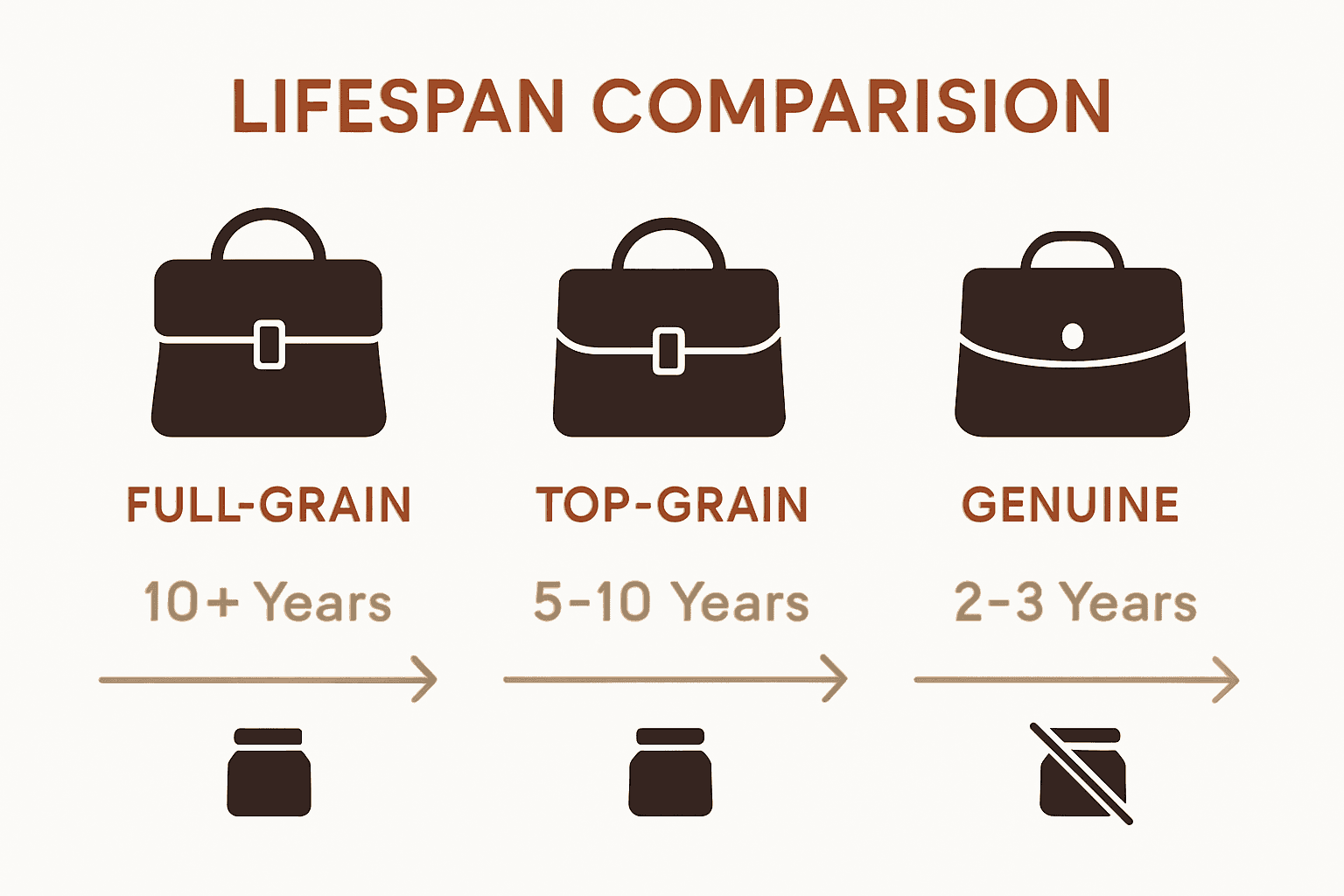
- Full-grain leather: Highest quality, can last decades with proper care
- Top-grain leather: Moderate durability, typically 5-10 years
- Genuine leather: Lower quality, may last 2-5 years
Beyond leather type, several environmental and usage factors dramatically impact a leather bag’s longevity. Exposure to direct sunlight, extreme temperatures, and high humidity can accelerate leather degradation. Frequent use, improper storage, and lack of routine maintenance can significantly reduce a bag’s lifespan.
To maximize your leather bag’s durability, consider how to store leather handbags naturally, which can help preserve its quality and extend its functional life. Regular conditioning, careful cleaning, and mindful usage are your best strategies for ensuring your investment remains beautiful and functional for years to come.
Key Types of Leather and Their Durability
Understanding the nuanced world of leather requires a deep dive into its various types and characteristics. According to Spinneybeck, leather can be categorized into multiple grades, each with distinct properties and performance levels.
At the pinnacle of leather quality sits full-grain leather, which Fibrenew describes as the most superior type. This premium leather retains the hide’s natural grain, offering exceptional durability and a unique ability to develop a rich patina over time. The characteristics of full-grain leather include:
- Unaltered natural surface with original texture intact
- Maximum strength and breathability
- Ages beautifully, becoming more attractive with use
- Highest quality and most expensive leather type
Other significant leather types include top-grain leather, which is slightly modified but still maintains high quality, and genuine leather, which represents a more processed and lower-grade material. Top-grain leather offers a smoother, more polished appearance while sacrificing some of the raw durability of full-grain leather.
The final leather categories include corrected-grain and split leather, which are further processed variations that provide more affordable options with reduced longevity. When selecting a leather bag, understanding these distinctions helps you make an informed choice about durability, appearance, and long-term value.
Craftsmanship and Its Role in Longevity
Craftsmanship represents the heartbeat of leather bag durability, transforming raw materials into extraordinary pieces that transcend mere functionality. According to Jetir, high-quality craftsmanship is fundamental in ensuring leather products can withstand the rigours of daily use and time itself.
Artisanal techniques play a crucial role in determining a leather bag’s potential lifespan. Spinneybeck emphasizes that the tanning process and meticulous workmanship significantly influence leather’s durability. Key aspects of superior craftsmanship include:
- Precise cutting techniques that minimize material waste
- Reinforced stitching at stress points
- Careful selection of thread and hardware
- Hand-finished edges and details
- Thoughtful design that distributes weight evenly
Italian leather craftsmanship, in particular, stands out for its commitment to traditional methods and exceptional attention to detail. Skilled artisans spend years perfecting techniques passed down through generations, ensuring each piece is not just a bag, but a testament to generations of leather-working expertise. Each stitch, seam, and finishing touch contributes to creating a product that ages gracefully and maintains structural integrity far longer than mass-produced alternatives.
Ultimately, true craftsmanship transforms a simple leather bag into a lifelong companion. By prioritizing expert construction and time-honoured techniques, artisans create accessories that not only serve a practical purpose but also tell a story of skill, tradition, and enduring quality.
Care, Maintenance, and Common Mistakes
Maintaining a leather bag requires thoughtful attention and consistent care. Fibrenew emphasizes that proper maintenance is crucial for preserving leather’s durability and preventing premature wear, making regular care an essential investment in your bag’s longevity.
Common maintenance mistakes can significantly reduce a leather bag’s lifespan. These critical errors often stem from misunderstanding leather’s delicate nature:
- Overwashing: Using harsh chemicals or excessive water
- Improper storage: Exposing leather to direct sunlight or humidity
- Neglecting conditioning: Failing to moisturize the leather periodically
- Using incorrect cleaning products: Applying unsuitable cleaning agents
- Overloading the bag: Consistently carrying weight beyond its designed capacity
Developing a consistent care routine is paramount for preserving your leather bag’s quality. This involves gentle cleaning with specialized leather products, storing the bag in a cool, dry environment, and conditioning the leather every 3-6 months. Professional leather specialists recommend using soft, lint-free cloths, avoiding direct heat sources, and protecting the bag from extreme temperature fluctuations.
Additionally, proactive maintenance goes beyond cleaning. Rotating your bags, using dust bags during storage, and addressing minor scuffs or marks immediately can dramatically extend your leather bag’s functional and aesthetic life. Remember, a well-maintained leather bag isn’t just an accessory – it’s an investment that can accompany you for decades when treated with respect and understanding.
Signs of Aging and When to Replace
Leather bags are unique in their ability to age beautifully, developing a character that tells a story of its journey. According to Fibrenew, leather develops a patina that can actually enhance its appearance, but there are critical signs that indicate when replacement becomes necessary.
Identifying the difference between natural aging and significant wear is crucial for leather bag owners. Key indicators that suggest your bag might be nearing the end of its functional life include:
- Structural damage: Irreparable tears or complete breakdown of seams
- Deep, extensive cracking: Particularly in load-bearing areas
- Hardware failure: Broken zippers, clasps, or handles that can’t be repaired
- Persistent odours: Indicating potential mould or leather degradation
- Loss of shape: Permanent deformation that affects the bag’s functionality
Quality full-grain leather bags can often be professionally restored, extending their life significantly. Professional leather artisans can repair minor damages, replace hardware, and recondition leather, transforming what might seem like an end-of-life bag into a renewed accessory. However, when restoration costs approach 50% of the bag’s original value, it might be more economical to consider a replacement.
Ultimately, a well-maintained leather bag is more than just an accessory – it’s a companion that can last decades. The key is understanding the difference between character-building wear and true structural compromise. When your bag’s functionality, aesthetic appeal, or structural integrity becomes permanently compromised, it might be time to thoughtfully retire it and invest in a new, high-quality leather piece.
Discover Timeless Elegance with Leather Bags That Last
Understanding the true lifespan of a leather bag is key to making a thoughtful investment. This guide highlights the importance of quality materials, expert craftsmanship, and dedicated care in extending your bag’s life and beauty. If you seek a handbag that evolves gracefully with age, combining durability with style and tradition, San Rocco Italia offers just that.

Explore our collection of luxury handbags, each handcrafted in Italy from premium full-grain leather by skilled artisans. We are passionate about providing you with accessories designed to withstand daily use while developing a rich patina unique to your journey. Don’t settle for less when you can own a piece that truly lasts. Visit San Rocco Italia today and choose a bag that is as enduring and elegant as you are.
Frequently Asked Questions
How long do leather bags typically last?
The lifespan of a leather bag depends on its type and care. Full-grain leather can last decades, while top-grain leather lasts approximately 5-10 years, and genuine leather may only last 2-5 years.
What factors affect the durability of a leather bag?
Key factors include the type of leather, craftsmanship, environmental conditions (like exposure to sunlight or humidity), and proper care and maintenance practices.
How can I care for my leather bag to ensure its longevity?
Regularly clean your bag with specialized leather products, condition it every 3-6 months, store it in a cool, dry place, and avoid overloading it. Using dust bags and addressing minor damages promptly can also extend its life.
What are the signs that my leather bag needs to be replaced?
Indications that a leather bag may need replacing include structural damage, extensive cracking, hardware failure, persistent odors, and loss of shape that impacts functionality.


