


Artisanal Leather Crafting Techniques Explained
Handcrafted leather goods stand apart for a reason. Experts estimate that less than 10 percent of global leather products are truly made by skilled artisans using traditional techniques. True artisanal leather crafting involves a rare blend of patience, technical mastery, and artistic imagination. If you value authenticity and long-lasting beauty, understanding these intricate handcraft methods will help you recognize genuine quality and choose pieces that carry real heritage.
Table of Contents
- Defining Artisanal Leather Crafting Techniques
- Types of Leather and Material Selection
- Traditional Handcraft Methods and Tools
- Identifying Authentic Craftsmanship and Quality
- Common Challenges and How to Avoid Them
Key Takeaways
| Point | Details |
|---|---|
| Artisanal Craftsmanship | Involves a blend of traditional skills and innovative techniques to create unique leather products with minimal machine involvement. |
| Material Selection | Choosing the right type of leather is critical, with full grain being the highest quality for durability and aesthetics. |
| Traditional Techniques | Techniques like skiving and buckstitching enhance quality, requiring specialized tools to achieve exceptional results. |
| Quality Indicators | Authentic craftsmanship is marked by meticulous finishing, individual material variations, and preservation of natural leather qualities. |
Defining Artisanal Leather Crafting Techniques
Artisanal leather crafting represents a sophisticated intersection of traditional skill, meticulous technique, and creative expression. According to Wikipedia, leather crafting involves creating objects and artworks from leather through intricate shaping and coloring methods that transform raw material into exquisite finished products.
At its core, artisanal leather crafting transcends mere manufacturing - it is a nuanced art form where skilled craftspeople employ techniques like dyeing, painting, molding, laser cutting, perforation, and pyrography. Each method requires profound understanding of leather’s unique properties and potential. The French craft of gainerie offers a perfect example of this complexity, involving precise leather covering of rigid supports like cases and sheaths, with edges meticulously turned in and seams worked flush.
The hallmarks of true artisanal leather crafting include:
- Handcrafted production with minimal machine intervention
- Exceptional attention to detail
- Use of premium full-grain leather
- Traditional techniques passed through generations
- Personalised approach to each piece
Leather artisans transform basic materials into extraordinary objects through techniques that blend technical precision with creative vision. Learn more about our artisan leather craftsmanship guide, where we explore the intricate world of Italian leather production and the skilled hands behind each remarkable piece.
Types of Leather and Material Selection
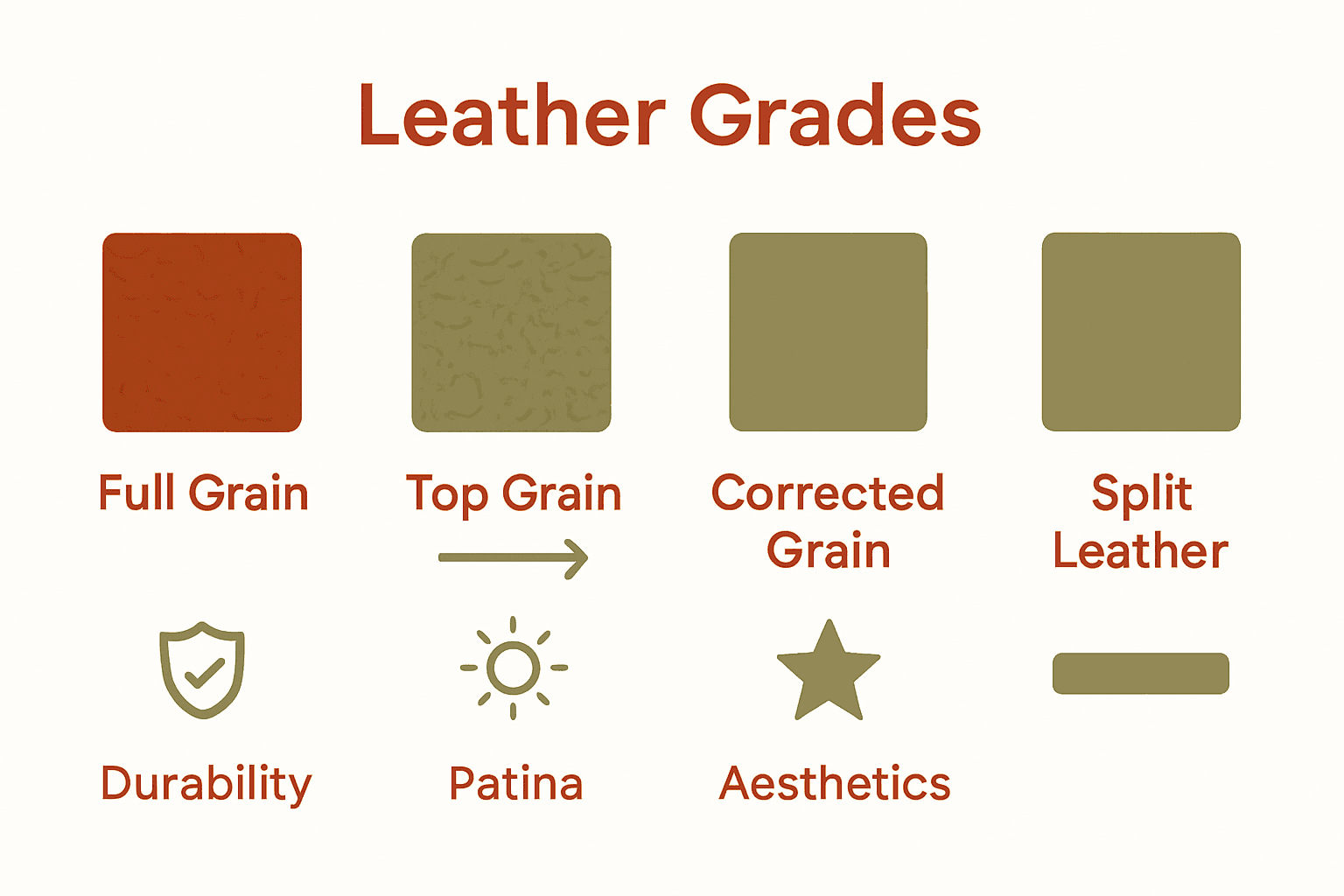
Selecting the right leather is fundamental to artisanal craftsmanship, with each type offering unique characteristics and potential. According to Spinneybeck, leather is broadly categorized into several distinct grades: full grain, enhanced grain, corrected grain, top grain, and split leathers, each representing different levels of quality and processing.
Full grain leather stands as the pinnacle of leather quality, retaining the hide’s natural pores and grain textures. This premium material develops a rich patina over time, gaining character and beauty with age. Enhanced and corrected grain leathers, by contrast, involve artificial texturing processes that modify the leather’s original surface - creating a more uniform appearance but sacrificing some of the material’s inherent natural qualities.
Beyond general classifications, specific leather types offer remarkable versatility. Goatskin, for instance, known traditionally as Morocco leather, provides exceptional durability and softness. Historically prized for bookbindings, gloves, and boots, goatskin represents the nuanced potential of specialised leather materials.
Key considerations when selecting leather include:
- Intended product purpose
- Desired aesthetic and texture
- Durability requirements
- Long-term maintenance expectations
- Budget constraints
For those seeking to understand the nuanced world of leather selection, explore our comprehensive guide on Italian leather characteristics, where we delve deeper into what makes certain leather types truly exceptional.
Traditional Handcraft Methods and Tools
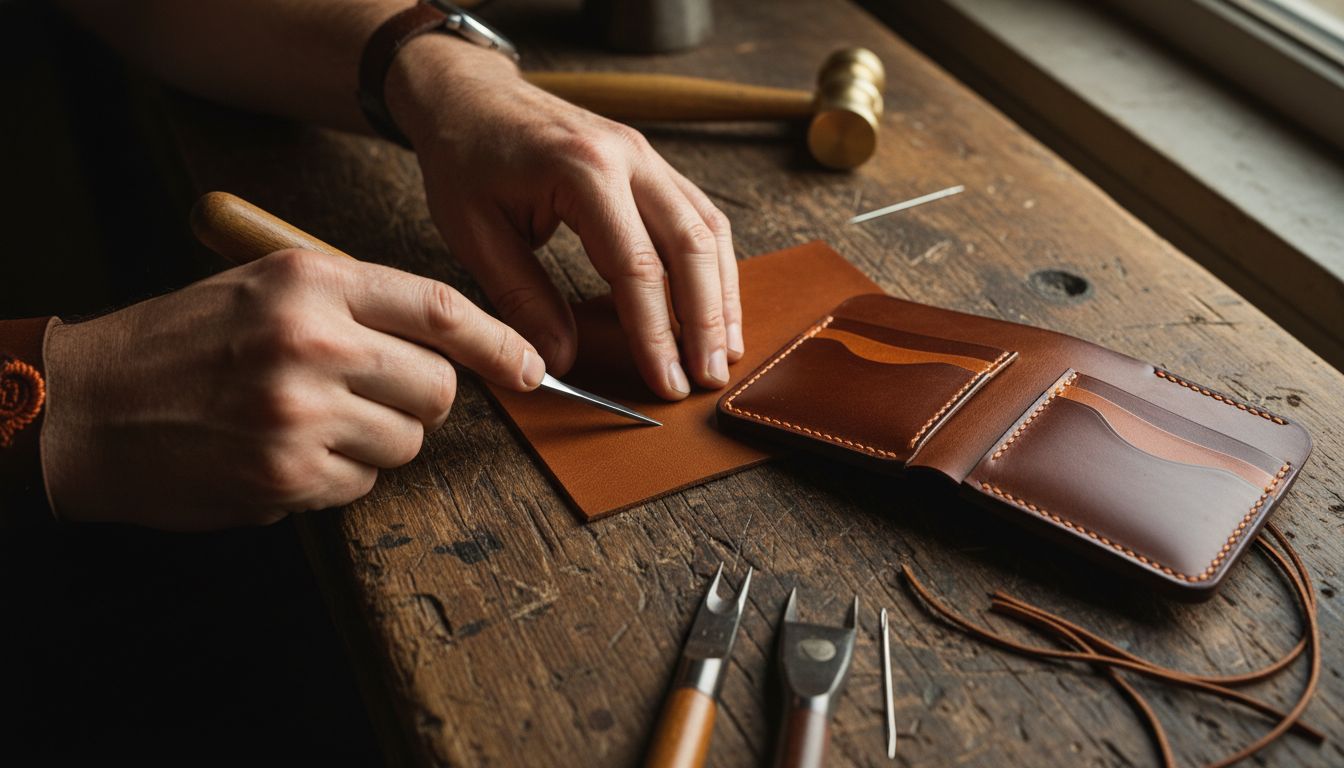
Artisanal leather crafting relies on a rich repertoire of specialized techniques that transform raw materials into extraordinary objects. Skiving, according to Wikipedia, is a fundamental process used to reduce leather thickness, particularly in areas requiring intricate bending or folding. This delicate technique is typically performed on the leather’s flesh side, ensuring maximum pliability without compromising the material’s structural integrity.
Traditional joining methods play an equally crucial role in leather craftsmanship. Buckstitching, a time-honoured technique, involves using a pronged metal chisel to create precise lacing slits, through which sturdy laces are meticulously threaded to join heavy leather pieces. This method not only ensures exceptional durability but also adds a distinctive aesthetic quality to the final product.
The essential tools for traditional leather crafting include:
- Precision skiving knives
- Leather punches and chisels
- Heavy-duty needles
- Specialized cutting mats
- Leather working hammers
- Edge bevelers and burnishers
- Sturdy cutting surfaces
Each tool represents generations of accumulated knowledge, transforming simple materials into objects of remarkable beauty and functionality.
VIDEO:video_content] [Discover more about authentic Italian leather crafting techniques, where tradition meets contemporary design in every carefully constructed piece.
Identifying Authentic Craftsmanship and Quality
Authentic leather craftsmanship transcends mere production, representing a profound artistic expression deeply rooted in skill and tradition. Wikipedia highlights that genuine craftsmanship is characterized by nuanced techniques such as dyeing, painting, molding, laser cutting, perforation, and pyrography - each method demanding extraordinary precision and expertise.
Handmade quality reveals itself through subtle yet distinctive markers that machine-produced items cannot replicate. These indicators include meticulously finished edges, consistent yet intentionally imperfect stitching, natural leather variations, and carefully selected materials that showcase the artisan’s discerning eye. The subtle asymmetries and unique characteristics speak to human involvement, transforming each piece from a mere object into a narrative of craftsmanship.
Key indicators of authentic leather craftsmanship include:
- Seamless, hand-finished edges
- Individual material variations
- Precise, consistent stitching
- Natural leather grain preservation
- Minimal machine interventions
- Thoughtful material selection
- Attention to structural integrity
For enthusiasts seeking deeper understanding of exceptional leather work, explore our comprehensive guide on identifying authentic leather, where we unveil the nuanced world of true artisanal mastery.
Common Challenges and How to Avoid Them
Leather crafting presents a complex array of potential challenges that can dramatically impact the final product’s quality and aesthetic appeal. Research from ArXiv highlights the critical importance of defect detection, noting that traditionally, quality control relies heavily on experienced experts who can identify subtle imperfections in leather materials.
Material handling represents another significant challenge in leather craftsmanship. According to DUAP, understanding advanced equipment selection and storage principles is fundamental to optimizing production processes and minimizing potential material degradation. Proper storage conditions, controlled humidity, and strategic material selection can prevent common issues like leather warping, discoloration, and structural weakness.
Common leather crafting challenges include:
- Uneven leather thickness
- Material inconsistencies
- Poor edge finishing
- Inappropriate storage conditions
- Inadequate tool maintenance
- Incorrect cutting techniques
- Moisture and humidity damage
Navigating these challenges requires continuous learning, meticulous attention to detail, and a commitment to mastering traditional techniques. Learn more about identifying and addressing leather crafting challenges, where we provide insights into maintaining the highest standards of artisanal leather work.
Discover True Artisanal Leather Craftsmanship with San Rocco Italia
Understanding the challenges of artisanal leather crafting, from selecting premium full-grain leather to mastering traditional handcraft techniques, can deepen your appreciation for genuine quality and timeless design. If you seek to avoid common pitfalls like uneven thickness or poor edge finishes, and desire accessories that tell a story of skilled craftsmanship and authentic materials, explore the meticulous work behind each piece.

Experience the luxury of leather goods that embrace tradition and individuality at San Rocco Italia. Our woman-owned boutique offers exquisite handbags and accessories proudly made in Italy by artisans who uphold these very techniques discussed in the article. Elevate your collection today by visiting our site and embracing craftsmanship that stands the test of time. Learn more about our dedication to authenticity and quality in our artisanal leather craftsmanship guide and see how passion transforms leather into art.
Frequently Asked Questions
What are artisanal leather crafting techniques?
Artisanal leather crafting techniques involve traditional skills and methods used by craftsmen to transform raw leather into high-quality products. These techniques include dyeing, painting, molding, laser cutting, perforation, and pyrography, emphasizing precision and creativity.
What is the difference between full grain leather and corrected grain leather?
Full grain leather is the highest quality leather that retains the hide’s natural grain and pores, allowing it to develop a rich patina over time. Corrected grain leather undergoes processes to modify its surface for a more uniform appearance but sacrifices some natural characteristics.
What tools are essential for traditional leather crafting?
Essential tools for traditional leather crafting include precision skiving knives, leather punches, chisels, heavy-duty needles, cutting mats, working hammers, edge bevelers, and burnishers, each playing a crucial role in crafting high-quality leather products.
How can I identify authentic leather craftsmanship?
Authentic leather craftsmanship can be identified by careful detail, including seamless hand-finished edges, natural leather grain, consistent stitching, minimal machine intervention, and individual material variations that highlight the artisan’s skill and attention to quality.



