


How to restore leather goods and revive luxury bags
TL;DR:
- Leather naturally ages by drying, fading, and scratching, reducing its luminous quality, but proper restoration can preserve its beauty. Using the correct tools and following a three-step process—clean, condition, and protect—ensures a professional-looking result that respects the leather’s character. Avoid amateur mistakes like over-conditioning, unapproved products, or rushing, and seek professional help only for severe damage or vintage pieces with valuable patina.
A beloved leather handbag does not simply age. It dries, fades, scratches, and slowly loses the luminous quality that made you fall in love with it. Knowing how to restore leather goods is the skill that stands between a cherished Italian bag reaching its full potential and an expensive piece spending years in the back of a wardrobe. Whether your bag is a well-used daily companion or a vintage find with decades of character, restoration is not just maintenance. It is a form of respect for the craft behind the object.
Table of Contents
- Essential tools and materials for leather restoration
- Step-by-step process: clean, condition, and protect your leather goods
- Dealing with common leather damages: scratches, stains, and fading
- Best practices and mistakes to avoid in home leather restoration
- When to seek professional leather restoration or preservation
- Why careful restoration honours the timeless craft of leather making
- Discover premium leather care at San Rocco Italia
- Frequently asked questions
Key Takeaways
| Point | Details |
|---|---|
| Three-step restoration | Restore leather by cleaning, conditioning, then protecting to maintain suppleness and appearance. |
| Condition wisely | Condition only when leather shows dryness, using thin layers and buffing to avoid greasiness. |
| Treat damage carefully | Blend minor scratches with conditioner; use colour-matched balm for deeper repair on clean, dry leather. |
| Avoid DIY risks | Don’t restore vintage leather with structural damage or valuable patina without professional advice. |
| Use proper products | Only apply products formulated for leather to prevent damage and ensure long-lasting care. |
Essential tools and materials for leather restoration
Before you touch a single leather surface, you need the right kit. Using the wrong product on a luxury full-grain Italian bag is not a minor mistake. It can permanently alter the texture, darken the colour unevenly, or strip the natural oils that give premium leather its character. Quality tools make the difference between a result that looks professional and one that looks rushed.
Here is what you need before starting any leather restoration work:
- Lint-free microfibre cloths for cleaning and applying conditioner without leaving fibres behind
- A horsehair brush for removing dry dirt and surface dust. Horsehair brushes clean effectively without scratching delicate leather surfaces
- A dedicated leather cleaning spray or foam formulated for full-grain or smooth leather. Avoid anything with sulphates or alcohol
- A quality leather conditioner containing natural oils such as mink oil, jojoba, or lanolin. Avoid petroleum-based conditioners, which coat leather rather than nourishing it from within
- Soft applicator pads or cotton cloth for conditioning in gentle circular motions
- A leather protectant spray to repel water and light stains after conditioning
- A leather repair kit containing colour-matched filler and balm for minor scratches or scuffs
For a full breakdown of which products to choose for specific bag types, the leather handbag cleaner expert guide from San Rocco Italia is a valuable starting point. Choosing the right conditioner is equally important, and the best leather conditioner for bags guide covers exactly what to look for.
The following table outlines what to use and what to avoid:
| Product type | Recommended | Avoid |
|---|---|---|
| Cleaner | pH-neutral leather foam or spray | Dish soap, baby wipes, all-purpose cleaners |
| Conditioner | Lanolin, jojoba, or mink oil-based | Petroleum jelly, coconut oil, baby oil |
| Brush | Horsehair brush (soft bristle) | Stiff nylon brushes, toothbrushes |
| Protectant | Leather-specific water repellent spray | Silicone sprays, general fabric protectors |
| Repair | Colour-matched leather balm or filler | Superglue, nail polish, household paint |
For a thorough overview of general leather care standards, the leather cleaning and care guide provides detailed insight into the different requirements for various leather types and finishes.
Step-by-step process: clean, condition, and protect your leather goods
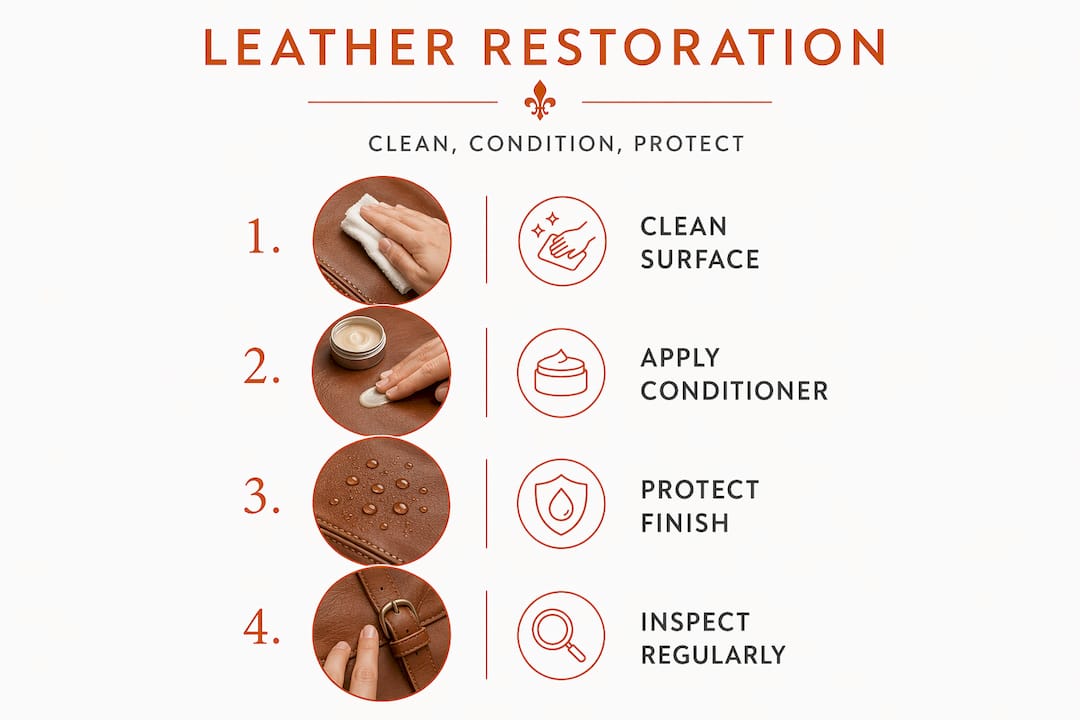
Leather restoration follows three steps: clean, condition, and protect. Conditioning is the most critical stage because it hydrates the leather and prevents the fibre structure from drying out and cracking. Understanding why each step matters will help you do each one properly.
Follow this sequence every time:
- Empty and prepare the bag. Remove all contents, open all pockets, and wipe out the interior lining with a dry cloth.
- Brush away surface dirt. Use a horsehair brush in long, gentle strokes to remove loose dust and particles before any liquid touches the leather.
- Apply your leather cleaner. Spray a small amount onto a microfibre cloth, never directly onto the bag. Work in sections using small circular motions. For guidance on doing this without harsh products, the clean leather handbag naturally guide offers excellent advice.
- Allow the leather to dry fully. This step is non-negotiable. Applying conditioner to damp leather traps moisture and can cause mildew or uneven absorption. Give it at least 30 to 60 minutes in a well-ventilated room away from direct heat.
- Apply conditioner in thin layers. Use a soft cloth or applicator pad. Work the conditioner in gently using circular motions, covering the entire surface evenly. Never apply it directly from the bottle. The best leather conditioner for bags resource explains why thin layers outperform a single heavy application every time.
- Let it absorb. Conditioning should absorb for 15 to 30 minutes before buffing. After that, use a clean dry cloth to buff off any excess and prevent a greasy surface finish.
- Apply a protectant spray. Hold the can 20 to 30 centimetres from the surface and apply a fine, even coat. Allow it to dry completely before using the bag. For recommendations on which products perform best, the best leather protector for luxury bags guide covers options tested on premium Italian leather.
- Hang the bag overnight. This allows the conditioner to continue absorbing evenly, especially in creased areas like handles and gussets.
Pro Tip: Work in a cool, shaded environment. Heat causes conditioner to absorb too quickly into the surface layer, which can result in uneven colour and dry patches. Italian full-grain leather in particular benefits from slow, steady absorption.
Dealing with common leather damages: scratches, stains, and fading
Now that you have restored basic suppleness, let us explore treating common imperfections that affect luxury leather’s appearance. Not every mark on your bag requires a repair kit, and knowing the difference saves both time and unnecessary intervention.
Scratches
Minor surface scratches on full-grain leather can often be reduced simply by conditioning. Minor scratches diminish after applying conditioner because the oils plump the leather fibres and blend the disrupted edges. For slightly deeper scuffs, a colour-matched leather balm applied with a fingertip can work well. The warmth of your finger helps the product penetrate evenly. For anything deeper than the surface layer, a leather filler from a repair kit is needed before colour correction.
Oil-based stains
Act quickly. Oil stains respond to absorbents like cornstarch applied immediately after the spill occurs. Sprinkle a generous amount over the stain, leave it for several hours, then brush away gently. Follow with a careful clean using your leather cleaner. Never rub an oil stain. That spreads it further into the fibres.
Water stains
Counterintuitive as it sounds, the best treatment for a water stain is more water. Lightly dampen the entire panel with a clean, damp cloth so the waterline disappears into a uniformly moistened surface. Allow it to dry slowly at room temperature before conditioning.
Colour fading
Fading is one of the most common issues with well-loved leather bags. The leather polish for handbags guide covers this in detail. Use a colour-matched leather dye or cream, and apply thin, colour-matched balm on a fully clean and dry surface to ensure proper bonding. Always build colour gradually with multiple thin coats rather than one heavy application.
Pro Tip: Before treating any stain or fade, test your product on the interior base of the bag where it will not show. Even products labelled for your leather type can behave differently on aged or previously conditioned surfaces.
Here is a quick comparison for treating the three most common types of leather damage:
| Damage type | First step | Treatment | Common mistake |
|---|---|---|---|
| Surface scratches | Clean and dry the area | Condition or apply colour-matched balm | Rubbing too hard and spreading the scratch |
| Oil stain | Apply cornstarch immediately | Clean after absorption, then condition | Using water first, which drives oil deeper |
| Colour fading | Clean entire area evenly | Thin coats of matching leather dye or cream | Applying dye to a dirty or damp surface |
For guidance on natural cleaning methods before tackling these repairs, the clean my leather purse naturally guide is a helpful reference.
Best practices and mistakes to avoid in home leather restoration
Having covered treatments and repairs, it is important to learn how to protect your work and avoid costly mistakes. Some of the most irreversible damage done to luxury leather happens not from neglect, but from well-intentioned but misguided care.
What to do:
- Always follow the clean, condition, protect sequence. Conditioning on dirty or damp leather traps dirt and produces patchy, uneven results
- Patch test every new product in a hidden area before full application
- Use products sparingly. Over-conditioning is a real problem: too much conditioner attracts dirt and creates a greasy surface that dulls the leather’s natural sheen
- Store your bag properly after care. Keep it stuffed with acid-free tissue to maintain its shape, in a breathable dust bag, away from direct light. The store leather handbags properly guide explains how storage directly affects how long your restoration lasts
- Allow each product to dry or absorb fully before applying the next
What to avoid:
- Dish soap or washing-up liquid. These strip the natural oils from leather rapidly and leave it dry and prone to cracking
- WD-40 or baby oil. Both leave residues that attract grime and can permanently darken light-coloured leather
- Applying conditioner directly from the bottle, which causes pooling and visible dark patches
- Using coloured cloths that may transfer dye to damp leather during cleaning
- Rushing. Leather responds slowly. Giving each step adequate time is not optional
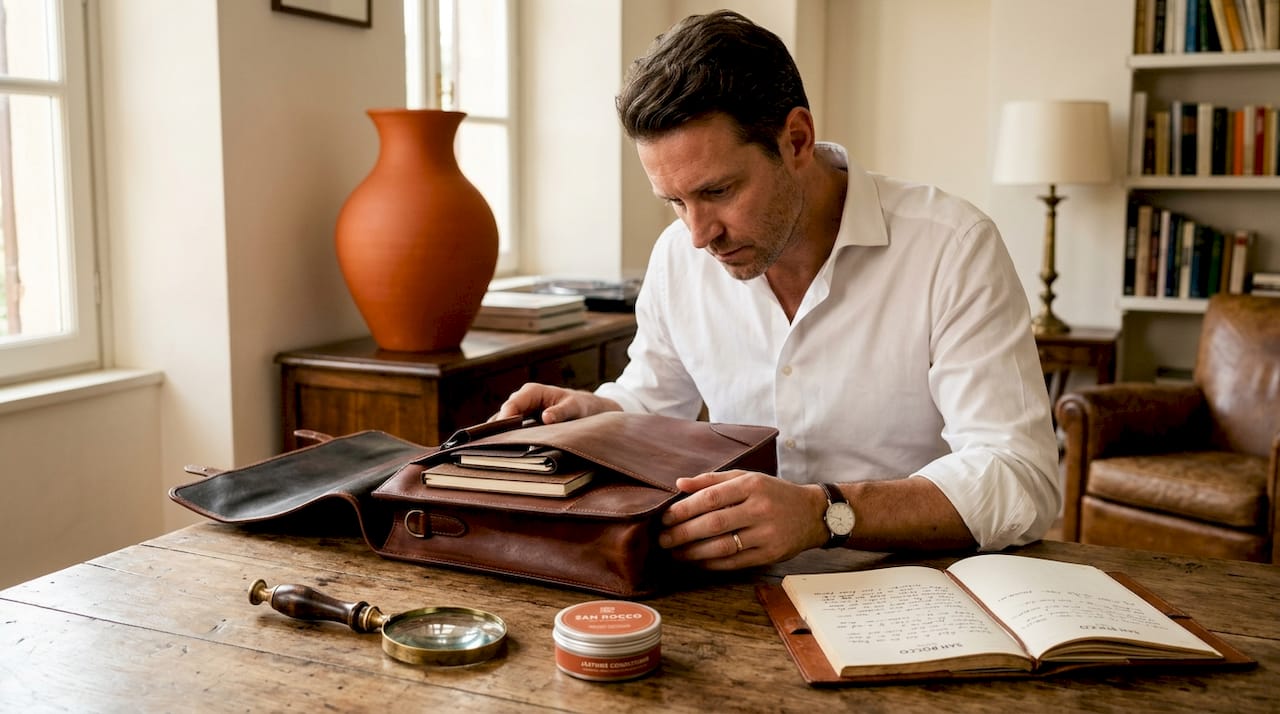
“The key is the sequence: clean, condition, protect. Aggressive treatments aiming for ‘new look’ often harm leather and reduce its long-term value.”
This point is particularly important for luxury full-grain leather. The surface is not sealed like corrected-grain leather, so it absorbs products quickly and responds strongly to whatever you apply. That sensitivity is also what gives it its beauty and character over time.
When to seek professional leather restoration or preservation
While many repairs are achievable at home, some leather conditions require expert care to protect your investment. Knowing when to stop and call a professional is as important as knowing how to clean and condition properly.
Signs that your bag needs professional attention rather than home care:
- Dry rot. When leather crumbles or feels powdery, its fibres have broken down structurally. No amount of conditioning will reverse this. Deep cracks and structural damage require treatment by a skilled leather professional
- Deep cracks or flaking. Surface cracking that extends through the leather rather than sitting only at the finish layer is beyond DIY treatment
- Severe or set-in stains. Ink, dye transfer from clothing, and chemical stains that have fully dried into the grain often require specialist solvents and re-dyeing
- Mould penetration. Surface mould can sometimes be treated at home, but mould that has penetrated the leather fibres needs professional intervention to prevent the damage spreading
- Hardware failure. Broken zips, loose rivets, or detached straps on high-value bags are best repaired by a specialist who can source matching hardware
- Antique or vintage leather with an established patina. The patina on a vintage bag is part of its story and its value. Attempting to restore it to a “new” appearance can erase that entirely and significantly reduce both its aesthetic and monetary worth
Preservation, in the professional sense, prioritises minimal intervention. A conservator’s goal is stability, not transformation. If your bag is particularly valuable, either sentimentally or financially, consulting a certified leather conservator before doing anything at all is the safest approach.
Why careful restoration honours the timeless craft of leather making
There is a view common in leather care discussions that more is always better. More conditioner, more polish, more intervention. In practice, the opposite is often true, and this is where understanding the philosophy behind luxury leather ownership changes everything.
When skilled artisans in Italy cut and stitch full-grain leather, they are working with a material that already carries decades of potential. The natural grain, the subtle variation in colour, the way the hide responds to light: all of these qualities are earned through quality. Over time, the leather develops what the Italians call patina, a deepening of colour and character that no factory finish can replicate. It is the difference between a bag that looks expensive and one that looks lived-in with elegance.
Restoration, done thoughtfully, supports that natural process. It does not erase the history; it sustains the material so the history can continue to accumulate. Conditioning replenishes oils. Cleaning removes what does not belong. Protection gives the leather a fighting chance against daily life. None of that contradicts the leather’s nature. It works with it.
The mistake many people make is treating restoration as a cosmetic exercise. They want the bag to look new. But a bag that looks new when it is ten years old has usually been over-treated, its grain filled in, its patina stripped back, its character flattened. The artisans who made it would likely wince.
What distinguishes a mindful leather owner is patience and restraint. It is knowing that doing less, more carefully, protects more than doing more, quickly. This approach connects you to the same sensibility that produced the piece in the first place. For an expanded view on this, the expert care for timeless leather article from San Rocco Italia reflects exactly this philosophy.
Discover premium leather care at San Rocco Italia
For those inspired to care for their leather handbags with the highest standards, San Rocco Italia offers trusted products and expertise built around Italian craftsmanship and timeless style.
At San Rocco Italia, we understand that a luxury leather bag is not just an accessory. It is an investment, a piece of craft, and often something deeply personal. That is why we have carefully curated a selection of leather conditioners, cleaners, and protectants chosen specifically for premium full-grain leather. Every recommendation we make follows the clean, condition, protect sequence outlined in this guide. If you are caring for an Italian leather piece, whether it is one of ours or a cherished find from another trusted maker, you will find both the products and the advice you need to keep it looking beautiful for years to come.
Frequently asked questions
How often should I condition my luxury leather handbag?
Condition your handbag every 3 to 6 months depending on usage and exposure to dryness, applying conditioner only when the leather feels dry or stiff. Conditioning every 6 months restores oils and flexibility, though bags used daily or in dry climates may benefit from slightly more frequent care.
Can I restore deeply scratched or torn leather at home?
Minor scratches can often be treated at home using a colour-matched conditioner or balm, but deep cracks and tears require specialised treatment by skilled leather professionals to avoid worsening the damage permanently.
Is it safe to use household products like WD-40 on leather?
No. WD-40 contains petroleum distillates that stain and damage fine leather surfaces and leave strong odours. Only use products specifically formulated for leather care.
What are signs that my vintage leather handbag should not be restored at home?
If the leather shows dry rot, flaking, severe mould, or has a valuable natural patina, do not attempt home restoration. Restoration on brittle vintage leather often causes irreversible structural damage, and professional preservation is the safer choice.
How can I avoid patchy colour when applying leather dye or balm?
Always ensure the leather is fully clean and dry before applying any colour product. Applying colour on dirty surfaces prevents proper bonding and leads to patchiness. Build colour in thin, even layers and allow each coat to dry completely before applying the next.
Recommended
- How to Clean Leather Handbag for Long-Lasting Luxury Care – San Rocco Italia
- Leather Handbag Cleaner: Expert Guide to Pristine Luxury Bags – San Rocco Italia
- How to Store Leather Handbags for Longevity and Care – San Rocco Italia
- How to clean luxury handbags and preserve their beauty – San Rocco Italia
