


How to clean handbag leather for lasting luxury care
You’ve invested in a beautiful Italian leather handbag, but one wrong cleaning move can cause irreversible damage. Harsh household products strip natural oils, leaving leather dry and cracked. Understanding the correct cleaning process protects your investment and extends your handbag’s life from a few years to decades of elegant use.
Table of Contents
- Why Proper Cleaning Matters For Italian Leather Handbags
- Tools And Materials Needed For Safe Cleaning
- Step-By-Step Cleaning And Conditioning Process
- Storage And Ongoing Handbag Maintenance
- Common Mistakes To Avoid And Troubleshooting Tips
- Expected Results And Handbag Longevity With Proper Care
- Explore San Rocco Italia’s Collection And Care Resources
Key takeaways
| Point | Details |
|---|---|
| Lifespan extension | Proper care extends handbag life to 10-20+ years compared to 3-5 years without maintenance. |
| Product selection | Use pH-neutral cleaners formulated for Italian leather and always spot test before full application. |
| Chemical avoidance | Never use vinegar, alcohol, or dish soap as these strip vital oils causing permanent damage. |
| Conditioning frequency | Condition leather only 1-2 times per year to prevent sticky buildup that attracts dirt. |
| Storage essentials | Fill handbags with acid-free tissue and store in breathable cotton dust bags away from sunlight. |
Why proper cleaning matters for Italian leather handbags
Italian leather stands apart from synthetic materials because it’s a natural, porous substance that breathes and evolves with use. The fibres contain natural oils that keep the material supple and soft. When you apply the wrong cleaning products, you strip these essential oils away, causing the leather to dry out and crack.
Here’s what makes Italian leather unique and vulnerable:
- The material is tanned using traditional methods that preserve natural characteristics
- Pores in the leather absorb moisture, oils, and cleaning products quickly
- Full-grain leather develops a desirable patina that enhances beauty over time
- Natural fibres respond differently than synthetic materials to temperature and humidity
Improper cleaning causes visible damage within months. You’ll notice stiffness first, then small cracks appear along stress points like corners and handles. The leather loses its natural sheen and develops a dull, lifeless appearance. This deterioration isn’t just cosmetic. Once the fibres crack, the damage cannot be reversed.
Proper leather treatment for bags preserves the material’s integrity. Regular gentle cleaning removes dirt before it embeds in pores. Appropriate conditioning replaces oils lost through normal use. These simple practices transform a handbag’s lifespan dramatically, taking it from a typical 3-5 years to over two decades of daily use whilst maintaining its elegant appearance.
Tools and materials needed for safe cleaning
Gathering the right supplies before you start prevents rushed decisions that damage leather. You need specific products formulated for Italian leather, not generic household cleaners that seem convenient but cause harm.
Essential cleaning toolkit:
- pH-neutral leather cleaner designed specifically for full-grain Italian leather
- High-quality leather conditioner with natural oils
- Several soft microfibre cloths for cleaning and buffing
- Soft-bristled brush for gentle dirt removal
- Cotton swabs for detailed work in seams and corners
- Acid-free tissue paper for storage and shape retention
Avoid harsh household chemicals entirely. Products containing vinegar, alcohol, or dish soap might clean kitchen surfaces effectively, but they destroy leather by stripping away the natural oils that keep fibres flexible. Even “gentle” dish soap designed for hands removes too much oil from leather surfaces.
| Product type | Safe for Italian leather | Damages leather |
|---|---|---|
| pH-neutral leather cleaner | ✓ | |
| Leather conditioner with natural oils | ✓ | |
| Household vinegar solution | ✓ | |
| Rubbing alcohol | ✓ | |
| Dish soap or washing-up liquid | ✓ | |
| Baby wipes | ✓ |
Organise your workspace before beginning. Lay out all materials within easy reach so you’re not searching for supplies mid-clean with wet leather exposed. This preparation prevents you from making hasty substitutions that could damage your handbag.
Pro Tip: Label your leather care products clearly and store them separate from household cleaners to prevent accidental mix-ups that could ruin your handbag.
Step-by-step cleaning and conditioning process
Following a systematic approach ensures thorough cleaning whilst protecting delicate leather fibres. Rush this process and you risk damage, but methodical care produces beautiful results.
-
Perform a spot test first. Choose a hidden area like the bottom edge or inside pocket. Apply a small amount of cleaner and wait 24 hours. Check for colour changes, darkening, or texture alterations. Skip this step and you might discover an adverse reaction across your handbag’s entire front panel.
-
Remove surface dust weekly. Take a soft, slightly damp microfibre cloth and gently wipe the entire surface. Use light pressure and circular motions. This regular maintenance prevents dirt from embedding in pores where it becomes difficult to remove.
-
Apply pH-neutral cleaner for deeper cleaning. Dampen your cloth with cleaner, never apply product directly to leather. Work in small sections about the size of your palm. Wipe gently using circular motions, then immediately buff dry with a clean cloth. Moving in sections prevents overwetting that damages fibres.
-
Allow complete air drying. Place your handbag in a cool, well-ventilated area away from direct sunlight and heat sources. Never use a hairdryer or place near radiators. Forced heat causes leather to shrink and crack. Natural air drying takes several hours but preserves material integrity.
-
Condition leather sparingly. Apply conditioner only 1-2 times per year using a clean cloth. Rub a thin, even layer across all leather surfaces. Let it absorb for 20 minutes, then buff away excess. Over-conditioning creates sticky buildup that attracts dirt.
Key practices during cleaning:
- Never saturate the leather; slightly damp cloths work better than wet ones
- Avoid scrubbing or harsh rubbing that damages surface fibres
- Clean seams and hardware carefully to prevent tarnishing or scratching
- Work in good lighting so you can see dirt removal progress
Pro Tip: Use cotton swabs dipped in cleaner to reach intricate areas around zips, buckles, and stitching where dirt accumulates but cloths can’t reach effectively.
For specific challenges with lighter leather, consult guides on how to clean cream leather handbag naturally and natural leather purse cleaning for additional techniques.
Storage and ongoing handbag maintenance
How you store your handbag between uses dramatically affects its longevity and shape retention. Proper storage prevents common damage like sagging, creasing, and moisture-related deterioration.
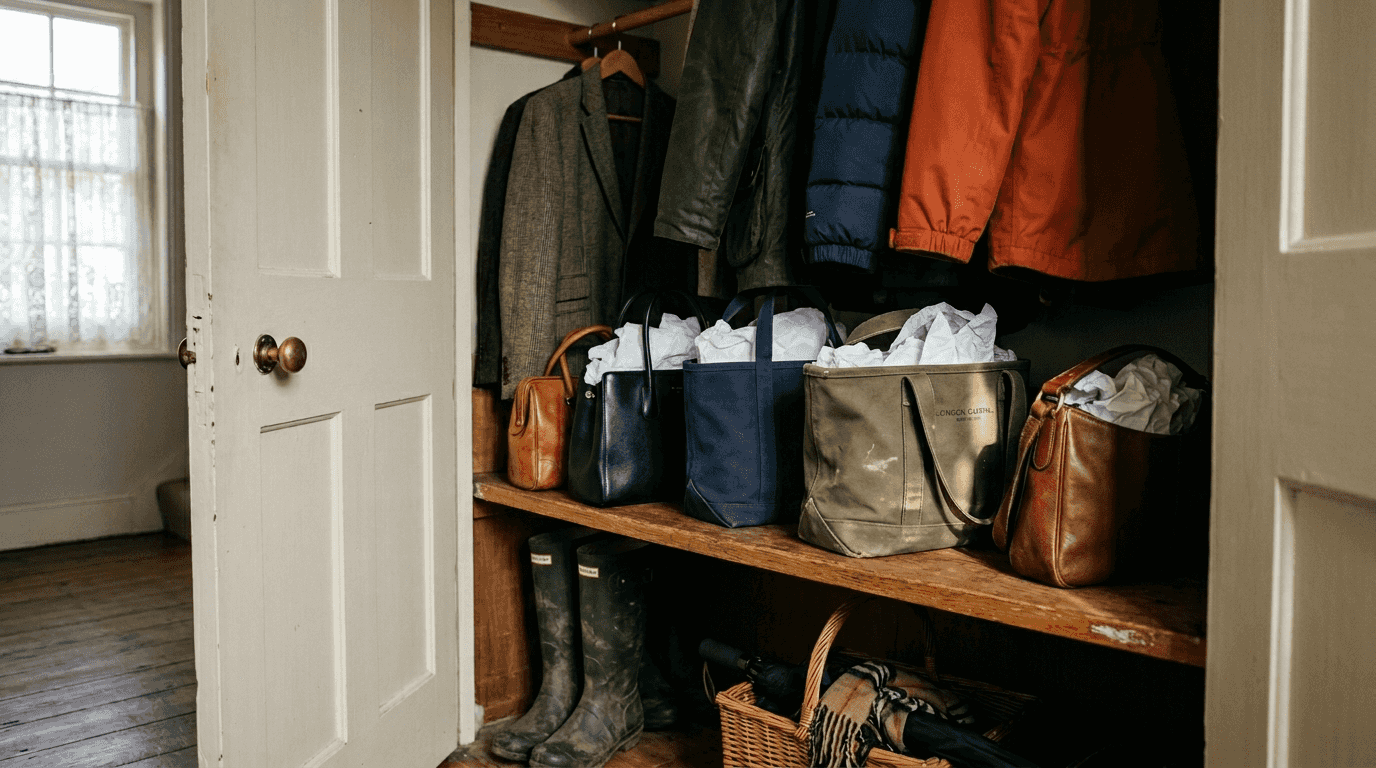
Fill your handbag completely with acid-free tissue paper before storing. This simple step maintains the structured shape and prevents creases from forming along fold lines. Regular tissue paper contains acids that can transfer to leather over time, causing discolouration, so invest in archival-quality materials.
Storage environment essentials:
- Use breathable cotton dust bags that allow air circulation whilst protecting from dust
- Never store in plastic bags or covers that trap moisture and promote mould growth
- Keep handbags away from direct sunlight which fades colour and dries leather
- Maintain consistent temperature and avoid storage near radiators or air vents
- Store upright or lying flat, never hanging by handles which stretches leather
Seasonal adjustments matter significantly for leather care. Summer humidity requires more frequent checks for mould or mildew. Winter heating systems dry out indoor air, potentially causing leather to crack. During humid months, place silica gel packets in storage bags to absorb excess moisture. In dry winter conditions, you might need to condition slightly more frequently.
Regularly inspect stored handbags every few weeks. Look for signs of shape distortion, colour changes, or texture alterations. Catching problems early prevents permanent damage. If you notice dryness developing, apply a thin layer of conditioner. If you spot mould, address it immediately with appropriate leather-safe products.
For detailed storage techniques, review how to store leather handbags naturally for comprehensive guidance on protecting your investment during periods of non-use.
Common mistakes to avoid and troubleshooting tips
Even well-intentioned care can damage Italian leather if you follow incorrect advice or use unsuitable products. Understanding these pitfalls helps you avoid costly mistakes.
Never use these household products:
- Vinegar solutions that strip natural oils causing dryness and cracking
- Rubbing alcohol or methylated spirits that remove protective finishes
- Dish soap or washing-up liquid that over-cleans and damages fibres
- Window cleaners containing ammonia that discolour leather
- Baby wipes with moisturisers that leave residue attracting dirt
Overwetting ranks among the most common errors. Excess water penetrates deep into leather fibres, causing stiffness and permanent texture changes. Always use slightly damp cloths, never dripping wet ones. If water accidentally soaks into leather, blot immediately with dry towels and allow slow air drying.
Spot testing saves handbags from disaster. You might assume a product is safe, but leather variations mean reactions differ. Always test in hidden areas first. This 30-second precaution prevents irreversible staining across visible surfaces.
Stubborn stains require professional help. Attempting aggressive home removal often spreads the mark or damages surrounding leather. Professional leather specialists have appropriate solvents and techniques that preserve material integrity whilst removing marks.
Over-conditioning creates sticky buildup that attracts dirt and dust. Some owners condition monthly thinking more is better, but this frequency causes more harm than good. Limit conditioning to twice yearly unless you live in extremely dry climates.
Using inappropriate cleaning products might seem economical initially, but the cost of replacing a damaged luxury handbag far exceeds investing in proper leather-specific care supplies.
Recognise when DIY care isn’t sufficient. Deep scratches, ink stains, extensive water damage, and colour transfer often require professional restoration. Attempting fixes beyond basic cleaning risks making damage permanent.
For comprehensive care principles, explore caring for leather handbags to understand how proper techniques preserve Italian craftsmanship.
Expected results and handbag longevity with proper care
Committing to proper leather care delivers measurable returns in both aesthetics and longevity. Understanding realistic outcomes helps you appreciate the value of consistent maintenance.
Well-maintained full-grain leather lasts 10-20+ years with regular care, compared to just 3-5 years when neglected. This dramatic difference stems from preserving the leather’s natural oils and preventing fibre breakdown. Your handbag doesn’t just survive longer; it improves visually over time.
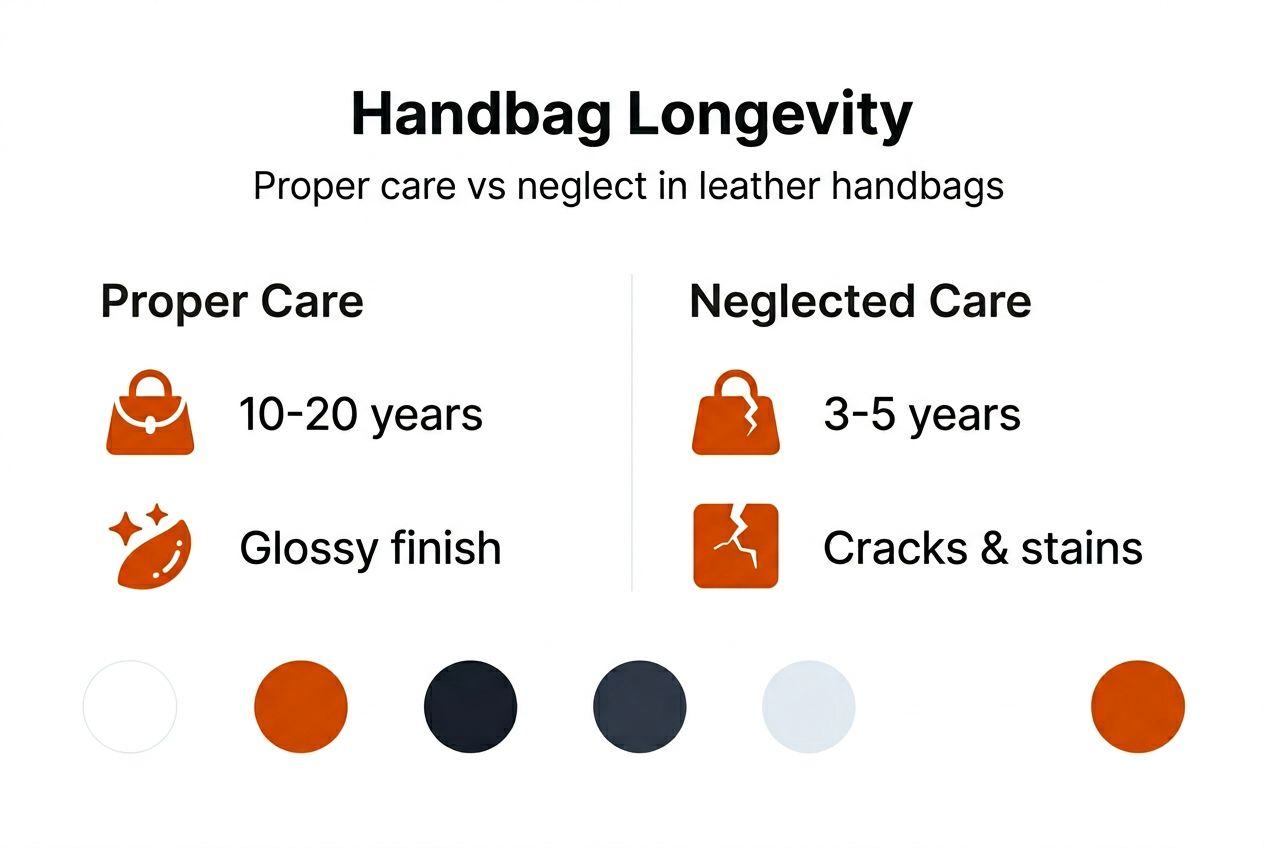
The patina that develops on properly cared-for Italian leather enhances its character and value. This natural darkening and softening process creates unique colour variations and a lustrous sheen that new leather lacks. Collectors and enthusiasts prize this aged appearance, viewing it as a mark of authentic quality and proper stewardship.
Prevented damage through maintenance:
- Dryness and brittleness from oil depletion
- Cracking along stress points and corners
- Colour fading from sun exposure and harsh cleaners
- Loss of suppleness making leather feel stiff
- Permanent staining from embedded dirt
| Care approach | Typical lifespan | Common issues | Appearance |
|---|---|---|---|
| Proper cleaning and conditioning | 10-20+ years | Minimal; natural patina develops | Rich, lustrous, unique character |
| Occasional cleaning only | 5-8 years | Some dryness, minor cracking | Acceptable but shows wear |
| No maintenance | 3-5 years | Severe cracking, stiffness, fading | Deteriorated, prematurely aged |
Your investment gains protection through simple consistent practices. A handbag costing several hundred pounds becomes economical when it serves you for two decades instead of five. The per-year cost drops dramatically, making luxury leather goods practical long-term purchases rather than fleeting indulgences.
Beyond financial value, properly maintained handbags retain aesthetic appeal that complements your style for years. They don’t look worn out or neglected; they showcase the beautiful ageing process that makes Italian leather special.
Explore San Rocco Italia’s collection and care resources
Now that you understand how proper care extends handbag life, explore authentic Italian leather pieces crafted to reward your maintenance efforts. San Rocco Italia offers luxury handbags made by skilled Italian artisans using premium full-grain leather and traditional techniques.

Each piece in our collection is selected for timeless design and exceptional craftsmanship that improves with proper care. Our handbags aren’t fast fashion; they’re investment pieces designed to develop character and beauty over decades of use.
Discover comprehensive leather handbag cleaning guides and expert tutorials on our blog. Learn advanced techniques for storing leather handbags naturally to protect your investment between uses. Our resources help you maintain the luxury pieces you love.
FAQ
How often should I clean and condition my Italian leather handbag?
Clean your handbag weekly with a slightly damp microfibre cloth to remove surface dirt before it embeds in leather pores. Condition only 1-2 times per year to restore natural oils and maintain suppleness without creating sticky buildup.
What should I do if my handbag gets a stubborn stain?
Avoid aggressive home treatments that risk spreading the stain or damaging surrounding leather. Seek professional leather specialist services for stubborn marks like ink, deep scratches, or extensive colour transfer that exceed basic cleaning capabilities.
Can I use household products like vinegar or alcohol to clean my leather handbag?
Never use household cleaners containing vinegar, alcohol, or dish soap on Italian leather. These products strip natural oils causing permanent dryness and cracking. Always use pH-neutral products specifically formulated for leather to protect your handbag’s integrity.
How should I store my handbag when not in use to preserve its shape?
Stuff your handbag completely with acid-free tissue paper to maintain its structured shape and prevent creasing. Store in a breathable cotton dust bag away from direct sunlight, moisture, and heat sources that damage leather fibres.
Recommended
- How to Clean Leather Handbag for Long-Lasting Luxury Care – San Rocco Italia
- How to Store Leather Handbags for Longevity and Care – San Rocco Italia
- Leather Handbag Cleaner: Expert Guide to Pristine Luxury Bags – San Rocco Italia
- How to Clean Kate Spade Leather Purse for Lasting Luxury – San Rocco Italia
- 🎒 Crossbody Bag for Geocachers – with Opencaching logo – CacheWerk


