


Desserto vegan leather: sustainable luxury handbag guide
The fashion industry is undergoing a remarkable transformation as innovative materials challenge traditional notions of luxury. Desserto vegan leather stands at the forefront of this revolution, offering a plant-based alternative that rivals genuine leather in quality and durability. Made from sustainably harvested cactus, this Mexican innovation appeals to discerning consumers who refuse to compromise on ethics or elegance. This guide explores what makes Desserto exceptional, from its unique production process to its performance in luxury handbags, helping you make informed choices about sustainable fashion investments.
Table of Contents
- Key takeaways
- Understanding what Desserto vegan leather is
- Key properties and sustainability benefits of Desserto
- Desserto vegan leather compared: durability and performance
- Desserto in luxury fashion: brands and practical considerations
- Discover luxury vegan leather goods with San Rocco Italia
- FAQ
Key Takeaways
| Point | Details |
|---|---|
| Sustainable harvesting | Desserto is produced by harvesting mature prickly pear cactus pads every six to eight months without uprooting or damaging the plants, enabling regeneration and long-term supply. |
| Water and plastics use | Processing relies on natural rainfall and recycles water, minimising fresh water use and reducing plastic waste compared with conventional leather. |
| Closed loop | Desserto recycles processing water and reuses cactus byproducts, creating a circular approach to resource management. |
| Luxury performance | The material matches genuine leather in softness, breathability and durability essential for handbags. |
| Biodegradability limits | It is partly biobased and cruelty free, but the coating prevents full biodegradability. |
Understanding what Desserto vegan leather is
Desserto represents a breakthrough in sustainable leather alternatives, combining botanical innovation with luxury performance. Developed by Mexican entrepreneur Adriano Di Marti, this patented material transforms the humble Nopal prickly pear cactus into a sophisticated textile suitable for high-end fashion. The production process begins with selective harvesting of mature cactus pads every six to eight months, a schedule that allows plants to regenerate naturally without damage. This careful timing ensures continuous supply whilst maintaining the cactus plantation’s health over its typical eight-year lifespan.
The transformation from plant to premium material involves extracting fibres and proteins from harvested pads to create a bio-resin base. This foundation receives a coating of partially bio-based polyurethane, engineered to deliver the suppleness and durability luxury consumers expect. What distinguishes Desserto from conventional synthetics is its closed-loop approach to resource management. Water used during processing undergoes recycling, whilst leftover cactus material finds new purpose in the food industry rather than becoming waste.
Key characteristics of Desserto production include:
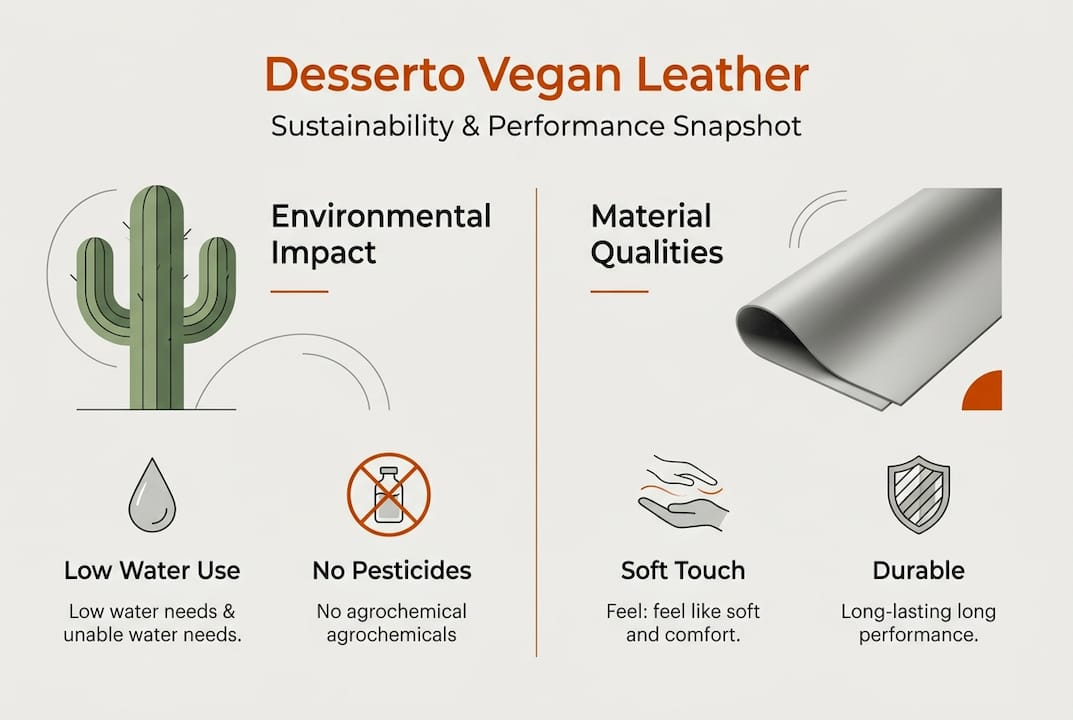
- Harvesting occurs without uprooting or harming cactus plants, preserving the ecosystem
- Processing requires no irrigation beyond natural rainfall in Mexico’s arid climate
- Zero pesticides or herbicides enter the production cycle
- Byproducts serve multiple industries, maximising resource efficiency
- The material achieves luxury-grade softness and flexibility through precise formulation
This methodology addresses multiple environmental concerns simultaneously. Traditional leather production demands extensive water resources and generates significant pollution through tanning processes. Conventional synthetic alternatives rely heavily on petroleum-based plastics. Desserto offers a middle path that reduces both water consumption and plastic dependency whilst delivering performance that satisfies luxury standards. The Desserto production process demonstrates how botanical materials can meet demanding fashion industry requirements without compromising on quality or sustainability credentials.
Key properties and sustainability benefits of Desserto
Desserto’s physical characteristics position it as a genuine contender in the luxury materials market. The material exhibits remarkable softness comparable to premium calfskin, with natural breathability that prevents the clammy feel common in fully synthetic alternatives. Water resistance and breathability work in tandem to protect contents whilst maintaining comfort during handling. Tear and abrasion resistance match levels expected from quality genuine leather, ensuring handbags withstand daily use without premature deterioration.
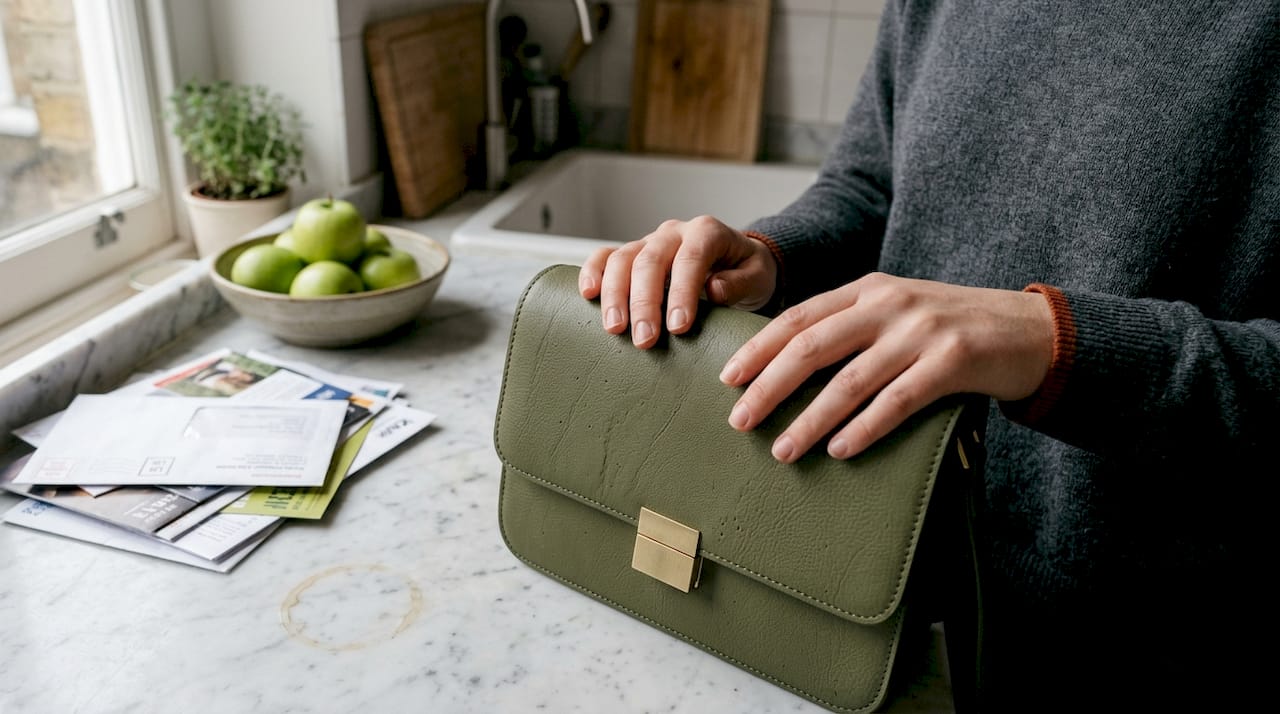
Tensile strength testing reveals Desserto performs admirably under stress, maintaining structural integrity even when stretched or pulled. This property proves essential for handbag construction, where handles and straps endure repeated strain. The material’s scratch resistance emerged clearly in real-world trials, with samples showing minimal visible wear after six months of regular handling. Such durability translates directly to longer product lifespans, reducing the frequency of replacement purchases and their associated environmental costs.
Environmental advantages extend beyond the growing phase:
- USDA certified biobased content confirms renewable material sourcing
- Cruelty-free certification guarantees no animal exploitation
- Partial biodegradability allows natural breakdown of plant-based components
- Water savings reach approximately 20% compared to traditional leather production
- Plastic waste reduction potential hits 42% versus fully synthetic vegan leathers
- No toxic chemicals enter manufacturing, protecting workers and ecosystems
The sustainability profile becomes even more impressive when examining resource inputs. Cactus cultivation requires virtually no irrigation in suitable climates, relying instead on natural precipitation. This stands in stark contrast to cattle ranching for leather, which demands substantial water for animal hydration and feed crop irrigation. Similarly, the absence of pesticides eliminates chemical runoff that might contaminate soil and waterways. These factors combine to create a genuinely lower-impact alternative for environmentally conscious consumers.
Pro Tip: Store Desserto handbags in breathable fabric dust bags away from direct sunlight and excessive humidity to maintain their supple texture and prevent any moisture-related issues that might affect the coating’s longevity.
Understanding these properties helps position Desserto accurately within the broader landscape of vegan versus real leather options. The material doesn’t claim perfection but offers a compelling balance of performance, aesthetics, and reduced environmental impact. For luxury consumers seeking alternatives that don’t compromise on quality, these characteristics provide reassurance that ethical choices need not sacrifice sophistication or durability.
Desserto vegan leather compared: durability and performance
Real-world testing provides the most reliable measure of how materials perform beyond laboratory conditions. Desserto achieved a 4.7 out of 5 durability score in six-month trials involving daily handbag use, showing no cracking, peeling, or significant visible wear. This performance places it firmly in the upper tier of vegan leather alternatives and remarkably close to quality genuine leather outcomes. The testing encompassed typical usage scenarios including exposure to varied weather conditions, regular handling, and contact with common substances like cosmetics and hand creams.
When compared directly to other popular alternatives, Desserto demonstrates clear advantages. PVC-based synthetic leathers often crack within months of regular use and offer poor breathability. Piñatex, made from pineapple leaf fibres, provides excellent sustainability credentials but typically shows faster wear patterns and lower water resistance. Genuine leather remains the traditional benchmark, offering proven longevity of three to five years with proper care. Desserto’s expected lifespan of two to three years with daily use positions it as a serious contender, particularly when factoring in its sustainability benefits.
| Material | Durability rating | Water resistance | Sustainability | Approximate price |
|---|---|---|---|---|
| Desserto | 4.7/5 | Excellent | High (partly biobased, low water) | Premium |
| Genuine leather | 4.8/5 | Good to excellent | Moderate (high water, emissions) | Premium to luxury |
| PVC synthetic | 2.5/5 | Good | Low (petroleum-based, toxic) | Budget |
| Piñatex | 3.5/5 | Moderate | High (agricultural waste) | Mid to premium |
| Cork leather | 3.8/5 | Excellent | High (renewable harvest) | Mid to premium |
Several factors influence Desserto’s performance characteristics:
- The partially bio-based PU coating enhances water resistance whilst limiting full biodegradability
- Thickness variations affect durability, with heavier weights performing better for structured bags
- Colour fastness remains excellent, with minimal fading under normal light exposure
- Flexibility maintains consistency across temperature ranges, unlike some synthetics that stiffen in cold
- Edge finishing requires skilled craftsmanship to achieve clean, professional results
These performance metrics matter significantly when investing in luxury handbags. A bag that deteriorates quickly represents poor value regardless of initial cost savings. Desserto’s proven durability ensures purchases deliver satisfaction over years rather than months. The material’s resistance to common damage types means less worry about accidental spills or scratches during use. For consumers exploring leather bags versus vegan bags, these real-world results provide concrete evidence that plant-based alternatives can meet demanding standards without compromise.
Desserto in luxury fashion: brands and practical considerations
The adoption of Desserto by established fashion houses validates its position in luxury markets. Brands including Thalie, Bohema, Fossil, and H&M have incorporated this cactus-based material into handbag and accessory collections, responding to growing consumer demand for ethical alternatives. These partnerships demonstrate that sustainability and luxury need not exist in opposition. Each brand brings different design sensibilities to Desserto applications, from minimalist contemporary styles to more ornate traditional aesthetics, proving the material’s versatility across fashion genres.
Maintaining Desserto handbags requires straightforward care that preserves their beauty and extends longevity:
- Wipe surfaces gently with a soft, slightly damp cloth to remove dust and light marks after each use.
- Apply natural cleaning solutions sparingly for stubborn stains, testing first on inconspicuous areas.
- Allow bags to air dry completely away from direct heat sources if they become wet.
- Store in breathable fabric dust bags rather than plastic to prevent moisture accumulation.
- Keep away from prolonged direct sunlight which may cause gradual colour fading over time.
- Avoid overloading bags beyond their designed capacity to prevent stress on seams and handles.
Practical considerations extend beyond basic care. Initial pricing for Desserto products typically sits at premium levels, reflecting both the innovative production process and limited manufacturing scale compared to mass-produced synthetics. This positions Desserto items as investment pieces rather than fast fashion purchases. Production capacity continues expanding but remains smaller than established leather or synthetic alternatives, occasionally creating availability constraints for certain styles or colours.
The partially biodegradable nature deserves clarification. Whilst the cactus-derived core components will eventually break down naturally, the PU coating necessary for durability and water resistance does not fully biodegrade. This represents a compromise between performance and environmental impact, one that still offers advantages over fully petroleum-based alternatives. The material performs optimally in dry to moderate humidity environments, making it particularly well-suited to climates similar to its Mexican origins.
Pro Tip: Rotate between multiple handbags if possible to allow each Desserto piece adequate rest between uses, preventing the material fatigue that occurs with constant daily wear and extending overall lifespan significantly.
These practical aspects align well with the values and lifestyles of affluent consumers seeking sustainable luxury. The care requirements prove less demanding than exotic leathers whilst delivering comparable aesthetic appeal. For those interested in proper maintenance techniques, resources on storing leather handbags naturally and cleaning leather handbags naturally offer additional guidance applicable to premium vegan alternatives. Understanding these considerations helps consumers make informed decisions that match their ethical commitments with practical lifestyle needs.
Discover luxury vegan leather goods with San Rocco Italia
Exploring sustainable luxury becomes effortless when you discover curated collections that share your values. San Rocco Italia offers discerning women access to premium vegan leather handbags and accessories that never compromise on elegance or quality. Each piece reflects careful selection criteria prioritising ethical production, innovative materials, and timeless design that transcends fleeting trends.
The boutique’s commitment to sustainability extends beyond material choices to encompass the entire sourcing process. Whether you’re seeking a sophisticated everyday tote or an elegant evening clutch, the collection provides options that align with your ethical standards whilst delivering the luxury experience you deserve. Discover how contemporary innovation meets classic craftsmanship in pieces designed for women who value both style and responsibility.
FAQ
What is Desserto vegan leather made from?
Desserto consists primarily of mature Nopal prickly pear cactus leaves, harvested sustainably without harming the plants. The extracted fibres undergo processing into a bio-resin base, then receive a coating of partially bio-based polyurethane to achieve luxury-grade softness and durability.
How does Desserto compare to real leather in durability?
Desserto matches genuine leather in abrasion resistance, water resistance, and practical longevity for daily handbag use over two to three years. It consistently outperforms synthetic alternatives like PVC and Piñatex in durability testing, achieving a 4.7 out of 5 rating in real-world trials.
Is Desserto vegan leather fully biodegradable?
Desserto remains partly biodegradable as its plant-based core components will naturally decompose, but the PU coating necessary for performance prevents complete degradation. Despite this limitation, it represents a more sustainable choice than fully petroleum-based vegan leathers.
What brands use Desserto in their products?
Established fashion labels including Thalie, Bohema, Fossil, and H&M incorporate Desserto into handbag and accessory collections targeting ethical luxury markets. This adoption by reputable brands confirms the material’s acceptance and performance in demanding fashion applications.
How should I care for a Desserto handbag?
Clean Desserto handbags gently using natural solutions and soft cloths, then store away from excessive moisture and direct sunlight to preserve softness and colour. Regular gentle care following natural cleaning methods ensures your vegan leather pieces maintain their beauty and durability over years of use.
