


Vintage Leather Tote: Ethical Luxury for Modern Women
Every season brings the challenge of finding a bag that truly reflects refined taste while respecting our planet. For women who value enduring style, a vintage leather tote offers more than everyday utility—it represents a legacy of Italian craftsmanship and conscious luxury. With their graceful patina, distinctive natural grain, and artisanal roots, these bags embody both tradition and ethical sensibility. Choosing such a piece means investing in timeless elegance shaped by skilled hands and responsible values.
Table of Contents
- Defining Vintage Leather Tote Bags
- Distinctive Qualities Of Italian Craftsmanship
- Styles And Variations Of Luxury Totes
- Sustainability And Ethical Production Standards
- Financial Value And Care Considerations
- Avoiding Common Mistakes In Selection
Key Takeaways
| Point | Details |
|---|---|
| Heritage Craftsmanship | Vintage leather tote bags exemplify a blend of artisanal skill and modern design, marked by their quality materials and attention to detail. |
| Sustainability Focus | The luxury leather industry is prioritising ethical production and sustainability, ensuring a commitment to environmental responsibilities. |
| Investment Potential | Vintage leather totes can appreciate in value over time, making informed selection and care essential for maintaining their worth. |
| Avoiding Missteps | Carefully evaluate leather quality and manufacturing standards to avoid common pitfalls in purchasing vintage totes. |
Defining vintage leather tote bags
A vintage leather tote bag represents more than just a functional accessory; it embodies a sophisticated intersection of heritage craftsmanship and contemporary style. These timeless carriers are defined by their distinctive characteristics - large, open silhouettes with parallel handles crafted from premium full-grain leather that develop a unique patina over time.
Originally designed for practical purposes like shopping and carrying daily essentials, vintage leather totes have evolved into coveted fashion statements. Their construction typically features robust materials sourced from carefully selected animal hides, processed through traditional tanning techniques that preserve the leather’s inherent strength and aesthetic complexity. Unlike mass-produced contemporary bags, these vintage pieces showcase natural variations in grain, texture, and colour that tell a nuanced story of artisanal production.
What distinguishes a true vintage leather tote is its commitment to exceptional quality and time-honoured manufacturing processes. These bags are characterised by meticulous attention to detail, hand-stitched components, and leathers that age gracefully, developing rich, deep tones and subtle character marks that reflect their journey. Each bag becomes a personal artefact, representing not just a fashion accessory, but a narrative of skilled European craftsmanship.
Pro tip: When investing in a vintage leather tote, examine the leather’s grain, flexibility, and stitching quality to ensure you’re purchasing an authentic, high-calibre piece that will gracefully accompany you through countless seasons.
Distinctive qualities of Italian craftsmanship
Italian craftsmanship represents the pinnacle of artisanal excellence, particularly in leather production, where generations of skill converge to create extraordinary pieces. The hallmark of traditional leather techniques lies in their meticulous approach, combining ancestral knowledge with contemporary precision. Venetian leather artisans, for instance, have historically employed sophisticated methods like cuir bouilli, which involves intricate processes of boiling and moulding vegetable-tanned leather to create objects of remarkable durability and aesthetic sophistication.
Beyond technical prowess, Italian craftsmanship embodies a profound philosophical commitment to quality. Each leather tote represents more than a mere accessory; it is a narrative of cultural heritage, where every stitch, fold, and grain tells a story of regional expertise. Craftsmen from regions like Tuscany and Veneto continue time-honoured traditions, ensuring that each piece maintains exceptional standards of construction, with hand-finished details that machine production could never replicate.
Modern Italian leather workshops are increasingly balancing traditional skills with contemporary ethical considerations. Leather production initiatives now focus not just on aesthetic excellence, but also on worker safety and environmental sustainability. This holistic approach ensures that each vintage leather tote represents not just artistic mastery, but also a commitment to responsible manufacturing practices that respect both human and ecological well-being.
Pro tip: When assessing an authentic Italian leather tote, look for subtle imperfections that indicate hand-craftsmanship, as machine-made items lack the nuanced character of truly artisanal pieces.
The following table compares Italian craftsmanship with mass-produced alternatives in the leather tote market:
| Attribute | Italian Craftsmanship | Mass-Produced Alternatives |
|---|---|---|
| Production Method | Hand-stitched, artisanal | Machine-assembled, bulk process |
| Material Selection | Carefully curated hides | Variable quality, mixed sources |
| Longevity | Decades with good care | Shorter lifespan |
| Unique Qualities | Visible natural variations | Uniform, lacks unique details |
Styles and variations of luxury totes
Luxury leather totes represent a sophisticated spectrum of design, ranging from minimalist functional carriers to statement pieces that reflect individual style and sophistication. Luxury tote variations encompass a rich diversity of structural approaches, including open-top designs, zippered configurations, and multi-compartment formats that cater to different lifestyle needs and aesthetic preferences.
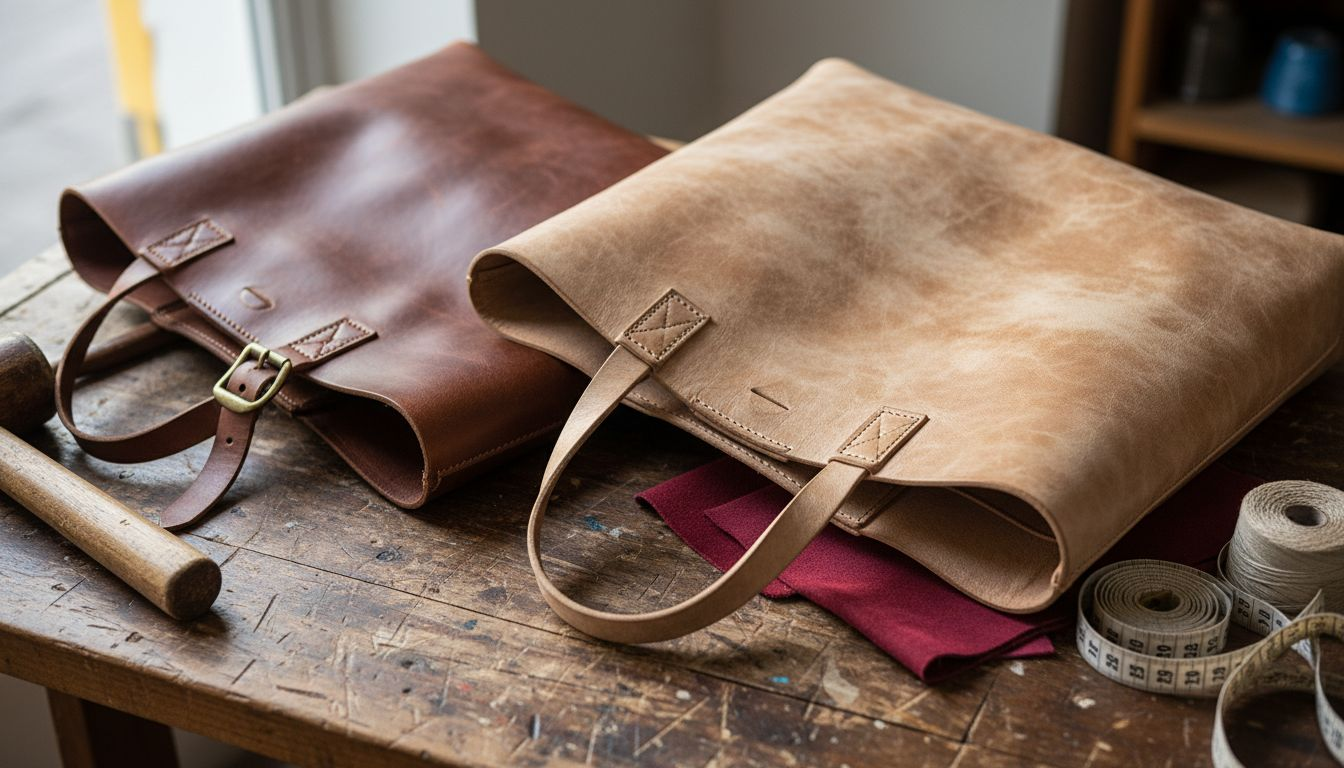
The nuanced world of leather selection plays a crucial role in defining these variations. Different tanning methods create distinct leather characteristics - vegetable-tanned leathers offer robust structure and a traditional aesthetic, while chrome-tanned alternatives provide remarkable softness and enhanced flexibility. Texture becomes another critical distinguishing factor, with options including smooth, pebbled, and distressed finishes that transform each tote from a mere accessory into a personalised expression of craftsmanship.
Modern luxury totes are distinguished not just by their aesthetic qualities, but by their intelligent design features. Leather thickness and treatment dramatically influence a tote’s performance, with carefully selected hides ranging from delicate, lightweight materials perfect for evening events to substantial, durable leathers ideal for daily professional use. Contemporary designers increasingly integrate functional elements like reinforced straps, interior organisational pockets, and discreet technological accommodations, ensuring these bags meet the complex demands of sophisticated modern women.
Pro tip: When selecting a luxury leather tote, examine its structural integrity by gently testing the handles and observing how the leather drapes, as superior craftsmanship reveals itself in these nuanced details.
Sustainability and ethical production standards
The contemporary luxury leather industry is undergoing a profound transformation, with sustainability emerging as a critical consideration for conscientious consumers and manufacturers alike. Leather production practices increasingly emphasise responsible sourcing, recognising that most leather is a by-product of the food industry, thereby minimising waste and maximising resource efficiency. This approach ensures that each vintage leather tote represents not just a fashion statement, but a commitment to environmental stewardship.
Certification mechanisms have become instrumental in driving ethical standards across the leather supply chain. The Leather Working Group has pioneered rigorous auditing processes that scrutinise tanneries’ environmental performance, focusing on critical areas such as chemical management, water consumption, and worker safety. These comprehensive assessments provide transparency and accountability, encouraging brands to adopt more responsible manufacturing practices that protect both human and ecological well-being.
Moreover, ethical leather production extends beyond environmental considerations to encompass broader social responsibilities. Leather Working Group certification has become a benchmark for brands committed to transparent and responsible supply chains. While challenges persist, particularly regarding chemical usage and labour conditions in certain regions, the industry is demonstrating a growing commitment to continuous improvement, recognising that true luxury transcends aesthetic appeal to include ethical integrity.
Pro tip: When purchasing a luxury leather tote, request certification documentation and ask about the brand’s sustainability practices to ensure your investment supports responsible manufacturing.
Financial value and care considerations
Vintage leather totes represent a sophisticated investment that transcends typical fashion acquisitions, with their financial value rooted in exceptional craftsmanship and material quality. Leather goods’ durability directly influences their long-term monetary worth, with meticulously crafted pieces potentially appreciating over time when maintained with precision and care. Understanding the nuanced factors that contribute to a vintage leather tote’s value becomes crucial for discerning collectors and style-conscious consumers.
The hierarchy of leather quality fundamentally determines a tote’s financial potential and longevity. Full-grain and top-grain leathers command significantly higher prices compared to genuine leather variants, reflecting superior manufacturing standards and inherent material resilience. Leather quality assessment requires understanding subtle distinctions in hide selection, tanning processes, and structural integrity that directly impact a bag’s market value and performance potential.
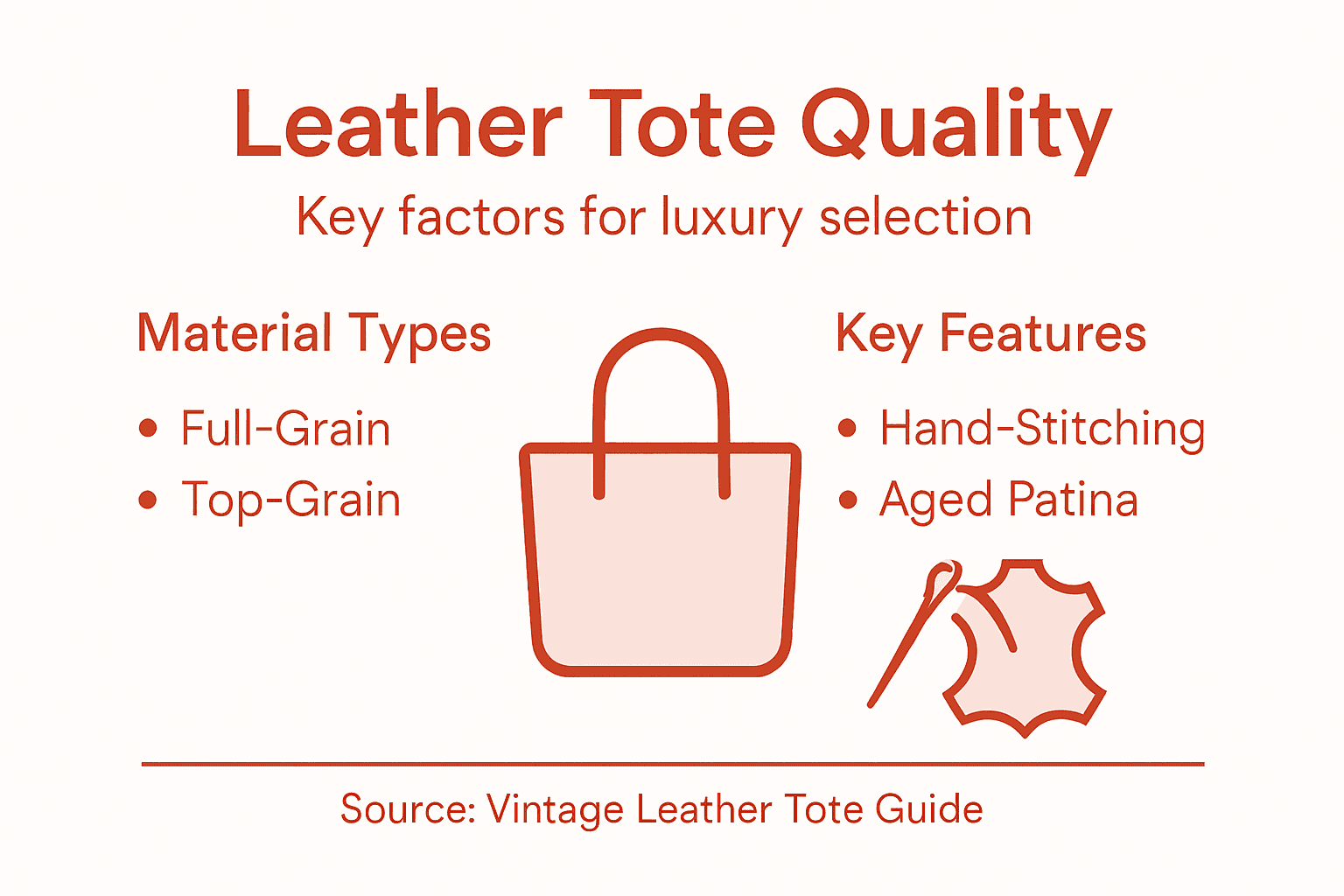
Here is a summary of different leather types and their impact on luxury tote qualities:
| Leather Type | Durability Level | Typical Use in Totes | Visual Character |
|---|---|---|---|
| Full-grain | Extremely long-lasting | Premium vintage models | Natural grain, ages well |
| Top-grain | Very durable | High-end modern pieces | Smooth, refined look |
| Genuine leather | Moderate retention | Lower-cost alternatives | Uniform, less unique |
| Chrome-tanned | Flexible, soft | Lightweight, casual styles | Mellow sheen |
| Vegetable-tanned | Structured, firm | Traditional, artisanal totes | Earthy, develops dark patina |
Maintaining a vintage leather tote’s pristine condition demands strategic, informed care practices. Potential preservation strategies include avoiding direct sunlight exposure, implementing regular conditioning treatments, and storing the bag in temperature-controlled environments with appropriate humidity levels. Professional leather restoration services can also help maintain or potentially enhance a vintage tote’s financial value, addressing minor wear and preserving its structural and aesthetic integrity.
Pro tip: Invest in professional-grade leather conditioning products and store your vintage tote in a breathable dust bag, away from direct heat and moisture, to preserve its value and aesthetic appeal.
Avoiding common mistakes in selection
Selecting a vintage leather tote requires nuanced understanding beyond superficial aesthetic appeal. Leather selection strategies demand careful consideration of multiple factors, with novice buyers often succumbing to common pitfalls that compromise their investment. Understanding the intricate details of leather quality, construction, and performance becomes paramount in making an informed purchasing decision.
Discerning buyers must navigate complex terminology and manufacturing standards with precision. Full-grain leather represents the pinnacle of quality, whereas misleading terms like ‘genuine leather’ can mask inferior materials. Leather quality evaluation involves examining critical aspects such as hide origin, tanning processes, structural integrity, and potential certifications like the Leather Working Group standard. Scrutinising stitching techniques, hardware quality, and leather’s natural characteristics provides crucial insights into a tote’s long-term performance and aesthetic potential.
Beyond visual assessment, potential buyers must consider practical functionality and maintenance requirements. This involves understanding how different leather types respond to wear, evaluating the bag’s interior organisation, assessing strap durability, and considering how the tote will integrate with various lifestyle contexts. Sophisticated consumers recognise that a vintage leather tote is not merely an accessory, but a carefully considered investment requiring comprehensive evaluation of craftsmanship, material quality, and potential longevity.
Pro tip: Always request detailed information about leather sourcing, tanning methods, and manufacturing processes, and physically inspect the bag’s construction before making a purchase.
Discover Ethical Luxury with Vintage Leather Totes
Embrace the exceptional quality and timeless elegance of vintage leather tote bags crafted with full-grain leather and traditional Italian craftsmanship. If you seek a sophisticated accessory that tells a story through natural variations and hand-stitched details — while supporting responsible manufacturing and sustainable practices — San Rocco Italia offers carefully selected collections designed for discerning modern women.

Browse our exclusive range of luxury handbags and leather goods, all proudly made in Italy using premium materials and artisanal techniques. Experience the harmony of heritage craftsmanship and ethical production by exploring our boutique San Rocco Italia. Act now to invest in an elegant leather tote that not only ages beautifully but also upholds your values for quality and sustainability.
Frequently Asked Questions
What defines a vintage leather tote bag?
A vintage leather tote bag is characterised by its large, open silhouette, premium full-grain leather, and artisan craftsmanship. These bags develop a unique patina over time and reflect quality with hand-stitched components and natural grain variations.
How can I determine the quality of a vintage leather tote?
To assess the quality, examine the leather’s grain, flexibility, and stitching quality. Look for signs of handcraftsmanship, such as subtle imperfections, which indicate a superior artisanal product compared to mass-produced alternatives.
What should I know about the care and maintenance of a vintage leather tote?
Proper maintenance includes conditioning the leather regularly, avoiding direct sunlight, and storing the tote in a breathable dust bag. Professional restoration services can help maintain its aesthetic and financial value, especially as it ages.
What are the key differences between Italian craftsmanship and mass-produced leather totes?
Italian craftsmanship focuses on hand-stitched, artisanal methods, utilising carefully curated hides, while mass-produced alternatives are machine-assembled with variable material quality. Italian totes typically offer unique details, longevity, and a commitment to quality that mass-produced options lack.
Recommended
- Best 6 Italian Handbags 2025 – Expert Comparison – San Rocco Italia
- Top Leather Tote Bags for Women – Best Choices 2025 – San Rocco Italia
- Top Italian Leather Gifts – Expert Comparison 2025 – San Rocco Italia
- 7 Best Leather Bag Companies for Timeless Luxury – San Rocco Italia
- Trend Alert - Leather Luxe
