


Clean Leather Bags: Expert Guide for 25% Longer Life
Your luxury Italian leather handbag deserves meticulous care to preserve its beauty and value. One wrong cleaning move can cause irreversible damage like discoloration, stiffness, or cracking that diminishes your investment. This guide reveals gentle, expert-approved methods to safely clean and condition your full-grain leather bag, extending its life while maintaining that coveted natural patina.
Table of Contents
- Understanding Your Luxury Italian Leather Bag
- Tools and Preparations Before Cleaning Your Leather Bag
- Step-by-Step Cleaning Process for Your Luxury Italian Leather Bag
- Conditioning and Long-Term Maintenance for Timeless Elegance
- Common Mistakes and Troubleshooting When Cleaning Leather Bags
- Expected Outcomes and Care Timeline for Your Luxury Leather Handbag
- Expert Leather Care Solutions for Your Luxury Italian Handbag
- Frequently Asked Questions
Key Takeaways
| Point | Details |
|---|---|
| Gentle cleaning preserves integrity | Use barely damp microfiber cloths with diluted mild soap to avoid damaging leather fibers. |
| Patch testing prevents disasters | Always test cleaners on hidden areas to catch adverse reactions before full application. |
| Regular conditioning maintains suppleness | Apply leather conditioner every 3 to 6 months to restore essential oils and enhance patina. |
| Avoid water saturation and chemicals | Excess moisture causes stains and cracks; harsh chemicals strip protective oils. |
| Proper care extends lifespan significantly | Annual cleaning plus correct storage increases handbag longevity by 25% or more. |
Understanding Your Luxury Italian Leather Bag
Your Italian leather handbag is crafted from full-grain leather, the highest quality material prized for its durability and ability to develop a gorgeous natural patina over time. This premium leather retains the hide’s complete grain structure, making it exceptionally strong yet supple.
Italian artisans bring centuries of heritage and meticulous craftsmanship to each piece, adding intrinsic value beyond the materials alone. Understanding what makes a handbag luxury helps you appreciate why these bags command premium prices and deserve specialized care.
Improper cleaning causes devastating, often irreversible damage. Water saturation leads to dark stains and cracking. Harsh chemicals strip natural oils, leaving leather stiff and rough. Using abrasive materials scratches the surface and destroys that smooth, buttery texture you love.
Recognizing your bag’s unique material properties allows you to tailor cleaning methods that preserve suppleness and richness. Each characteristic of full-grain leather requires gentle handling:
- Natural grain patterns and pores that breathe and absorb products
- Oils and fats within fibers that maintain flexibility
- Surface patina that deepens character with proper aging
- Sensitivity to water, heat, and chemical exposure
Your luxury Italian bag represents a long-term investment. Treating it with the respect it deserves ensures decades of elegant use while maintaining resale value.
Tools and Preparations Before Cleaning Your Leather Bag
Gathering proper supplies before you begin protects your handbag from accidental damage. You need soft microfiber cloths, a soft bristle brush for dust removal, mild soap properly diluted, and a high-quality leather conditioner formulated for luxury goods.
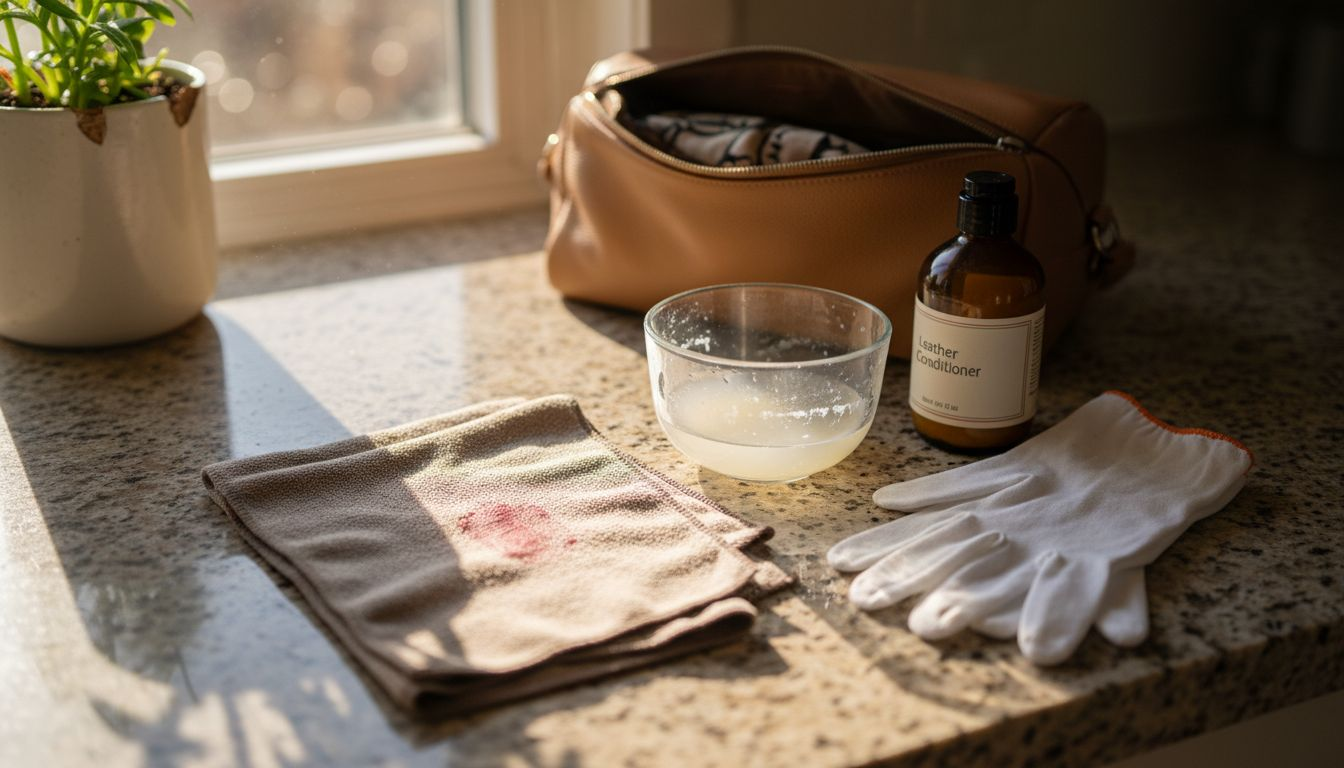
Avoid anything containing ammonia, bleach, alcohol, or petroleum-based solvents. These harsh chemicals damage leather by stripping protective oils and causing discoloration. Skip rough sponges, paper towels, or stiff brushes that scratch surfaces.
Conducting a patch test is non-negotiable. Apply your cleaning solution to a hidden area about 2 cm square, such as the bottom corner or interior seam. Wait 10 minutes and check for color change, texture alteration, or adverse reactions before proceeding.
Prepare a clean, shaded workspace with good ventilation. Direct sunlight fades leather and heat causes cracking. Dust and debris in your workspace can scratch surfaces during cleaning.
Always wear clean cotton gloves to prevent transferring natural skin oils from your hands onto the leather. These oils can cause uneven darkening over time.
Cleaning Solution Comparison
| Solution Type | Advantages | Best For | Precautions |
|---|---|---|---|
| Mild Dish Soap | Gentle, readily available, effective on light dirt | Regular maintenance cleaning | Dilute heavily (1:10 ratio); rinse residue thoroughly |
| Saddle Soap | Formulated for leather, adds slight conditioning | Moderate dirt and grime | Can darken some leathers; test first |
| Natural Remedies | Chemical-free, gentle on delicate finishes | Sensitive or vintage leather | Limited cleaning power; requires more effort |
Pro Tip: Label your leather care supplies clearly and store them separately from household cleaners. Keeping dedicated tools only for leather prevents contamination from harsh chemicals that might linger on shared cloths or brushes.
Explore detailed guidance on how to clean leather handbag naturally and review our leather handbag cleaner expert guide for product recommendations that professionals trust.
Step-by-Step Cleaning Process for Your Luxury Italian Leather Bag
Follow these precise steps to safely clean your handbag without causing damage. Rushing or skipping steps invites problems that proper technique prevents.
-
Remove all loose dust and dirt first using a soft bristle brush or quality lint roller. Work gently in the direction of the leather grain to avoid scratching. Pay special attention to seams, corners, and hardware areas where debris accumulates.
-
Mix your mild soap solution at a 1:10 ratio with lukewarm water. Dip a clean microfiber cloth into the mixture, then wring it thoroughly until barely damp. The cloth should feel almost dry to the touch.
-
Wipe the handbag’s leather surface carefully using gentle, circular motions. Never soak or saturate the leather. Work in small sections, frequently checking that you are not applying excess moisture.
-
Skip the rinsing step entirely. Adding more water harms leather fibers and causes staining. Instead, use a second clean, dry microfiber cloth to immediately absorb any remaining moisture from the cleaning process.
-
Allow your bag to air dry naturally in a shaded, well-ventilated area for 3 to 4 hours. Keep it away from heaters, radiators, hair dryers, or direct sunlight. These heat sources cause leather to dry too quickly, leading to cracks and stiffness.
“Water causes drying and irreparable stains in full-grain leather. Always use minimal moisture and allow proper air drying time.” — European leather care specialists
These methods align with expert recommendations for removing stains from leather bags while preserving the material’s integrity. The same gentle approach applies whether you are learning how to clean a Prada leather bag or any other luxury brand.
Pro Tip: Use multiple microfiber cloths during the process. Designate one for soap application, another dry cloth to absorb excess moisture immediately after each section, and a third for final buffing once completely dry. This system prevents moisture buildup that damages leather.
Conditioning and Long-Term Maintenance for Timeless Elegance
Conditioning nourishes leather by replacing oils that naturally evaporate over time. Apply high-quality leather conditioner only after your bag is completely dry following cleaning. Applying conditioner to damp leather traps moisture and encourages mold growth.
Use a thin, even layer applied sparingly with a clean cloth. Excessive conditioning damages leather by over-softening fibers, causing the bag to lose its structured shape and feel limp. Less is genuinely more with conditioning products.
Condition at regular intervals every 3 to 6 months depending on usage frequency and climate conditions. Bags used daily in dry climates need conditioning more often than occasionally used pieces in humid environments.
For delicate colored leather, consider natural conditioning alternatives. Lightly wiping with whole milk or gently applying beaten egg white froth provides gentle nourishment without harsh chemicals. Always test these methods on hidden areas first.
Proper conditioning delivers multiple benefits:
- Restores essential oils that keep leather soft and flexible
- Prevents drying and cracking from environmental exposure
- Enhances the natural patina development process
- Maintains the rich, deep color of premium leather
- Protects against minor scratches and scuffs
Pro Tip: Always test conditioner on a hidden spot first, even if you have used the product before. Leather changes over time, and reactions can vary. Avoid over-conditioning by following product instructions precisely and never applying conditioner more frequently than every three months.
Store your handbag properly between uses. Keep it in a cool, dark place using breathable cotton dust bags that allow air circulation. Avoid plastic bags that trap moisture. Stuff the bag lightly with acid-free tissue to maintain shape without overstretching.
Discover the best leather conditioner for bags recommended by professionals who care for museum-quality pieces and luxury collections.
Common Mistakes and Troubleshooting When Cleaning Leather Bags
Understanding frequent errors helps you avoid costly damage to your investment piece. Water saturation tops the list of cleaning disasters. Even small amounts of excess water penetrate leather fibers, causing dark stains and eventual cracking as the material dries unevenly.
Harsh chemicals strip protective oils faster than you can replace them. Products containing alcohol, acetone, or ammonia roughen leather surfaces and cause irreversible color fading. These substances dissolve the natural fats that keep leather supple.
Skipping patch testing risks immediate, visible damage that cannot be undone. Color changes, texture alterations, and finish degradation happen within minutes of applying incompatible products. Testing protects you from discovering incompatibility on highly visible areas.
Over-conditioning creates problems just as severe as under-conditioning. Leather becomes overly soft, loses structural integrity, and develops a greasy feel that attracts dirt. The bag may sag or lose its intended shape permanently.
If discoloration or unusual stiffness occurs after cleaning, stop all treatment immediately. Reduce cleaning frequency and allow the leather to rest and stabilize naturally. For serious issues, seek professional leather restoration services rather than attempting DIY fixes that might worsen damage.
Avoid these additional pitfalls:
- Drying in direct sunlight causes fading and uneven color distribution
- Placing bags near heaters or radiators leads to brittle, cracked leather
- Using hair dryers or heat guns causes immediate surface damage
- Applying conditioner too soon after cleaning traps moisture inside
- Storing in humid basements or attics encourages mold growth
Learn comprehensive prevention strategies through our guide on leather treatment for bags, which covers both immediate fixes and long-term protection methods. The cleaning guidelines emphasize avoiding water exposure, never using harsh chemicals, and always testing products first.
Recovery from minor mistakes often requires simply stopping treatment and allowing leather to rest. Serious damage necessitates professional intervention from specialists who understand luxury leather restoration.
Expected Outcomes and Care Timeline for Your Luxury Leather Handbag
Proper maintenance delivers remarkable results that justify the time investment. Annual gentle cleaning combined with regular conditioning ensures lasting suppleness while encouraging beautiful natural patina development. Your bag’s appearance improves rather than deteriorates over years of use.
Research shows proper care extends handbag life by 25% or more compared to neglect or harsh cleaning methods. This means a well-maintained bag lasting 15 to 20 years instead of just 10 to 12 years with improper care.
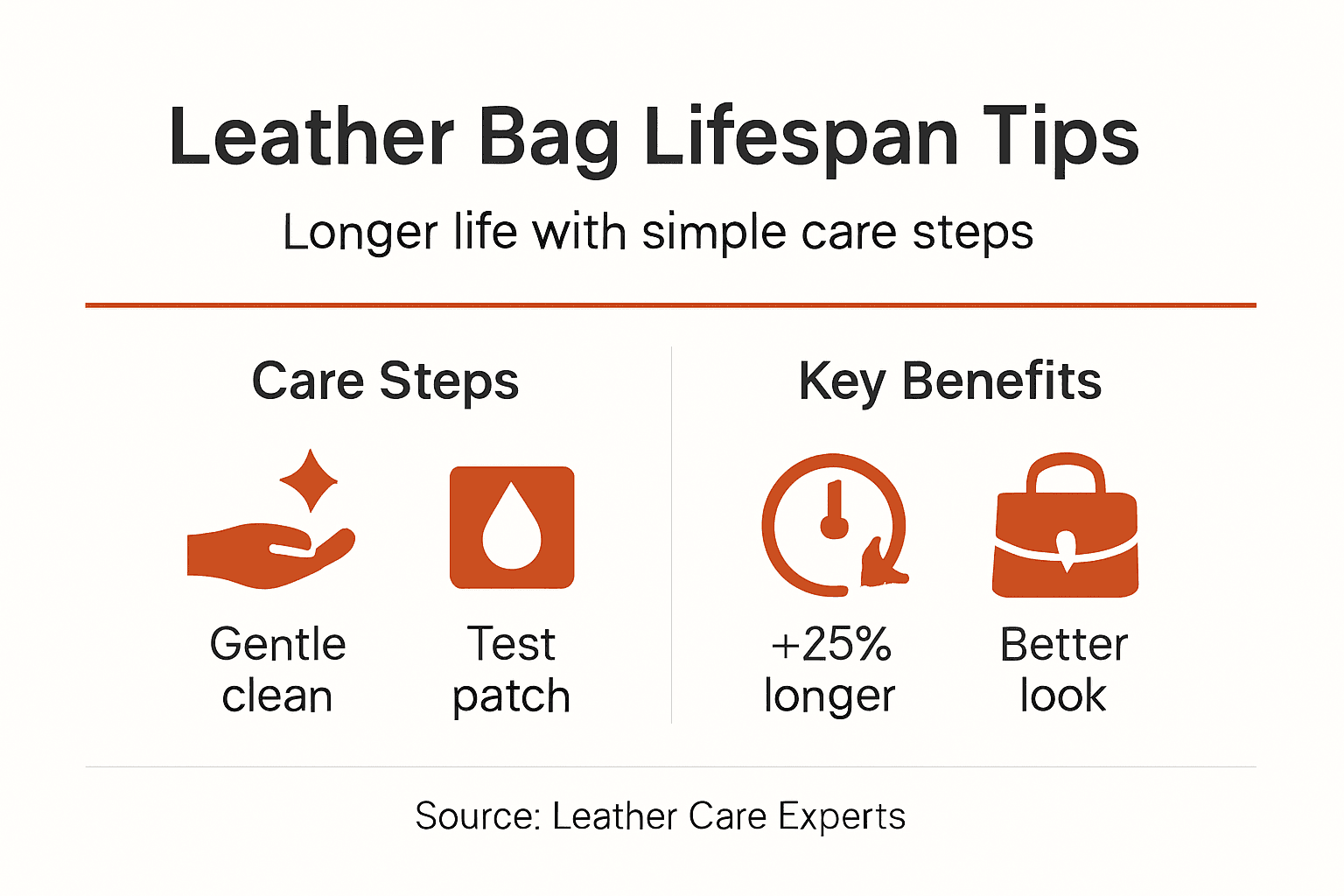
Leather’s rich color deepens authentically when you follow correct maintenance schedules. The soft, buttery texture remains intact rather than becoming stiff or dry. Surface scratches and minor scuffs blend naturally into the developing patina instead of standing out as defects.
Care Approach Comparison
| Care Method | Appearance After 5 Years | Leather Condition | Estimated Lifespan |
|---|---|---|---|
| Improper Care | Faded, stiff, cracked surface | Dry, brittle, damaged grain | 8 to 12 years |
| Regular Home Care | Rich patina, supple texture | Flexible, well-nourished | 15 to 20 years |
| Professional Cleaning | Museum-quality preservation | Optimal flexibility, protected | 20+ years |
Establish a consistent care timeline:
- Weekly dusting with soft brush or cloth to prevent dirt buildup
- Quarterly conditioning (every 3 to 6 months) to maintain suppleness
- Annual deep cleaning to remove accumulated grime
- Immediate spot treatment for spills or stains
- Seasonal storage assessment and adjustment
Store handbags properly in cool, dark, dry environments using breathable cotton dust bags. Learn detailed techniques for how to store leather handbags naturally to prevent environmental damage between uses.
Consistent care preserves not only appearance but monetary value. Well-maintained luxury handbags retain significant resale value, sometimes appreciating for rare or limited pieces. Your investment remains protected through diligent maintenance.
Expert Leather Care Solutions for Your Luxury Italian Handbag
San Rocco Italia offers curated guidance and premium products specifically formulated for luxury Italian leather. Our expert resources help you maintain your investment with confidence, combining traditional artisan knowledge with modern leather science.
Explore our comprehensive clean leather handbag guide for detailed natural cleaning methods that protect delicate finishes. Discover our recommendations for the best leather conditioner for luxury bags, carefully selected to nourish without over-softening.

Understanding luxury handbag construction and care requirements helps you make informed decisions. Our guide explaining what makes a handbag luxury reveals the craftsmanship and materials that define exceptional pieces worth preserving.
Take confident steps to keep your handbag looking timeless with trusted advice from specialists who understand Italian leather artistry.
Frequently Asked Questions
How do you clean a leather bag without damaging it?
Use a barely damp microfiber cloth with diluted mild soap, avoiding complete saturation of the leather. Always perform a patch test on a hidden area first and allow the bag to dry naturally away from heat sources and direct sunlight.
Can I use household soaps to clean luxury leather handbags?
Mild dish soap properly diluted is generally safe for luxury leather when used sparingly. Avoid harsh household chemicals like bleach, ammonia, or alcohol-based cleaners. Specialized saddle soaps or gentle natural remedies work better for delicate or vintage pieces.
How often should I condition my luxury leather bag?
Apply quality leather conditioner every 3 to 6 months, adjusting frequency based on usage and climate conditions. Bags used daily or in dry environments need conditioning more often. Never over-condition, as excessive product softens leather and causes structural problems.
What should I do if my leather handbag gets stained with water?
Blot the area immediately with a clean, dry cloth using gentle pressure without rubbing. Allow the bag to air dry naturally in a shaded area with good ventilation. If water stains or stiffness persist after drying, consult a professional leather restoration specialist rather than attempting further home treatment.
Recommended
- Clean Cream Leather Handbag: 25% Longer Lifespan Guide – San Rocco Italia
- How Long Do Leather Bags Last: Complete Guide – San Rocco Italia
- How to Care for Leather Bags: A Complete Guide for Longevity – San Rocco Italia
- How to Store Leather Handbags for Longevity and Care – San Rocco Italia
- How to Condition a Leather Bag: A Luxury Care Guide – MaraFormigone
