


Artisan Italian leather key rings: elegance and craft
A leather key ring is one of those objects most people never think twice about. It sits in a pocket or handbag, quietly doing its job, rarely earning a second glance. Yet for those who understand quality, it tells an immediate story. The weight of the leather, the precision of the stitching, the warm scent of a well-tanned hide — these details speak volumes before a single word is exchanged. A truly exceptional Italian leather key ring is not merely functional. It is a quiet declaration of taste, a daily ritual made beautiful, and an investment in craftsmanship that only improves with time.
Table of Contents
- Why Italian leather craftsmanship stands apart
- Core materials: full-grain, vegetable-tanned, and Saffiano leathers
- The artisanal process: from raw hide to finished key ring
- Selecting your signature piece: timelessness, practicality, and style cues
- Explore authentic Italian leather key rings
- Frequently asked questions
Key Takeaways
| Point | Details |
|---|---|
| Italian leather artistry | True luxury key rings feature artisanal craftsmanship, eco-friendly processes, and materials that gain beauty with use. |
| Choosing premium materials | Vegetable-tanned and Saffiano leathers offer exceptional durability and visual sophistication. |
| Signs of authenticity | Look for hand-stitching and natural leather marks as indicators of genuine Italian craftsmanship. |
| Personal style and care | Choose timeless designs and maintain your key ring with gentle cleaning to preserve its elegance. |
Why Italian leather craftsmanship stands apart
Italy’s relationship with leather spans centuries. Florentine artisans were producing fine leather goods as far back as the 13th century, and that tradition has never been interrupted. What distinguishes Italian leatherwork is not simply heritage, though that matters enormously. It is the insistence on process. Italian artisans treat each hide as a unique material, not a commodity, and that philosophy shapes every decision from tannery to finished piece.
The Italian leather tradition is rooted in vegetable tanning, a slow, natural process using plant-based tannins rather than industrial chemicals. This method produces leather that is firmer, more responsive to touch, and far more characterful than its chrome-tanned counterpart. As the article on vegetable-tanned leather explains, vegetable-tanned leather develops a unique patina over time, is stronger, more durable, and eco-friendly, ageing beautifully in ways chrome-tanned leather simply cannot replicate.
“True Italian artisans do not rush. The tanning alone can take weeks. That patience is what you feel when you hold a piece made the right way.”
Hand-stitching and precision cutting are the other hallmarks that separate genuine artisanal work from mass production. A skilled craftsperson wastes almost nothing, cutting each component to maximise the hide’s finest sections. The stitching is tight, even, and executed with waxed linen thread that resists fraying for decades. And those small natural marks — a slight variation in grain, a faint shadow — are not imperfections. They are proof that you are holding real, full-grain leather from a living animal, not a processed sheet.
- Vegetable tanning produces leather with superior character and longevity
- Hand-stitching with waxed thread ensures decades of durability
- Precision cutting honours the quality of the hide
- Natural grain variations confirm full-grain authenticity
Core materials: full-grain, vegetable-tanned, and Saffiano leathers
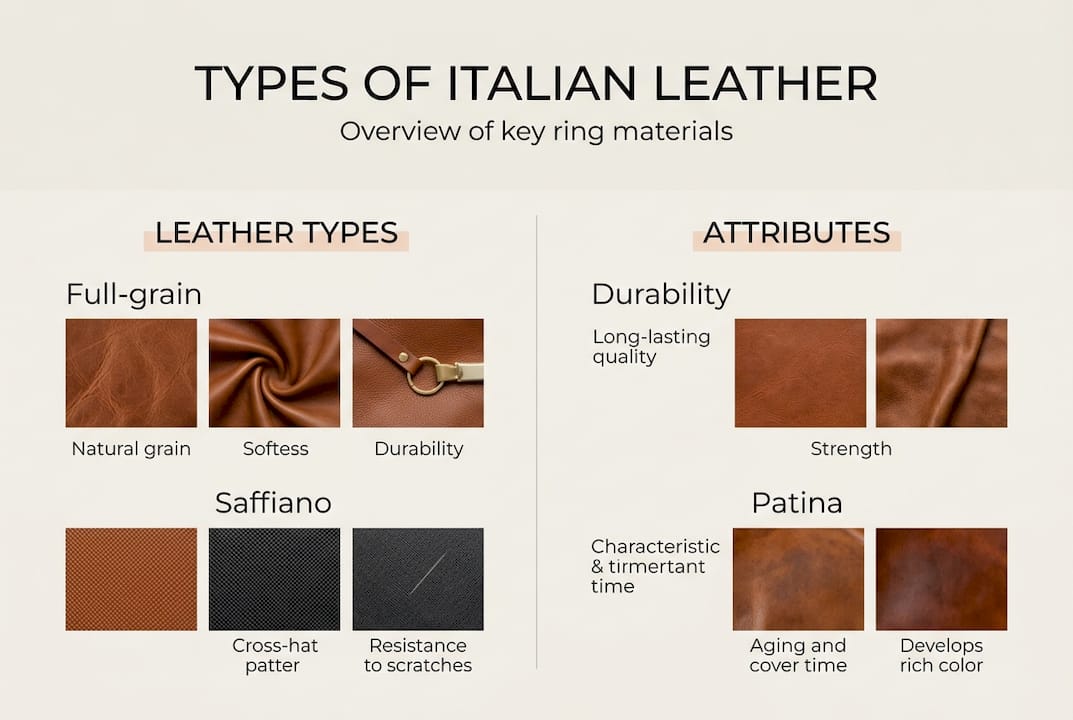
Not all leather is equal, and understanding the differences will sharpen your eye considerably. Full-grain leather is the highest grade available. It retains the entire outer surface of the hide, including all natural markings, which means it is the most durable and the most honest. As noted in the craftsmanship guide, full-grain leather shows natural marks as authenticity signs, not defects. Top-grain leather, by contrast, has been sanded to remove surface irregularities, producing a more uniform look but sacrificing the depth and ageing quality that makes full-grain so desirable.
| Leather type | Durability | Patina development | Best suited for |
|---|---|---|---|
| Full-grain | Excellent | Rich and distinctive | Timeless luxury pieces |
| Top-grain | Good | Minimal | Everyday fashion accessories |
| Vegetable-tanned | Excellent | Exceptional | Heritage and artisanal goods |
| Saffiano | Very good | None | Structured, scratch-resistant items |
| Chrome-tanned | Moderate | Poor | Budget and fast-fashion goods |
Saffiano leather deserves its own mention. Developed originally by Prada, it is a cross-hatch embossed leather that is highly resistant to scratches and moisture. For a key ring that will endure daily contact with metal keys and the interior of a handbag, Saffiano’s daily durability is genuinely impressive. It will not develop a patina, but it will remain pristine-looking far longer than unprotected smooth leather.
When considering your values as a buyer, it is also worth exploring the debate around real versus vegan leather and reviewing ethical leather options to make a choice that aligns with your principles as well as your aesthetic.
Pro Tip: If longevity and character are your priorities, choose vegetable-tanned full-grain leather. If you want something that stays pristine with minimal care, Saffiano is your answer.
The artisanal process: from raw hide to finished key ring
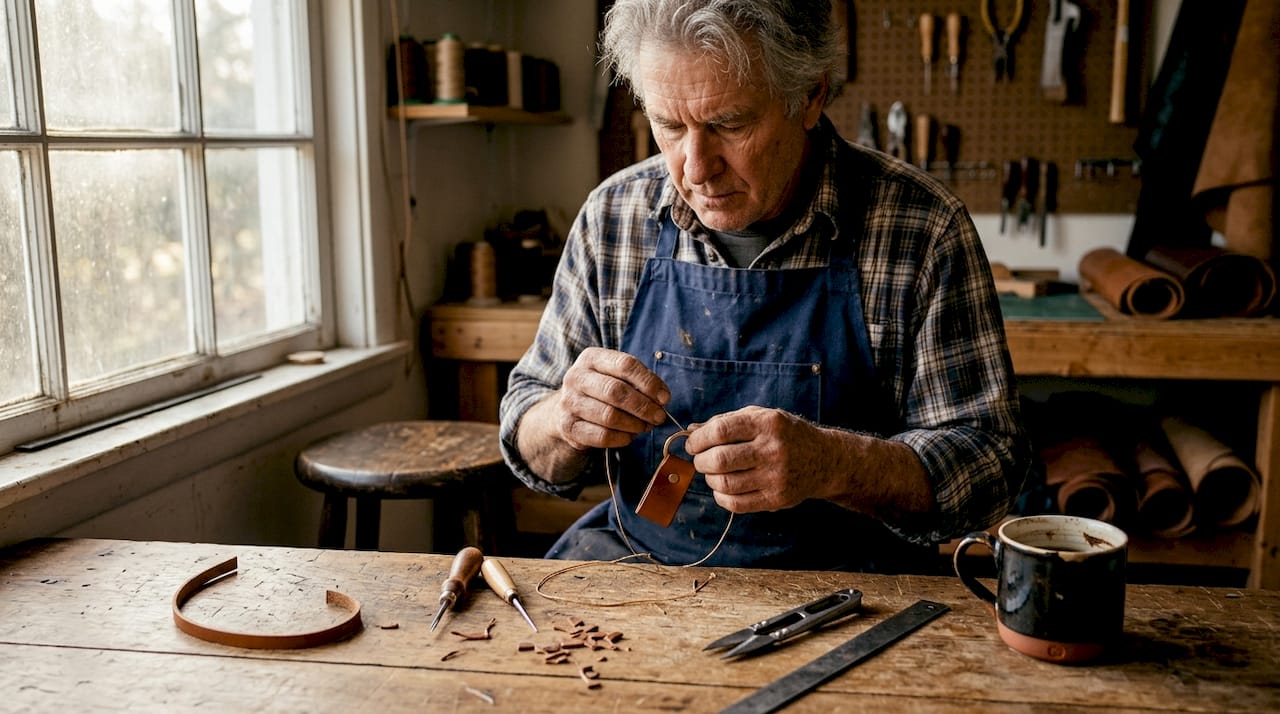
Understanding how a key ring is made transforms how you see it. What looks like a small, simple object is actually the result of numerous skilled decisions, each one affecting the final quality.
- Hide selection. The artisan begins by inspecting full-grain hides, choosing only those sections with the finest grain and fewest structural weaknesses. This is not a mechanical process. It requires an experienced eye and a feel for the material.
- Vegetable tanning. Selected hides enter the tanning process, which can take several weeks. Plant-based tannins penetrate the leather slowly, producing a firm, responsive material with a warm, natural colour.
- Colour application. Dyes are applied by hand, often in multiple layers, to achieve depth and evenness. Heritage tones — cognac, tan, forest green, deep burgundy — are favoured for their timeless appeal.
- Hand-cutting and skiving. Each component is cut by hand or with precision tools, then skived (thinned at the edges) so that folded sections lie flat and clean. As the craftsmanship guide confirms, hand-stitching and precision cutting maximise material use and elevate the finished result.
- Edge finishing. Raw edges are burnished, painted, or folded and stitched. This step is often where shortcuts are taken in lesser goods. A properly finished edge is smooth, sealed, and visually refined.
- Stitching. Waxed linen or polyester thread is sewn by hand or with a specialist machine, producing the characteristic even, slightly raised stitch line that is a hallmark of quality.
- Hardware fitting and quality checks. Italian-made brass or gold-plated rings and clasps are fitted last. The finished piece is inspected for symmetry, stitch consistency, and edge quality before it leaves the workshop.
For those curious about more sustainable approaches to this process, exploring eco-friendly leather alternatives offers a broader perspective on where the industry is heading.
Pro Tip: When examining a key ring in person, run your thumb along the stitched edge. Consistent tension and no loose threads are immediate signs of genuine artisanal quality.
Selecting your signature piece: timelessness, practicality, and style cues
With a clear understanding of materials and process, choosing your key ring becomes a far more confident and enjoyable experience. The goal is to find a piece that feels like an extension of your personal style while meeting the practical demands of daily life.
Begin with colour. Heritage tones age the most gracefully and pair effortlessly with a wide range of handbags and outfits. Cognac, tan, chocolate brown, and deep navy are all excellent choices. Avoid overly trend-driven colours unless you are buying a secondary piece for seasonal variety.
Next, examine the construction closely:
- Look for hand-stitching with consistent tension and no fraying at the thread ends
- Check that natural leather marks are visible, confirming full-grain material
- Test the hardware by opening and closing the clasp several times. It should feel solid and smooth, not stiff or loose
- Assess the edge finishing. A burnished or painted edge that is even and sealed indicates proper craftsmanship
- Consider size. A key ring that is too large becomes cumbersome. One that is too small may not accommodate your keys comfortably
For something with a touch of personality, whimsical key rings offer a charming alternative to purely minimalist designs, without sacrificing quality.
Care is equally important. Vegetable-tanned leather ages beautifully and grows more durable over time, but it benefits from occasional conditioning with a natural leather cream. Store your key ring away from direct sunlight when not in use, and keep it dry. For guidance on maintaining your pieces, the advice on cleaning leather accessories applies equally well to key rings as to handbags.
A well-chosen Italian leather key ring will not look tired after a year. It will look better. That is the quiet magic of genuine craftsmanship.
Explore authentic Italian leather key rings
You now have the knowledge to recognise exceptional quality and make a purchase you will be proud of for years. At San Rocco Italia, our artisan leather key rings selection is curated with exactly this standard in mind. Every piece in our leather goods collection is made in Italy by skilled artisans using premium full-grain leather and traditional techniques, so you can shop with complete confidence.
Whether you are treating yourself or searching for a gift that speaks to genuine taste, our collection offers pieces that carry the full weight of Italian heritage. If you are ready to explore further, our guide to the Italian leather handbags comparison will help you build a complete wardrobe of artisanal Italian leather goods that endure in both quality and elegance.
Frequently asked questions
What makes vegetable-tanned leather preferable for key rings?
Vegetable-tanned leather develops a uniquely beautiful patina with use, becoming stronger and more characterful over time. It is also more eco-friendly than chrome-tanned alternatives, making it the preferred choice for those who value both longevity and sustainability.
How do I spot authentic Italian craftsmanship in a leather key ring?
Look for even hand-stitching, visible natural grain variations in the leather, and solid Italian-made hardware. As the craftsmanship guide confirms, hand-stitching and natural marks are the clearest indicators of genuine artisanal quality, not mass production.
Are Saffiano leather key rings suitable for daily use?
Absolutely. Saffiano’s daily durability is well established, with its cross-hatch texture offering excellent resistance to scratches and moisture. It is an ideal choice if you want a key ring that stays looking pristine with minimal maintenance.
How can I maintain the elegance of my leather key ring?
Store it away from direct sunlight and apply a natural leather conditioner every few months to keep the material supple. Because vegetable-tanned leather ages beautifully with proper care, a little attention goes a long way towards preserving both its appearance and its structural integrity.
