


Strappy Leather Sandals: Elevate Your Summer Style
Finding sandals that perfectly balance elegance and sustainability can feel challenging when so many options lack genuine craftsmanship. For women in Central Europe who value both style and environmental responsibility, Italian leather sandals stand out for their refined artistry and ethical production. This guide reveals how strappy designs, rooted in ancient Egyptian, Greek and Roman traditions, deliver comfort, durability and timeless sophistication for every summer occasion.
Table of Contents
- Defining Strappy Leather Sandals and Origins
- Classic Italian Styles and Modern Variations
- Key Materials, Construction, and Fit Considerations
- Caring for and Maintaining Leather Sandals
- Choosing Sustainable, Ethically Made Options
Key Takeaways
| Point | Details |
|---|---|
| Strappy Leather Sandals | These versatile sandals combine elegance and practicality, featuring multiple straps that provide support and breathability. |
| Timeless Heritage | Strappy sandals have ancient roots, symbolising both functionality and social status throughout history, evolving into a contemporary fashion staple. |
| Importance of Quality Materials | Genuine leather, particularly full-grain leather, moulds to the foot, develops a beautiful patina, and contributes to sustainable practices. |
| Sustainability Practices | Opt for ethically made sandals from reputable sources that offer repair options and prioritise worker welfare, promoting longevity and reducing environmental impact. |
Defining Strappy Leather Sandals and Origins
Strappy leather sandals are more than a casual summer choice—they’re a refined wardrobe staple that bridges practicality and elegance. At their core, strappy leather sandals feature multiple leather straps that secure the foot to a sole, creating a design that’s both supportive and visually striking.
The architecture is deceptively simple but highly functional. Rather than a single band across the foot, strappy designs incorporate multiple leather straps that crisscross or wrap around the ankle and instep. This construction distributes weight evenly whilst offering excellent breathability—perfect for warm European summers.
The Ancient Roots of Strappy Design
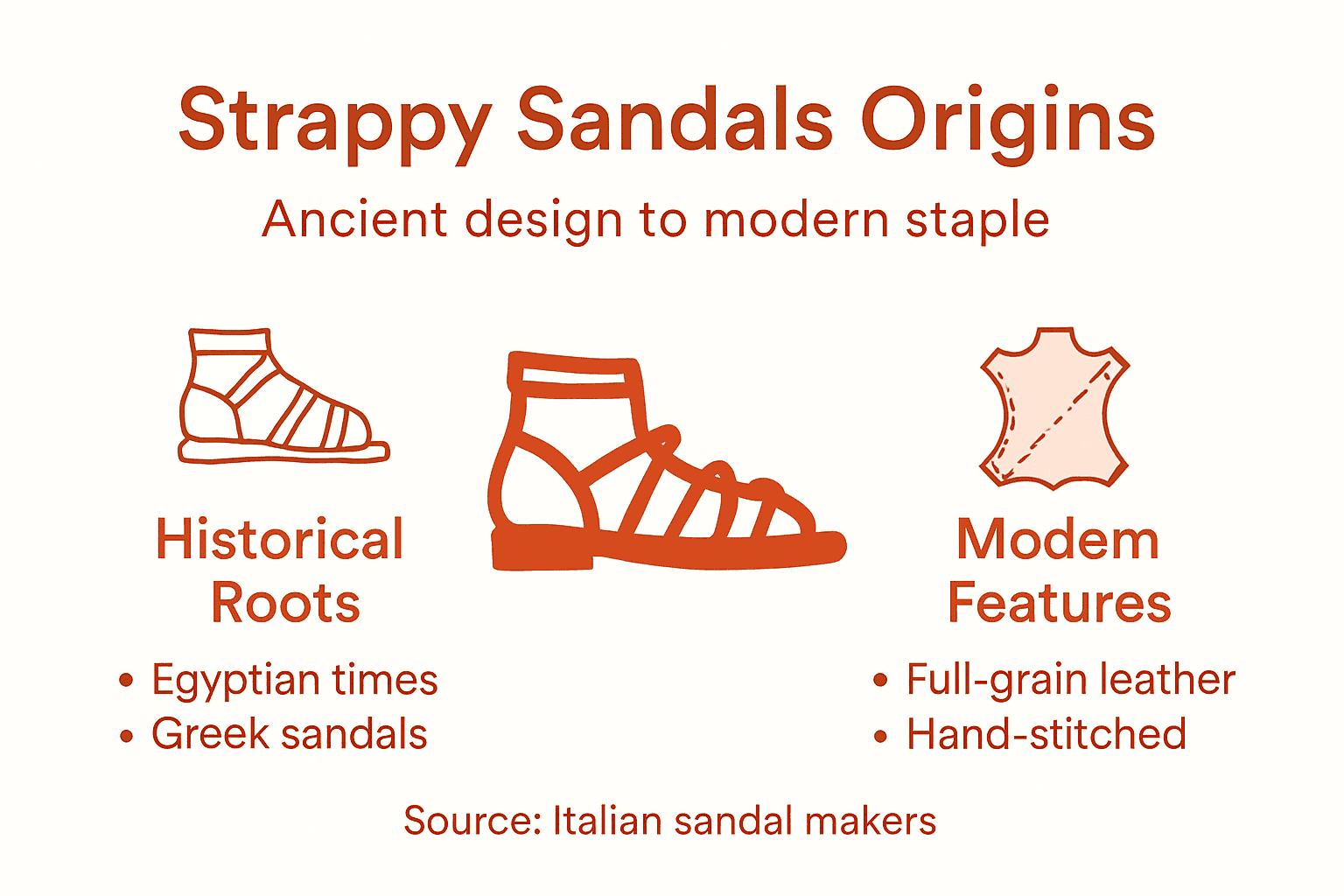
The story of strappy sandals begins thousands of years ago. Ancient sandals with leather straps were common in Egyptian, Greek, and Roman cultures, where they represented both practical footwear and social status. Wealthy citizens wore intricately crafted leather versions, whilst simpler designs served everyday purposes.
These ancient civilizations understood what modern designers still honour: leather adapts to the foot beautifully and improves with age. The oldest known sandals date back approximately 10,900 years and were fashioned from natural materials including leather. This heritage proves that strappy designs have endured because they work.
Modern Evolution and Contemporary Style
The strappy sandal resurfaced in fashion consciousness through several key movements:
- 1970s gladiator influence: Inspired by ancient gladiator sandals, designers reinterpreted the strappy aesthetic for modern wardrobes
- 1990s resurgence: High-fashion runways featured strappy leather designs, establishing them as trend-worthy rather than purely functional
- Contemporary collections: Today’s luxury market celebrates strappy sandals as timeless pieces rather than seasonal trends
What distinguishes contemporary strappy sandals from their ancestors is refinement. Modern Italian artisans apply centuries-old leather-working techniques to create pieces that honour tradition whilst embracing current design sensibilities.
Why Leather Remains Essential
The reason leather dominates quality strappy sandal production is straightforward. Unlike synthetic alternatives, genuine leather:
- Moulds to your foot shape over time, becoming increasingly comfortable
- Develops a beautiful patina that tells the story of your adventures
- Breathes naturally, preventing moisture build-up during warm weather
- Ages gracefully, often looking better after years of wear
- Supports sustainable practices when sourced responsibly from trusted makers
Leather transforms with you. A quality pair becomes more comfortable and more beautiful with each summer season.
For affluent women seeking pieces that transcend seasons and trends, understanding this foundation matters. Strappy leather sandals represent the intersection of ancient wisdom and contemporary craftsmanship—a connection to thousands of years of human ingenuity expressed through your choice of footwear.
Pro tip: When selecting strappy leather sandals, examine how the straps attach to the sole. Hand-stitched connections indicate superior craftsmanship and longevity compared to glued alternatives.
Classic Italian Styles and Modern Variations
Italian strappy leather sandals embody a philosophy: comfort and elegance aren’t opposing forces. The classics originated from workshops in Florence, Rome, and Milan, where artisans perfected the balance between form and function. This heritage distinguishes Italian design from mass-produced alternatives found elsewhere.
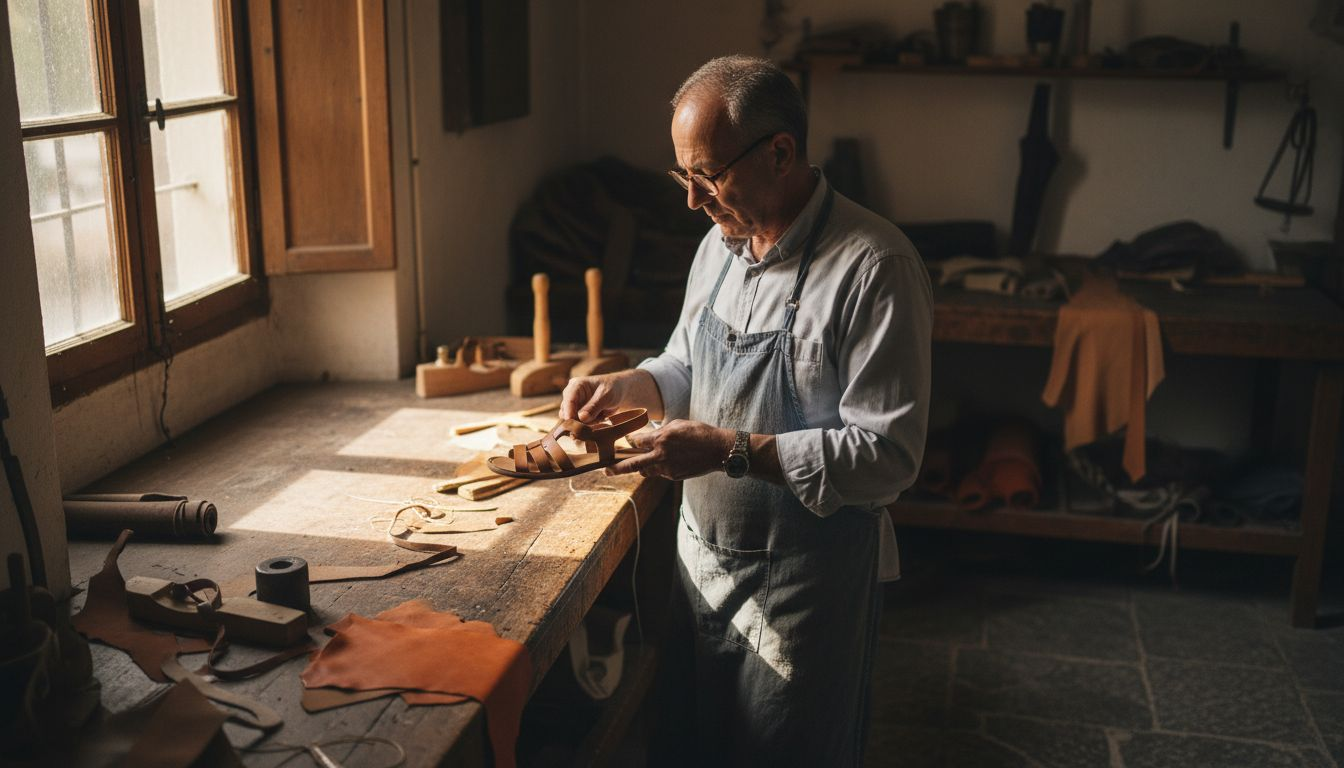
What makes Italian styles recognisable is their restraint. Rather than chasing trends, Italian makers focus on silhouettes that work season after season. A well-designed Italian sandal from 2010 looks just as sophisticated today—that’s intentional.
The Timeless Classics
Traditional Italian strappy sandals share certain hallmarks. Vegetable-tanned leather develops character over time, becoming richer and more supple with each wear. The colour deepens naturally, creating a personalised patina unique to your feet.
Classic designs typically feature:
- Minimalist straps in geometric patterns rather than ornamental flourishes
- Padded footbeds for all-day comfort without sacrificing elegance
- Ankle straps that provide security whilst maintaining visual lightness
- Neutral colour palettes—cognac, cream, black—that pair with everything
These foundational styles remain popular because they solve real problems. The straps distribute weight evenly, reducing fatigue during long Mediterranean summers. The construction respects your foot’s natural shape rather than forcing it into uncomfortable angles.
Here is a comparison of classic versus contemporary Italian strappy sandal characteristics:
| Aspect | Classic Italian Sandals | Contemporary Italian Sandals |
|---|---|---|
| Visual Style | Geometric, understated straps | Minimal or bold design cues |
| Colour Palette | Neutral: black, tan, cream | Brights, mixed or striking tones |
| Materials | Pure vegetable-tanned leather | Leather blended with textiles |
| Comfort Solutions | Padded footbeds, anatomical fit | Varied footbeds, architectural heels |
| Wardrobe Coordination | Timeless and versatile | Statement-making, more individual |
Contemporary Interpretations
Modern Italian designers maintain traditional techniques whilst embracing contemporary aesthetics. Today’s variations include:
- Minimalist strappy designs with ultra-clean lines and reduced strap count
- Mixed materials combining leather with linen or canvas for textural interest
- Bold colour choices whilst maintaining classic proportions
- Architectural heels that add height without compromising walkability
European sandals combine traditional craftsmanship with modern aesthetics, and Italian makers lead this movement. Understanding this balance helps explain why contemporary pieces from Italy remain collectible rather than disposable.
The San Rocco Italia Difference
Our Italian leather goods prioritise this intersection of heritage and innovation. Each piece reflects time-honoured techniques—hand-stitching, vegetable tanning, careful finishing—applied to designs that work in your actual life.
The distinct styles of Italian leather goods demonstrate how artisans respect material constraints whilst pushing creative boundaries. Quality leather doesn’t need embellishment; it speaks through patina development and structural integrity.
Italian design philosophy: every element serves a purpose. Nothing is decorative; everything is functional.
When selecting between classic and contemporary styles, consider your lifestyle. Classic designs prove invaluable for building a coherent wardrobe—they coordinate across seasons and occasions. Contemporary pieces offer personality and individuality, allowing you to express current preferences without abandoning wearability.
Pro tip: Invest in at least one pair of classic Italian strappy sandals in a neutral tone—these become wardrobe foundations. Then explore contemporary designs that reflect your personality without abandoning the versatility you’ve built.
Key Materials, Construction, and Fit Considerations
Quality strappy leather sandals succeed or fail based on three interconnected factors: what they’re made from, how they’re constructed, and whether they actually fit your feet. Understanding these elements transforms you from a casual buyer into an informed purchaser who recognises value.
The material composition directly influences how a sandal behaves. A sandal isn’t simply leather—it’s a system of leather types, thicknesses, and supporting materials working together. This complexity explains why two sandals can look identical yet feel completely different on your foot.
Full-Grain Leather: The Foundation
Full-grain leather represents the highest quality option available. Unlike processed alternatives, full-grain retains the hide’s natural surface, complete with variations in texture and colour. These aren’t flaws; they’re proof of authenticity.
Full-grain leather offers distinct advantages:
- Develops a protective patina over time, actually improving water resistance
- Moulds to your foot’s unique shape within weeks of wearing
- Strengthens rather than weakens with age and use
- Allows natural breathability, preventing moisture accumulation
- Ages beautifully, becoming richer in colour and more supple
This is why San Rocco Italia prioritises full-grain leather across our collection. The material investment reflects long-term value—your sandals become more comfortable and more beautiful simultaneously.
Construction Techniques That Matter
How a sandal is assembled determines its longevity and comfort. Hand-stitching requires significant skill but creates flexible, durable seams that flex with your foot. Machine stitching offers consistency but less flexibility. Quality sandal makers combine both strategically.
Leather’s mechanical properties affect strap placement and durability, determining whether your sandals provide support or cause strain. Artisans who understand these mechanical principles position straps to distribute weight evenly, reducing pressure points.
Look for:
- Double or triple stitching at stress points (ankle straps, toe areas)
- Reinforced insoles that maintain shape rather than compressing
- Vegetable-tanned leather soles that grip surfaces and age gracefully
- Hand-burnished edges that prevent fraying and look refined
The Fit Question
Proper fit isn’t about size alone—it’s about how the straps interact with your foot anatomy. Strap placement balances durability with flexibility, affecting both comfort and injury prevention. A well-fitted strappy sandal should feel secure without creating pressure points across the top of your foot.
When trying on sandals, consider:
- Ankle strap security without digging into bone
- Toe box width that accommodates natural foot spread
- Arch support that aligns with your foot’s natural curve
- Heel cup depth that prevents slipping during walking
The right sandal feels invisible on your foot—you forget you’re wearing it until you admire how good your feet look.
Central European women often have specific fit preferences shaped by climate and lifestyle. Summer temperatures mean you’ll wear these sandals frequently, so comfort isn’t negotiable. Investing time in finding the right fit pays dividends across months of wear.
Pro tip: Try on strappy sandals in the late afternoon when your feet are slightly swollen from daily activity. This ensures they’ll feel comfortable even when your feet expand during warm summer days.
Caring for and Maintaining Leather Sandals
Your investment in quality Italian leather sandals deserves thoughtful care. Unlike mass-produced alternatives that deteriorate predictably, genuine leather responds positively to maintenance—it actually improves with age when treated properly. The effort required is minimal, but the payoff extends your sandals’ lifespan by years.
Consider maintenance as a conversation with your leather rather than a chore. Each action—cleaning, conditioning, storing—sends a message about how much you value the piece. Your sandals return this care by becoming more beautiful and more comfortable over time.
Daily and Weekly Care
Daily maintenance takes seconds but prevents accumulated damage. After wearing your sandals, wipe them with a dry microfibre cloth to remove dust. This prevents grit from grinding against the leather surface during storage.
These simple weekly habits protect your investment:
- Inspect straps and seams for any loose stitching or damage
- Wipe leather with a soft, dry cloth before storing
- Check metal hardware for any signs of moisture or discolouration
- Ensure sandals are completely dry before placing in storage
This preventative approach costs nothing but prevents most common problems from developing. You’re not fixing damage—you’re preventing it from occurring.
Deep Cleaning and Conditioning
Monthly or seasonal deep cleaning restores appearance and protects leather. Use mild soap with warm water, gently working the solution into the leather with a soft brush or cloth. Avoid harsh chemicals or abrasive scrubbing, which damages the surface.
After cleaning, dry immediately and thoroughly. Conditioning helps prevent leather from drying and cracking, preserving both comfort and appearance. Apply a quality leather conditioner every 3–4 months, working it in with circular motions.
For deeper leather care principles applicable to all leather goods, understanding how to clean leather at home provides comprehensive guidance for your entire collection.
Storage and Rotation
How you store sandals dramatically affects their longevity. Keep them in a cool, dry place away from direct sunlight, which fades colour and dries leather. Use shoe trees or stuff them loosely with newspaper to maintain shape and absorb internal moisture.
Rotating between pairs is crucial. Leather needs rest between wearings to recover its shape and breathe properly. If you wear the same sandals daily, they won’t last as long as pairs worn 3–4 times weekly.
Store metal hardware carefully:
- Keep sandals in a ventilated area to prevent moisture accumulation
- Clean metal components regularly with a dry cloth
- Prevent rust by ensuring sandals are completely dry before storage
- Consider cedar blocks or sachets to deter insects and odour
Leather remembers how you treat it. Consistent, gentle care creates sandals that become treasured pieces rather than disposable purchases.
These practices might seem detailed, but they’re actually straightforward and require minimal investment. You’re protecting something beautiful and functional that you use regularly. The reward—sandals that genuinely improve with age—justifies every moment of attention.
Pro tip: Store each pair in an individual cloth dust bag to prevent colour transfer and protect from environmental dust. This single investment pays dividends across years of wear.
Choosing Sustainable, Ethically Made Options
Sustainability isn’t a marketing buzzword for conscious consumers—it’s a practical consideration that reflects your values in every wardrobe choice. Quality strappy leather sandals made with ethical practices last longer, feel better, and align with how you want to live. The good news: sustainability and style aren’t competing interests anymore.
When you purchase Italian leather sandals from makers committed to responsible practices, you’re investing in footwear that respects both people and planet. Understanding what makes sandals truly sustainable helps you distinguish between genuine commitment and superficial claims.
Understanding Tannery Standards
The tanning process—how raw hide becomes wearable leather—determines much of a sandal’s environmental impact. Vegetable tanning uses natural compounds like tree bark, creating leather that’s fully biodegradable and develops beautiful patina over time. This traditional method is slower and more expensive than industrial alternatives, but the results justify the investment.
Look for Leather Working Group certified tanneries, which meet rigorous environmental and safety standards. LWG certification ensures that tanneries:
- Minimise water waste and chemical runoff
- Meet strict emissions regulations
- Document sustainable sourcing practices
- Prioritise worker safety and fair wages
This certification provides transparency—you know exactly what standards were met before the leather reaches your feet. San Rocco Italia prioritises full-grain leather from certified sources, ensuring every pair meets our sustainability commitments.
Labour Practices and Production Ethics
Sustainability extends beyond materials to how sandals are made. Ethical manufacturers operate audited facilities where workers receive fair compensation, reasonable working hours, and safe conditions. This matters personally—the artisans crafting your sandals deserve dignity and respect.
When evaluating makers, ask about:
- Factory auditing and certification practices
- Worker compensation and benefits
- Safety standards and equipment
- Transparency regarding production locations
Italian manufacturing often emphasises regional production, reducing transport emissions whilst supporting local communities. Choosing sandals made in Europe rather than mass-produced overseas significantly reduces your purchase’s carbon footprint.
Beyond Materials: Repair and Longevity
The most sustainable sandal is one you wear for years. Brands offering repair programmes demonstrate commitment to longevity—they want your investment to last. A worn heel can be replaced; damaged straps can be restitched; faded leather can be conditioned. This contrasts sharply with disposable footwear designed for single seasons.
Construct your choices around quality rather than quantity. One pair of ethically made sandals worn regularly for five years beats five pairs discarded after one season. Your cost per wear becomes dramatically lower, and your environmental impact shrinks proportionally.
Understanding what ethical fashion truly means helps you evaluate any purchase beyond sandals, building sustainable practices across your entire wardrobe.
Sustainable luxury isn’t about sacrifice—it’s about purchasing items so well made that you genuinely treasure them rather than merely tolerate them.
For affluent women in Central Europe, sustainability aligns naturally with quality craftsmanship. Both demand patience, investment, and respect for materials. Both reward you with pieces that improve with age rather than deteriorate predictably.
Below is a helpful overview of sustainable sandal attributes for informed purchasing:
| Factor | What to Look For | Why It Matters |
|---|---|---|
| Tannery Standards | Vegetable tanning, LWG certified | Reduces chemicals, eco-friendly |
| Labour Practices | Fair wages, safe conditions | Supports artisan livelihoods |
| Repair Opportunities | In-house repair or restitching | Extends product lifespan |
| Regional Production | Made in Europe, local workshops | Lower carbon footprint |
Pro tip: When purchasing strappy sandals, ask manufacturers directly about their sustainability practices, certifications, and repair options. Genuine commitment shows in detailed, honest answers rather than vague marketing language.
Elevate Your Summer Wardrobe with Timeless Italian Craftsmanship
Finding the perfect pair of strappy leather sandals that combine comfort, style, and sustainability can be a challenge. Many women struggle with sandals that lack true breathability, fail to mould to their feet, or do not age gracefully over seasons. If you value the authentic comfort of full-grain leather and desire sandals that tell your story through their patina, then embracing exquisite Italian craftsmanship is the answer.
At San Rocco Italia, we understand the importance of tradition meeting modern elegance. Our collection features carefully crafted leather goods made by skilled artisans in Italy using vegetable-tanned full-grain leather. These pieces not only provide the perfect fit and durable construction highlighted in the article but also support sustainable and ethical practices that stand the test of time.

Discover how timeless design and superior materials can transform your summer style. Shop now to invest in strappy leather sandals that enhance your wardrobe season after season. Explore our collection and experience luxury that truly lasts.
Frequently Asked Questions
What are strappy leather sandals?
Strappy leather sandals feature multiple leather straps that secure the foot to a sole, providing both support and breathability, making them an elegant choice for summer wear.
How do I choose the right size for strappy leather sandals?
Ensure you try on sandals in the late afternoon when your feet may be slightly swollen. Look for a secure ankle strap without digging into your foot, a comfortable toe box, and arch support that aligns with your natural foot curve.
What is the difference between classic and contemporary Italian strappy sandals?
Classic Italian strappy sandals typically feature geometric patterns, neutral colour palettes, and a focus on timeless designs. In contrast, contemporary styles may embrace bold colours, mixed materials, and unique architectural heels.
How can I maintain my leather sandals to extend their lifespan?
Daily maintenance involves wiping sandals with a microfibre cloth to remove dust. For deeper care, clean with mild soap and warm water monthly, condition every few months, and store in a cool, dry place to preserve their shape and appearance.
Recommended
- Elevate Your Resort Wardrobe: Luxury Must-Haves for Your Sunny Escape – San Rocco Italia
- Elevate Your Style with Italian Leather Bags – San Rocco Italia
- Endless Summer: Designer Swimsuits for Your Next Exotic Escape – San Rocco Italia
- Leather Briefcase Strap: Durability Meets Timeless Elegance – San Rocco Italia
