


Navy Handbag Leather – Italian Craftsmanship Unveiled
Selecting a navy leather handbag is about far more than style—it is a celebration of enduring beauty and heritage. Leather handbags, especially those crafted in Italy, have evolved from simple animal skin pouches to symbols of lasting sophistication and function, with the oldest surviving leather bag dating back to the early 1300s. For discerning European women, a navy leather bag represents more than a mere accessory; it is a statement of refined taste, artisan skill and ethical choice that fits every part of modern life. For those who understand luxury, the significance lies in both the quality of the leather and the story behind its creation.
Table of Contents
- Navy Handbag Leather Defined And Clarified
- Types Of Italian Leather Used In Handbags
- Key Features And Characteristics Of Navy Leather
- Italian Craftsmanship And Artisan Techniques Explained
- Ethical Sourcing And Sustainability Considerations
- Comparing Navy Leather With Alternative Materials
Key Takeaways
| Point | Details |
|---|---|
| Navy Leather Handbags as Investment Pieces | Investing in a navy leather handbag is not just a fashion choice; it signifies a commitment to quality materials and craftsmanship that improve with age. |
| Craftsmanship Matters | The difference in quality between navy leather handbags lies in the craftsmanship and material integrity, particularly in full-grain leather processed by skilled artisans. |
| Understanding Leather Types | Knowing the differences between full-grain, top-grain, and split leather is crucial when selecting a handbag to ensure longevity and aesthetic appeal. |
| Sustainability in Leather Production | Choosing ethically sourced navy leather supports sustainable practices and ensures higher quality, reducing environmental impact compared to synthetic alternatives. |
Navy handbag leather defined and clarified
When you hold a navy leather handbag, you’re touching something far more substantial than a fashion accessory. A handbag represents a specific category of carried bag, typically medium to large in size, designed for holding personal items and essentials. The term itself has evolved considerably over centuries. The oldest surviving handbag dates from the early 1300s, crafted from leather and valued for both its practical durability and its symbolic weight. What began as simple animal skin pouches in ancient times transformed gradually into the sophisticated pieces we recognise today, particularly those crafted by skilled Italian artisans.
Navy leather handbags represent a specific subcategory within this broader definition. Navy is not merely another colour choice. It’s a practical one, particularly favoured by women across Central Europe who understand that timeless pieces must transcend seasonal trends. Navy leather handbags serve dual purposes: they function as reliable carriers for daily necessities whilst simultaneously signalling a refined aesthetic sensibility. The colour itself pairs effortlessly with nearly every wardrobe, from casual weekend wear to professional business settings. This versatility explains why discerning buyers consistently choose navy over more transient colour trends. When discussing navy handbag leather specifically, we’re referring to genuine full-grain leather—typically sourced from premium hides and treated to achieve that rich, dark blue tone—worked by experienced craftspeople who understand how this particular shade develops character and depth over years of use.
What distinguishes a truly quality navy leather handbag from mass-produced alternatives comes down to craftsmanship and material integrity. Italian leather-working traditions span centuries, with artisans passing knowledge through generations. The leather used in authentic Italian handbags undergoes careful selection and treatment to ensure it ages beautifully rather than simply wearing out. This matters enormously because navy leather, like all full-grain leather, develops a patina over time—subtle variations in tone, a softening of edges, a deepening of colour that reflects the individual life of the bag. Understanding proper leather care techniques becomes essential for maintaining this investment piece throughout its lifespan, ensuring your navy handbag not only survives but genuinely improves with each passing year.
Pro tip: When evaluating a navy leather handbag, run your fingers along the interior seams and examine how evenly the colour runs—consistent navy depth throughout indicates superior leather selection and dyeing techniques characteristic of genuine Italian craftsmanship.
Types of Italian leather used in handbags
Italian leather comes in several distinct varieties, each offering particular advantages for handbag construction. The most coveted is full-grain leather, which retains the complete surface of the hide, including its natural grain and markings. This type is prized for luxury handbags precisely because it develops character over time. When you use a full-grain leather bag, you’ll notice it becomes softer and richer in appearance with each season. The natural imperfections—slight scars, variations in tone, marks from an animal’s life—become part of the bag’s story rather than flaws to conceal. Below full-grain sits top-grain leather, which has the outer surface buffed or sanded to remove blemishes. Top-grain leather offers a more uniform appearance and greater pliability, making it easier to work into specific shapes. Both varieties represent genuine leather and are far superior to split leather, which comes from lower layers and lacks durability.
Beyond the grade of leather, the tanning method profoundly influences how your navy handbag will age and perform. Chrome tanning, a faster industrial process, produces leather that is soft, pliable, and consistent from piece to piece. Handbags made with chrome-tanned leather are typically more affordable and require less break-in time. Alternatively, vegetable tanning uses natural tannins from tree bark, creating leather that is sturdier initially and develops a deeper patina over years. Italian leather tanning traditions reveal that many luxury producers favour vegetable tanning specifically because the resulting leather improves visibly with age, something your Central European clientele truly values. The leather becomes supple and darkens beautifully, whilst chrome-tanned leather remains relatively stable in colour and feel. This distinction matters enormously when investing in a handbag you intend to carry for decades.
When San Rocco Italia sources leather for its handbags, the selection process reflects deep knowledge of these variations. Artisans understand that full-grain leather offers durability and rich patina development, making it the gold standard for investment pieces. Italian craftspeople often combine the best of both worlds—selecting premium full-grain hides and employing vegetable tanning methods that ensure your navy handbag will develop distinctive character whilst maintaining structural integrity. The leather’s softness improves, its colour deepens, and subtle creasing patterns emerge that are uniquely yours. This is why Italian handbags command such respect. They’re not static objects; they’re living pieces that evolve alongside your life.
Pro tip: When purchasing an Italian leather handbag, ask specifically about both the leather grade and tanning method—full-grain vegetable-tanned leather represents the most rewarding long-term investment, as it will develop a beautiful patina whilst becoming increasingly supple over time.
Here’s a concise overview of Italian leather types and tanning methods useful for discerning handbag buyers:
| Leather Type | Tanning Method | Durability & Ageing | Typical Use in Handbags |
|---|---|---|---|
| Full-grain | Vegetable-tanned | Exceptional longevity, rich patina | Luxury, investment pieces |
| Top-grain | Chrome-tanned | Consistent colour, soft and flexible | Trend-driven, mid-range handbags |
| Split leather | Chrome-tanned | Low durability, minimal ageing | Budget, mass-produced accessories |
| Full-grain | Chrome-tanned | Soft finish, steady appearance | Contemporary, entry-level luxury |
Key features and characteristics of navy leather
Navy leather possesses several distinctive qualities that make it particularly suitable for handbags. The colour itself is achieved through careful dyeing processes that penetrate the leather fibres, creating that rich, deep blue tone you see in quality Italian pieces. This is not paint or coating applied to the surface but rather colour integrated throughout the material. The dye must be formulated to resist both colour transfer onto clothing and fading from sunlight and regular handling. Quality navy leather maintains its colour integrity across decades of use, though it naturally develops subtle variations and deepens slightly, which only adds to its appeal. The dyeing process requires expertise to ensure evenness without compromising the leather’s natural breathability.
Beyond colour, navy leather exhibits inherent physical properties that define its performance. Elasticity and flexibility allow the leather to conform to your hand and shoulder whilst remaining structurally sound. Leather possesses natural water resistance, which means accidental spills or rain exposure won’t immediately damage your handbag. This doesn’t mean it’s waterproof—proper care remains essential—but rather that the material has an inherent ability to shed moisture rather than absorb it instantly. The tensile strength of quality navy leather means it can bear weight without tearing or deforming excessively. When Italian artisans select hides for navy handbags, they assess these characteristics carefully, knowing that thickness, tanning method, and finishing processes all influence how the leather will perform in daily life.
The supple, luxurious feel of exceptional navy leather comes from fat liquoring processes applied during tanning and finishing. This is what distinguishes a handbag that feels wonderful to touch from one that merely looks attractive. The leather should feel soft yet substantial, pliable without being floppy. Over time, your navy leather handbag becomes even more supple as natural oils from your skin and the environment soften the fibres further. Italian craftspeople understand that physical characteristics like elasticity and flexibility determine not just initial appeal but long-term wearability. A navy leather handbag from San Rocco Italia should feel like an extension of yourself after months of use, conforming gently to your body whilst protecting your belongings.
Pro tip: Test the flexibility of navy leather by gently folding a corner of the bag inward—quality leather should move smoothly without cracking, and spring back to shape immediately once released.
Italian craftsmanship and artisan techniques explained
Italian craftsmanship in leather goods represents far more than simply assembling materials into a finished product. It embodies centuries of accumulated knowledge, passed down through families and workshops, refined through countless iterations until techniques reach near perfection. When you examine a navy leather handbag crafted by Italian artisans, you’re looking at the result of meticulous decision making at every stage. The process begins long before cutting and stitching. Artisans select premium hides with discerning eyes, assessing grain consistency, thickness variations, and natural characteristics that will influence the final piece. Italian leather production combines precise tanning, retaining, milling and finishing steps performed by skilled craftspeople who understand how each chemical and mechanical process transforms raw hide into supple, durable material worthy of luxury handbags. The stabilisation of protein structures, the careful application of multiple dye layers, and the strategic use of oils all require both scientific knowledge and intuitive understanding developed through years of hands-on experience.
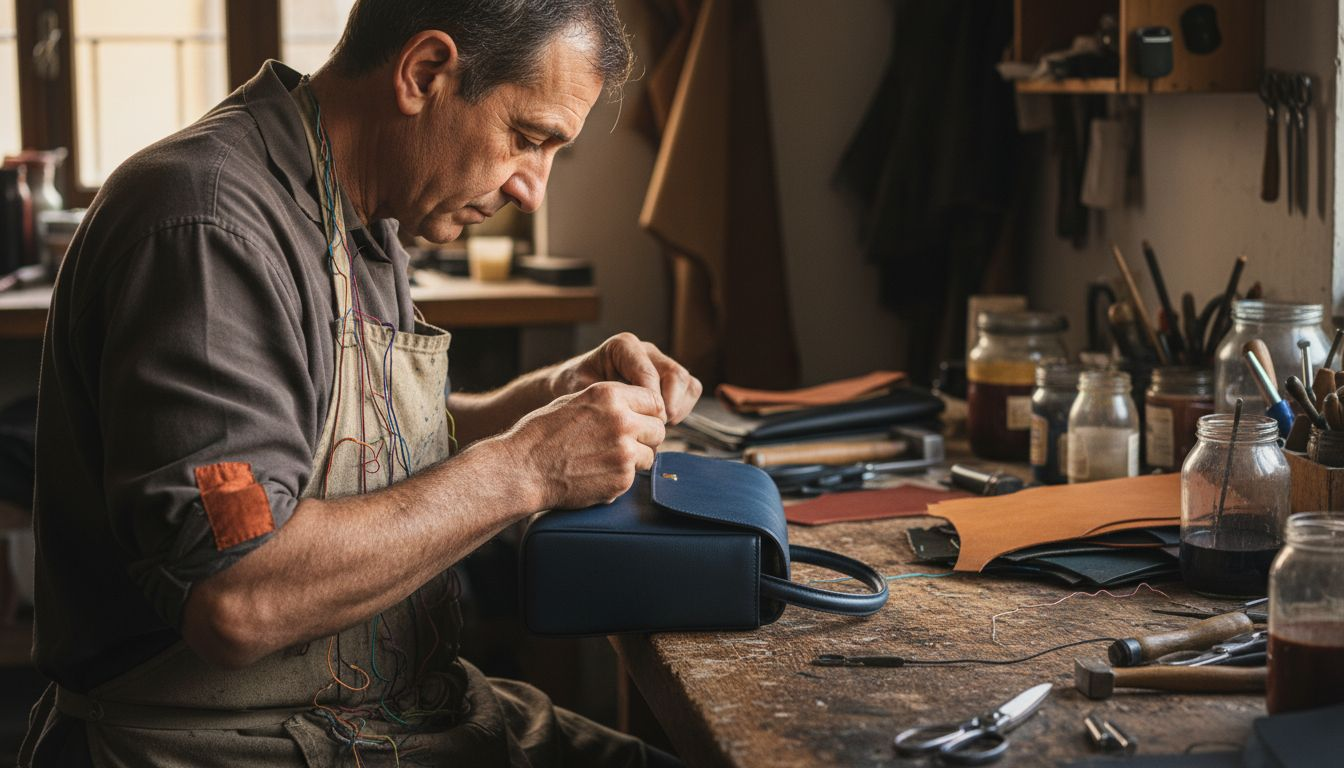
What distinguishes Italian artisan handbags is the commitment to handmade techniques that machines simply cannot replicate. Hand-stitching represents one of the most visible manifestations of this craft. Rather than uniform mechanical stitching, skilled artisans create deliberately consistent yet naturally variable stitches that distribute stress evenly across seams. The hand-cutting of leather panels demands extraordinary precision because, unlike fabric, leather tolerates no second chances. A misdirected blade creates permanent damage impossible to conceal. Artisans make these cuts with confidence born from thousands of repetitions, understanding exactly how much pressure to apply, at what angle, with which blade. The finishing processes are equally demanding. Italian craftspeople employ expert hand-stitching, leather cutting, and finishing methods, ensuring each handbag is unique and of exceptional quality, upholding the Made in Italy reputation for luxury and durability. Edge finishing, for instance, requires burnishing leather edges to create smooth, durable surfaces that won’t fray or deteriorate. This cannot be rushed. Quality Italian workshops spend as much time perfecting edges as they do constructing the main body.
The philosophy underlying Italian craftsmanship extends beyond technical skill. It involves a fundamental respect for materials and a commitment to creating objects that will endure and improve over decades. Artisans take personal responsibility for their work in ways that industrial production simply cannot match. A craftsperson who hand-stitches your navy leather handbag knows that you will carry it, appreciate it, and potentially keep it for life. This knowledge informs their choices about thread tension, stitch length, and material selection. They’re not fulfilling a quota or meeting a timeline imposed by corporate efficiency metrics. They’re creating something meant to transcend fashion cycles and become part of your life story. This is why Italian leather handbags command respect and justify their investment cost.
Pro tip: Examine the interior stitching of any navy leather handbag before purchasing—Italian artisan work shows consistent stitch length and tension with slightly visible individual needle marks, whereas machine stitching appears perfectly uniform, which paradoxically indicates less craftsmanship rather than more.
Ethical sourcing and sustainability considerations
When you invest in a navy leather handbag from San Rocco Italia, you’re making a choice that extends far beyond personal style. You’re implicitly supporting production methods and supply chains that prioritise human dignity and environmental responsibility. This matters increasingly to affluent women across Central Europe who understand that true luxury cannot come at the expense of workers or ecosystems. Ethical sourcing in the leather industry involves far more than surface-level marketing claims. It requires genuine transparency throughout the entire supply chain, from hide selection through final finishing. This means knowing where animals were raised, how hides were processed, which tanneries were used, and what labour practices governed each stage of production. Ethical sourcing in leather involves ensuring supply chain transparency, fair labour practices, and environmental stewardship. Quality Italian producers maintain direct relationships with their suppliers rather than purchasing through anonymous intermediaries. They visit tanneries, inspect facilities, and maintain accountability relationships that prevent exploitation.
Sustainability considerations in leather production centre on minimising ecological impact without compromising the quality that justifies the investment. Italian tanneries have increasingly adopted vegetable tanning methods and closed-loop water systems that dramatically reduce environmental harm compared to industrial chrome tanning operations in regions with minimal environmental regulation. This shift requires investment and commitment. San Rocco Italia specifically prioritises producers who implement these practices because sustainable leather ages beautifully rather than deteriorating into environmental liability. Your navy leather handbag should outlive fast fashion by decades, which fundamentally makes it more sustainable than cheaper alternatives requiring replacement every few years. However, genuine sustainability demands accountability beyond production itself. Recent initiatives focus on implementing human rights due diligence in leather supply chains, emphasising worker safety, gender equality, and sustainable practices throughout operations. This means tannery workers earn fair wages, work in safe conditions with proper ventilation and protective equipment, and have grievance mechanisms if problems arise.
The distinction between marketing and genuine ethical commitment becomes evident through transparency. Reputable producers provide specific information about their sourcing practices without vague language or greenwashing terminology. They can identify which regions their hides originate from, which specific tanneries process their leather, and what certifications verify their claims. San Rocco Italia maintains these standards deliberately because affluent Central European buyers increasingly demand accountability. You deserve to know that the artisan who hand-stitched your navy leather handbag worked in safe conditions earning a living wage, and that the production process didn’t devastate local water supplies or exploit vulnerable populations. This knowledge actually enhances your enjoyment of the piece. You’re not simply carrying a beautiful object; you’re carrying evidence of human dignity and environmental stewardship built into every fibre.
Pro tip: Before purchasing any Italian leather handbag, ask the retailer specific questions about tanning methods, supplier locations, and labour certifications—evasive answers suggest greenwashing, whilst detailed transparency indicates genuine ethical commitment.
Comparing navy leather with alternative materials
Navy leather stands apart from alternative materials in ways that become increasingly apparent the longer you own a handbag. Synthetic leather (often called pleather) replicates leather’s appearance through plastic coatings applied to fabric bases. Initially, synthetic materials offer certain advantages. They cost significantly less, require minimal care, and avoid animal-derived materials entirely. However, synthetic leather deteriorates predictably. The plastic coating cracks and peels after a few years of regular use. Unlike genuine navy leather, which becomes softer and more beautiful with age, synthetic materials simply wear out. They cannot be repaired meaningfully once the coating fails. Fabric blends represent another alternative, typically combining cotton, polyester, or linen with minimal leather accents. These materials breathe exceptionally well and feel lightweight, yet they stain easily, absorb moisture readily, and lack the durability required for daily-use investment pieces. A navy fabric handbag requires constant protection and careful maintenance, ultimately proving more demanding than genuine leather.
When examining performance characteristics, genuine navy leather demonstrates measurable advantages. Leather offers natural aesthetic and tactile benefits with superior durability and breathability compared to synthetic alternatives. The material adapts to your body, develops a unique patina reflecting your individual use patterns, and actually improves structurally over time. Navy leather develops a subtle sheen from natural oils and handling, whereas synthetic materials lose their finish and become dull. The weight difference matters less than marketing suggests. Quality leather handbags weigh slightly more than synthetic alternatives, but this weight distribution actually improves comfort during extended carrying. A light synthetic bag might seem appealing initially, yet the material’s rigidity creates awkward burden points. Genuine leather, by contrast, flexes naturally with your body.
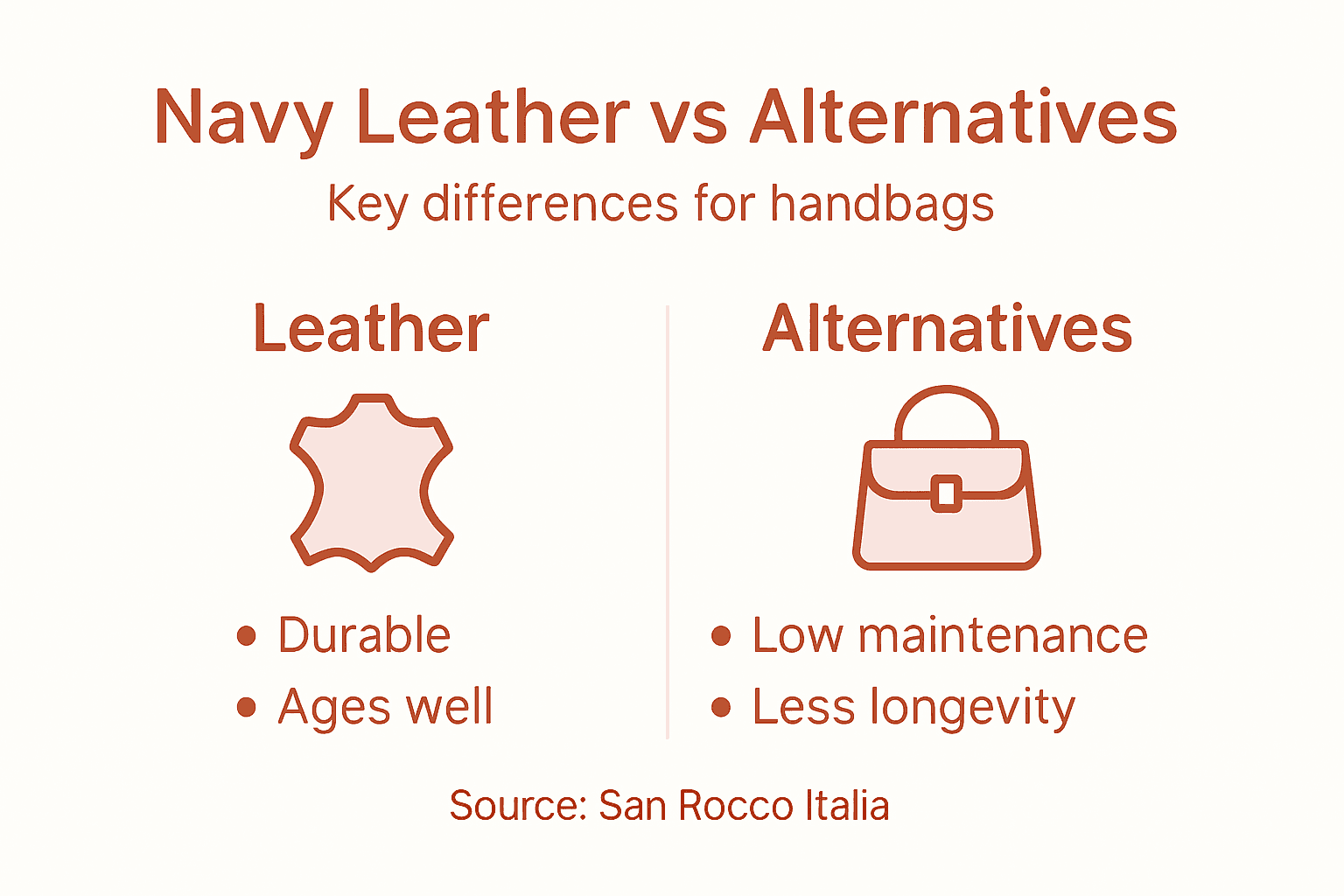
The environmental and ethical dimensions reveal perhaps the starkest contrasts. Leather represents a traditional material prized for durability and style, though alternatives like synthetic leather and fabric blends present trade-offs in environmental impact, longevity, maintenance, and user experience. Synthetic leather production relies on petroleum-based plastics and generates microplastic pollution throughout its lifecycle. Fabric alternatives use less intensive resources initially but require frequent replacement, ultimately consuming more resources than a single genuine leather handbag lasting decades. Italian leather production, particularly with vegetable tanning, integrates into circular economies where byproducts become fertiliser or other materials. A navy leather handbag from San Rocco Italia represents a decades-long investment versus synthetic alternatives requiring periodic replacement. This fundamental difference means your genuine leather handbag ultimately proves more sustainable, more ethical, and ultimately more economical despite higher initial cost.
Pro tip: When evaluating alternative materials, calculate the total cost of ownership over ten years rather than comparing initial price alone—genuine navy leather almost always proves more economical when accounting for lifespan, maintenance costs, and replacement frequency.
To help compare navy leather handbags with popular alternatives, see the summary below:
| Material | Longevity | Maintenance Required | Environmental Impact |
|---|---|---|---|
| Genuine navy leather | Decades, improves | Occasional care | Lower with vegetable tanning |
| Synthetic leather | 2-5 years, deteriorates | Minimal, cannot repair | High, microplastic pollution |
| Fabric blends | 1-3 years, stains easily | Frequent cleaning | Higher, frequent replacement |
| Top-grain leather | 5-10 years, less patina | Basic maintenance | Moderate, depends on tanning |
Discover Timeless Elegance with Authentic Navy Leather Handbags
Choosing the perfect navy leather handbag means investing in craftsmanship, durability and ethical sourcing. If you value full-grain vegetable-tanned leather that develops a rich patina over time and the artistry of Italian hand-stitching, San Rocco Italia offers you an exclusive collection designed to meet these exacting standards. Our woman-owned boutique carefully selects premium hides and supports artisans who blend tradition with sustainability, ensuring your handbag is more than an accessory — it is a lifelong companion.
Explore our range of luxury handbags crafted with the care and passion described in “Navy Handbag Leather – Italian Craftsmanship Unveiled” at San Rocco Italia. Immerse yourself in elegant designs that combine practical versatility with ethical integrity. Act now to own a navy leather handbag that grows more beautiful with every year of wear. Visit San Rocco Italia to experience true Italian craftsmanship and secure your investment in quality today.
Frequently Asked Questions
What is navy handbag leather and why is it significant?
Navy handbag leather refers to high-quality leather handbags that feature a deep blue colour. This type of leather is significant due to its durability, aesthetic appeal, and versatility, making it a popular choice for both everyday and formal wear.
What are the differences between full-grain and top-grain leather in handbags?
Full-grain leather retains the natural grain and markings of the hide, developing a unique patina over time, while top-grain leather has its outer surface sanded for a more uniform appearance. Full-grain is generally more durable and ages beautifully, making it ideal for luxury investment pieces.
How does the tanning method impact the quality of navy leather handbags?
The tanning method affects the leather’s durability and how it ages. Vegetable tanning, used by many luxury producers, creates sturdier leather that develops character over time, while chrome tanning results in softer, more consistent leather that may not age as gracefully.
What are the care tips to maintain a navy leather handbag?
To maintain a navy leather handbag, regularly clean it with a soft cloth, apply leather conditioner to keep it supple, and store it in a cool, dry place away from direct sunlight. Avoid excessive exposure to water and consider protective sprays to help guard against stains.
Recommended
- Understanding Italian Handbag Craftsmanship Explained – San Rocco Italia
- Understanding the Benefits of Italian Handbags – San Rocco Italia
- Leather Treatment for Bags: Preserving Italian Luxury – San Rocco Italia
- Understanding How Italian Handbags Are Made – San Rocco Italia
- Magnetic Leather Wallet Case for iPhone – MagSafe Compatible – Asknik
