


How to identify authentic handbags with confidence
TL;DR:
- Counterfeit handbags are more convincing and widespread than ever, making authentication essential for serious investors.
- A layered approach combining brand knowledge, sensory checks, visual examination, and technology verification helps accurately distinguish genuine pieces.
Counterfeit handbags have never been more convincing, or more common. Knowing how to identify authentic handbags is no longer a niche skill reserved for resellers and auction house specialists; it is essential knowledge for any woman who invests seriously in quality leather goods. EU authorities seized over 112 million counterfeit items worth an estimated €3.8 billion in 2024 alone, a figure that underscores how industrialised the fake goods trade has become. This guide walks you through every layer of the authentication process, from a 30-second sensory check to decoding microchips, so you can buy with complete confidence.
Table of Contents
- Preparing to identify authenticity: what you need to know first
- Step-by-step tactile and visual inspection process
- Decoding serial numbers, date codes and microchips for verification
- Professional authentication services and tools: when to seek expert help
- Why treating authentication as a layered process protects your luxury investment
- Trusted sources for authentic Italian craftsmanship handbags
- Frequently asked questions
Preparing to identify authenticity: what you need to know first
Authentication is not about finding one smoking gun. It is about building a picture. Before you ever pick up a bag and start poking at its stitching, you need two things: brand-specific knowledge and a calibrated set of senses. These are not optional extras. They are the foundation on which every other check rests.
Learn the brand before you learn the bag. Every reputable luxury house has signature construction standards that have remained consistent for decades. The way a Florentine workshop saddle-stitches its handles, the precise thread count used on a Venetian leather flap, the weight of solid brass fittings: these details are publicly documented through brand archives, official boutique staff, and authorised retailers. Study them before you inspect any piece.
Quick sensory checks you can do in under a minute:
- Smell the leather. Genuine full-grain leather has a rich, slightly earthy, almost sweet aroma. Fake bags frequently smell sharp and chemical, like a new plastic raincoat. This single test eliminates a surprising proportion of counterfeits immediately.
- Check the internal label plating. Plating changes on labels and inconsistent finishes inside the bag are reliable early-warning signs. Run your thumb across any metallic internal tags. Authentic fittings feel smooth and uniform; fakes often show uneven edges or colour variation.
- Feel the weight. A bag filled with quality hardware and dense leather has natural heft. Something that feels hollow or unusually light warrants further scrutiny.
- Look at the overall symmetry. Step back and look at the bag as a whole before you examine any detail. Misaligned panels, puckered seams, or a lopsided silhouette are visible from two metres away on a fake.
Understanding how to spot fake leather and how to recognise real leather is worth studying in depth before you begin any purchase. The ability to distinguish genuine full-grain from coated split-leather or PU imitation is, by itself, one of the most reliable tips for authentic handbags available to you.
One more thing worth knowing: authentication methods are not static. Brands are actively raising the bar. Louis Vuitton, for example, began embedding invisible RFID and NFC microchips into new bags from 2021 onwards. If you are shopping for a newer piece and expecting a physical date code, you are already working from outdated assumptions.
Step-by-step tactile and visual inspection process
Having done your sensory warm-up, it is time to work through the bag systematically. The most experienced authenticators use a layered approach: broad impressions first, granular detail last. Reversing that order causes you to fixate on a single feature and miss the bigger picture. As authentication specialists confirm, identifying genuine handbags means assessing consistent craftsmanship cues across stitching, hardware, and construction rather than relying on any single detail.
Step-by-step inspection sequence:
- Material feel. Run the back of your hand across the exterior leather. Authentic full-grain leather feels supple and warm, almost like skin. It yields slightly under pressure without creasing permanently. Fake materials typically feel plastic-like and smell of chemicals because counterfeit materials cannot replicate both texture and scent simultaneously.
- Stitching uniformity. Count the stitches per centimetre on a handle or seam. Luxury Italian workshops commonly use 5 to 8 stitches per centimetre, executed with saddle-stitching technique where two needles work from opposite sides. This creates diagonal, interlocking stitches that will not unravel if one breaks. Machine-stitched fakes tend to be shallower, more vertical, and occasionally skip.
- Thread quality. Pull gently at a visible stitch. Authentic thread is waxed, dense, and resistant. It should not stretch or fray. Loose or fluffy thread fibres around any seam indicate a lesser construction.
- Hardware assessment. Every zip pull, buckle, clasp, and D-ring on a genuine luxury bag is cast from solid or heavily plated brass. Pick up the hardware and feel its density. Zip it slowly. The slider should glide without resistance and land with a definite, satisfying click. Counterfeit zippers tend to catch, skip, or feel grainy. Engraved logos on hardware should have crisp, clean edges; on fakes they often look stamped rather than cut.
- Interior finishing. Open the bag fully and examine the lining. Check whether the pattern, if there is one, aligns with the exterior panels at the seams. Look at the glued edges of the leather: they should be painted and burnished, not raw or roughened. Interior pockets should be stitched cleanly, with no loose threads or puckered fabric.
- Quilting or pattern alignment. On bags with quilted panels or monogram canvas, the pattern should align symmetrically across seams, pockets, and flaps. This is deliberately difficult to achieve in mass counterfeit production.
Here is a quick comparison of what you will typically find in authentic versus counterfeit construction:
| Feature | Authentic bag | Counterfeit bag |
|---|---|---|
| Leather texture | Supple, warm, natural variation | Stiff, uniform, slightly waxy |
| Leather scent | Rich, earthy, organic | Chemical, plasticky, sharp |
| Stitching | Even, waxed, saddle technique | Irregular, shallow, machine-only |
| Hardware weight | Dense, solid, smooth operation | Light, hollow sound, gritty zip |
| Interior finish | Clean edges, aligned lining | Raw edges, misaligned pattern |
| Logo engraving | Sharp, clean, deeply cut | Blurred, stamped, shallow |
Understanding leather handbag quality essentials adds significant depth to steps one through three. The finer points of high-quality leather are equally worth reading before you inspect an unfamiliar brand or style.
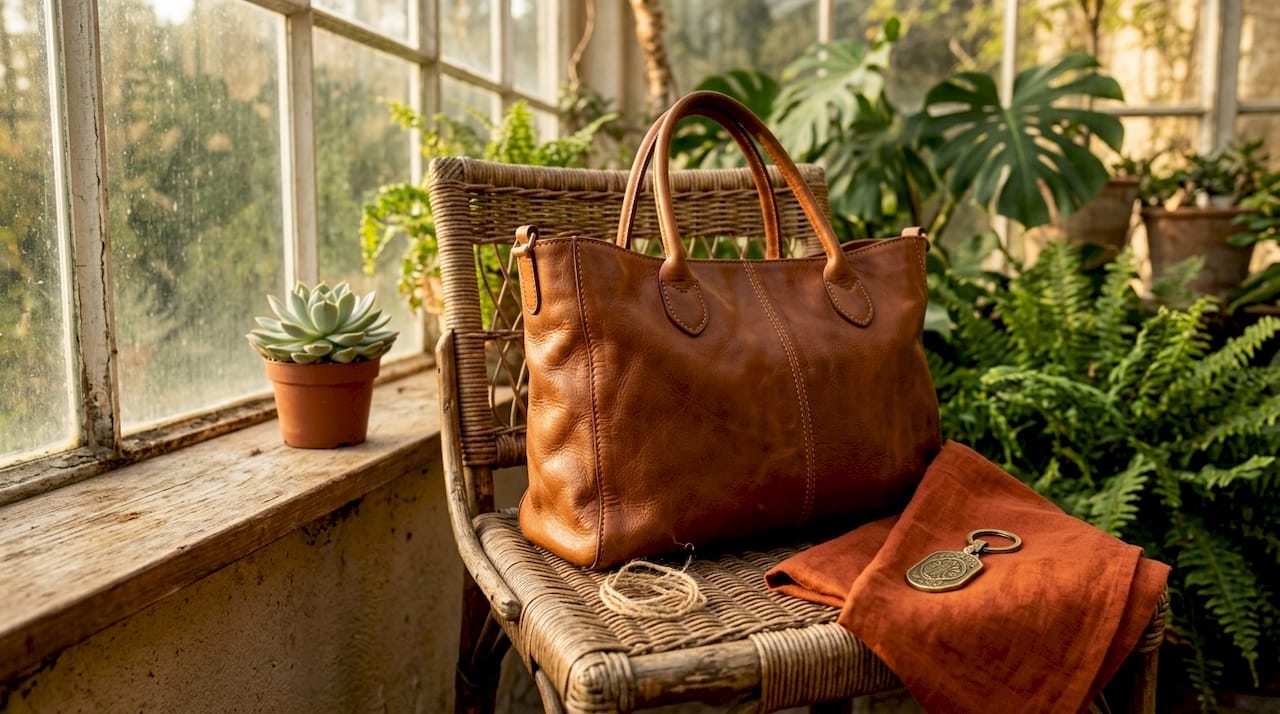
Pro Tip: Bring a small torch on any serious inspection. Shining a light at an oblique angle across the leather surface reveals surface grain patterns that are nearly impossible to replicate in synthetic materials. Genuine full-grain leather shows irregular, organic pores. PU and bonded leather show a repeating, stamped grid.
The principle underpinning all of this is the same one that governs artisan craftsmanship authenticity in any handmade luxury category: genuine craftsmanship is consistent, not perfect. Small natural variations confirm human hands made the piece. Robot-like uniformity, paradoxically, can signal a factory fake.
Decoding serial numbers, date codes and microchips for verification
Once you are satisfied with the physical construction, you move to what most buyers treat as the first check and what experienced authenticators treat as the third or fourth. Serial numbers and date codes are important. They are also the most heavily forged element of any counterfeit bag, which is precisely why they must be evaluated last, not first.
How serial and date codes work:
- Each brand uses a specific alphanumeric format encoding production location, year, and batch. Louis Vuitton date codes, for example, historically used two letters for the manufacturing country followed by four digits representing the week and year.
- The format changed multiple times over the decades. Codes produced between 1990 and 2006 follow a different structure to those between 2007 and 2021.
- Counterfeit codes frequently misuse the structure, font, or placement, even when the rest of the bag appears convincing at a glance.
- Correct placement matters as much as correct format. The stamp should sit squarely on the interior leather tab, centred, with consistent depth of impression across every letter.
The critical shift in recent years is the move away from physical codes entirely. Louis Vuitton phased out date codes from March 2021, replacing them with embedded RFID and NFC microchips invisible to the naked eye. Verifying these bags requires a compatible scanning application on a smartphone, which reads the chip and cross-references it against Louis Vuitton’s database. Other major houses are following a similar path.
What this means practically:
- If you are buying a Louis Vuitton piece made after March 2021 and the seller points to a physical date code as proof of authenticity, that is itself a red flag.
- Transitional bags made in early 2021 may have both a physical code and a chip. Verify which era the production date suggests before deciding which method to apply.
- Cross-checking microchip data against the physical bag characteristics adds a verification layer that even sophisticated counterfeiters cannot yet replicate reliably.
| Verification method | Applicable era | Key tool needed |
|---|---|---|
| Date code format check | Pre-March 2021 (most brands) | Brand code reference guide |
| Serial number validation | All eras (varies by brand) | Brand-specific lookup |
| RFID/NFC microchip scan | Post-March 2021 (Louis Vuitton) | NFC-enabled smartphone app |
| Combined code and chip | Early 2021 transitional pieces | Both methods above |
Pro Tip: Before purchasing a pre-owned bag at a premium price, consult expert guidance on code verification and cross-reference the specific format used in the production year the code suggests. A code that does not match the format for its supposed year is a clear sign of counterfeiting, regardless of how convincing everything else appears.
Professional authentication services and tools: when to seek expert help
There is a point in every serious purchase where personal diligence reaches its natural limit. That point arrives sooner than most buyers expect, particularly when the bag is a newer model, a rare colourway, or simply priced high enough that the cost of being wrong is significant.
Modern authentication methods combine high-resolution microscopy, AI-assisted analysis, and hands-on expert review to achieve accuracy above 99%. These are not services reserved for auction houses. They are widely accessible, affordable relative to the cost of a luxury bag, and increasingly expected in the secondary market.
When professional authentication is worth the investment:
- Any bag priced above a threshold where personal financial comfort is tested.
- Newer bags using embedded microchips, since chip verification requires specialist tools beyond a standard smartphone for definitive results.
- Rare or limited-edition models where the market is flooded with high-quality replicas specifically targeting collectors.
- Pre-owned bags purchased from private sellers or platforms without built-in authentication guarantees.
- Situations where you have identified one or two inconsistencies during your own inspection and need an expert opinion to resolve the uncertainty.
AI-powered authentication platforms work by analysing micro-texture patterns, leather grain structures, and hardware surfaces at resolutions far beyond the human eye. They flag inconsistencies in construction that even experienced buyers would miss on visual inspection alone. This is not a replacement for physical expertise; it is a complement to it.
The resale dimension matters too. Documented authentication significantly increases buyer confidence and achievable resale price. A bag with a third-party authentication certificate, accurate condition grading, and purchase documentation sells faster and commands a meaningfully higher price than an identical undocumented piece.
Pro Tip: Think of professional authentication as insurance, not a luxury. The fee for a third-party authentication service is typically a fraction of one percent of the bag’s value. For a piece you intend to keep, wear, and potentially resell, that cost is negligible. For a thorough DIY inspection guide beforehand, build your own checklist so that you arrive at any professional service with specific questions rather than general doubts.
Why treating authentication as a layered process protects your luxury investment
Here is the perspective that most buying guides miss: authentication anxiety leads buyers to look for a single definitive signal. The code is right, so it must be genuine. The leather smells correct, so the rest does not matter. This single-indicator thinking is exactly what sophisticated counterfeiters rely on.
The most reliable buyers approach authentication as a cumulative process, where no single feature confirms or denies authenticity on its own. A convincing leather scent combined with poor stitching and lightweight hardware is still a fake. An authentic date code paired with plasticky material is still a fake. The signal you need is consistency, not perfection, across every layer of the inspection.
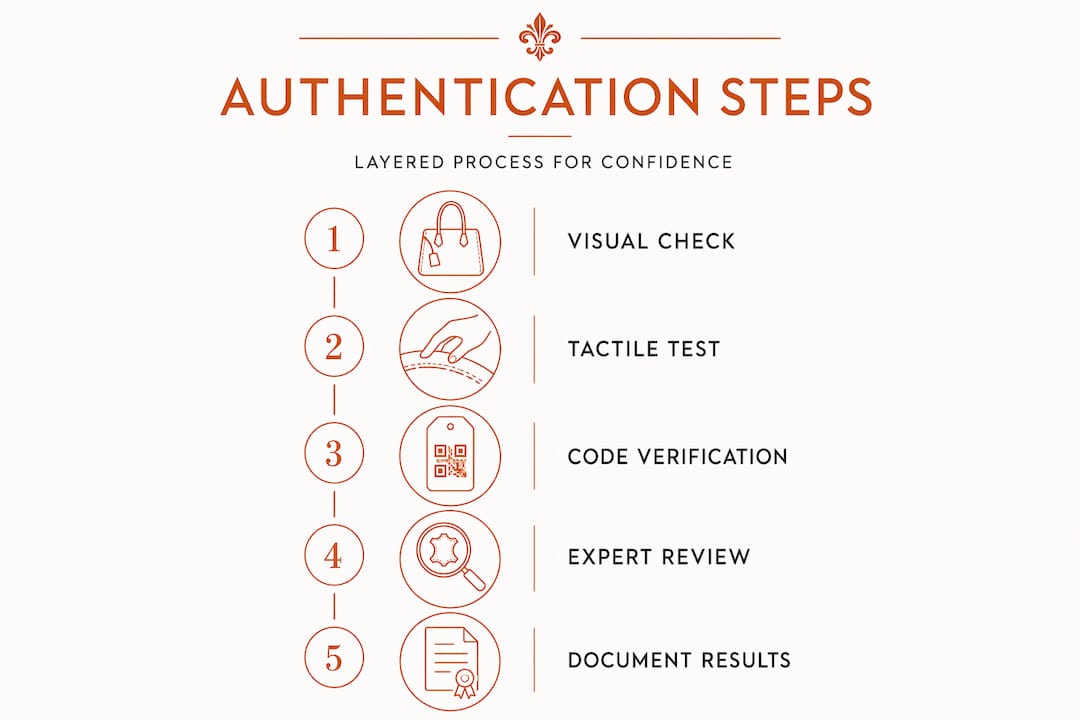
This matters especially now, because counterfeiting technology is asymmetric. Fake producers tend to invest heavily in one or two convincing elements, usually the most visible ones, and cut corners everywhere else. A bag with a beautifully executed monogram canvas may have hollow brass rings, shallow stitching, and a synthetic lining. It looks right from the outside. It fails everywhere else. The layered approach catches this. The single-indicator approach does not.
We have also seen buyers make the opposite mistake: rejecting an authentic bag because of one perceived inconsistency, such as a date code format they did not recognise or a leather variation that seemed unusual. Genuine leather is not uniform. Production codes changed across eras. Expert care and authentication knowledge removes this kind of false negative from the equation.
The brands shifting to microchips are making a statement about where authentication is heading. Physical markers will become less central. Digital verification will become more so. The buyers who understand both worlds, and who apply sensory, visual, code-based, and technology-assisted checks in concert, will be the most protected. That is not a complex skill to develop. It is simply a habit of thoroughness.
Trusted sources for authentic Italian craftsmanship handbags
Authentication knowledge is most valuable when you pair it with a source you can genuinely trust from the outset.
At San Rocco Italia, every handbag and leather good in our collection is made in Italy by skilled artisans using premium full-grain leather and traditional construction techniques. There is no ambiguity about origin, materials, or craftsmanship because we work directly with the makers. When you purchase with us, you are not navigating provenance questions or serial code formats. You are buying with complete confidence, backed by the transparency that only comes from a direct relationship with the people who made the piece. Browse our collection and discover what checking handbag authenticity feels like when the answer is always yes.
Frequently asked questions
What are the quickest ways to spot a fake handbag at a glance?
Look for plating inconsistencies on labels inside the bag and check whether the leather has a natural, earthy scent. Fake bags almost always smell chemical-heavy and show uneven metallic finishes on internal fittings.
How important are serial numbers or date codes for authenticating luxury handbags?
They are essential but must be validated alongside stitching, hardware, and material quality, since counterfeit codes often misuse structure, font, or placement even when other elements appear convincing.
Why do some new luxury handbags have embedded microchips?
Brands like Louis Vuitton replaced physical date codes with embedded RFID and NFC microchips from March 2021 to make counterfeiting significantly harder and to enable digital verification through smartphone scanning.
When should I consider professional authentication for a handbag purchase?
Seek professional authentication for high-value, rare, or newer bags, particularly if your own inspection reveals inconsistencies or the bag uses microchip technology. AI and expert tools achieve over 99% accuracy and are well worth the small cost relative to the purchase price.
How does authentication documentation affect resale value?
Verified proof of authenticity and accurate condition grading substantially increase buyer confidence and the price a bag can command in the secondary market, making documentation a worthwhile investment from day one.
