


Cultural History of Italian Design: Timeless Influence
Selecting a handbag is more than choosing a beautiful accessory. For those who appreciate authentic craftsmanship, Italian design offers a unique harmony of tradition and creativity. Drawing inspiration from centuries of Roman and Renaissance artistic heritage, Italian artisans bring meticulous attention to every detail. This article uncovers how Italian craftsmanship transforms luxury bags and accessories into enduring statements, highlighting the blend of heritage preservation and modern innovation that defines global design standards.
Table of Contents
- Defining Italian Design In Cultural Context
- Historic Movements Shaping Italian Design
- Iconic Styles And Influential Designers
- Artisan Craftsmanship And Modern Industry
- Italian Design’s Global Impact And Reputation
Key Takeaways
| Point | Details |
|---|---|
| Cultural Narrative | Italian design blends heritage, innovation, and craftsmanship, representing a unique cultural philosophy. |
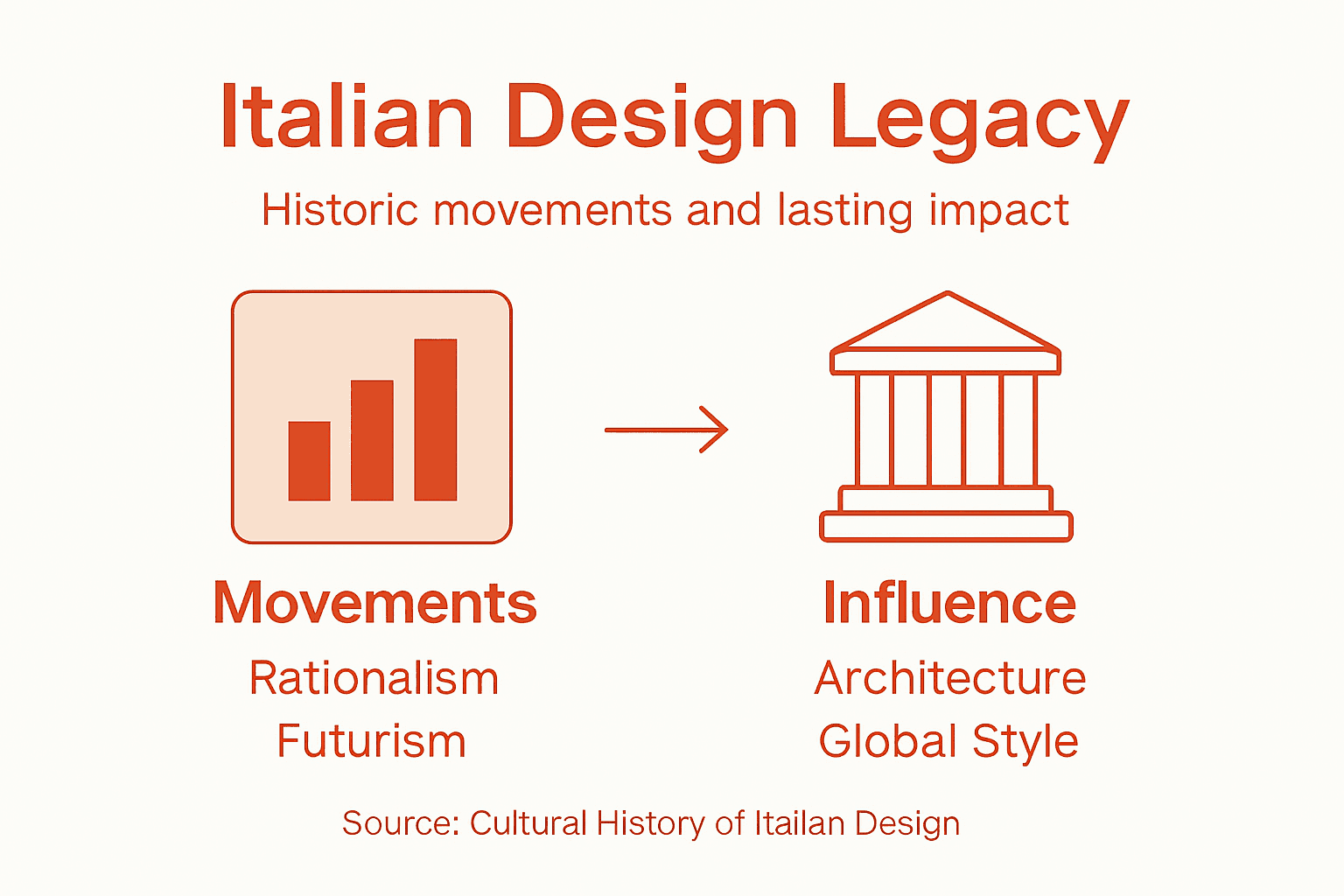
| Historic Movements | Key design movements like Rationalism and Futurism reflect Italy’s capacity for artistic and cultural reinvention. |
| Influential Designers | Pioneers such as Gio Ponti and Achille Castiglioni transformed everyday objects into extraordinary artistic expressions. |
| Global Impact | Italian design has redefined international standards of luxury and quality, establishing itself as a cultural language extending beyond aesthetics. |
Defining Italian Design in Cultural Context
Italian design represents far more than mere aesthetic expression—it embodies a profound cultural narrative that weaves together heritage, innovation, and artisanal excellence. Italian design’s global influence emerges from a rich historical tapestry that seamlessly blends tradition with contemporary creativity, positioning Italy as a global design powerhouse.
At its core, Italian design reflects a unique cultural philosophy characterised by several distinctive attributes:
- Artistic Heritage: Drawing inspiration from centuries of Renaissance and Roman cultural achievements
- Innovation: Balancing classical elegance with cutting-edge technological approaches
- Craftsmanship: Prioritising meticulous handmade techniques and superior material quality
- Emotional Expression: Creating designs that communicate narrative and evoke sensory experiences
The cultural foundations of Italian design are deeply rooted in a complex historical landscape. Fragmented political entities historically contributed to diverse design traditions, allowing multiple regional perspectives to flourish. This decentralised approach enabled designers to develop unique aesthetic languages that collectively formed Italy’s design identity.
Italian design represents a dynamic dialogue between historical awareness and contemporary innovation, transforming cultural heritage into globally recognised artistic expressions.
Design movements like Rationalism emerged in the 1920s, demonstrating Italy’s capacity to reimagine traditional forms through modern lens. Influential designers such as Achille Castiglioni and Gio Ponti transformed everyday objects into artistic statements, elevating functional design to cultural commentary.
Pro tip: Understand Italian design by appreciating its profound connection between cultural memory and forward-thinking creativity.
Historic Movements Shaping Italian Design
Italian design movements represent a profound journey of artistic and cultural transformation, reflecting the nation’s remarkable ability to reinvent aesthetic principles through different historical epochs. Italian design’s pivotal movements emerged from complex socio-political contexts, each challenging and redefining design philosophy.
The key historic movements that shaped Italian design include:
- Art Deco: Embracing elegance and exotic materials in early 20th century
- Rationalism: Pursuing simplicity and functional design principles
- Futurism: Celebrating technological innovation and modernity
- Novecento: Integrating classical aesthetics with contemporary approaches
During the early 1900s, Rationalism emerged as a transformative design philosophy, emphasising clean lines, functional simplicity, and innovative use of materials like tubular steel. Designers such as Gio Ponti pioneered interior design approaches that broke away from traditional decorative styles, introducing a more minimalist and purposeful aesthetic.
Italian design movements consistently demonstrated an extraordinary capacity to transform cultural constraints into creative opportunities.
The post-World War II period marked a significant renaissance in Italian design, with avant-garde movements blending industrial production techniques with exceptional artisanal craftsmanship. This era saw designers elevating everyday objects into artistic statements, creating a global reputation for Italian design excellence.
To better understand the influences on Italian design, here is a summary of historic movements and their core contributions:
| Movement | Period | Signature Features | Key Impact |
|---|---|---|---|
| Art Deco | 1920s–1930s | Luxurious materials, bold geometry | Fostered elegance |
| Rationalism | 1920s–1940s | Minimalism, functional forms | Pioneered simplicity |
| Futurism | 1909–1930s | Dynamic lines, modern themes | Championed innovation |
| Novecento | 1920s–1950s | Classical motifs, new techniques | Bridged tradition & modernity |
Pro tip: Study the historical context of design movements to truly appreciate the cultural significance behind each aesthetic innovation.
Iconic Styles and Influential Designers
The landscape of Italian design is defined by extraordinary individuals who transformed everyday objects into extraordinary artistic expressions. Italian design’s most influential creators emerged during a remarkable period of cultural and industrial renaissance, bridging traditional craftsmanship with innovative design principles.
Several legendary designers stand out for their groundbreaking contributions:
- Gio Ponti: Master of architectural and furniture design
- Achille Castiglioni: Pioneer of minimalist industrial design
- Ettore Sottsass: Founder of the radical Memphis design movement
- Piero Fornasetti: Renowned for surrealist decorative arts
The post-World War II era witnessed an extraordinary transformation in Italian design, with designers like Castiglioni revolutionising furniture and product design. His iconic pieces, such as the Arco lamp, demonstrated an ingenious blend of functionality and sculptural beauty, challenging conventional design paradigms.
Italian designers did not merely create objects; they crafted cultural narratives through form, function, and aesthetic innovation.
The 1960s represented a pivotal moment, with designers collaborating across disciplines to establish Italy’s global design reputation. Interdisciplinary approaches saw architects, fashion designers, and industrial creators forming a unique ecosystem that celebrated creativity and technical excellence.

Explore how leading Italian designers shaped global perceptions:
| Designer | Field | Signature Contribution | Global Influence |
|---|---|---|---|
| Gio Ponti | Architecture | Sleek interiors, versatile furniture | Inspired modern commercial spaces |
| Achille Castiglioni | Industrial | Sculptural lamps, ergonomic objects | Elevated everyday product aesthetics |
| Ettore Sottsass | Furniture/Art | Colourful, Memphis group designs | Revolutionised avant-garde furniture |
| Piero Fornasetti | Decorative Arts | Surrealist prints on ceramics | Popularised playful luxury decor |
Pro tip: Study the works of iconic Italian designers to understand how true innovation transcends mere aesthetics and becomes a form of cultural expression.
Artisan Craftsmanship and Modern Industry
The essence of Italian design lies in its extraordinary ability to harmonise traditional craftsmanship with technological innovation. Italian artisan manufacturing heritage represents a profound cultural narrative that transcends mere production, embodying a deep commitment to quality, creativity, and generational expertise.
Key characteristics of Italian artisan craftsmanship include:
- Manual Precision: Generations of refined skill passed through family workshops
- Material Mastery: Deep understanding of leather, metal, glass, and textile properties
- Technological Integration: Seamless blending of traditional techniques with modern manufacturing
- Cultural Identity: Design as an expression of regional and national heritage
The post-World War II era marked a pivotal transformation, with manufacturers developing innovative approaches that combined industrial efficiency with artisanal attention to detail. Architects and industrial designers collaborated closely, creating production networks that maintained exceptional quality standards while embracing technological advancements.
Craftsmanship in Italy is not merely a profession; it is a living, breathing cultural expression that bridges past and present.
Modern Italian industries have successfully maintained their artisanal roots while adapting to global market demands. This delicate balance between tradition and innovation has positioned Italian design as a global benchmark of excellence, particularly in sectors like fashion, furniture, and luxury goods.
Pro tip: Appreciate Italian design by understanding the intricate balance between human skill and technological innovation that defines its unique character.
Italian Design’s Global Impact and Reputation
Italian design has emerged as a transformative global cultural force, transcending mere aesthetic expression to become a powerful language of innovation and creativity. International design influence represents a complex narrative of artistic excellence that has reshaped global perceptions of creativity, functionality, and cultural expression.
Key dimensions of Italy’s global design reputation include:
- Cultural Mediation: Bridging traditional craftsmanship with contemporary innovation
- Aesthetic Leadership: Setting international design standards and trends
- Interdisciplinary Excellence: Integrating art, industry, and cultural expression
- Economic Impact: Driving global market perceptions of luxury and quality
The post-war design renaissance of the 1960s marked a pivotal moment, positioning Italy as a global design powerhouse. Designers, industries, and cultural institutions collaborated to create a unique ecosystem that projected Italian creativity onto the international stage, transforming design from a local practice into a global phenomenon.
Italian design is not merely about creating objects, but about telling complex stories of cultural identity, technological innovation, and artistic vision.
This extraordinary reputation emerged from a sophisticated approach that balances technological innovation with deep-rooted artisanal traditions. By consistently demonstrating an ability to reimagine design across sectors—from automotive engineering to fashion, furniture to architectural spaces—Italian creators have established a globally recognised standard of excellence.
Pro tip: Appreciate Italian design by recognising it as a holistic cultural language that speaks beyond visual aesthetics.
Experience the Legacy of Italian Design with San Rocco Italia
Italian design captures the perfect harmony between cultural heritage and innovative craftsmanship. The article highlights challenges such as preserving timeless artisan techniques while embracing modern aesthetics and functionality. We understand your desire for authentic pieces that tell a story through quality materials and expert design. At San Rocco Italia, every handbag and leather good reflects this ethos, crafted by skilled Italian artisans using premium full-grain leather and traditional methods to bring the emotional expression and meticulous precision of Italian design directly to you.
Discover our collection where heritage meets contemporary style and enjoy the cultural narrative behind each unique item.

Elevate your accessory collection with pieces that embody the spirit of iconic Italian craftsmanship. Visit San Rocco Italia today to explore our beautifully curated selection of luxury handbags, accessories, and home décor. Own a piece of the timeless Italian design tradition and experience unparalleled quality and style now.
Frequently Asked Questions
What are the key characteristics of Italian design?
Italian design is characterised by its artistic heritage, innovation, craftsmanship, and emotional expression. It blends traditional elements with modern creativity and prioritises high-quality materials and meticulous handmade techniques.
How has Italian design evolved over time?
Italian design has evolved through historic movements like Art Deco, Rationalism, Futurism, and Novecento, each redefining aesthetic principles and responding to socio-political contexts, ultimately shaping the modern Italian design landscape.
Who are some of the influential designers in Italian design history?
Influential designers include Gio Ponti, known for his architectural and furniture design; Achille Castiglioni, a pioneer of minimalist industrial design; Ettore Sottsass, founder of the Memphis movement; and Piero Fornasetti, renowned for his surrealist decorative arts.
What is the role of craftsmanship in Italian design?
Craftsmanship plays a crucial role in Italian design as it embodies a deep commitment to quality and creativity. It integrates traditional skills with modern technology, ensuring exceptional artisanship in design products while maintaining cultural identity.
Recommended
- Best 6 Italian Handbags 2025 – Expert Comparison – San Rocco Italia
- The Influence of Italian Design on Global Fashion Trends – San Rocco Italia
- Cultural Influence on Italian Design: Timeless Impact – San Rocco Italia
- Italian Home Décor Trends: Complete Guide to Style – San Rocco Italia
- Why Display Art at Home: Transforming Modern Spaces
- 8 Essential Examples of Vintage Frame Styles – ministry of sight
