


Coach Leather Bag Cleaner: Preserving Timeless Luxury
Beautiful Italian leather handbags can brighten any occasion, but caring for them brings its own set of challenges. With unique materials like glove-tanned and refined calfskin, standard cleaners and tools are simply not enough for true protection. This guide shines a light on the safest ways to maintain your luxurious investment, covering the importance of gentle, tailored leather care to keep your favourite bag stunning for years to come.
Table of Contents
- Coach Leather Bag Cleaner Explained Clearly
- Types of Leather and Their Cleaning Needs
- Choosing Safe Cleaners and Tools
- Step-by-Step Cleaning for Lasting Results
- Common Mistakes and What to Avoid
Key Takeaways
| Point | Details |
|---|---|
| Proper Cleaner Importance | Use Coach-specific leather cleaners to protect delicate materials and maintain their natural finish. Standard cleaners may cause irreparable damage. |
| Cleaning Technique Matters | Clean your Coach bag every three months using gentle circular motions to avoid product buildup and ensure even application. |
| Leather Type Awareness | Identify the specific leather type of your bag to apply the appropriate cleaning method, as different leathers require tailored care. |
| Avoid Harmful Products | Steer clear of household cleaners and harsh chemicals that can strip oils and lead to discolouration, going for recommended leather care products instead. |
Coach Leather Bag Cleaner Explained Clearly
Coach leather bags are investment pieces deserving proper care. Understanding what makes Coach leather cleaner different helps you preserve your handbag’s beauty for decades.
Why Coach Cleaner Matters
Coach leather includes delicate types like glove-tanned and refined calfskin. These materials require gentler treatment than everyday fabrics. Standard household cleaners contain harsh chemicals that damage leather’s natural finish and texture.
Coach-formulated cleansers are designed exclusively for their leather types. They clean effectively without stripping oils that keep leather supple. This targeted approach prevents discolouration and deterioration over time.
What Makes It Different
General-purpose leather products aren’t formulated for Coach’s specific leather treatment. Coach cleaner works because it balances two competing needs:
- Removes dirt and surface marks gently
- Preserves natural leather protection and sheen
- Avoids harsh solvents that cause fading
- Maintains the leather’s flexibility and feel
When you use a proper leather cleanser, you’re protecting the artisan craftsmanship that went into your bag. Italian leather particularly benefits from this gentle approach.
The Right Technique
Application matters as much as product selection. Coach recommends cleaning every three months using circular motions with a small amount of cleaner. This prevents product buildup whilst ensuring even coverage.
Always test on an inconspicuous area first. Different leather finishes react differently, and early detection prevents costly damage.
Using the correct cleaner and technique every three months dramatically extends your bag’s lifespan and maintains its luxury appearance.
Before You Start
Preparation prevents problems:
- Identify your leather type (check Coach documentation or tags)
- Gather a lint-free cloth (microfibre works best)
- Test the cleaner on an inconspicuous area
- Apply with gentle circular strokes
- Buff dry immediately with a clean cloth
Rush the process and you risk streaking or uneven cleaning. Take your time for professional results at home.
Pro tip: Store your Coach bag with a breathable cloth over it in a cool, dry space, and clean quarterly using small amounts of product with gentle circular motions to maintain that pristine lustre without overdoing the cleaning routine.
Types of Leather and Their Cleaning Needs
Not all leather behaves the same way. Coach bags feature several different leather types, and each one demands a specific cleaning approach to maintain its beauty and longevity.
Understanding Your Leather Type
Coach uses multiple leather varieties in their collections. Identifying which type you own is the first step toward proper care. The leather type determines what products work, what techniques are safe, and how often you should clean.
Your bag’s documentation or Coach tag should specify the leather. If not, the feel and appearance offer clues. Smooth leathers look polished; pebbled leathers have texture; soft leathers feel buttery.
Smooth and Refined Leathers
Glove-tanned and sport calf are durable yet responsive to gentle handling. These leathers benefit from regular light cleaning and conditioning. They develop character over time, showing wear patterns that enhance rather than diminish their appeal.
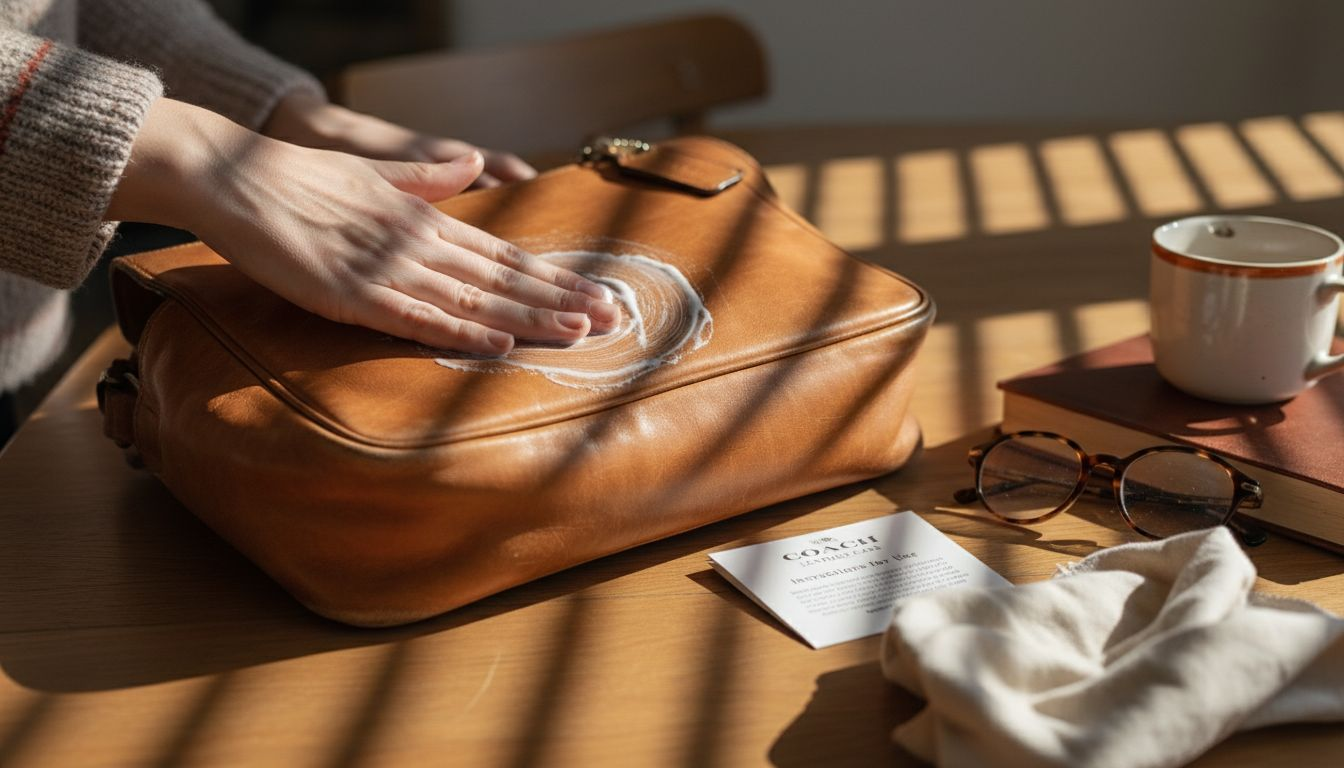
Smooth leathers respond well to Coach’s official cleaner and conditioner. Apply with circular motions and buff immediately. Conditioning every few months keeps these leathers supple and protected against environmental damage.
Textured and Pebbled Leathers
Pebbled leather offers built-in texture that hides minor marks naturally. This type is forgiving and doesn’t show dust as quickly as smooth finishes. It still requires gentle cleaning, but the textured surface provides extra protection against scratches.
Use the same Coach cleaner for pebbled leather. The texture actually helps the product distribute more evenly. Always test on a hidden area first, as different batches can vary slightly in how they respond.
Delicate and Exotic Leathers
Exotic leathers like crocodile, python, and suede demand completely different approaches. Suede is particularly vulnerable to moisture and requires dry brushing only. Water exposure can permanently damage the nap, causing discolouration and stiffness.
For exotic leathers, avoid traditional cleaners entirely:
- Skip liquid cleaners completely
- Use soft, dry brushing for surface dust
- Never expose to direct moisture
- Consult Coach directly before attempting any cleaning
Nappa and Soft Leathers
Nappa leather feels luxurious but remains delicate. It absorbs moisture readily and can stain easily. Specific care for delicate leather types requires gentler pressure and less product than standard leather care.
Each leather type requires tailored care; using the wrong approach can permanently damage even the most beautiful bag.
Apply cleaner sparingly and work in gentle strokes rather than aggressive rubbing. These softer leathers reward patience with years of beautiful patina development.
Quick Reference
Here’s which cleaning method suits each type:
- Smooth, glove-tanned, sport calf → Coach cleaner and conditioner
- Pebbled leather → Coach cleaner, gentle circular motions
- Nappa and soft leather → Light Coach cleaner, minimal pressure
- Suede → Dry brushing only, no liquids
- Exotic leather → Professional cleaning only
When in doubt, contact Coach customer service before cleaning. A few minutes of verification prevents costly mistakes.
Pro tip: Keep your Coach bag’s care card or documentation in a safe place, as it specifies your exact leather type and approved cleaning products; this reference guide eliminates guesswork and protects your investment.
Here’s a concise guide comparing cleaning challenges for each Coach leather type:
| Leather Type | Main Cleaning Challenge | Best Approach |
|---|---|---|
| Glove-tanned | Maintaining suppleness | Gentle cleaner, condition regularly |
| Pebbled | Debris in textured surface | Soft brush, mild cleaner |
| Nappa | Moisture absorption and staining | Minimal cleaner, very gentle strokes |
| Suede | Water and nap damage | Dry brushing only |
| Exotic skins | Damage from conventional products | Leave to professionals |
Choosing Safe Cleaners and Tools
Using the wrong cleaner or tool can ruin your Coach bag in seconds. The right equipment protects your investment while delivering professional results at home.
Why Product Selection Matters
Coach leather is delicate and responds poorly to harsh chemicals. Universal cleaners contain solvents designed for tough industrial jobs, not luxurious leather. These aggressive formulations strip natural oils, cause discolouration, and harden leather permanently.
Gentle formulations specifically designed for delicate leather protect whilst cleaning effectively. Coach’s proprietary products are engineered for their leather types. Alternatives that seem cheaper often cost far more when they damage your bag.
Coach’s Recommended Cleaners
Coach manufactures proprietary leather cleaner and moisturiser formulated exclusively for their bags. These products balance effectiveness with gentleness. They remove dirt without stripping the natural finish or protective oils your leather needs.
The official products come with guidance tailored to different leather types. Using them eliminates guesswork and liability concerns. Quality luxury goods deserve quality products matched to their construction.
Safe Alternative Cleaners
If Coach products are unavailable, limited alternatives exist:
- Mild soap solutions (baby shampoo or Castile soap diluted in water)
- Specialist leather cleaners from reputable brands
- Distilled water for light spot cleaning only
- White vinegar solution (1 part vinegar, 4 parts water) for stubborn marks
Always test alternatives on a hidden area first. Different leather batches react differently. What works on one bag might stain another.
Avoid These Products Completely
Never use these on your Coach bag:
- Bleach or household cleaners
- Alcohol-based products
- Acetone or nail polish remover
- Abrasive powders or scouring creams
- Pet shampoo or automotive products
These substances permanently damage leather. The damage appears immediately and cannot be reversed.
Essential Cleaning Tools
Your toolkit needs just three items:
- Ultra-soft microfibre cloth (lint-free)
- Small soft-bristled brush (for textured leather)
- Cotton swabs (for detail work around seams)
Microfibre cloths prevent lint transfer and scratching. They absorb product efficiently and dry quickly. Invest in quality cloths; cheap versions leave fibres on leather.
Using improper tools scratches leather more easily than you’d think; microfibre cloths and soft brushes protect whilst cleaning effectively.
The Patch Test Protocol
Always test products on an inconspicuous area first. Apply a small amount, wait 24 hours, then inspect for discolouration or texture changes. This simple step prevents costly mistakes.
Test areas include interior bag surfaces, underside of flaps, or back corners. Never test on the most visible surface.
Pro tip: Keep your testing area consistent by always using the bag’s interior back corner; this ensures you’re testing under similar conditions and can easily monitor any changes before full application.
Step-by-Step Cleaning for Lasting Results
Proper technique transforms cleaning from risky to rewarding. Following a structured process ensures consistent results and protects your bag throughout the cleaning cycle.
Preparation is Everything
Empty your bag completely before starting. Remove every item from pockets and compartments. Loose debris inside can scratch leather when you move the bag during cleaning.
Shake the bag gently over a bin to dislodge dust and dirt. Pay special attention to corners and seams where particles accumulate. This simple step prevents dragging dirt across the leather surface.
The Dry Wipe
Begin with a dry microfibre cloth and gentle circular motions. This removes surface dust without introducing moisture. Work methodically across the entire bag, paying attention to handles and edges where grime builds up.
Never press hard; let the cloth do the work. Aggressive rubbing can damage delicate leather or push dirt deeper into the grain. Light pressure is all you need.
Applying the Cleaner
Use circular motions when applying cleaner with your microfibre cloth. Apply only a small amount on the cloth, not directly onto leather. Start with less product; you can always add more if needed.
Work section by section, ensuring even coverage. Overlap slightly between sections to prevent visible lines. This methodical approach prevents patchy results.
The Drying Phase
Allow the cleaner to dry completely before proceeding. This typically takes 15-30 minutes depending on humidity and leather thickness. Never rush this step by using heat sources like hair dryers or radiators.
Drying naturally preserves the leather’s integrity. Artificial heat can cause leather to crack or become brittle.
Conditioning Application
Once dry, apply leather moisturiser using the same gentle technique. Conditioning replenishes oils that cleaning removes. It keeps leather supple and maintains its protective barrier.
Apply sparingly and buff any excess with a clean cloth immediately. Excess conditioner attracts dirt and can create sticky residue.
The Final Steps
Your cleaning sequence in order:
- Empty bag and remove loose debris
- Dry wipe with microfibre cloth
- Apply cleaner in circular motions
- Allow complete drying
- Apply conditioning moisturiser
- Buff excess product
- Store in breathable dust bag
Patience during drying prevents damage; rushing this phase risks re-depositing dirt or creating moisture marks on leather.
Store your cleaned bag in a breathable dust bag in a cool, dry location. Avoid direct sunlight and heat sources. Proper storage maintains your cleaning results for months.
Pro tip: Clean your Coach bag on a cloudy day or indoors away from direct sunlight, as UV light can cause uneven drying and potentially fade the leather whilst the cleaner and conditioner are setting.
Common Mistakes and What to Avoid
One careless decision can undo months of careful maintenance. Understanding what damages Coach leather helps you protect your investment from irreversible harm.
The Wrong Product Trap
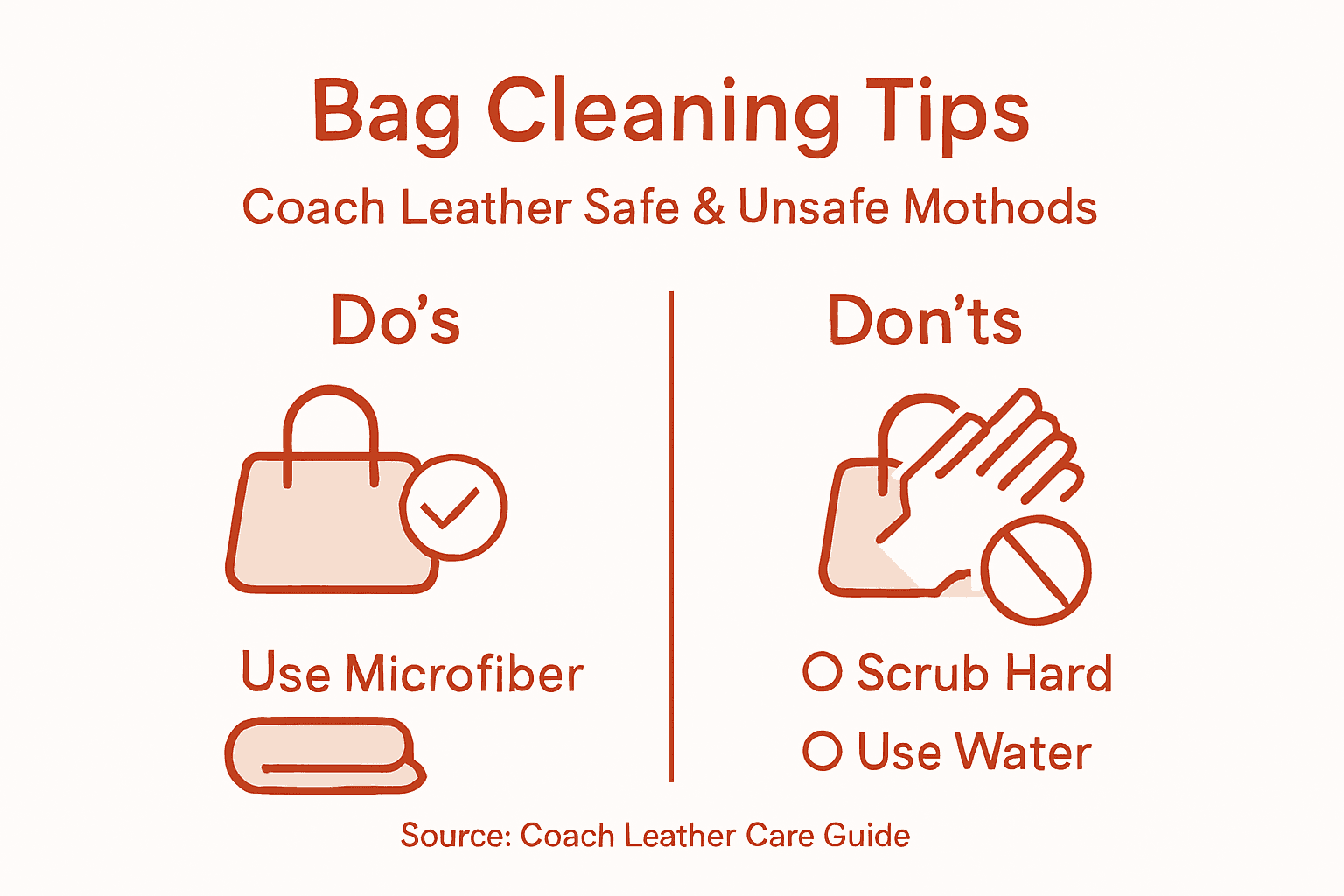
Using unsuitable cleaners ranks as the most costly mistake. Household products contain harsh solvents designed for industrial cleaning, not luxury leather. They strip natural oils, cause permanent discolouration, and harden leather irreversibly.
Skipping patch tests before full application invites disaster. Different leather batches react differently to products. Testing on hidden areas prevents visible damage that cannot be reversed.
Over-Wetting and Moisture Damage
Excessive water ruins leather quickly. Saturating your bag causes water stains, weakens stitching, and promotes mould growth inside. Coach leather absorbs moisture easily, so restraint matters.
Apply cleaner sparingly on the cloth, never directly onto leather. Work quickly and buff dry immediately. Damp leather left in storage develops musty odours and permanent mildew spots.
Storage Mistakes That Cost
Hanging bags by their straps stretches leather permanently. The weight concentrates stress on narrow attachment points. Over time, straps elongate and handles lose their shape beyond recovery.
Storing in plastic bags traps moisture and causes mould. Plastic prevents air circulation, creating humid micro-environments where mould thrives. Use breathable dust bags instead.
Direct sunlight and heat sources fade and dry leather. Windows, radiators, and heat vents accelerate deterioration. Store your bag in a cool, dark cupboard away from temperature fluctuations.
Ignoring Conditioning
Skipping conditioning after cleaning leaves leather vulnerable. Cleaning removes oils that protect leather naturally. Without conditioning, leather becomes brittle, cracks easily, and loses its suppleness.
Conditioning replenishes these protective oils. Apply it every few months, especially after cleaning. This single habit extends your bag’s lifespan dramatically.
The table below summarises the effects of proper and improper cleaning methods for Coach leather bags:
| Cleaning Method | Result on Bag Appearance | Longevity Impact |
|---|---|---|
| Coach-approved products | Retains natural sheen | Preserves for decades |
| Harsh chemicals | Dulls and discolours surface | Causes cracking, shortens lifespan |
| Over-wetting | Water stains and stiffness | Promotes mould, ruins structure |
| Correct tool use | Prevents scratches | Maintains value |
| Skipping conditioning | Leads to brittleness | Leather dries, cracks quickly |
Specialty Leather Mistakes
Exotic and specialty leathers demand professional care. Attempting standard cleaning on suede, crocodile, or exotic skins causes irreversible damage:
- Water exposure darkens and stiffens exotic leather
- Abrasive tools destroy delicate naps
- Standard cleaners strip specialised finishes
- DIY attempts void warranties on expensive pieces
Consult Coach directly before cleaning these materials. Professional restoration costs less than replacing an exotic leather bag.
Never apply water or standard cleaners to exotic leathers; professional care protects these specialty materials from permanent damage.
The Scrubbing Mistake
Aggressive rubbing damages leather finish. Scrubbing breaks down the leather’s protective surface layer. Use light pressure with circular motions instead.
Stains require patient treatment with appropriate products, not force. Blot stains gently rather than rubbing them. Immediate treatment with correct products prevents permanent marks.
Pro tip: Create a checklist of your bag’s specific leather type and approved products, stored in your phone or notebook; refer to it before each cleaning to prevent product mistakes that could have been avoided with a simple reference check.
Preserve Your Coach Bag’s Luxury with Timeless Craftsmanship
Maintaining the natural beauty and suppleness of your Coach leather bag requires tailored care and the right approach as explained in our detailed guide. At San Rocco Italia, we understand the challenges of protecting delicate leathers like glove-tanned and nappa while preventing issues such as discolouration, moisture damage, and premature ageing. Our collection features luxury handbags made with premium full-grain leather by skilled Italian artisans who value the same craftsmanship and gentle care you wish to preserve in your accessory.
Discover authentic leather goods designed to stand the test of time. Whether you are refreshing your wardrobe or seeking a new investment piece, trust San Rocco Italia’s carefully curated selection for quality, style, and longevity. Start your journey towards owning a bag that deserves dedicated care by browsing our exquisite offerings at San Rocco Italia. Enhance your bag’s lifespan and elegance with products and pieces crafted to celebrate leather’s natural beauty, perfectly complementing the expert cleaning and conditioning methods you follow. Visit now and invest in timeless luxury.
Frequently Asked Questions
How often should I clean my Coach leather bag?
To maintain your Coach leather bag, it is recommended to clean it every three months. This routine helps preserve its beauty and extends its lifespan.
What type of cleaner should I use for Coach leather bags?
You should use Coach’s formulated leather cleaner, which is specifically designed for their leather types. Avoid harsh household cleaners, as they can damage the leather’s natural finish and texture.
How can I identify the type of leather on my Coach bag?
You can identify the type of leather by checking the bag’s documentation or tag. Additionally, observe the leather’s feel and appearance: smooth leathers look polished, while pebbled leathers have a textured surface.
What is the best technique for applying cleaner on leather?
Apply the cleaner using gentle circular motions with a soft microfibre cloth. Start with a small amount on the cloth instead of applying directly onto the leather, ensuring even coverage without streaking.
Recommended
- How to Clean Leather Handbag for Long-Lasting Luxury Care – San Rocco Italia
- Leather Handbag Cleaner: Expert Guide to Pristine Luxury Bags – San Rocco Italia
- Best Leather Conditioner for Bags – Preserving Luxury – San Rocco Italia
- How to Clean Designer Purses for Timeless Elegance – San Rocco Italia
- 7 Types of Leather Care Products for Timeless Beauty - Maker of Jacket


