


Artisan Leatherworking Techniques: Timeless Italian Craft
Choosing a handbag that reflects both refined taste and environmental values can feel like searching for genuine artistry in a world of passing trends. For women who value excellence, understanding the principles behind artisan leatherworking reveals why authentic Italian pieces stand apart. This introduction unpacks the traditions, careful methods, and sustainable choices that define true craftsmanship—empowering you to recognise timeless Italian leather bags that are both beautiful and responsibly made.
Table of Contents
- Defining Artisan Leatherworking: Core Principles
- Full-Grain Leather And Its Unique Qualities
- Traditional Italian Techniques And Regional Styles
- Handcraft Tools And Step-By-Step Methods
- Sustainability, Longevity, And Authenticity
Key Takeaways
| Point | Details |
|---|---|
| Artisan Leatherworking | Focuses on sustainability, technical precision, and cultural preservation, producing unique, handcrafted leather goods. |
| Full-Grain Leather | Represents the highest quality leather, characterised by natural markings, durability, and the ability to age beautifully. |
| Italian Leather Traditions | Exhibits regional specialities and unique techniques that reflect long-standing cultural practices in leather craftsmanship. |
| Sustainable Practices | Emphasises eco-friendly materials and methods, promoting a conscious approach in the leather industry for long-lasting products. |
Defining Artisan Leatherworking: Core Principles
Artisan leatherworking represents a sophisticated craft combining ancient traditions with contemporary design sensibilities. Unlike mass-produced leather goods, this specialised discipline focuses on creating exquisite pieces through meticulous handcrafting techniques. Leather artisans preserve generations of cultural knowledge while adapting their skills to modern aesthetic demands.
The core principles of artisan leatherworking encompass several fundamental elements that distinguish true craftsmanship:
- Sustainability: Prioritising responsible material sourcing
- Technical Precision: Mastering complex cutting and stitching techniques
- Design Integrity: Balancing functional requirements with aesthetic beauty
- Cultural Preservation: Maintaining traditional European leather crafting methods
Skilled leather artisans invest substantial time developing their expertise, often training for years to perfect intricate techniques like vegetable tanning, hand-stitching, and specialised tooling. Their approach transforms raw leather into sophisticated products that transcend mere functionality, becoming wearable art pieces that communicate heritage and individual creativity.
Artisan leatherworking is not just a skill—it’s a dialogue between craftsperson, material, and cultural tradition.
The process demands extraordinary patience, with each piece requiring multiple sophisticated steps. Craftspeople must understand leather’s unique properties, selecting appropriate hides, determining optimal cutting techniques, and executing precise finishing treatments. This requires deep technical knowledge alongside artistic vision.
Pro tip: When evaluating artisan leather goods, examine the stitching, edge finishing, and material grain to distinguish genuine craftsmanship from mass-produced alternatives.
Full-Grain Leather And Its Unique Qualities
Full-grain leather represents the pinnacle of leather quality, embodying the most premium and unaltered form of animal hide. Physical properties vary significantly across hide locations, making each piece truly unique and exceptional.
The distinctive characteristics of full-grain leather include:
- Natural Markings: Preserving original hide textures and imperfections
- Superior Durability: Strongest leather grade available
- Breathability: Maintains natural porous qualities
- Aging Gracefully: Develops rich patina over time
- Unmodified Surface: No artificial surface corrections
Unlike processed leather variants, full-grain leather retains the entire grain layer, including all natural markings and characteristics. This means each piece tells a unique story, reflecting the individual animal’s life and environment. The surface remains completely unaltered, showcasing genuine leather’s most authentic expression.
Here’s a comparative overview of full-grain leather and other common leather types:
| Leather Type | Surface Quality | Durability | Ageing Characteristics |
|---|---|---|---|
| Full-grain | Unaltered, natural | Extremely robust | Develops deep patina |
| Top-grain | Lightly buffed, finished | Good but less durable | Ages moderately |
| Corrected-grain | Heavily treated surface | Lower durability | Minimal patina |
| Genuine leather | Mixed layers, processed | Least durable | Little aesthetic change |
Full-grain leather represents more than a material—it’s a testament to nature’s intricate craftsmanship.
Chrome-tanning techniques have significantly enhanced full-grain leather’s mechanical properties, increasing its durability and resilience. Skilled artisans carefully select hide sections, understanding that different regions offer varying strengths and aesthetic qualities. This meticulous selection process ensures only the most exceptional leather becomes a final product.
Pro tip: Examine full-grain leather closely; genuine pieces will display subtle variations and natural markings that machine-produced leathers cannot replicate.
Traditional Italian Techniques And Regional Styles
Italian leatherworking traditions reveal a profound regional diversity that transforms simple hide into extraordinary artisan masterpieces. Each region contributes unique techniques, reflecting centuries of cultural and environmental influences that shape their distinctive craftsmanship.
The primary regional leather specialities include:
- Tuscany: Renowned for vegetable tanning and premium leather production
- Naples: Celebrated for exquisite glove-making techniques
- Milan: Blending traditional craftsmanship with contemporary luxury design
- Florence: Hosting prestigious leather artisan workshops and schools
- Bologna: Specialising in sophisticated leather finishing methods
Traditional techniques remain at the heart of Italian leatherworking, with artisans meticulously preserving generations-old practices. Hand-stitching, tool forging, and natural tanning processes represent more than technical skills—they are living cultural expressions passed down through familial and apprenticeship networks.
Italian leather craftsmanship transcends mere manufacturing; it is a dialogue between human creativity and natural materials.
Each region’s approach reflects unique environmental and cultural contexts. Tuscan artisans, for instance, leverage local vegetable tannins, creating leather with extraordinary depth and character. Neapolitan craftsmen focus on intricate glove-making, while Milanese workshops seamlessly integrate traditional methods with contemporary design sensibilities.
Below is a summary of key Italian regional leatherworking specialities for quick reference:
| Region | Distinctive Craft | Notable Feature | Signature Product |
|---|---|---|---|
| Tuscany | Vegetable tanning | Deep, rich leather tones | Premium handbags |
| Naples | Glove-making artistry | Finesse in fit and style | Luxury leather gloves |
| Milan | Contemporary design | Fashion-forward finishing | Bespoke accessories |
| Florence | Artisanal workshops | Educational excellence | Skilled artisan goods |
| Bologna | Advanced finishing | Smooth, elegant textures | High-end briefcases |
Pro tip: Examine the subtle variations in stitching, edge finishing, and leather texture to distinguish authentic regional Italian leather craftsmanship.
Handcraft Tools And Step-By-Step Methods
Essential leatherworking tools fall into precise categories that enable artisan craftspeople to transform raw materials into exquisite leather products. Each tool represents a critical extension of the artisan’s skill, carefully selected to achieve extraordinary precision and aesthetic excellence.
The primary tool categories include:
- Cutting Tools: Utility knives, strap cutters, precision blades
- Measuring Instruments: Metal rulers, wing dividers, callipers
- Stitching Equipment: Needles, awls, stitching chisels
- Finishing Accessories: Edge bevellers, burnishing tools, conditioning agents
- Surface Preparation: Cutting mats, leather skiving knives
Traditional leatherworking involves a meticulous sequence of techniques that transform raw hide into refined pieces. Each step requires exceptional patience and technical mastery, from initial measurements to final surface treatments. Artisans must understand leather’s unique properties, selecting appropriate tools and techniques for different hide types and project requirements.
Leathercraft is not merely a skill—it is an intimate conversation between craftsperson and material.
The fundamental process typically follows a structured progression: measuring and marking, precise cutting, hole preparation, hand-stitching using traditional methods like saddle stitch, and finally, comprehensive surface finishing. Advanced practitioners develop signature techniques that elevate their work from functional to extraordinary.
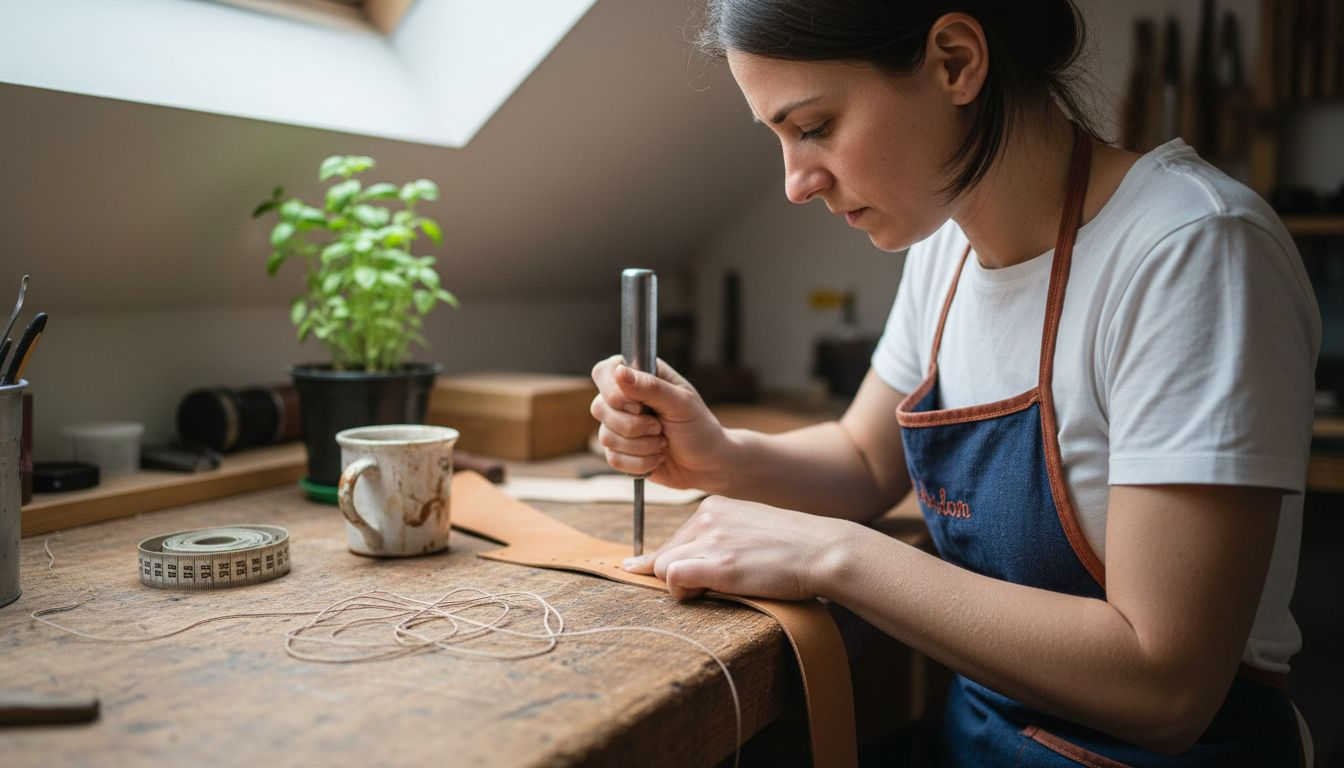
Pro tip: Invest in high-quality, specialised tools and maintain them meticulously; superior equipment is the foundation of exceptional leatherwork.
Sustainability, Longevity, And Authenticity
Sustainable leatherworking combines ecological responsibility with artisan craftsmanship to create products that honour both environmental integrity and traditional manufacturing techniques. This holistic approach transforms leather production from a potentially harmful industry into a model of conscious, thoughtful design.
Key sustainability principles in leather crafting include:
- Eco-Friendly Tanning: Minimising chemical usage
- Waste Reduction: Upcycling leather scraps
- Water Conservation: Implementing recycling techniques
- Ethical Material Sourcing: Prioritising responsible hide procurement
- Circular Economy Integration: Designing for extended product lifecycles
Longevity emerges from meticulous craftsmanship and deliberate material selection. High-quality leather pieces are not merely products but investments, designed to improve with age and usage. Authentic techniques ensure each item carries a narrative of cultural heritage, transcending temporary fashion trends.
Sustainable leather crafting represents a profound dialogue between human creativity, material integrity, and environmental consciousness.
Authentic leather production requires transparency about material origins, processing methods, and environmental impact. Artisans committed to genuine craftsmanship understand that true value lies not just in aesthetic appeal, but in the ethical and ecological story behind each piece.
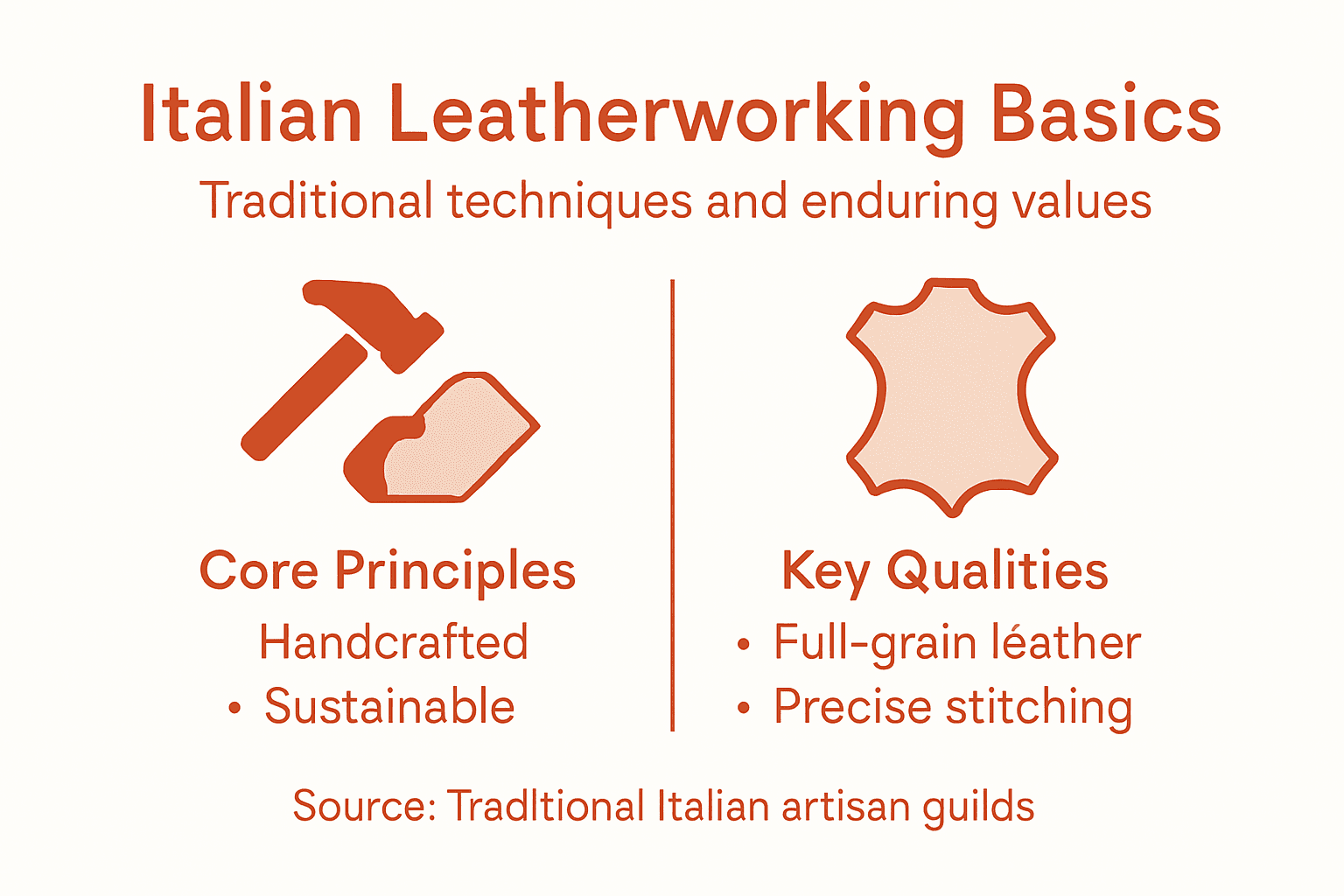
Pro tip: When selecting leather goods, prioritise pieces that demonstrate clear sustainability credentials and traditional manufacturing techniques.
Experience Timeless Italian Artisan Leatherworking Today
The challenge in appreciating artisan leatherworking lies in finding products that truly embody traditional Italian craftsmanship, crafted with premium full-grain leather and employing authentic, sustainable techniques. At San Rocco Italia, we honour this heritage by offering a boutique collection where every handbag and accessory reflects the patience, precision, and cultural legacy described in artisan leatherworking. Our commitment to craftsmanship, longevity, and authenticity means you receive not just leather goods but wearable art that ages gracefully and tells a story.
Explore our curated selection to embrace the core principles of artisan leatherworking such as sustainability and regional Italian techniques. Each piece is handcrafted by skilled artisans in Italy, ensuring the depth, texture, and natural markings celebrated in full-grain leather. Perfect for those who value exquisite design that transcends trends and connects with tradition.
Discover San Rocco Italia’s exclusive range of luxury handbags and accessories crafted with passion and purpose.

Elevate your style with timeless pieces that celebrate genuine Italian artisan leatherwork. Visit San Rocco Italia now and step into a world where tradition meets luxury and craftsmanship knows no compromise.
Frequently Asked Questions
What is artisan leatherworking?
Artisan leatherworking is a specialised craft focusing on the handcrafting of leather goods, combining traditional techniques with contemporary design to create unique pieces of art that reflect heritage and individual creativity.
What are the core principles of artisan leatherworking?
The core principles include sustainability, technical precision, design integrity, and cultural preservation, distinguishing true craftsmanship from mass-produced alternatives.
How is full-grain leather different from other leather types?
Full-grain leather retains the entire grain layer and shows natural markings, making it durable and capable of developing a rich patina over time. Other types like top-grain or corrected-grain leather undergo processing that alters their natural qualities.
What tools are essential for artisan leatherworking?
Essential tools include cutting tools (utility knives, precision blades), measuring instruments (metal rulers, callipers), stitching equipment (needles, awls), and finishing accessories (edge bevellers, burnishing tools), each crucial for precise and artistic craftsmanship.
