


What is heritage leather? A guide to lasting luxury
TL;DR:
- Heritage leather is full-grain, vegetable-tanned, and handcrafted in Italy, ensuring quality and durability.
- It develops a unique patina over time, making each piece one-of-a-kind and investment-worthy.
- Proper identification involves checking labels for ‘full-grain’ and ‘vegetable-tanned’ along with Tuscan origins.
Not every Italian handbag is created equal, and that’s a truth the luxury market rarely shouts about. Walk into any boutique and you’ll see the words ‘Italian leather’ printed on tags, stitched into linings, and repeated in marketing copy with quiet confidence. But here’s what those two words don’t tell you: the grade of the hide, the tanning method, or whether the bag will look better in ten years or fall apart in three. Heritage leather is a different conversation entirely. It refers to a specific category of leather defined by full-grain selection, traditional vegetable tanning, and the kind of Italian craftsmanship that has been practised for centuries. This guide will walk you through what heritage leather actually is, how it’s made, why it matters for your wardrobe, and how to shop for it with confidence.
Table of Contents
- Heritage leather: what it really means
- How heritage leather is made: tradition meets science
- Why heritage leather matters for your luxury wardrobe
- How to identify and shop for true heritage leather
- Our perspective: why heritage leather is worth seeking out
- Discover authentic Italian heritage leather
- Frequently asked questions
Key Takeaways
| Point | Details |
|---|---|
| Heritage leather definition | Heritage leather means full-grain, vegetable-tanned, often Italian-crafted hide known for durability and patina. |
| Superior craftsmanship | Traditional techniques and careful material selection yield bags that last for decades and become more beautiful with age. |
| Investment value | Handbags made from heritage leather typically retain high value and aesthetic appeal for collectors and daily use alike. |
| Shopper’s checklist | Always look for ‘full-grain’, ‘vegetable-tanned’, and clear Italian provenance for true heritage leather pieces. |
Heritage leather: what it really means
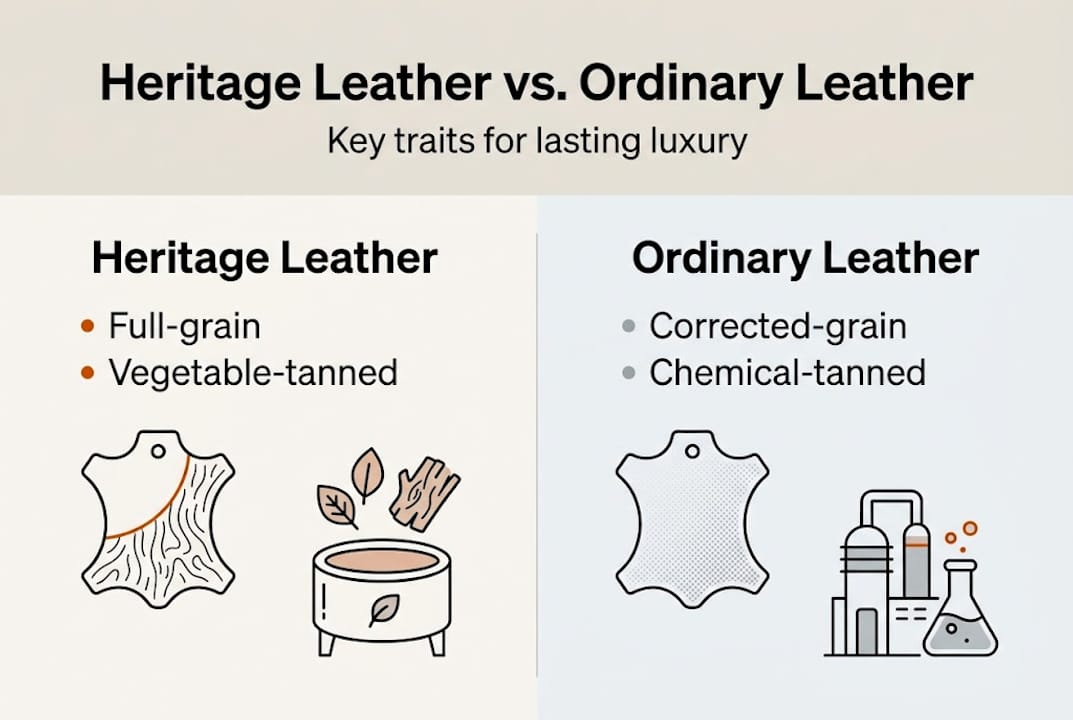
The term ‘heritage leather’ is not a formal industry classification stamped by a governing body. You won’t find it on a regulated label or in a trade standard. What it represents, however, is very real. It describes leathers that are full-grain, vegetable-tanned with Italian craftsmanship, produced using methods that have been refined over generations in tanneries across Tuscany and other Italian regions. The term signals a commitment to quality that goes far beyond surface appearance.
Full-grain leather is the highest grade available. It comes from the outermost layer of the hide, the part that retains the natural grain, the subtle markings, and the fibrous structure that gives leather its strength. Nothing is sanded away, buffed down, or corrected. What you see is what the animal’s life left behind, and that’s precisely the point. It means every bag is genuinely unique.
The role of Italian leather in luxury fashion is deeply tied to this tradition. Tuscany, in particular, has been home to some of the world’s most respected tanneries for over 600 years. The Santa Croce sull’Arno district alone is responsible for a significant share of the world’s finest vegetable-tanned leather, and the techniques used there are passed down through families, not factories.
Here’s what separates heritage leather from everything else on the market:
- Full-grain hide: The natural surface is preserved, with no sanding or buffing to remove imperfections
- Vegetable tanning: Plant-based tannins are used instead of synthetic chemicals, a process that takes weeks rather than hours
- Visible character: Natural marks, variations in tone, and a slightly firm hand feel that softens beautifully over time
- Patina development: The leather darkens and deepens with use, becoming more beautiful rather than more worn
- Tuscan provenance: Often traceable to specific tanneries in Tuscany, where the craft is both an art and an industry
- Exceptional durability: Properly cared for, heritage leather pieces last decades, not seasons
Contrast this with ‘genuine leather’, a term that sounds reassuring but actually refers to one of the lowest grades. It’s made from the leftover layers of the hide after the top grain has been removed, then coated and embossed to mimic the look of higher-quality leather. It wears poorly and ages badly.
“Heritage leather is not about branding. It’s about the hide, the tannin, and the hands that shaped it. When those three things align, the result is something that outlives fashion entirely.”
Understanding what Italian leather actually means is the first step toward making purchases you won’t regret. For collectors and investment buyers, this distinction is everything.
How heritage leather is made: tradition meets science
Knowing what heritage leather is, let’s pull back the curtain on how it’s actually created, and why that matters for quality.
The process begins long before a tannery receives a hide. Skilled selectors examine raw hides for consistency, thickness, and natural character. Only the finest are chosen for heritage production. Vegetable tanning uses plant tannins and takes weeks or months, producing long-lasting firm leather with rich patina, a stark contrast to the industrial chrome-tanning process that can complete the same chemical transformation in a single day.
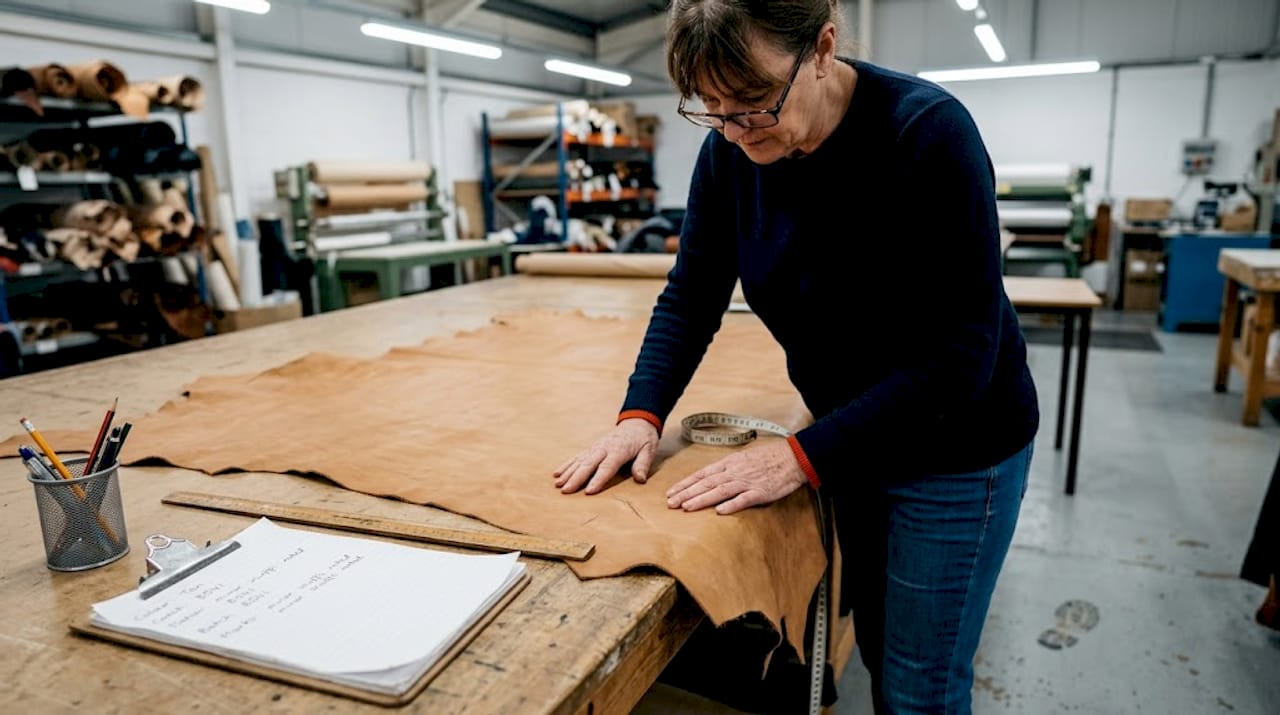
The difference in outcome is enormous. Here’s how the two methods compare:
| Feature | Vegetable tanning (heritage) | Chrome tanning (mainstream) |
|---|---|---|
| Time required | 30 to 60 days or more | 1 to 2 days |
| Materials used | Plant tannins (bark, roots) | Chromium sulphate salts |
| Patina development | Rich, deepening over years | Minimal to none |
| Durability | Exceptional, decades of use | Moderate, prone to cracking |
| Environmental impact | Lower chemical load | Higher chemical waste |
| End result | Firm, character-rich leather | Soft, uniform, consistent |
The steps involved in producing true heritage leather follow a careful sequence:
- Hide selection: Raw hides are hand-inspected and graded; only full-grain quality is accepted
- Preparation: Hides are soaked and cleaned to remove impurities without damaging the natural grain
- Tannin infusion: Hides are placed in pits or drums with plant-based tannin solutions, rotated slowly over weeks
- Drying and conditioning: Leather is dried naturally, then conditioned with natural oils to restore suppleness
- Hand finishing: Artisans apply surface treatments by hand, preserving the grain while enhancing the colour
- Quality control: Each piece is inspected for consistency, grain integrity, and structural soundness
- Final product: The leather is cut and prepared for use by craftspeople in small ateliers and workshops
It’s worth noting that only 10 to 15% of leather is full-grain, often reserved for heritage goods made in Italy. That scarcity is part of what makes heritage leather so valuable, and why it commands a premium price.
The Italian craftsmanship in leather that surrounds this process is not incidental. It is the process. The hands that finish the leather, the eyes that inspect it, and the knowledge passed down through generations are as much a part of the product as the hide itself.
Pro Tip: When shopping for Italian leather bags, always look for the specific terms ‘full-grain’ and ‘vegetable-tanned’ on the label or product description. If a brand uses only ‘Italian leather’ without these qualifiers, ask directly. A reputable maker will always be able to tell you exactly what they’re working with.
Why heritage leather matters for your luxury wardrobe
Understanding the meticulous craft is only half the story. Next, discover why heritage leather should be at the heart of your luxury wardrobe plans.
For women building a wardrobe that lasts, the choice of material is not a detail. It’s the foundation. Heritage leather doesn’t just hold up over time; it improves. The patina that develops on a well-used full-grain bag is not wear. It’s evidence of a life well lived, and it adds to both the aesthetic and the monetary value of the piece.
Here’s how heritage leather bags compare to mainstream alternatives:
| Quality | Heritage leather bag | Mainstream leather bag |
|---|---|---|
| Patina | Deepens beautifully with use | Fades or cracks over time |
| Lifespan | 20 to 40 years with care | 3 to 7 years typically |
| Resale value | High, especially Italian makers | Low to moderate |
| Upkeep | Occasional conditioning | Frequent treatment or replacement |
| Emotional value | Heirloom quality | Seasonal, trend-dependent |
The benefits of choosing heritage leather extend well beyond durability:
- Patina: Each bag develops a unique, personal character that no two pieces share
- Luxury heritage: You’re buying into a tradition that predates modern fashion entirely
- Collector’s value: Pieces from respected Italian makers appreciate rather than depreciate
- Environmental credentials: Vegetable tanning uses significantly fewer synthetic chemicals than industrial methods
- Heirloom potential: A well-made heritage leather bag can be passed to the next generation in better condition than it arrived
The numbers support this. Heritage leather investment pieces hold their value remarkably well, with iconic bags like the Hermès Birkin achieving 70 to 90% resale value. That figure is not accidental. It reflects the combination of material quality, craftsmanship, and provenance that heritage leather represents.
For buyers over 35 who are building a considered wardrobe rather than chasing trends, this matters deeply. Vegetable-tanned full-grain leather is found in heirloom goods from Tuscany, used by top Italian brands, and it’s the material that connects a purchase today to a piece your daughter might carry in twenty years.
When you think about choosing the best leather for handbags, the question isn’t really about style. It’s about time. Heritage leather operates on a timeline measured in decades. Everything else operates in seasons. That’s a fundamental difference, and it’s one that becomes more meaningful the more you invest in your wardrobe.
For those considering Italian leather bags as investments, the heritage category is the clearest path to genuine long-term value.
How to identify and shop for true heritage leather
With investment value in mind, here’s exactly how to spot and shop for the real deal.
The luxury market is full of beautiful objects that don’t quite deliver on their promises. Knowing how to identify authentic heritage leather before you buy protects both your money and your wardrobe. The good news is that the signs are consistent and learnable.
Here’s a step-by-step approach to confident heritage leather shopping:
- Research the brand: Look for makers who name their tanneries, specify their leather grade, and have a traceable supply chain. Transparency is a strong signal of quality.
- Check the labelling: Look for ‘full-grain’ and ‘vegetable-tanned’ explicitly stated. Generic terms like ‘genuine leather’ or simply ‘Italian leather’ are not sufficient.
- Inspect the surface: Heritage leather has a slightly irregular, natural grain. It should not look perfectly uniform or plastic-smooth. Subtle variations in tone and texture are features, not flaws.
- Smell the leather: Vegetable-tanned leather has a warm, earthy, slightly sweet smell. Chrome-tanned leather often smells chemical or synthetic. Your nose is a reliable tool here.
- Feel the stiffness: New heritage leather is firm and structured. It softens with use, but it should never feel limp or hollow when new.
- Confirm the origin: Ask specifically about Tuscan or Florentine tanneries. Reputable Italian brands will name their suppliers with pride.
- Ask the retailer directly: A knowledgeable seller should be able to answer questions about the hide grade, tanning method, and country of origin without hesitation.
Visual and tactile indicators to look for at a glance:
- Natural pore patterns visible under light
- Slight variations in colour across the surface
- A firm, dense hand feel that doesn’t compress easily
- Edges that are burnished or painted, not raw or fraying
- Stitching that is tight, even, and made with waxed thread
The label ‘Italian leather’ isn’t a quality guarantee. Look for specifics like ‘full-grain’, ‘vegetable-tanned’, and Tuscan origin to be certain you’re buying the real thing.
Pro Tip: Before purchasing, ask the retailer or brand three specific questions: What grade is the leather? Is it vegetable-tanned or chrome-tanned? Which tannery supplied it? If they can’t answer all three, keep looking. The right maker will answer confidently.
For a curated starting point, exploring top Italian handbag options from verified makers removes much of the guesswork and gives you a reliable foundation for your search.
Our perspective: why heritage leather is worth seeking out
Having seen the facts and the steps, here’s why we believe heritage leather is an exceptional choice for any luxury wardrobe, beyond the marketing.
Price is not provenance. We’ve seen beautiful bags command extraordinary prices while being made from corrected-grain leather that will peel within five years. And we’ve seen quietly priced pieces from small Italian ateliers that will outlast everything around them. The difference is never in the price tag. It’s always in the process.
There is something genuinely rewarding about owning a bag that improves with you. A heritage leather piece doesn’t ask you to keep it perfect. It asks you to use it. The marks it collects, the patina it develops, the way the leather softens in exactly the places you hold it, these are not signs of age. They are signs of a relationship between the object and its owner. That’s a rare thing in modern retail.
We’ve also learnt that patience in sourcing pays off in a way that impulse purchases rarely do. When you take the time to understand Italian leather’s value and seek out makers who can speak to every stage of their production, the result is a purchase that feels settled and certain. Not just for a season, but for a lifetime.
The contrast with fast fashion accessories couldn’t be sharper. Trend-driven pieces are designed to feel exciting for a short window and then fade. Heritage leather is designed to outlast every trend it encounters. For women who are building a wardrobe with intention, that distinction is not just practical. It’s deeply satisfying.
Discover authentic Italian heritage leather
If you’re ready to turn this knowledge into your next treasured purchase, here’s where to begin.
At San Rocco Italia, every handbag and leather accessory is made in Italy by skilled artisans working with premium full-grain leather and time-honoured techniques. We work directly with trusted Italian makers who can name their tanneries, specify their leather grade, and stand behind every stitch. That transparency is not incidental. It’s the foundation of everything we curate.

Our collection is designed for women who want to invest in pieces that last, not just look good on arrival. Whether you’re searching for your first heritage leather bag or adding to a considered collection, our selection takes the guesswork out of luxury shopping. Explore our range and discover what it feels like to own something made to last a lifetime. Your heritage leather journey starts here.
Frequently asked questions
What makes heritage leather different from ordinary leather?
Heritage leather is always full-grain, vegetable-tanned, and crafted using traditional Italian methods, resulting in a unique patina and unmatched longevity. Heritage leather is defined by full-grain selection, vegetable tanning, and its association with Italian craftsmanship, setting it apart from corrected-grain or chemically tanned alternatives.
How do I know if a handbag is made from true heritage leather?
Look for labels or descriptions specifying ‘full-grain’, ‘vegetable-tanned’, and a Tuscan or Florentine origin; avoid generic terms like ‘Italian leather’ alone. Seek out labels with ‘full-grain vegetable-tanned’ from Tuscany or Florentine tanneries for authentic heritage leather.
Does heritage leather require special care?
It benefits from gentle cleaning and occasional conditioning with natural products, but it is celebrated for becoming more beautiful with age and regular use. Heritage leather develops a richer patina over time and is valued for its durability and ease of long-term care.
Is heritage leather worth the investment?
Yes, its durability, unique character development, and strong resale values make it a smart choice for long-term luxury accessory investments. Heritage leather offers investment value via patina and retains high resale percentages, with top designer bags achieving 70 to 90% of their original value on the secondary market.
Recommended
- Protect luxury leather: expert care for timeless elegance – San Rocco Italia
- Premium leather sourcing: ethical, timeless fashion guide – San Rocco Italia
- Italian vs French leather bags: choosing timeless luxury – San Rocco Italia
- How to Clean Leather Handbag for Long-Lasting Luxury Care – San Rocco Italia
