


Leather Briefcase Strap: Durability Meets Timeless Elegance
Finding the perfect leather briefcase strap can feel unexpectedly complex when your style demands more than fleeting trends. For women navigating demanding careers across Central European cities, the right strap does more than carry weight—it sends a message about your attention to detail and love of enduring craftsmanship. This guide highlights the features that distinguish a reinforced leather band created for years of comfortable, confident use, and explains why small decisions about materials and artistry elevate your professional image.
Table of Contents
- Defining A Leather Briefcase Strap
- Types Of Straps And Key Distinctions
- Premium Materials And Artisanal Processes
- How A Strap Enhances Functionality
- Risks, Common Mistakes And Alternatives
Key Takeaways
| Point | Details |
|---|---|
| Quality Matters | Invest in artisanal leather straps for durability and comfort over cheaper synthetic options. |
| Ergonomic Design | Choose straps that distribute weight effectively to prevent discomfort during professional commutes. |
| Match Professional Image | Select a strap that complements the briefcase to enhance your overall professional appearance. |
| Regular Maintenance | Maintain leather straps with appropriate care to extend their lifespan significantly. |
Defining a leather briefcase strap
A leather briefcase strap is far more than a functional accessory. It’s the bridge between your hand and your most essential professional companion, bearing the weight of your documents, technology, and daily responsibilities. At its core, a briefcase strap is a reinforced leather band attached to the body of a briefcase or structured handbag, designed to distribute weight evenly across your shoulder or hand whilst maintaining both comfort and elegance. Unlike mass-produced straps found on fast-fashion pieces, an artisanal leather briefcase strap represents a deliberate choice to invest in something built to last decades rather than seasons.
What distinguishes a quality leather briefcase strap from ordinary replacements or knock-offs comes down to several interconnected elements. The strap must balance three critical functions simultaneously. First, it must provide structural integrity capable of supporting the full weight of your loaded briefcase without stretching, fraying, or creasing excessively. Second, it should distribute pressure across your shoulder without creating discomfort during your commute through Central European cities or throughout your working day. Third, and equally important for your professional image, it must reflect understated luxury through its finish, patina development, and overall aesthetic coherence with your briefcase. Full-grain leather, which retains all of the hide’s natural characteristics including minor imperfections and grain patterns, becomes increasingly beautiful with age rather than deteriorating. This is why handcrafted straps from skilled artisans command higher value than synthetic alternatives.
The construction method profoundly affects a strap’s longevity. A properly made leather briefcase strap utilises multiple layers of premium leather bonded or stitched together at stress points, creating a unified structure that resists tearing and maintains its shape. The attachment points to your briefcase represent another critical consideration. Rather than being glued or stapled, quality straps are sewn with waxed thread using techniques that date back generations, creating connections that actually strengthen over time as the thread settles into the leather. The hardware—whether brass rings, swivel hooks, or simple leather loops—must complement rather than compromise the overall design, avoiding cheap-looking or flimsy components that detract from your professional presentation.
When you select a leather briefcase strap, you’re making a decision about how you present yourself in boardrooms, at conferences, and during client meetings. The strap becomes part of your personal brand, signalling that you appreciate quality and understands the value of durability. A well-chosen strap transforms an ordinary briefcase into a statement piece that conveys taste, confidence, and professional integrity. For women navigating demanding careers in demanding European markets, this distinction matters.
Professional tip Examine the underside of any potential strap purchase—the bottom leather reveals the true quality of the hide and construction method, as this is where manufacturers cannot hide flaws or cost-cutting measures.
Types of straps and key distinctions
Not all leather briefcase straps serve the same purpose or suit the same lifestyle. The strap you choose fundamentally shapes how you interact with your briefcase throughout your day, affecting everything from your posture during your commute to how professionally you appear when you arrive at meetings. Understanding the distinctions between strap types allows you to select something that genuinely matches your needs rather than settling for whatever came attached to your briefcase. The primary categories break down into three main styles, each with distinct advantages and trade-offs worth considering carefully.
Top-handle straps
The top-handle strap remains the most traditional and formal choice, and for good reason. This strap attaches at two points along the top edge of your briefcase, creating a single unified handle you carry in your hand or briefly over your forearm. Top-handle straps work exceptionally well for formal professional environments where you want to convey structured elegance and control. When you’re moving between your car, an office lobby, and a boardroom, a top handle keeps your briefcase close and creates an impression of purposeful sophistication. The downside is clear: your hand bears the full weight. After 20 minutes of holding a fully loaded briefcase, your grip begins to fatigue, and if you’re juggling documents, a mobile device, or a coffee, you’re managing multiple objects simultaneously.
Detachable and adjustable shoulder straps
Detachable adjustable shoulder straps represent the practical evolution of briefcase design. These straps attach to your briefcase via hardware (typically brass swivels or D-rings) that allows the strap to be removed entirely when not needed. Once attached, you adjust the length to sit comfortably across your shoulder, distributing the weight across your torso rather than concentrating it in your hand and arm. This design proves invaluable during your daily commute through busy European cities, especially when you’re navigating train stations, climbing stairs, or moving between meetings across multiple locations. The strap length adjustment means you can customise the fit based on how you’re dressed—longer for fitted jackets, shorter for layered clothing. The ergonomic benefits are substantial: proper weight distribution reduces shoulder and neck strain, and your hands remain free for other tasks. Many professionals keep detachable straps in their office, attaching them only when commuting and removing them once they arrive at their desk.
Crossbody and messenger-style straps
The crossbody configuration sits at the opposite end of the formality spectrum from the traditional top handle. These longer straps angle across your body, positioning your briefcase on your hip or at your side rather than on your shoulder. Crossbody straps offer exceptional stability, particularly on crowded trains or whilst navigating congested streets. They distribute weight naturally across your body and create a more contemporary, fashion-forward appearance than traditional shoulder configurations. For professionals who value both function and modern aesthetics, a high-quality leather crossbody strap transforms your briefcase into something that feels less corporate and more personally curated. The trade-off involves formality: crossbody positioning works beautifully in creative industries or relaxed professional settings but might feel too casual for traditional boardroom environments. Consider whether your professional context skews towards traditional or contemporary.
Choosing your strap type
Your ideal strap type depends on three concrete factors. First, assess your daily commute and how you travel. If you’re on public transport regularly, shoulder or crossbody straps free your hands for balance and stability. Second, consider your professional environment’s formality level. Conservative industries favour top handles or structured shoulder straps, whilst creative sectors embrace crossbody versatility. Third, think about comfort during extended wearing. A briefcase fully loaded with your laptop, documents, and client materials weighs considerably more than an empty one, and weight distribution matters for your long-term shoulder and spinal health.
Professional tip Choose a detachable strap system if you want maximum versatility—you can carry your briefcase by hand in formal settings and switch to a shoulder strap for commuting, giving you complete flexibility without purchasing multiple briefcases.
Here’s a concise comparison of briefcase strap styles and their professional advantages:
| Strap Style | Typical Usage Context | Ergonomic Benefit | Impact on Professional Image |
|---|---|---|---|
| Top-handle | Boardrooms, formal events | None, hand fatigue common | Traditional and structured elegance |
| Detachable adjustable strap | Commuting, offices | Hands-free, weight distributed | Adaptable and quietly refined |
| Crossbody/messenger | Creative settings, travel | Maximum comfort, stable | Contemporary and fashion-forward |
Premium materials and artisanal processes
The difference between a briefcase strap that lasts five years and one that serves you for thirty comes down to what you cannot always see at first glance. Premium materials and artisanal processes represent the foundation of durability, and understanding what separates exceptional straps from mediocre alternatives helps you invest wisely. When you purchase a leather briefcase strap from San Rocco Italia, you are acquiring something built through deliberate choices about sourcing, craftsmanship, and quality control. These choices compound over decades, transforming an initial investment into an accessory that becomes more beautiful and more valuable as it ages.
The significance of full-grain leather
Full-grain leather forms the cornerstone of any strap worthy of your investment. Unlike corrected or bonded leather, full-grain preserves the hide’s natural surface, including its grain patterns and minor characteristics that make each strap genuinely unique. This leather breathes, develops a rich patina over time, and actually strengthens as it ages rather than deteriorating. When you examine a San Rocco Italia strap crafted from full-grain leather sourced through ethical, LWG-certified processes, you are holding material that has been selected for its individual qualities rather than treated to hide imperfections. The leather itself tells a story. A small scar on the hide becomes a mark of authenticity rather than a defect. Colour variations across the strap indicate genuine leather rather than artificial uniformity. These characteristics distinguish artisanal products from factory-produced alternatives designed for disposability.
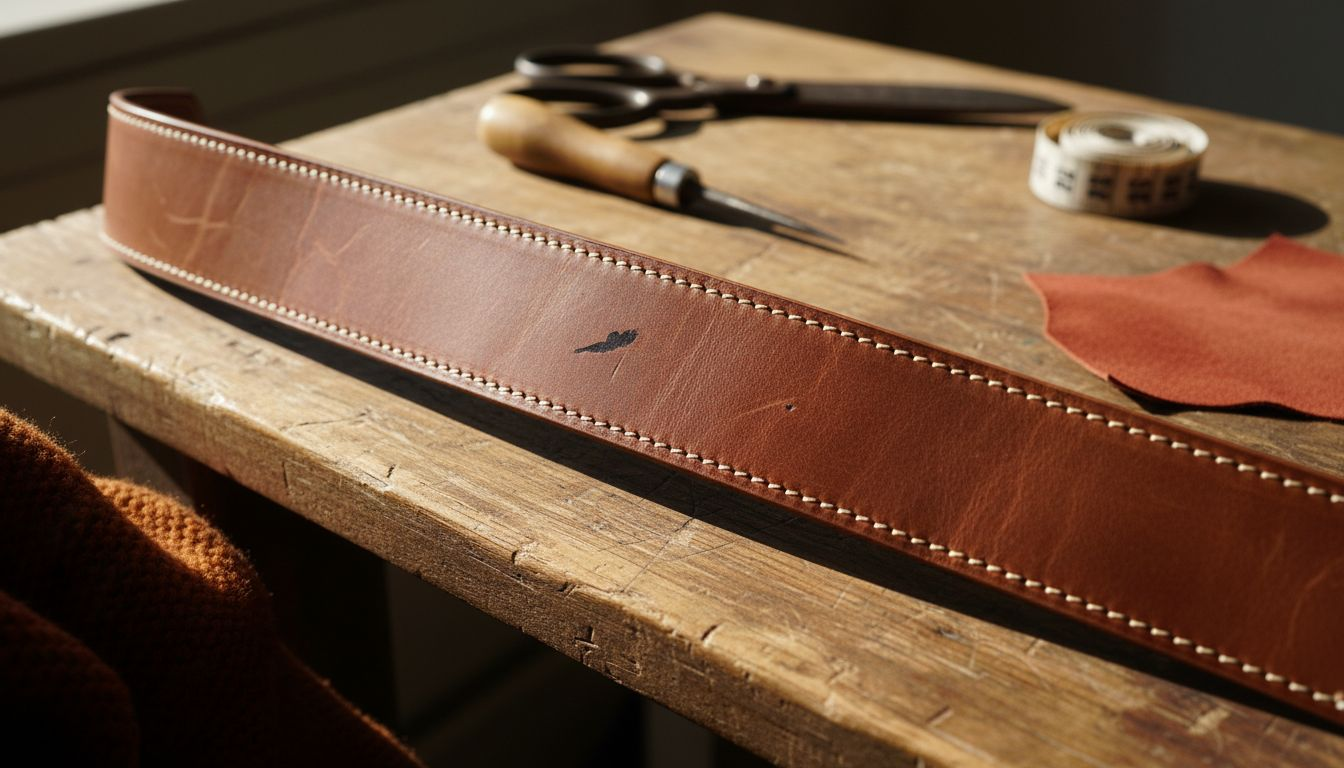
Full-grain leather also requires proper selection at the source. Ethical and sustainable leather sourcing, a cornerstone of responsible craftsmanship, ensures that the hides come from responsible tanneries employing environmentally conscious practices. The LWG certification system verifies that tanneries meet stringent environmental and quality standards. When artisans work with such materials, they are beginning with leather that will develop character rather than crack, fade, or crack unexpectedly after a few years of use.
Hardware and construction techniques
The metal components of your strap matter as much as the leather itself. Premium briefcase manufacturers utilise solid brass buckles, D-rings, and swivel hardware rather than cheap nickel-plated alternatives that tarnish and corrode. Brass develops its own patina over time, complementing the leather’s evolution. These components must be attached securely, not merely glued into place. Quality artisans use rivets or countersunk bolts, creating connections that actually strengthen as the leather settles.
Hand-stitching represents another critical distinction. Machine-stitched straps may look uniform, but hand-stitching creates variations that allow the thread to settle naturally into the leather, becoming more secure over time rather than loosening. Artisans stitch using waxed thread, which resists moisture and rot. The burnished or painted edges you see on San Rocco Italia pieces receive individual attention—each edge is sealed, smoothed, and finished by hand rather than processed through industrial machinery. This detail work adds hours to production but creates straps that resist fraying and maintain crisp edges indefinitely.
Small-batch and bespoke approaches
Artisanal production inherently differs from mass manufacturing. Small-batch production means your strap is created as part of a limited run rather than a colossal factory run of thousands of identical pieces. This approach allows artisans to maintain quality control throughout the entire process. Bespoke options enable you to customise leather colour, hardware finish, strap width, and attachment points to match your specific briefcase and preferences. When you work with San Rocco Italia’s curated selection, you are accessing makers who prioritise longevity and functional luxury over quarterly profits and rapid turnover. They are invested in creating products you will keep for decades, not products you will discard after a season.
Precision in cutting and consistent stitching patterns ensure that every aspect of your strap receives careful attention. Ergonomic strap design means the width and thickness have been calculated to distribute weight efficiently whilst remaining comfortable against your shoulder during extended use. These details emerge from decades of accumulated knowledge, refined through countless iterations. The artisans creating San Rocco Italia straps are not following a corporate template—they are applying generations of craft knowledge to create something genuinely superior.
Professional tip Ask your supplier about the tannery source and certifications before purchasing—LWG certification indicates a commitment to environmental responsibility and consistent quality standards that will directly impact your strap’s longevity.
This table summarises key artisan strap materials and methods for enhanced durability:
| Component | Premium Artisan Approach | Common Low-Cost Alternative |
|---|---|---|
| Leather | Full-grain, ethically sourced | Bonded or corrected, mass-produced |
| Hardware | Solid brass, hand-finished | Nickel-plated, machine-made |
| Stitching | Waxed thread, hand-stitched | Machine-sewn, glued |
| Edge finishing | Burnished and sealed by hand | Machine cut, unfinished |
How a strap enhances functionality
A quality leather briefcase strap transforms your briefcase from a stationary object you must carry to an extension of your body that moves with you seamlessly. The strap is not merely a convenience—it is an engineering solution that fundamentally changes how you interact with your professional life. When designed and constructed properly, a strap enhances your briefcase’s functionality in ways that compound throughout your day, reducing fatigue, protecting your documents, and enabling you to present yourself with confidence. Understanding precisely how a strap achieves these benefits helps you recognise quality when you encounter it.
Weight distribution and ergonomic comfort
Your briefcase likely contains your laptop, client files, notebooks, and numerous other essentials that collectively weigh considerably more than you probably register consciously. A fully loaded briefcase easily reaches five to eight kilograms, and when you carry that weight in your hand with a traditional top handle, you concentrate the entire load into your grip and forearm. Over the course of a week of commuting and client meetings, this concentrated pressure creates genuine physical strain. A properly designed shoulder or crossbody strap distributes that weight across your shoulder, collarbone, and torso, engaging larger muscle groups rather than forcing your hand and arm to bear everything.
The strap’s width directly impacts comfort. Thin straps concentrate pressure into a narrow band, which can pinch and create discomfort even with lighter loads. Artisanal makers understand that a strap between four to five centimetres wide distributes pressure across a broader area, making extended wearing genuinely comfortable. The strap’s thickness matters equally—it must be rigid enough to maintain its shape and resist sagging, but flexible enough to conform naturally to your shoulder. This balance comes from decades of refinement and cannot be replicated through generic factory specifications. When you wear a San Rocco Italia strap for a full day of commuting and meetings, you should notice negligible shoulder fatigue compared to hand carrying. This is not luxury—this is basic ergonomic function that translates directly into your comfort and long-term spinal health.
Stability and hands-free convenience
Consider a typical morning in your professional life. You arrive at the train station juggling your briefcase, a mobile device, perhaps a coffee, and an umbrella. You need to tap your transit card, navigate stairs or crowded platforms, and maintain your balance. A shoulder or crossbody strap frees both your hands, fundamentally changing your capability. You can hold the handrail whilst ascending stairs. You can answer calls or send messages whilst moving through busy spaces. You can carry additional items without feeling encumbered. This hands-free convenience is not a luxury feature—it is a practical reality that makes your commute substantially safer and less stressful.
Crossbody straps offer additional stability benefits. By positioning your briefcase at your hip rather than on your shoulder, the weight sits lower and closer to your body’s centre of gravity. On crowded trains or whilst navigating busy streets, this positioning makes sudden movements less likely to throw you off balance. The strap remains secure and stable, whereas a shoulder strap can shift if you lean or turn quickly. For professionals navigating European cities where public transport is the norm, this stability difference is tangible and meaningful.
Protection of documents and contents
A quality strap does not merely carry your briefcase—it protects what is inside. When you carry by hand, your briefcase moves with your arm, potentially tilting, rotating, or banging against your leg or doorways. A properly fitted shoulder strap keeps your briefcase relatively stationary against your body, reducing unnecessary movement that could damage contents or cause papers to shift inside. The strap’s stability also protects the briefcase itself from impact damage. Your briefcase sits more securely, meaning corners and edges are less likely to strike objects during navigation through crowded spaces.
Moreover, the strap’s attachment points distribute the briefcase’s weight evenly throughout the bag’s structure rather than concentrating stress on limited areas. Quality stitching at attachment points means the briefcase’s frame is strengthened rather than weakened by the strap’s weight. Over years of use, this distributed load-bearing approach means your briefcase maintains its shape and structural integrity whereas poorly constructed alternatives begin to sag or develop stress cracks in the leather.
Creating a cohesive professional appearance
A strap is not invisible—it is prominently visible to everyone you interact with professionally. A quality leather strap in a complementary colour and finish signals that you have invested in your professional image and care about details. The strap should harmonise with your briefcase leather, not clash or appear mismatched. When your strap matches your briefcase in colour depth and leather quality, you project an impression of intentional curation rather than accidental assembly. This may sound superficial, but in professional environments where others form impressions of your competence and attention to detail within seconds, these visual elements matter. Artisanal leather crafting techniques produce straps that age gracefully alongside your briefcase, developing patina and character that enhance rather than diminish your professional aesthetic. A strap that becomes more beautiful with use is a genuine functional advantage—it communicates longevity, quality, and confidence.
Professional tip Test a strap’s comfort by fully loading your briefcase and wearing it for at least thirty minutes before committing to a purchase—comfort depends on how the strap’s width and material feel against your specific shoulder structure, and this cannot be assessed without genuine wearing time.
Risks, common mistakes and alternatives
Investing in a leather briefcase strap requires understanding not just what makes a good choice, but what pitfalls can undermine your decision. Many professionals make mistakes that seem logical in the moment but create genuine problems months or years into ownership. Understanding these risks and the common errors that lead to them helps you navigate the decision with confidence. The good news is that most mistakes are entirely preventable once you know what to watch for.
The dangers of cheap synthetic alternatives
The most common and consequential mistake is purchasing straps made from synthetic materials or heavily corrected leather marketed as affordable solutions. Synthetic straps—typically polyurethane or PVC coated fabric—may feel fine initially, but they deteriorate in ways that genuine leather simply does not. Synthetic materials crack when exposed to temperature changes, becoming stiff in winter and sticky in summer. The coating peels away, exposing fragile fabric underneath that tears easily. After 18 to 24 months of regular use, a synthetic strap becomes genuinely uncomfortable and visually deteriorated. More problematically, synthetic straps fail catastrophically. The attachment points become loose, stitching pulls free, and you risk dropping your briefcase unexpectedly. This is not merely inconvenient—it is a functional failure that can damage your documents, your laptop, or create an embarrassing situation in a professional setting.
Corrected leather, sometimes marketed as “full-grain” deceptively, has had its surface sanded and artificially coloured to hide imperfections. This process removes the natural protective layer that makes genuine full-grain so durable. Corrected leather feels smooth and uniform initially, but the artificial coating wears away, revealing damaged leather underneath. After two to three years, corrected leather becomes patchy, discoloured, and frankly unattractive. Genuine full-grain leather, by contrast, develops richer colour and actually becomes more beautiful as it ages. When evaluating strap options, ask directly whether the leather is full-grain with natural surface treatment or corrected and artificially finished. The answer reveals whether you are purchasing something built to last or something engineered for disposability.
Common attachment and hardware failures
Poor attachment points represent another frequent problem that compromises functionality and safety. When straps are glued rather than stitched to your briefcase, they eventually separate. Glue deteriorates under moisture exposure and temperature changes. You might not notice until your strap suddenly pulls free while you are carrying a fully loaded briefcase. Quality attachment requires stitching with waxed thread through reinforced leather panels, creating connections that actually strengthen as the leather settles. Hardware failures follow a similar pattern. Cheap nickel-plated buckles and D-rings corrode within months, particularly in damp European climates. Corrosion weakens the connection points, and metal deterioration creates an unsightly appearance. Solid brass hardware costs more initially but develops a natural patina that complements aged leather. More importantly, brass resists corrosion and maintains structural integrity for decades.
An often overlooked risk involves strap width and thickness inconsistency. A strap that begins at five centimetres wide and narrows to three centimetres creates stress concentration at the narrowing points. These areas fail first under load. Quality straps maintain consistent width throughout their length or transition gradually at attachment points. Thickness should remain uniform—thin spots indicate cost-cutting measures that compromise durability. Examine your potential strap carefully. If the leather feels thinner in certain areas or the width appears inconsistent, these are warning signs of poor construction.
When alternatives make sense
Whilst a quality leather strap is optimal for most professionals, alternatives exist for specific situations. Nylon straps with reinforced stitching work well if you frequently navigate genuinely harsh environments—construction sites, outdoor fieldwork, or industrial settings where leather’s vulnerability to cutting or extreme damage becomes a liability. Nylon withstands abuse better than leather and can be cleaned more easily. However, nylon lacks the aesthetic elegance and never develops character like leather does. For professional contexts, leather remains superior.
Some briefcases arrive with both top handles and detachable shoulder straps, providing versatility without requiring replacement. This configuration works well if your briefcase already has quality attachment points and the included strap is genuinely well-constructed. However, many included straps are mediocre at best. If your briefcase came with a generic strap and you use it regularly, replacing it with an artisanal leather strap from San Rocco Italia represents a logical investment.
Some professionals mistakenly believe that briefcases without any strap option are somehow superior or more formal. This thinking is outdated. Modern professional contexts accept and even appreciate briefcases with quality shoulder straps. The formality comes from the briefcase’s design and materials, not from whether you carry it by hand or shoulder. Italian craftsmanship complete guide resources explore how heritage makers balance tradition with contemporary functionality, creating pieces that are simultaneously timeless and practically useful.
Risk mitigation through proper care
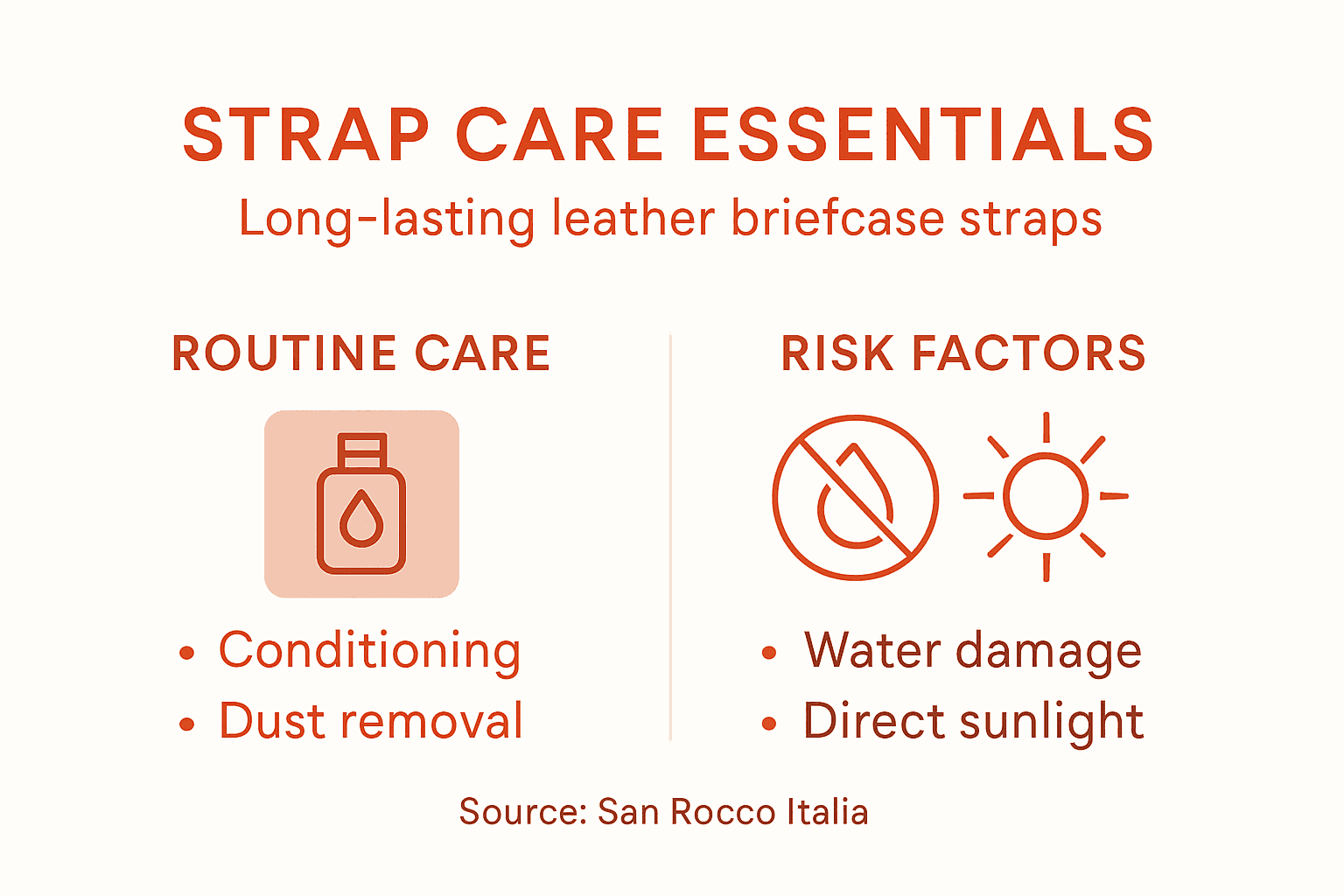
Even quality straps require appropriate maintenance to reach their full lifespan potential. Exposure to extreme moisture damages leather, even full-grain varieties. If you are caught in heavy rain regularly, condition your strap monthly with appropriate leather care products. Excessive heat causes leather to become brittle, so avoid storing your briefcase in direct sunlight or hot cars. Salt from winter roads corrodes hardware and degrades leather, so rinse your briefcase occasionally during winter months. These maintenance actions are simple but compound into significant lifespan extension. A strap properly maintained reaches 30 to 40 years of service. The same strap neglected might fail within 5 to 10 years.
Professional tip Request information about the strap’s attachment method before purchasing—straps should be sewn through reinforced leather with waxed thread, never glued or stapled, as this construction method is the single strongest predictor of long-term durability.
Elevate Your Professional Presence with San Rocco Italia’s Leather Briefcase Straps
Choosing the right leather briefcase strap is essential to combine durability with timeless elegance that withstands the demands of a busy professional life. If you are seeking a strap that offers full-grain leather quality, artisanal construction, and the perfect balance of comfort and style for your daily commute or boardroom meetings then San Rocco Italia provides exceptional handcrafted solutions designed to last decades and enhance your professional image.

Explore our exclusive collection of straps and leather accessories made by skilled Italian artisans who prioritise quality stitching, solid brass hardware, and ergonomic design at San Rocco Italia. Discover why professionals across Europe trust our boutique for sophisticated, durable straps that complement your briefcase and elevate your confidence. Act today to invest in a strap that will develop character over years of use and experience the subtle power of true craftsmanship at San Rocco Italia. Learn more about our commitment to traditional techniques and distinctive materials on our website and transform the way you carry your professional essentials.
Frequently Asked Questions
What is a leather briefcase strap made of?
A quality leather briefcase strap is typically made from full-grain leather, which retains the hide’s natural qualities and develops a unique patina over time, making it both durable and aesthetically pleasing.
How do I choose the right type of leather briefcase strap?
Selecting the right strap depends on your daily commute, the formality of your professional environment, and your comfort needs. Top-handle straps are ideal for formal settings, while detachable shoulder and crossbody straps offer more comfort and practicality for commuting.
What are the benefits of a detachable adjustable shoulder strap?
A detachable adjustable shoulder strap allows for hands-free convenience and better weight distribution across your torso, reducing strain on your shoulder and making it easier to multitask during your commute.
How can I ensure the durability of my leather briefcase strap?
To ensure durability, invest in a strap made from high-quality full-grain leather with solid brass hardware and reinforced stitching. Additionally, maintain it properly by avoiding extreme moisture and direct sunlight, and conditioning the leather regularly.
Recommended
- Leather Ladies Briefcase: Elegance Meets Enduring Craft – San Rocco Italia
- How Long Do Leather Bags Last: Complete Guide – San Rocco Italia
- The Essential Guide to Leather & Luggage – San Rocco Italia
- Top Italian Leather Gifts – Expert Comparison 2025 – San Rocco Italia
- Pourquoi Choisir des Matériaux Anciens pour Vos Projets de Construction ?
