


Why a leather doctor's bag is the ultimate luxury
Not every expensive handbag is created equal. Many women invest in a designer piece only to watch it crack, fade, or lose its shape within a few years. The truth is that genuine luxury is not about a logo or a price tag. It is about the material, the method, and the hands that made it. A leather doctor’s bag, crafted by skilled Italian artisans using full-grain hide and time-honoured techniques, belongs to a different category entirely. This guide will help you understand what separates a true heirloom piece from a well-marketed imitation, and why the doctor’s bag remains one of the most enduring investments in a woman’s wardrobe.
Table of Contents
- What makes a leather doctor’s bag unique?
- The craftsmanship behind true Italian leather
- Leather vs. synthetic: Why patina and longevity matter
- Care and maintenance: Keeping your doctor’s bag timeless
- Styling your leather doctor’s bag for modern elegance
- Where to find your perfect Italian leather doctor’s bag
- Frequently asked questions
Key Takeaways
| Point | Details |
|---|---|
| Authentic Italian craftsmanship | Handmade leather and ethical sourcing set true luxury bags apart. |
| Lasting beauty and strength | Patina and expert construction let genuine leather bags age gracefully for decades. |
| Proper care extends life | Consistent cleaning and correct storage maximise both beauty and value. |
| Sustainability through longevity | Heirloom-quality bags offer more sustainable luxury than fast fashion. |
What makes a leather doctor’s bag unique?
The doctor’s bag has a fascinating origin. In the 19th century, physicians carried their instruments in structured, top-handle satchels built for durability and quick access. That same logic, function married to elegance, is precisely what makes the silhouette so compelling today. Nothing about it is accidental.
The defining features of a classic doctor’s bag are easy to recognise once you know what to look for:
- A rigid or semi-rigid frame that holds its shape without stuffing
- A wide, hinged opening that allows full visibility of the interior
- A single or double top handle, often reinforced at the stress points
- Structured base feet to protect the leather from surface wear
- Clean, minimal exterior lines that work across decades of fashion
These design elements are not trends. They are solutions. The bag was engineered to perform, and that engineering is what gives it staying power in a wardrobe built on quality rather than novelty.
True Italian craftsmanship takes this foundation further. Handmade with traceable supply chains and responsible tanning processes, a genuine Italian doctor’s bag is built to outlast fast fashion by a significant margin. If you are exploring premium doctors bags for the first time, understanding these hallmarks will protect your investment from the start.
The craftsmanship behind true Italian leather
The phrase “Italian leather” is used so freely that it has almost lost its meaning. But when it is genuine, it represents something specific: a tradition of artisan skill, regional pride, and material integrity that cannot be replicated at scale.
Full-grain leather is the highest grade available. It retains the natural surface of the hide, including its unique markings, which means no two bags are identical. Vegetable tanning, a process that uses plant-based compounds rather than harsh chemicals, produces leather that is firmer, more breathable, and far more responsive to ageing. This is the leather that develops a rich patina over time rather than peeling or cracking.
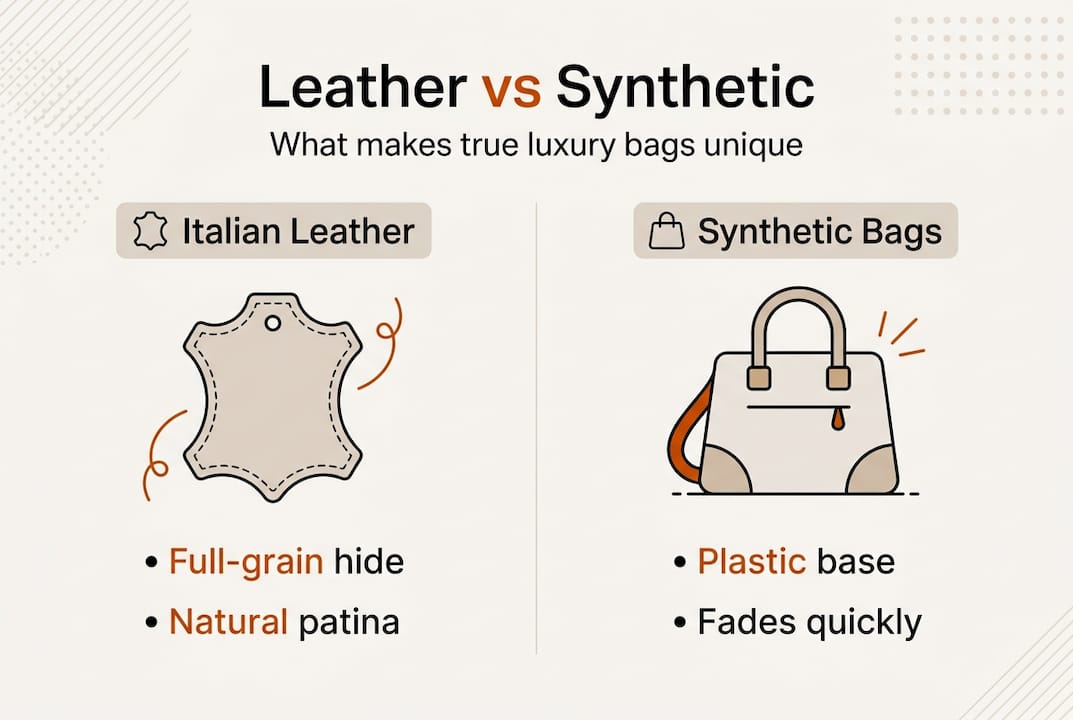
Hand-stitching is another marker of quality that is easy to overlook. Machine stitching is uniform but brittle. A single broken thread can cause a seam to unravel. Hand-stitching, by contrast, uses a saddle-stitch technique where each stitch is independent, meaning one loose thread does not compromise the whole.
| Feature | Artisan Italian leather | Mass-produced alternative |
|---|---|---|
| Leather grade | Full-grain | Bonded or corrected grain |
| Tanning method | Vegetable-tanned | Chrome-tanned |
| Stitching | Hand-stitched | Machine-stitched |
| Traceability | Regional, named artisan | Unknown supply chain |
| Lifespan | 20 to 40 years | 3 to 7 years |
“True Italian luxury avoids mass-production. Seek handmade pieces with traceable supply chains and responsible tanning certifications.”
Ethical sourcing matters too. The Leather Working Group (LWG) certification is a reliable benchmark for responsible tanning practices. When a brand can name its tannery and its artisan, that transparency is itself a mark of quality. Explore how the best leather bag companies approach this standard to understand what genuine accountability looks like.
Pro Tip: Ask any luxury leather brand where their hides are tanned and whether their tannery holds LWG certification. A confident, specific answer is a very good sign.
Leather vs. synthetic: Why patina and longevity matter
Patina is the word used to describe the gradual, beautiful transformation of full-grain leather over time. It is not damage. It is evidence. The oils from your hands, the light from your environment, and the gentle friction of daily use all contribute to a surface that becomes richer, deeper, and more personal with every passing year.
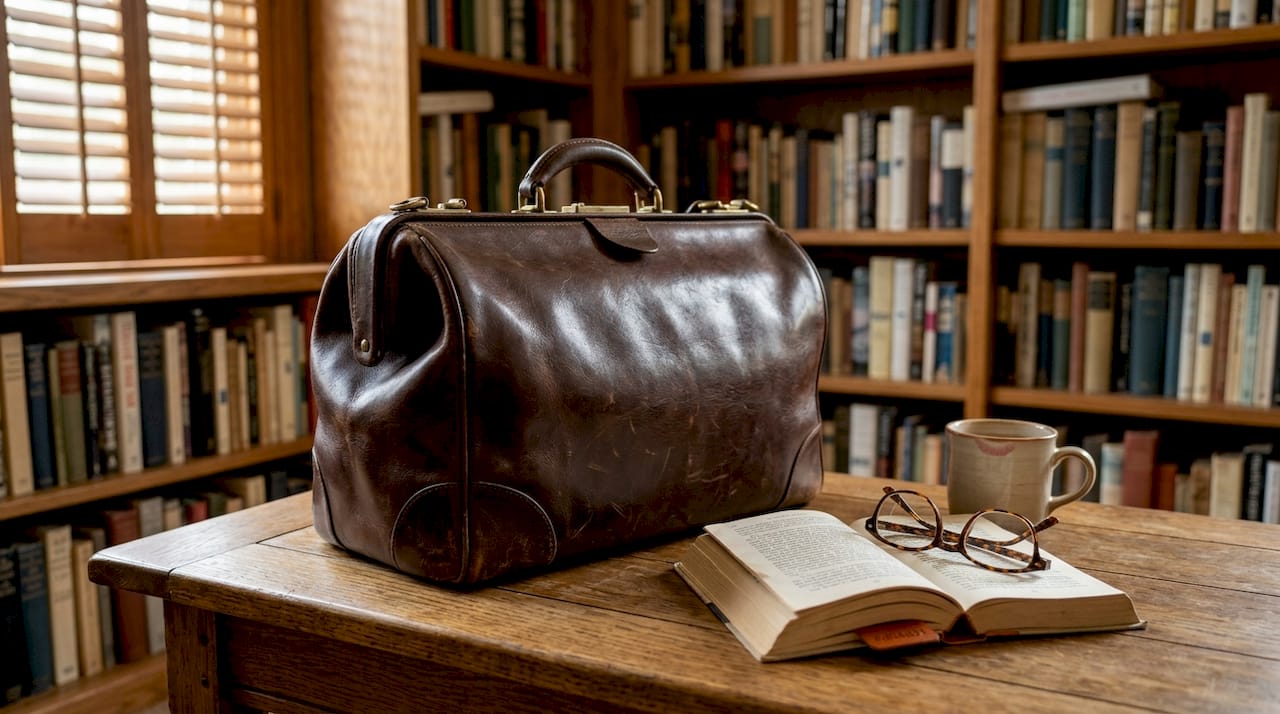
Synthetic materials cannot do this. They degrade. The surface cracks, the colour fades unevenly, and the structure collapses. There is no graceful ageing with a polyurethane bag. There is only deterioration.
Here is how the two materials compare over time:
| Timeline | Full-grain leather | Synthetic or bonded leather |
|---|---|---|
| Year 1 | Stiff, breaking in | Looks new |
| Year 3 | Softening, patina begins | Surface starts to peel |
| Year 5 | Rich colour, character | Significant wear and cracking |
| Year 10 | 5-10 years of rich ageing, heirloom quality | Unusable |
The sustainability argument is equally compelling. A leather doctor’s bag that lasts 30 years replaces dozens of synthetic bags over the same period. That is less waste, fewer resources consumed, and a smaller environmental footprint overall. Choosing quality is, in this sense, an ethical act.
How to care for your leather to maximise its patina:
- Allow the bag to breathe. Never store it in plastic.
- Condition the leather every three to four months with a natural conditioner.
- Rotate use so the leather rests between outings.
- Keep it away from prolonged direct sunlight, which fades colour unevenly.
- Address moisture immediately with a clean, dry cloth.
Pro Tip: A small amount of natural beeswax conditioner applied in circular motions every season will feed the leather and encourage an even, beautiful patina without darkening the surface excessively.
For women who want to understand the full picture before purchasing, reading about designer work bags and their material standards is a worthwhile step.
Care and maintenance: Keeping your doctor’s bag timeless
A luxury leather bag is not high-maintenance. It simply requires the right kind of attention, applied consistently. The good news is that the routines are straightforward once you understand what the leather actually needs.
The essentials of caring for your doctor’s bag:
- Clean gently: Use a soft, barely damp cloth for surface dust. Never use household cleaners, alcohol wipes, or abrasive materials.
- Condition regularly: Apply a leather conditioner every three to four months to prevent dryness and cracking. Read guidance on choosing the best leather conditioner for Italian hides specifically.
- Store correctly: Place the bag in a breathable cotton dust bag when not in use. Guidance on storing your leather bag properly will help you avoid the most common mistakes.
- Protect from rain: A light leather protector spray applied at the start of each season adds a barrier against moisture without affecting breathability.
- Avoid overfilling: Stretching the structure of a doctor’s bag repeatedly will distort the frame and stress the stitching.
The most common mistakes that shorten a luxury bag’s life are storing it in direct sunlight, using the wrong cleaning products, and neglecting conditioning until the leather is already dry. Detailed advice on cleaning a leather doctors bag naturally is available and worth bookmarking.
Pro Tip: Stuff your bag with acid-free tissue paper when storing it for longer periods. This preserves the shape without the chemical risk that newspaper ink can pose to pale leathers.
Styling your leather doctor’s bag for modern elegance
One of the most compelling qualities of a doctor’s bag is its refusal to be seasonal. It does not belong to a trend cycle. It belongs to a woman who knows her own style and invests accordingly.
For women over 35, the doctor’s bag offers something that most handbags cannot: genuine versatility without compromise. It is structured enough for a boardroom and relaxed enough for a weekend gallery visit. The silhouette flatters rather than competes.
Here are some of the most elegant ways to wear it:
- With tailored trousers and a silk blouse: The bag’s structure echoes the precision of a well-cut suit without feeling stiff.
- Over a midi dress: The contrast between a fluid hem and a rigid bag creates a balance that feels effortlessly polished.
- For travel: The wide opening and firm base make it practical for airport security and hotel lobbies alike.
- With knitwear and wide-leg trousers: A relaxed outfit gains instant authority when anchored by a quality leather bag.
- As a statement piece with a neutral palette: Let the leather’s natural colour and patina do the work.
The doctor’s bag works because it is suited to professional women who want their accessories to reflect their values: quality, longevity, and quiet confidence. Pairing it with other Italian leather handbags from the same artisan tradition creates a wardrobe that tells a coherent story.
Where to find your perfect Italian leather doctor’s bag
Finding a genuinely exceptional doctor’s bag means looking beyond department stores and fast-luxury brands. It means seeking out makers who can name their tannery, describe their stitching technique, and stand behind the longevity of every piece they sell.

San Rocco Italia was founded on exactly this principle. As a woman-owned boutique, every leather bag in the collection is made in Italy by skilled artisans using full-grain leather and traditional hand-finishing techniques. The supply chain is traceable, the craftsmanship is verifiable, and the design is built to last decades rather than seasons. When you invest in a piece from San Rocco Italia, you are not buying a bag. You are acquiring something that will age beautifully alongside you, carry your story, and hold its value in ways that no synthetic alternative ever could. That is what genuine luxury looks like.
Frequently asked questions
How can I tell if my doctor’s bag is genuine Italian leather?
Look for full-grain, vegetable-tanned leather with flawless hand-stitching and traceable origins. True Italian luxury avoids mass-production and includes specific details about the region and artisan behind each piece.
Why does a patina develop on quality leather bags?
Patina is the natural result of high-grade leather responding to light, oils, and use over time. Rich ageing over 5 to 10 years is a hallmark of full-grain leather and cannot be replicated by synthetic materials.
What’s the best way to store my leather doctor’s bag?
Keep your bag in a breathable cotton dust bag, away from direct sunlight and moisture. Proper storage for leather handbags retains both shape and finish over the long term.
Are leather doctor’s bags considered sustainable?
Yes, when responsibly sourced with traceable supply chains and certified tanning processes. Their exceptional longevity means far less waste compared to synthetic alternatives, making them a genuinely ethical choice.



