


History of Luxury Handbags: Timeless Symbols of Status
Choosing a luxury handbag is more than finding a stylish accessory. For many women, these pieces become symbols of personal achievement, taste, and lasting cultural value. Luxury handbags have long served as iconic consumer artefacts, communicating layers of identity, status, and artistry across eras and societies. Discover how artisanal craftsmanship and Italian heritage transform every handbag into a sophisticated statement that blends elegance with meaningful tradition.
Table of Contents
- Luxury Handbags As Enduring Status Symbols
- Major Eras And Design Breakthroughs
- Italian Craftsmanship And Iconic Techniques
- Famed Brands And Their Lasting Influence
- Sustainability In Modern Luxury Handbags
Key Takeaways
| Point | Details |
|---|---|
| Cultural Significance | Luxury handbags serve as powerful social signifiers, reflecting wealth and social positioning across different cultures. |
| Evolving Design | Significant design transformations in luxury handbags illustrate broader societal trends and cultural shifts over the decades. |
| Artisanal Craftsmanship | Italian craftsmanship is revered for its meticulous techniques and embodies a narrative of cultural identity and quality. |
| Sustainability Focus | The luxury handbag industry is increasingly embracing sustainability, with a shift towards eco-friendly materials and transparent production practices. |
Luxury handbags as enduring status symbols
Luxury handbags represent far more than mere accessories - they are powerful sociological artifacts that communicate complex narratives of wealth, achievement, and social positioning. Throughout history, these meticulously crafted objects have served as iconic consumer symbols of prestige.
The significance of luxury handbags extends beyond simple fashion statements. They function as sophisticated social signifiers that communicate multiple layers of meaning about their owners. Different cultures and historical periods have used handbags as strategic tools for expressing economic status, personal identity, and cultural affiliation.
- Cultural Significance: Handbags communicate social hierarchy
- Economic Indicator: Signals financial achievement
- Personal Branding: Represents individual taste and sophistication
- Historical Context: Used as markers of social standing
Sociological research reveals that luxury brands strategically employ branding techniques to create these status markers. Some utilise conspicuous branding that loudly announces wealth, while others prefer subtle design elements that only discerning observers might recognise.
Luxury handbags are not merely accessories, but powerful statements of social identity and economic achievement.
Pro tip: When selecting a luxury handbag, consider not just its aesthetic appeal, but the subtle social narratives it communicates about your personal brand and status.
Major eras and design breakthroughs
Luxury handbags have undergone remarkable transformations, reflecting broader cultural and aesthetic shifts throughout the 20th and 21st centuries. Luxury handbag evolution tells a fascinating story of innovation, social change, and design brilliance.
The journey begins in the early 20th century, when handbags transitioned from purely functional items to elegant accessories. Structured clutches emerged, signalling a new era of feminine sophistication. Each subsequent decade brought distinctive design philosophies:
- 1920s: Art Deco influences with geometric shapes
- 1950s-1960s: Minimalist designs reflecting modernist aesthetics
- 1980s-1990s: Bold logos and conspicuous brand statements
- 2000s-Present: Sustainable design and technological integration
By the mid-20th century, luxury handbags had become powerful statements of personal style and social positioning. Designers like Coco Chanel revolutionised accessory design, creating pieces that were both functional and emblematic of emerging women’s independence.
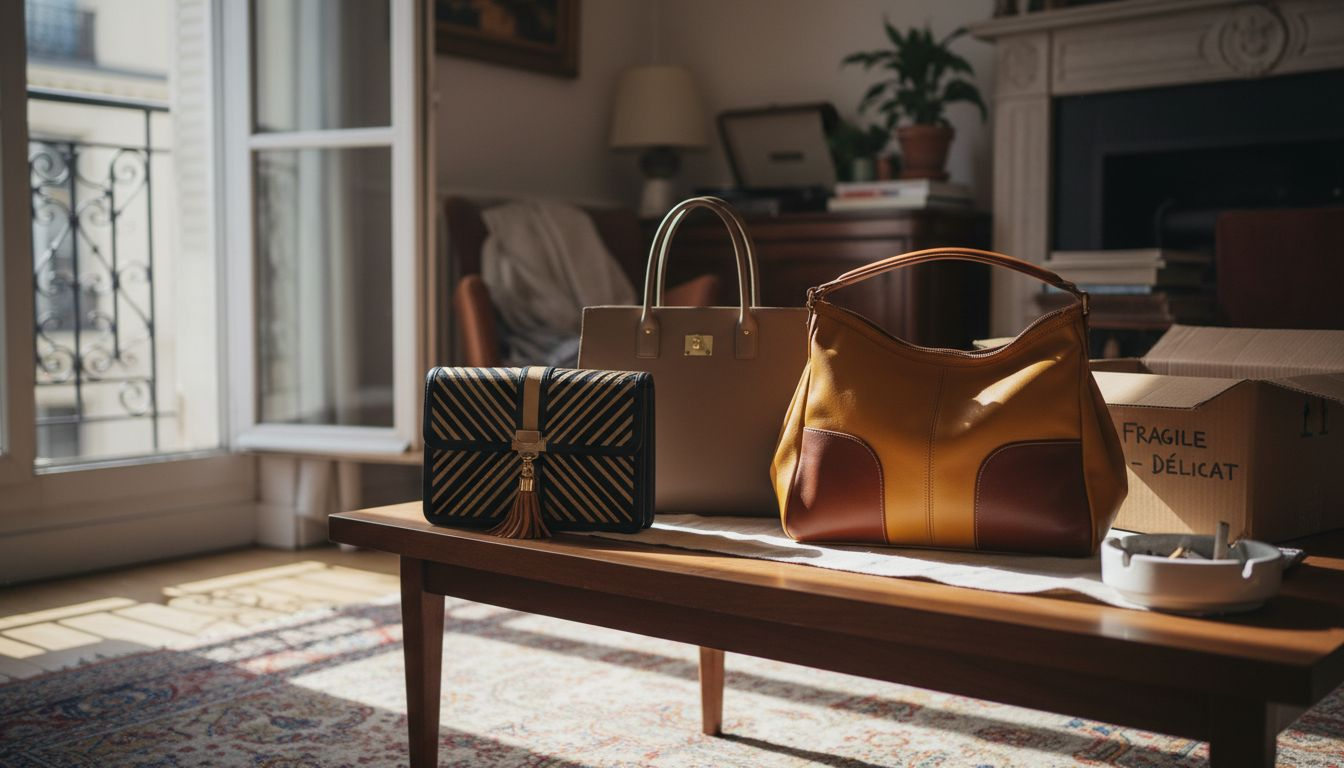
Compare some key eras in luxury handbag evolution and their design impact:
| Era | Distinctive Element | Societal Trend Reflected | Lasting Influence |
|---|---|---|---|
| 1920s | Geometric Art Deco | Rise of modern femininity | Structured sophistication |
| 1950s-1960s | Minimalist refinement | Post-war modernist aspirations | Understated elegance |
| 1980s-1990s | Bold logos & excess | Luxury boom & conspicuous wealth | Brand-driven statements |
| 2000s-Present | Sustainability, tech | Eco-awareness & digital culture | Responsible innovation |
Handbags are more than accessories - they are portable narratives of cultural transformation.
Pro tip: When collecting vintage luxury handbags, focus on pieces that represent significant design movements and cultural moments.
Italian craftsmanship and iconic techniques
Italian leather craftsmanship represents the pinnacle of luxury handbag production, combining centuries-old traditions with cutting-edge innovation. Artisanal techniques define Italian leather excellence, creating a unique approach to manufacturing that sets global standards for quality and design.
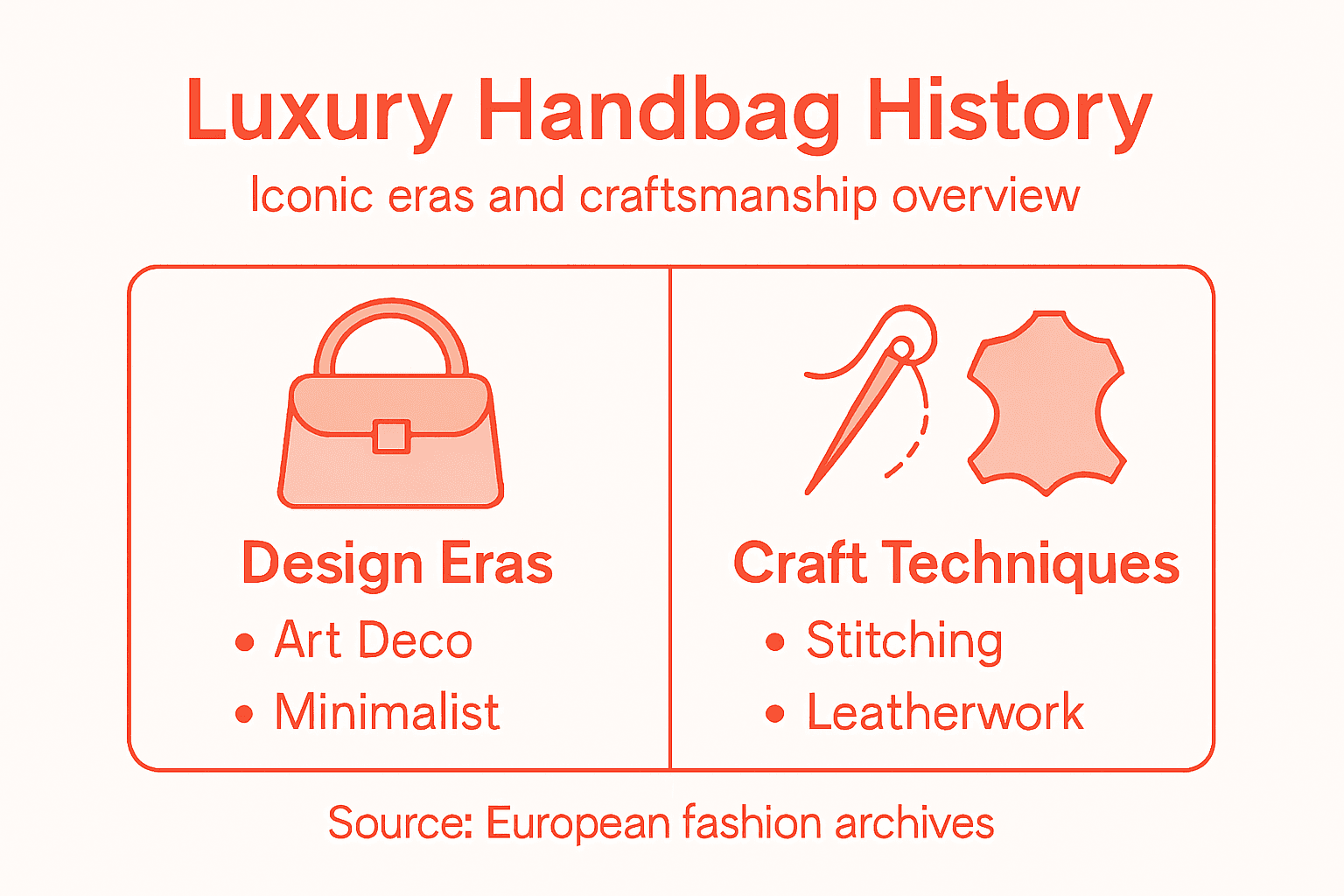
The process begins with meticulously selecting premium raw materials, particularly full-grain leather from renowned Tuscan tanneries. Skilled artisans employ sophisticated techniques that transform raw materials into extraordinary accessories:
- Hand Selection: Carefully choosing the finest leather grades
- Vegetable Tanning: Using eco-friendly, traditional preservation methods
- Precision Cutting: Employing expert hand-cutting techniques
- Detailed Stitching: Creating durability through exceptional craftsmanship
Beyond technical skill, Italian craftsmanship integrates a profound cultural narrative. Each handbag becomes a portable representation of regional heritage, blending historical techniques with contemporary design sensibilities. The artisans transform leather into more than an accessory - they create a narrative of Italian cultural identity.
Italian craftsmanship transcends manufacturing; it is a living, breathing artistic expression.
Pro tip: When investing in a luxury handbag, examine the stitching, leather quality, and subtle craftsmanship details that reveal true artisanal excellence.
Famed brands and their lasting influence
Luxury handbag brands have transcended mere fashion accessories to become global cultural institutions. Prestigious brands define luxury market dynamics, creating narratives of exclusivity and exceptional craftsmanship that resonate across generations.
The European luxury handbag market represents a fascinating ecosystem of heritage and innovation. These iconic brands have successfully maintained their relevance through strategic design, storytelling, and an unwavering commitment to quality:
Here is a summary of how major luxury handbag brands distinguish themselves:
| Brand | Signature Feature | Heritage Focus | Design Philosophy |
|---|---|---|---|
| Louis Vuitton | Monogram canvas & travel | Travel culture & legacy | Functional elegance |
| Hermès | Artisan craftsmanship | Equestrian tradition | Timeless exclusivity |
| Chanel | Quilted leather & chains | Feminist empowerment | Modern classicism |
| Gucci | Iconic motifs & boldness | Italian luxury legacy | Eclectic innovation |
- Louis Vuitton: Pioneering travel leather goods and monogram design
- Hermès: Epitomising craftsmanship and generational luxury
- Chanel: Revolutionising women’s accessory design
- Gucci: Blending Italian heritage with contemporary aesthetics
European luxury brands continue to dominate the global marketplace, representing more than just fashion items. They are repositories of cultural memory, artistic expression, and sophisticated design philosophy. Each handbag tells a story of meticulous craftsmanship, technological innovation, and uncompromising quality.
Luxury brands are not merely selling products, but curating experiences and cultural narratives.
Pro tip: When investing in a luxury handbag, prioritise brands with demonstrable heritage, consistent craftsmanship, and a clear design philosophy.
Sustainability in modern luxury handbags
The luxury handbag industry is experiencing a transformative shift towards environmental consciousness, driven by increasing consumer awareness and technological innovations. Lean practices support sustainable fashion, challenging traditional manufacturing paradigms.
Modern luxury brands are reimagining their approach to production, material sourcing, and environmental responsibility through several innovative strategies:
- Recycled Materials: Utilising regenerated leather and eco-friendly fabrics
- Circular Design: Creating products with end-of-life recyclability
- Reduced Waste: Implementing precision manufacturing techniques
- Transparent Supply Chains: Ensuring ethical and environmentally responsible production
Technological advancements are playing a crucial role in sustainable luxury handbag production. Industry 4.0 technologies enable more precise manufacturing processes, reducing material waste and improving overall resource efficiency. Brands are increasingly viewing sustainability not as a constraint, but as an opportunity for innovation and brand differentiation.
Sustainability in luxury fashion is not a trend, but a fundamental reimagining of production philosophy.
Pro tip: When purchasing luxury handbags, prioritise brands demonstrating genuine commitment to environmental sustainability and transparent production practices.
Discover Timeless Elegance Rooted in Italian Craftsmanship
The article highlights the enduring power of luxury handbags as social symbols crafted with exceptional skill and heritage. If you seek to own a piece that reflects cultural identity, careful artisanal techniques, and sustainable luxury, San Rocco Italia offers a perfect solution. Our collection proudly features handbags made in Italy using premium full-grain leather and traditional methods that embody the timeless sophistication and personal branding discussed.

Explore our unique range and experience the authentic craftsmanship that transforms each handbag into a statement of lasting style and social distinction. Visit San Rocco Italia today, embrace the legacy of iconic design, and select a luxury handbag that resonates with your own narrative of achievement and elegance.
Frequently Asked Questions
What makes luxury handbags a status symbol?
Luxury handbags are considered status symbols because they communicate wealth, achievement, and social positioning through their exclusive design and branding.
How have luxury handbags evolved over time?
Luxury handbags have transformed significantly, reflecting cultural shifts and societal changes, from functional accessories in the early 20th century to sophisticated designs symbolising personal identity and social status today.
What are some key design movements in the history of luxury handbags?
Prominent design movements include the Art Deco influences of the 1920s, minimalist approaches of the 1950s, and the bold logos prevalent in the 1980s and 1990s, culminating in today’s focus on sustainability and technology.
Why is Italian craftsmanship so highly regarded in handbag production?
Italian craftsmanship is revered for its meticulous techniques, high-quality materials, and the cultural narrative embedded in each piece, setting a global standard for luxury handbag production.
