


Complete Guide to the Benefits of Shopping Local
Over 60 percent of every dollar spent at a local business stays within the community, fueling jobs and neighborhood improvements. Choosing local shops is not just about convenience or nostalgia. It is a conscious decision that shapes the health, diversity, and resilience of your local economy. If you want to make your spending matter, understanding the true principles, benefits, and impact of shopping local will help you become a more empowered and thoughtful consumer.
Table of Contents
- Defining Shopping Local And Core Principles
- Key Economic Benefits For Your Community
- Quality, Craftsmanship, And Product Authenticity
- Sustainability And Environmental Considerations
- Comparing Local Vs. Mass-Market Shopping
- Common Misconceptions And Challenges Explained
Key Takeaways
| Point | Details |
|---|---|
| Support Local Businesses | Prioritizing local shopping strengthens community economies by ensuring that money circulates multiple times within the local area. |
| Emphasize Quality and Craftsmanship | Local products often feature exceptional quality and authenticity due to personalized service and artisan techniques. |
| Environmental Advantages | Shopping local reduces transportation emissions and promotes sustainable practices, thereby lessening ecological impact. |
| Address Misconceptions | Overcoming common misconceptions about local shopping can empower consumers to support economic ecosystems effectively. |
Defining Shopping Local and Core Principles
Shopping local is more than a trend—it’s a strategic approach to supporting community economies and making mindful consumer choices. At its core, local shopping represents a deliberate commitment to purchasing goods and services from businesses rooted in your immediate geographical area, prioritising proximity and community impact over global mass production.
According to research on Alternative Purchase Networks, these commerce channels are established as alternatives to traditional consumerism, promoting ethical shopping behaviours that are environmentally conscious and considerate of local economic realities. This approach transcends mere transactions, transforming shopping into a powerful mechanism for community development and sustainable economic practices.
The local multiplier effect provides a compelling rationale for this approach. As outlined by Local Multiplier Effect research, when consumers spend money within their local economy, the financial benefits extend far beyond the initial purchase. This economic phenomenon suggests that each pound spent locally circulates multiple times within the community, generating additional economic activity and supporting local employment.
Key principles of shopping local include:
- Supporting small and independent businesses
- Reducing environmental transportation costs
- Preserving local economic diversity
- Maintaining community character and entrepreneurial spirit
- Creating meaningful connections between consumers and producers
By embracing local shopping, consumers become active participants in crafting a more sustainable, interconnected, and resilient economic ecosystem that values quality, craftsmanship, and community wellbeing.
Key Economic Benefits for Your Community
Shopping local isn’t just a feel-good choice—it’s a powerful economic strategy that directly impacts community prosperity. When consumers choose to spend their money with local businesses, they create a ripple effect of economic opportunities that extend far beyond a single transaction.
Northwest Nature and History research highlights the critical economic multiplier effect, demonstrating that spending at local independent retailers recirculates significantly more money within the community compared to national chain purchases. This means that every pound spent locally generates multiple layers of economic activity, creating a self-sustaining ecosystem of growth and opportunity.
The economic benefits of local shopping are multifaceted and profound. Local businesses are not just transaction points, but vital economic engines that:
- Create local jobs and employment opportunities
- Generate municipal tax revenues
- Support local entrepreneurship
- Promote economic diversity and resilience
- Reduce dependency on external economic systems
Moreover, local businesses are more likely to reinvest their earnings back into the community. They tend to source from other local suppliers, hire local employees, and contribute to community initiatives. This interconnected approach ensures that wealth remains within the community, fostering a robust and sustainable local economic environment that benefits everyone from small business owners to residents seeking meaningful economic opportunities.
Quality, Craftsmanship, and Product Authenticity
When it comes to shopping local, quality and authenticity are more than just buzzwords—they’re fundamental promises that distinguish local businesses from mass-produced alternatives. These enterprises represent a commitment to exceptional craftsmanship, offering products that tell a story and reflect genuine artisan expertise.
According to CFBHFG, local businesses excel by providing unique products with highly personalized service. Their owners are typically deeply engaged with their customer base, ensuring higher quality and authenticity in their offerings. This personal connection transforms shopping from a mere transaction into a meaningful interaction that celebrates skill, tradition, and individual creativity.
In the realm of craftsmanship, local artisans bring unparalleled attention to detail that global manufacturers simply cannot replicate. Each product becomes a testament to:
- Meticulous handcrafting techniques
- Generations of inherited skills
- Preservation of traditional manufacturing methods
- Individual artistic expression
- Commitment to superior materials
For those seeking truly exceptional items, understanding Italian handbag craftsmanship represents the pinnacle of this philosophy. Local craftspeople don’t just create products—they craft experiences, embedding each piece with cultural heritage, personal passion, and uncompromising quality that mass production can never match.

Sustainability and Environmental Considerations
Shopping local is not just an economic choice—it’s a powerful strategy for reducing environmental impact and promoting sustainable consumption. Conscious consumers increasingly recognize that their purchasing decisions have profound implications for ecological preservation and climate responsibility.
Business Report research highlights how local businesses are pioneering sustainable practices by sourcing materials closer to home and maintaining nearby inventories. This approach dramatically reduces carbon emissions from transportation, minimizing the environmental footprint associated with long-distance supply chains and global distribution networks.
The sustainability advantages of local shopping extend far beyond reduced transportation emissions. Local businesses typically demonstrate a more holistic approach to environmental stewardship:
- Shorter supply chains
- Reduced packaging waste
- Lower energy consumption
- More transparent production processes
- Greater accountability for environmental practices
COMMONENERGY Project research further underscores the potential for innovative design and technology in creating more sustainable shopping environments. By prioritizing local businesses, consumers actively participate in a broader movement towards ecological responsibility, supporting enterprises that view environmental protection not as an afterthought, but as a fundamental operational principle.
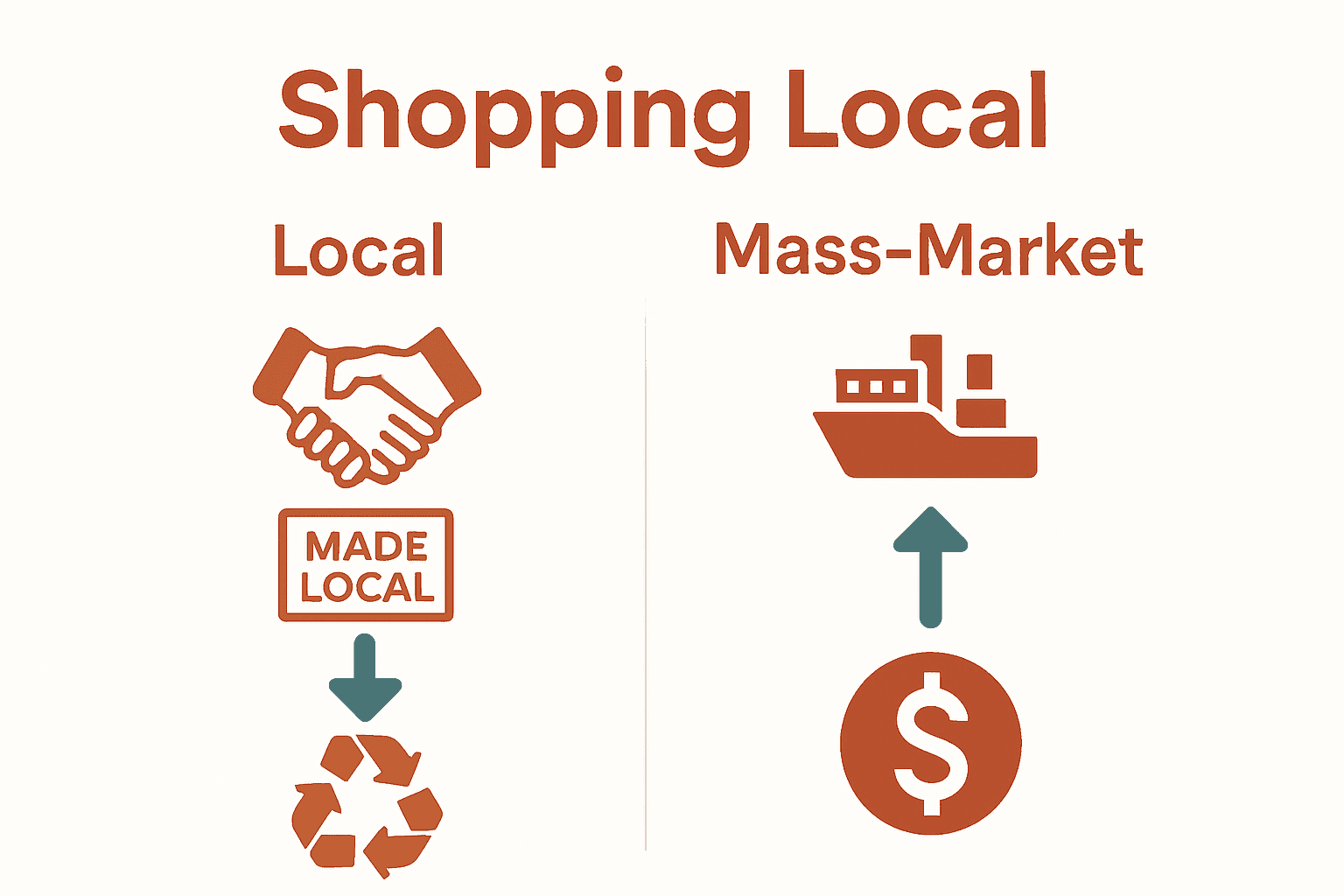
Comparing Local vs. Mass-Market Shopping
The landscape of shopping is fundamentally divided between two distinct approaches: local independent retail and mass-market commercial enterprises. While mass-market shopping offers convenience and predictability, local businesses provide a deeply nuanced and personalized shopping experience that transcends mere transactional exchanges.
CFBHFG research reveals that local shops create unique and inviting environments, offering products and experiences that authentically reflect their community’s character—a stark contrast to the bland uniformity typically found in mass-market stores. These local establishments aren’t just selling products; they’re curating experiences that connect consumers directly with the creative spirit of their immediate environment.
Key differences between local and mass-market shopping include:
- Product Diversity: Local shops offer unique, often handcrafted items
- Customer Interaction: Personal, relationship-driven service vs. anonymous transactions
- Economic Impact: Direct community investment vs. corporate profit distribution
- Production Transparency: Known origins vs. complex, obscured supply chains
- Customization: Tailored selections vs. standardized inventories
Ultimately, choosing local shopping is about more than acquiring goods—it’s about supporting a holistic ecosystem of creativity, craftsmanship, and community connection. Mass-market retailers might provide volume and consistency, but local businesses offer something far more valuable: authenticity, character, and a genuine connection to the human stories behind each product.
Common Misconceptions and Challenges Explained
Shopping local is often misunderstood as a romantic notion rather than a strategic economic choice. Consumer perceptions can create significant barriers that prevent people from fully embracing local shopping, despite its numerous tangible benefits.
PMC Research highlights the complex challenges facing local retailers, particularly how cross-border shopping can diminish domestic tax revenues and reduce sales for local businesses. These economic pressures create a challenging environment where small businesses must continuously innovate and demonstrate their unique value proposition to remain competitive.
Common misconceptions about local shopping include:
- Local products are always more expensive
- Limited selection compared to mass-market retailers
- Inconvenient shopping experiences
- Lower quality than corporate brands
- Less competitive pricing
ArXiv Research suggests that socioeconomic challenges are deeply embedded in spatial dynamics, and bottom-up approaches like altering shopping mobility practices can help redistribute economic opportunities. By understanding and addressing these misconceptions, consumers can make more informed choices that support local economic ecosystems and create meaningful community impact.
Experience the True Value of Shopping Local with San Rocco Italia
The article highlights the challenges faced by consumers who want to support local craftsmanship but often struggle with concerns about price, selection, and convenience. You value quality, authenticity, and the spirit of community embedded in every product, yet finding genuine local artisans can be difficult. At San Rocco Italia, we proudly embrace the principles of shopping local by offering luxury handbags and leather goods handmade in Italy by skilled artisans using traditional techniques and premium materials. This ensures you receive exceptional craftsmanship that truly reflects the personal touch and cultural heritage celebrated in the article.

Discover unique, timeless pieces that support both ethical artisanship and sustainable practices by exploring our curated collection that embodies the local multiplier effect and celebrates authentic craftsmanship. Don’t wait to enrich your wardrobe with products that carry a meaningful story and positively impact the community. Visit San Rocco Italia today to find your next treasured handbag or accessory and join the movement of mindful shopping that transforms your choices into lasting value. Explore the collection and experience firsthand the benefits of choosing local with luxury Italian handbags and elegant designs crafted just for you.
Frequently Asked Questions
What are the main benefits of shopping local?
Shopping local supports small businesses, boosts the local economy, creates jobs, and fosters community connections. It also helps reduce environmental impacts and encourages sustainable practices within the community.
How does shopping local contribute to environmental sustainability?
Shopping local reduces transportation emissions by sourcing materials closer to home, minimizes packaging waste, and promotes accountability in production practices, leading to a smaller overall environmental footprint.
What impact does local shopping have on community employment?
Local shopping directly supports job creation in the community, as local businesses tend to hire more workers from the area and reinvest earnings back into the local economy.
How does craftsmanship differ between local and mass-produced items?
Local artisans typically focus on quality and authenticity, offering handcrafted items that reflect personal artistry and tradition. In contrast, mass-produced items often lack these unique qualities and may prioritize volume over craftsmanship.
