


Boldrini Bags: Why Craftsmanship Still Matters
Selecting a true Italian luxury handbag often means searching beyond fleeting trends and mass production. For women who value enduring style and environmental responsibility, authentic craftsmanship matters more than logo displays or seasonal colours. A Boldrini bag represents the perfect blend of tradition and modern sophistication, marked by unparalleled attention to detail and the remarkable depth of vegetable-tanned calfskin that only improves with age. Discover what truly sets Italian heritage apart in the contemporary world of luxury accessories.
Table of Contents
- What Defines A Boldrini Bag Today
- Signature Styles And Product Range Explained
- Artisanal Leatherwork And Tuscan Craft Techniques
- How Sustainability Shapes Boldrini’s Process
- Comparing Boldrini To Other Luxury Handbags
Key Takeaways
| Point | Details |
|---|---|
| Artisanal Craftsmanship | Each Boldrini bag is handcrafted using traditional techniques on premium vegetable-tanned leather, ensuring longevity and unique character. |
| Timeless Design Philosophy | Boldrini focuses on creating enduring styles that resist the pressures of seasonal trends, offering pieces that remain relevant for years. |
| Sustainability Commitment | The brand prioritises sustainable practices through quality materials and conscious production, reducing environmental impact by promoting durability over disposability. |
| Investment in Quality | Choosing a Boldrini bag is an investment in timeless elegance and artisanal quality, contrasting with mass-produced alternatives that lack character and longevity. |
What Defines a Boldrini Bag Today
A Boldrini bag is not simply another luxury handbag. It represents a specific philosophy about how leather goods should be created, valued, and worn. Founded by Scandiano Boldrini in 1955, the brand has maintained unwavering commitment to principles that distinguish it from mass-produced alternatives and even from many competitors claiming Italian heritage. The foundation of every Boldrini bag rests on three non-negotiable elements: the quality of materials, meticulous attention to detail, and the balance between timeless aesthetic and practical functionality.
When you hold a Boldrini bag, you’re encountering vegetable-tanned calfskin that ages beautifully over years of use. This matters more than marketing copy might suggest. Vegetable tanning takes longer and costs considerably more than chemical alternatives, but it creates leather that develops character and patina rather than deteriorating. The leather breathes, softens in your hands, and tells the story of your life with it. This approach demands patience from makers and investment from buyers, yet it’s precisely what separates artisanal craftsmanship from commercial production. A Boldrini bag today embodies the traditional Tuscan craftsmanship that has defined Italian leatherworking for generations, combined with contemporary elegance that allows the bag to function seamlessly in modern life. You’ll find clean lines, practical organisation, and thoughtful proportions alongside hand-stitched seams and finishes that reveal the maker’s skill.
What truly defines a Boldrini bag in today’s market is exclusivity with purpose. These are not bags produced in rotating seasonal collections designed for obsolescence. Instead, Boldrini creates distinctive pieces that remain relevant years after purchase, resisting the pressure to chase trends whilst maintaining understated sophistication. The bags demand a relationship with their owner, a willingness to care for them properly and appreciate how they transform with time.
Pro tip: When evaluating any artisanal leather bag, ask about tanning methods and production location rather than focusing solely on size or colour; these details reveal whether the maker prioritises longevity and craftsmanship or merely visual appeal.
Signature Styles and Product Range Explained
Boldrini’s collection represents studied restraint rather than endless variety. The brand focuses on perfecting individual silhouettes rather than chasing seasonal trends, which is precisely why women at your stage of life value them so deeply. Each style carries a name that reflects the brand’s Italian heritage and tells a story about the bag’s character and purpose. The Valentina, Barbara, Sveva, Alzira, Norma, and Sofia aren’t arbitrary designations but rather expressions of distinct personalities, each crafted to serve different moments in your wardrobe and life.
When you examine these signature leather handbags, you notice immediately that they avoid novelty. The Valentina speaks to understated elegance with proportions that work equally well for business meetings and weekend gatherings. The Barbara offers structured sophistication, the kind of bag that commands attention through refinement rather than decoration. Each style reflects careful consideration of how women actually live and move through their day. These bags balance practical functionality with visual restraint. The handles sit comfortably on your shoulder or in your hand, the compartments organise without complicating, and the leather quality means the bag improves rather than deteriorates with years of use. This is where heritage meets contemporary living. Boldrini refuses to overwhelm you with logo branding or seasonal colour drops. Instead, the focus remains on the quality of premium vegetable-tanned calfskin leather and the precision of artisan construction that makes each piece feel intentional and permanent.
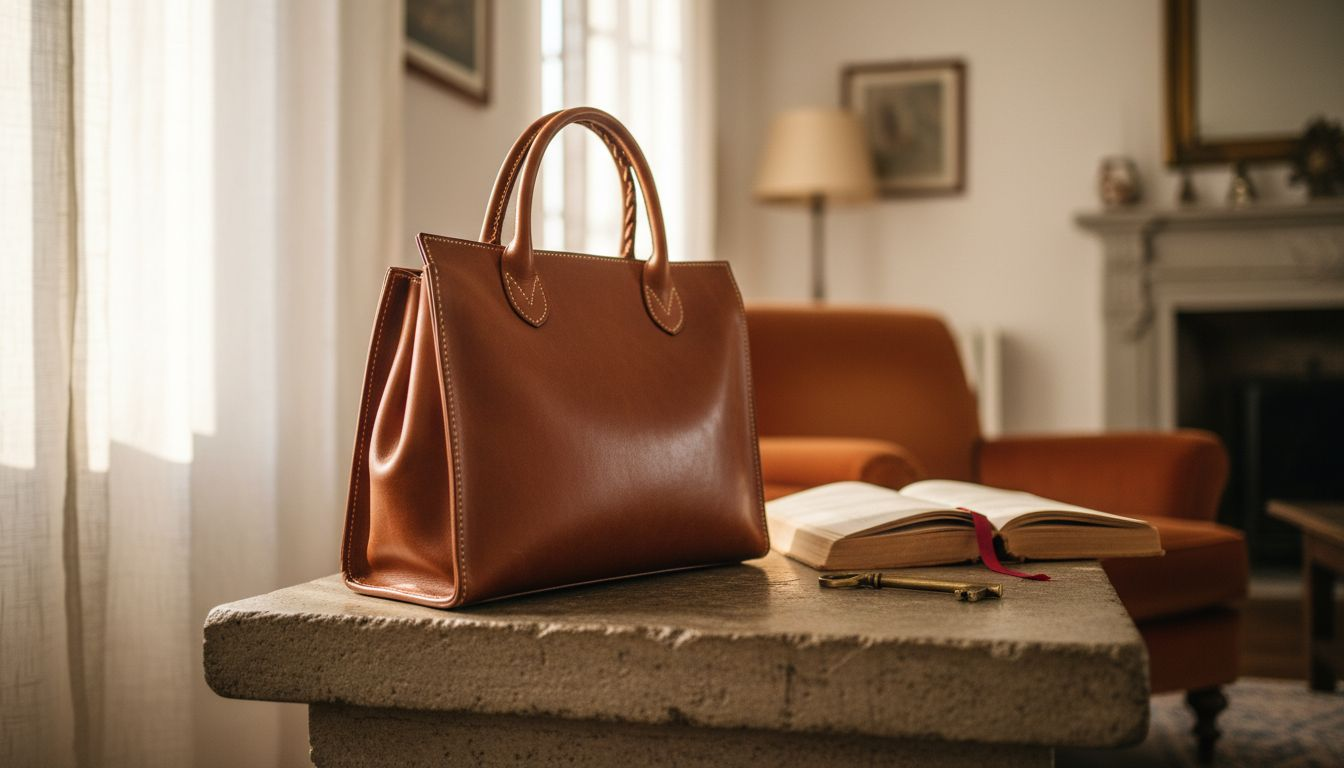
What distinguishes Boldrini’s approach within the luxury market is the commitment to timelessness without sacrificing modern appeal. These bags acknowledge that you live in the present whilst investing in pieces that transcend seasons and trends. Whether you select the Sofia or the Alzira, you’re acquiring something that belongs in your life for decades, not seasons. The range exists to accommodate different aesthetic preferences and practical needs, but each style maintains the same uncompromising standards. This consistency is rare in contemporary luxury. Many brands dilute their collections with lower-quality secondary lines or seasonal experiments. Boldrini remains disciplined, producing exclusively through boutiques and private labels that share their values. That selectivity protects both the brand’s integrity and your investment.
Below is a summary of Boldrini’s signature handbag styles and their unique characteristics:
| Bag Style | Core Personality | Ideal Occasions | Distinctive Feature |
|---|---|---|---|
| Valentina | Understated elegance | Business and weekends | Balanced proportions |
| Barbara | Structured sophistication | Professional settings | Minimalist refinement |
| Sveva | Practical chic | Daily errands | Effortless organisation |
| Alzira | Modern versatility | City life and travel | Adaptable compartments |
| Norma | Classic femininity | Special gatherings | Iconic silhouette |
| Sofia | Contemporary flair | Everyday sophistication | Simple, clean lines |
Pro tip: Choose your Boldrini style based on how you spend most of your time rather than aspirational occasions; a bag you reach for daily will develop more character and patina than one reserved for special events, ultimately becoming more valuable to you.
Artisanal Leatherwork and Tuscan Craft Techniques
Tuscan leatherworking represents centuries of accumulated knowledge passed down through families and workshops. This isn’t romanticised history. Real artisans in the region continue producing leather goods using methods that have remained fundamentally unchanged because they work. When you purchase a Boldrini bag, you’re acquiring the product of this lineage, crafted by makers who learned their trade through years of apprenticeship rather than industrial training programmes. The difference between factory production and Tuscan artisanal work becomes apparent the moment you examine hand-stitched seams or feel how the leather responds to your touch. Each bag carries the fingerprints of its maker, literally and figuratively.
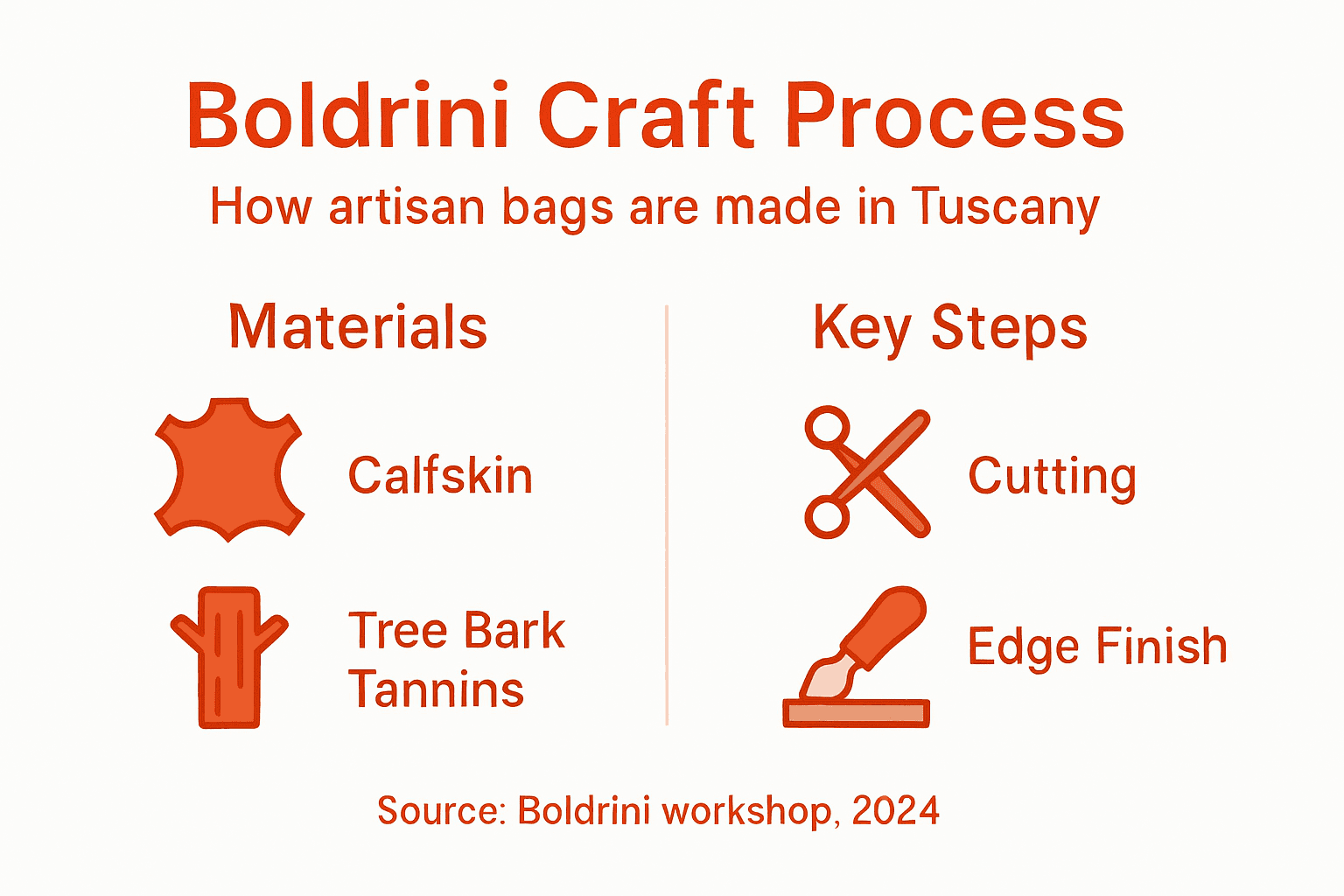
The foundation of Boldrini’s craft begins with material selection. Artisans source premium hides and subject them to vegetable tanning, a process that takes months rather than the weeks required for chemical alternatives. This extended timeline demands patience and planning. The tanner monitors temperature, humidity, and chemical balance throughout the process, treating each batch as a unique entity rather than an interchangeable unit. The resulting leather possesses qualities that synthetic or chemically treated alternatives cannot replicate. It breathes naturally, developing a patina that reflects your life with the bag. Understanding artisanal leather crafting techniques reveals why this extended process matters so profoundly for longevity and beauty. The leather actually improves with age rather than deteriorating, a characteristic impossible with industrial shortcuts.
Once tanned leather arrives at the workshop, Boldrini’s craftspeople begin the meticulous work of cutting, edge finishing, and assembly. Hand-stitching represents a significant portion of the labour involved. These stitches aren’t decorative flourishes but rather structural elements that distribute stress more effectively than machine stitching. A Boldrini artisan might complete only two or three bags per week, depending on complexity. That pace allows for constant quality control and adjustment. If leather behaves unexpectedly or an edge requires refinement, the maker responds immediately rather than pushing through to meet quotas. The handles receive special attention. Each one is shaped, burnished, and sealed by hand, ensuring they soften into comfort rather than remaining stiff. Edge finishing involves multiple stages of sanding and treatment, creating smooth surfaces that prevent cracking and enhance visual refinement.
What distinguishes Tuscan craft from other regional leatherworking traditions is the emphasis on restraint and functionality. Boldrini bags avoid excessive embellishment because their makers understand that true elegance requires subtraction rather than addition. Every detail serves a purpose. The proportions derive from decades of observing how women actually carry bags, not from trend forecasting. This philosophy permeates every aspect of production, from initial design through final quality inspection. When you invest in a Boldrini bag, you’re acquiring not merely an object but rather the accumulated wisdom of Tuscan makers who have perfected their craft across generations.
Pro tip: Examine the interior stitching and edge finishing of any artisanal leather bag before purchasing; these hidden details reveal the maker’s actual commitment to quality far better than visible exterior design.
How Sustainability Shapes Boldrini’s Process
Sustainability isn’t a marketing term for Boldrini. It’s an economic necessity baked into their entire approach. When you produce bags designed to last decades, planned obsolescence becomes irrelevant. The maker’s incentive aligns perfectly with environmental responsibility. A bag that falls apart in two seasons generates repeat purchases but damages the maker’s reputation and wastes resources. A bag that improves over twenty years builds loyalty and reduces the cumulative environmental impact of production. This fundamental alignment between quality and sustainability distinguishes artisanal makers from fashion brands chasing quarterly growth targets.
Vegetable tanning exemplifies this principle. The process uses tree bark tannins rather than synthetic chemicals, making the leather biodegradable at the end of its life cycle. The extended timeline means fewer hides are processed overall compared to rapid chemical tanning. Water usage is substantial but primarily involves monitoring and temperature control rather than the chemical-intensive washing cycles required for industrial leather production. The resulting leather requires minimal finishing treatments because vegetable tanning produces leather that is naturally durable and resistant to cracking. Boldrini’s makers understand that sustainable leather production demands accepting longer timelines and accepting that each batch will vary slightly based on natural conditions. They cannot promise absolute consistency across thousands of identical units because they refuse to chemically standardise the material.
Beyond materials, Boldrini’s production model itself embodies sustainability through conscious limitation. By producing exclusively through selective boutiques rather than pursuing mass distribution, they avoid the shipping, packaging, and inventory waste inherent in global retail networks. Each bag is created in response to actual demand rather than anticipated sales forecasts. Artisans work at a pace that allows them to repair or adjust pieces as needed, eliminating factory waste from defective units. The workshops operate on a human scale, consuming minimal energy and supporting skilled workers rather than replacing labour with machinery. When a Boldrini bag requires repair after years of use, local artisans can service it because the construction remains comprehensible to skilled hands rather than relying on proprietary industrial processes.
Your role in this sustainability equation matters more than you might realise. By choosing a bag designed for longevity, you reduce your personal consumption footprint dramatically. A Boldrini bag that serves you for twenty years represents perhaps one thousandth of the environmental impact of purchasing twenty disposable alternatives. The artisans who craft these pieces depend on customers who value permanence over novelty. When you invest in a Boldrini bag, you’re not simply acquiring an object. You’re supporting a system that prioritises quality over quantity, durability over decoration, and lasting value over temporary satisfaction.
Pro tip: When evaluating any luxury leather purchase, calculate the cost per year of use rather than the initial price; a premium bag worn for twenty years costs far less annually than an inexpensive alternative replaced every two years, and generates substantially less waste.
Comparing Boldrini to Other Luxury Handbags
The luxury handbag market presents a bewildering array of choices, yet most options fall into distinct categories based on their underlying philosophy. Mass market luxury brands prioritise brand visibility and seasonal collections, releasing new styles constantly to encourage repeat purchases. Heritage European makers like Boldrini operate from an entirely different premise. They believe in perfecting specific designs rather than chasing trends, investing in premium materials rather than marketing budgets, and building relationships with customers rather than audiences. Understanding this distinction transforms how you evaluate value.
When you compare Boldrini to other luxury handbags, the differences emerge immediately in production methodology. Most luxury brands manufacture in multiple countries, using a combination of handwork and machinery to optimise production speed and standardisation. Boldrini operates as a family-run business where artisanal tradition meets timeless craftsmanship, with every bag handcrafted by skilled makers who understand their material intimately. This approach yields fewer bags annually but ensures consistency in quality rather than consistency in appearance. Two Boldrini bags in the same style will vary slightly because they’re created by different hands, using leather that responds uniquely to climate and time. Many luxury consumers find this variation off-putting. Those who understand craftsmanship recognise it as evidence of authenticity.
Material sourcing reveals another critical difference. Boldrini exclusively uses vegetable-tanned calfskin, which costs substantially more than the blended leather or synthetic alternatives used by larger luxury producers. Vegetable tanning cannot be rushed or standardised. The leather develops character and patina over years of use. Compare this to brands using chemically tanned leather sealed with heavy finishes that remain unchanged regardless of how you carry the bag. A Boldrini bag that you use daily for twenty years will visually improve. A mass-produced luxury alternative will look identical in year five as it does in year one, then deteriorate rapidly once the protective coating breaks down. One represents investment. The other represents consumption.
Pricing reflects these differences accurately, though many luxury brands inflate prices through marketing rather than material quality or production cost. A Boldrini bag costs what it costs because creating it consumes significant skilled labour and premium materials with no shortcuts available. When you invest in a Boldrini bag, you’re acquiring something designed for permanence. When you purchase from brands relying on trend cycles and seasonal collections, you’re renting status for a season before discarding it for the next trend.
Here is a concise comparison of Boldrini handbags and typical luxury alternatives:
| Aspect | Boldrini Handbags | Mass Market Luxury Brands |
|---|---|---|
| Production Method | Handcrafted by artisans | Combination of hand and machine |
| Material Sourcing | Vegetable-tanned calfskin | Chemically-treated or synthetic |
| Design Philosophy | Timeless, refined restraint | Trend-driven, seasonal rotation |
| Lifespan | Improves over decades | Deteriorates after few years |
| Repair Services | Offered for life | Rarely available |
| Price Structure | Reflects material and labour | Influenced by branding |
Pro tip: When comparing luxury bags, ask the seller whether production involves intentional variation between pieces and whether the maker offers repair services decades after purchase; these questions reveal whether you’re buying a collectible or a commodity.
Discover Timeless Craftsmanship with San Rocco Italia
The article “Boldrini Bags: Why Craftsmanship Still Matters” highlights the challenge of finding luxury handbags that truly honour artisanal tradition rather than fleeting trends. If you value vegetable-tanned calfskin, meticulous stitching, and durability that improves with time, San Rocco Italia offers the perfect solution. Our collection is curated specifically for women seeking authenticity, timeless elegance, and handcrafted quality in every leather good.
Explore our range of handbags and accessories, all proudly made in Italy by skilled artisans who embrace these exact principles. Embrace the confidence that comes with investing in pieces designed to last decades, not seasons. Visit San Rocco Italia today to find your next timeless companion and experience true craftsmanship. Delve deeper into artisanal leather crafting techniques and understand why choosing quality over quantity changes everything.
Frequently Asked Questions
What materials are used in Boldrini bags?
Boldrini bags are crafted from premium vegetable-tanned calfskin, known for its ability to age beautifully and develop character over time.
How do Boldrini bags differ from other luxury handbags?
Unlike many mass-market luxury brands, Boldrini bags are handcrafted by artisans using traditional techniques, focusing on quality materials and timeless designs rather than trend-driven styles.
Why is vegetable tanning important for the durability of a bag?
Vegetable tanning, which involves using natural substances like tree bark, creates leather that is biodegradable and improves with age, ensuring longevity and reducing environmental impact compared to chemical tanning methods.
Can Boldrini bags be repaired?
Yes, Boldrini bags are designed for longevity and can be repaired by local artisans, making them a sustainable choice that supports craftsmanship over time.
Recommended
- Best 6 Italian Handbags 2025 – Expert Comparison – San Rocco Italia
- Top Italian Leather Gifts – Expert Comparison 2025 – San Rocco Italia
- Understanding Italian Handbag Craftsmanship Explained – San Rocco Italia
- The Essential Guide to Italian Handbag Making History – San Rocco Italia
- Accessories – Brass & Steel
- The Timeless Elegance of Tumbled Bardiglio Marble
