


Tanned Leather: The Essence of Italian Craftsmanship
Choosing the right handbag is more than a style decision for discerning Central European women who appreciate timeless Italian design. The allure of tanned leather lies in its intricate transformation, where skilled craftsmanship converts raw hides into a material prized for both elegance and resilience. Expert artisans use precise tanning techniques that create durable leather resistant to decomposition and enhance its natural beauty, offering a luxurious accessory that supports sustainable values.
Table of Contents
- What Is Tanned Leather And Why It Matters
- Types Of Tanned Leather And Key Distinctions
- How The Tanning Process Shapes Quality
- Benefits Of Full-Grain Italian Tanned Leather
- Environmental And Safety Aspects In Europe
- Common Mistakes When Choosing Tanned Leather
Key Takeaways
| Point | Details |
|---|---|
| Understanding Tanning Methods | Familiarise yourself with the three main tanning methods: chrome, vegetable, and chrome-free, as they significantly impact leather quality and environmental considerations. |
| Choosing Full-Grain Leather | Opt for full-grain leather for its durability and unique aesthetic, ensuring you invest in high-quality, artisanal craftsmanship. |
| Environmental Impact | Prioritise leather products from manufacturers with stringent environmental standards and certifications to support sustainable practices. |
| Avoid Common Mistakes | Educate yourself on leather grades and specifications to avoid purchasing lower-quality products that do not meet your expectations. |
What Is Tanned Leather and Why It Matters
Leather tanning represents a sophisticated transformation process that converts raw animal hides into durable, versatile materials suitable for luxury accessories. At its core, this technique involves complex chemical interactions that convert unstable animal skin into a resilient, flexible substance prized by artisans worldwide.
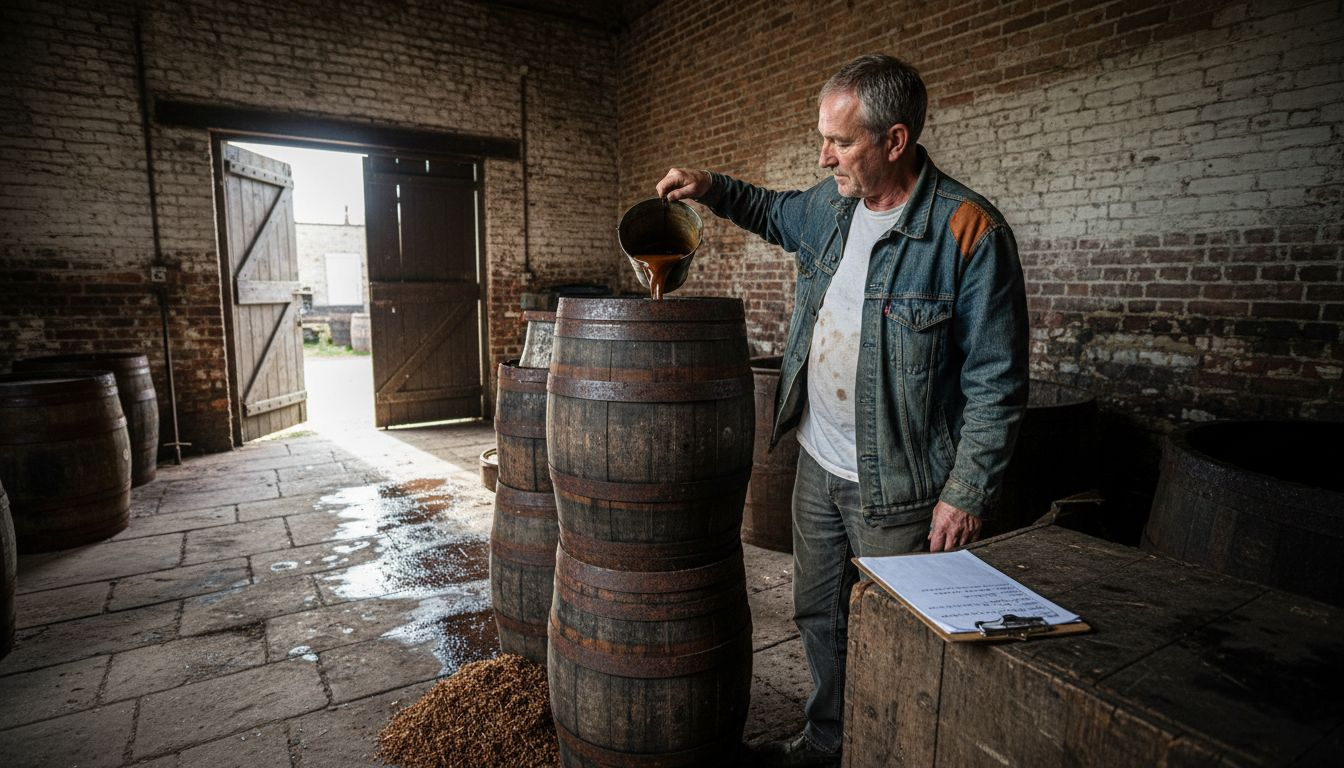
The tanning process involves multiple intricate steps, beginning with preparing and stabilising animal hides. Skilled craftspeople use specific chemical agents to react with collagen fibres, permanently altering the protein structure and creating a material that resists decomposition. Traditional methods include vegetable tanning using natural tree bark extracts, while modern approaches utilise chromium salts for faster processing.
What distinguishes premium tanned leather is its exceptional durability and aesthetic quality. Unlike raw animal hides that deteriorate rapidly, tanned leather maintains structural integrity, develops a rich patina over time, and can withstand years of use. The transformation process not only preserves the material but also enhances its natural characteristics, making it ideal for high-end handbags, accessories, and fashion items that demand both beauty and longevity.
Pro tip: When selecting a leather product, examine the tanning method and origin, as vegetable-tanned leather from traditional Italian workshops often represents the highest quality craftsmanship.
Types of Tanned Leather and Key Distinctions
Leather tanning encompasses diverse techniques, each offering unique characteristics that transform raw animal hides into materials with distinct properties. Understanding these variations is crucial for discerning consumers seeking high-quality leather products that match their specific aesthetic and functional requirements.
The leather industry primarily employs three fundamental tanning methods: chrome tanning, vegetable tanning, and chrome-free tanning. Chrome tanning dominates global production, accounting for approximately 75% of leather manufacturing. This method utilises chromium salts to create soft, consistent, and water-resistant leather ideal for fashion accessories and clothing. The process is relatively quick and produces a uniform material with excellent flexibility.
Vegetable tanning represents a more traditional approach, using natural tannins extracted from tree bark. This method produces leather with extraordinary character, developing a rich patina over time and appealing to artisans and environmentally conscious consumers. While more time-consuming and requiring sophisticated effluent management, vegetable-tanned leather offers unparalleled aesthetic depth and sustainability. Chrome-free tanning methods, employing aldehydes and alternative chemicals, provide specialised solutions for manufacturers seeking environmentally responsible alternatives.
Here is a comparison of the three main tanning methods and their characteristics:
| Tanning Method | Key Features | Typical Applications |
|---|---|---|
| Chrome Tanning | Fast processing, soft finish, water-resistant | Fashion accessories, clothing |
| Vegetable Tanning | Rich patina, eco-friendly, unique appearance | Handcrafted goods, luxury items |
| Chrome-Free Tanning | Lower emissions, uses alternatives to chrome | Baby shoes, upholstery, eco markets |
Pro tip: When selecting leather goods, examine the tanning method closely – vegetable-tanned leather from traditional workshops typically offers superior craftsmanship and a more unique, evolving aesthetic.
How the Tanning Process Shapes Quality
The transformation of raw animal hides into exquisite leather is a nuanced art form that requires meticulous scientific precision. Each stage of the tanning process fundamentally influences the material’s ultimate quality, durability, and aesthetic appeal, making it far more complex than a simple chemical treatment.
Chemical stabilisation of collagen fibres represents the core mechanism that determines leather’s performance characteristics. Skilled artisans carefully control factors such as temperature, chemical concentrations, and processing duration to modify the hide’s fundamental structure. These intricate interventions directly impact critical quality parameters including mechanical strength, texture, water resistance, and overall longevity. The precise manipulation of molecular bonds creates leather that can withstand years of use while maintaining its inherent beauty and structural integrity.
Advanced tanning techniques now allow manufacturers to engineer leather with specific performance attributes tailored to distinct applications. By understanding and controlling the chemical interactions during tanning, craftspeople can produce materials ranging from ultra-soft fashion leathers to robust, hardwearing surfaces for professional accessories. The selection of tanning agents, whether traditional vegetable extracts or modern synthetic compounds, plays a crucial role in defining the leather’s final characteristics, ensuring that each piece meets exacting standards of quality and performance.
Pro tip: Examine leather products closely by checking flexibility, observing how evenly the surface absorbs moisture, and feeling the texture – these tactile indicators reveal the sophistication of the tanning process.
Benefits of Full-Grain Italian Tanned Leather
Full-grain Italian leather represents the pinnacle of craftsmanship, offering unparalleled quality that transcends mere material and becomes a testament to generations of artisanal expertise. Unlike processed leathers that strip away natural characteristics, full-grain leather preserves the hide’s entire surface, maintaining its most distinctive and valuable attributes.
The exceptional durability of full-grain leather stems from its unaltered structural integrity. Italian leather craftsmanship ensures that each hide retains its original grain, creating a material that develops a unique patina over time. This natural ageing process enhances the leather’s aesthetic appeal, with subtle colour variations and soft sheen that tell a story of refined elegance. Unlike synthetic or heavily processed alternatives, full-grain leather breathes, adapts, and improves with use, becoming more characterful and personally nuanced with each passing year.
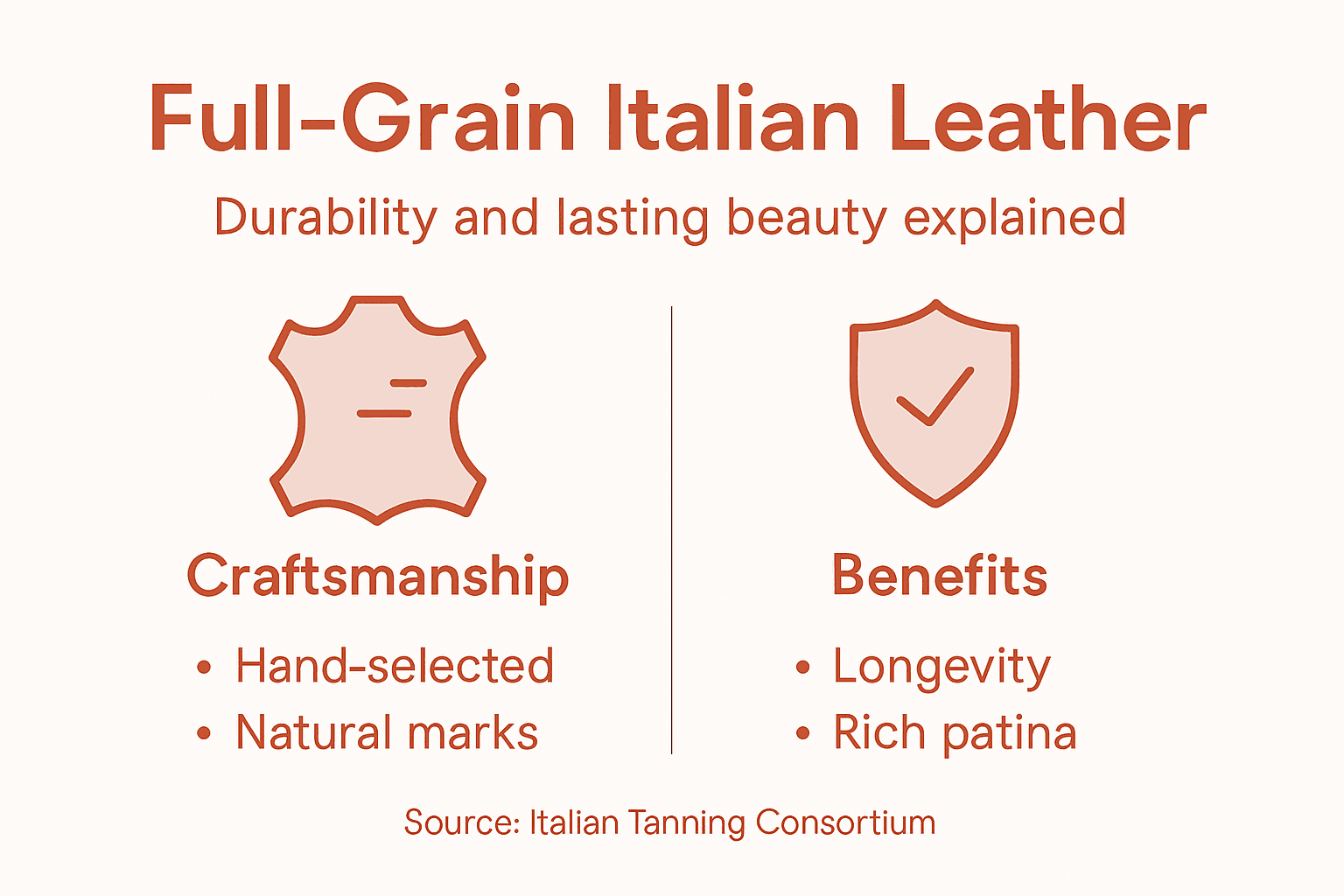
Italian tanneries have perfected techniques that transform raw hides into extraordinary materials through meticulous selection and treatment. The process involves carefully choosing premium animal hides, treating them with traditional vegetable tanning methods, and applying sophisticated finishing techniques that highlight the leather’s inherent beauty. This approach produces leather with remarkable strength, exceptional flexibility, and a luxurious texture that synthetic materials cannot replicate. From handbags to accessories, full-grain Italian leather represents an investment in quality that transcends temporary fashion trends.
Pro tip: When assessing full-grain leather quality, pay attention to its natural imperfections – genuine leather’s unique markings are a sign of authenticity and superior craftsmanship.
Environmental and Safety Aspects in Europe
The European leather industry stands at the forefront of sustainable manufacturing, integrating rigorous environmental standards and worker protection protocols that set global benchmarks for responsible production. These comprehensive approaches go beyond mere regulatory compliance, representing a holistic commitment to ecological preservation and human well-being.
Occupational safety initiatives in European tanneries emphasise sophisticated chemical management, worker protection, and environmental stewardship. Modern European leather production has transformed traditional processes by implementing stringent safety protocols that minimise chemical exposure, reduce environmental impact, and prioritise worker health. Tanneries now employ advanced filtration systems, closed-loop water recycling technologies, and carefully controlled chemical treatments that dramatically reduce harmful emissions and waste.
European regulations mandate comprehensive environmental assessments for leather production, ensuring that every stage of manufacturing meets exacting sustainability standards. These guidelines cover crucial aspects such as water usage, chemical selection, waste management, and energy consumption. Italian tanneries, in particular, have distinguished themselves by developing innovative techniques that dramatically reduce environmental footprint while maintaining the highest quality standards. By investing in research and sustainable technologies, European leather manufacturers demonstrate that exceptional craftsmanship and environmental responsibility are not mutually exclusive but instead can be beautifully integrated.
Pro tip: When purchasing leather goods, look for certifications indicating environmentally responsible production and transparent manufacturing practices.
Common Mistakes When Choosing Tanned Leather
Selecting the perfect leather product requires more than aesthetic appreciation; it demands nuanced understanding of material quality and craftsmanship. Many consumers unknowingly make critical errors that compromise the longevity, performance, and value of their leather investments.
Tanning process intricacies reveal the complexity behind leather selection. Novice buyers frequently misunderstand leather grades, mistaking surface treatments for genuine quality. Common pitfalls include confusing top-grain with full-grain leather, overlooking the significance of tanning methods, and failing to assess the hide’s structural integrity. These misconceptions can lead to purchasing leather goods that deteriorate rapidly, lose aesthetic appeal, or fail to meet functional expectations.
The distinctions between leather types are profound and consequential. Consumers often select leather without considering its intended use, thickness, or finishing technique. Full-grain leather represents the highest quality, preserving the hide’s natural grain and developing a rich patina over time. Top-grain leather, while smoother, has its outermost layer sanded and refinished, potentially reducing durability. Split leather, derived from the lower layers of the hide, offers the least structural integrity and aesthetic sophistication. Understanding these nuances requires careful examination of texture, flexibility, and manufacturing origin.
The table below summarises the main leather grades, highlighting their properties and common uses:
| Leather Grade | Main Properties | Typical Uses |
|---|---|---|
| Full-Grain | Maximum strength, shows imperfections | High-end handbags, footwear |
| Top-Grain | Smoother, less durable than full-grain | Wallets, belts, jackets |
| Split Leather | Less durable, heavily processed | Linings, budget accessories |
Pro tip: Always request a detailed explanation of the leather’s origin, tanning method, and grade before making a purchase, and gently test the material’s flexibility and surface quality.
Discover the True Luxury of Italian Full-Grain Tanned Leather
Choosing leather goods that combine authentic craftsmanship with lasting quality can be challenging. This article highlights the importance of understanding tanning methods like vegetable tanning and full-grain leather, which offer durability, unique beauty, and environmental responsibility. At San Rocco Italia, we address these critical concerns by offering luxury handbags and accessories made with premium full-grain Italian leather crafted using traditional vegetable tanning techniques by skilled artisans. This means you can enjoy pieces that not only evolve beautifully over time but also embody the essence of genuine Italian craftsmanship.
Experience the elegance and durability that comes from expert tanning and authentic materials. Visit our San Rocco Italia boutique to explore our curated collection where every leather detail reflects careful selection and sustainable processes. Don’t settle for less when quality and heritage matter — find your perfect leather piece with us today and own a creation that tells a story of tradition and excellence.
Frequently Asked Questions
What is tanned leather and why is it important?
Tanned leather is the result of processing raw animal hides through a tanning process that makes them durable and versatile for luxury goods. It transforms unstable animal skin into a resilient material that is valued for its longevity and aesthetic qualities.
What are the different types of tanning methods and how do they differ?
The three primary tanning methods are chrome tanning, vegetable tanning, and chrome-free tanning. Chrome tanning is fast and produces water-resistant leather; vegetable tanning is slow, eco-friendly, and develops a rich patina; while chrome-free tanning uses alternatives to chrome for environmental safety.
How does the tanning process affect the quality of leather?
The tanning process involves meticulously controlling chemical interactions that stabilise collagen fibres in the hides. This affects the leather’s strength, texture, water resistance, and overall durability, ultimately determining its quality and suitability for various applications.
What are the benefits of choosing full-grain leather?
Full-grain leather maintains the hide’s original surface, offering exceptional durability and a unique patina that develops over time. It provides superior texture and breathability compared to processed leathers, making it a long-lasting investment in quality craftsmanship.



