


Boutique craftsmanship: The secret behind timeless luxury handbags
TL;DR:
- Boutique craftsmanship involves small-batch, artisan-made leather goods emphasizing authenticity and heritage.
- Genuine boutique handbags show natural grain variations, hand-stitching, and traceability features.
- Investing in handcrafted Italian bags supports cultural traditions, slow fashion, and long-term value.
There is a widespread assumption that a truly luxurious handbag should look absolutely flawless, as though no human hand ever touched it. This idea, largely shaped by decades of mass-market marketing, could not be further from the truth. The finest Italian handbags carry the quiet signatures of the artisans who made them: a slight variation in grain, a hand-cut edge that is fractionally uneven, a stitch that speaks of deliberate intention rather than mechanical repetition. These are not flaws. They are proof. For the discerning woman who invests in timeless pieces rather than seasonal trends, understanding boutique craftsmanship changes everything about how you choose, wear, and treasure a handbag.
Table of Contents
- Understanding boutique craftsmanship
- Why boutique craftsmanship matters for luxury handbags
- The hallmarks of authenticity and traceability
- Boutique craftsmanship in practice: Choosing your investment piece
- Our perspective: Timeless value goes beyond the label
- Discover Italian boutique craftsmanship with San Rocco Italia
- Frequently asked questions
Key Takeaways
| Point | Details |
|---|---|
| Authenticity signals | Subtle imperfections and traceable provenance mark genuine boutique craftsmanship. |
| Slow fashion impact | Boutique handbags reduce consumption, support artisans, and offer lasting value. |
| Investment potential | Well-chosen boutique handbags gain patina and desirability over time. |
| Practical selection | Use a checklist to identify genuine boutique bags and avoid mass-market imitations. |
| Emotional value | Boutique handbags carry personal stories and heritage beyond mere aesthetics. |
Understanding boutique craftsmanship
Boutique craftsmanship is a term that gets used loosely, but it describes something quite specific. It refers to the production of goods, particularly leather goods and accessories, in small batches by skilled artisans who employ traditional techniques passed down through generations. Unlike factory production, boutique craftsmanship prioritises quality at every individual stage rather than efficiency across a high volume of identical pieces.
At its heart, boutique craftsmanship is a blend of three things: artistry, heritage, and small-batch precision. Artistry means the maker brings personal skill and judgement to each piece. Heritage refers to the cultural and technical lineage that informs how the piece is constructed. Small-batch precision ensures that each item receives genuine attention, rather than being one of thousands moving along a conveyor belt.
What makes this approach particularly compelling for luxury handbags is its relationship with authenticity. Italian handbag craftsmanship has long been defined by these very principles, with regional ateliers in Florence, Vicenza, and Naples each maintaining their own distinct methods and aesthetic signatures. When you hold a boutique Italian handbag, you are not simply holding an accessory. You are holding the outcome of a tradition that may be centuries old.
One of the most revealing characteristics of genuine boutique craftsmanship is the presence of what might initially appear to be imperfections. In full-grain leather, for example, natural grain variations, slight tonal shifts, and the occasional small mark are entirely normal. They indicate that the hide has not been corrected or buffed down to an artificial uniformity. According to the definition of artisanal craft, natural grain variations signal authenticity, and small-batch production allows for traceability through tools like NFC chips and provenance passports. This matters enormously for buyers who want to know exactly where their handbag came from and who made it.
Boutique craftsmanship also aligns directly with slow fashion principles. Slow fashion is an approach to design, production, and consumption that prioritises durability, ethical sourcing, and cultural integrity over speed and volume. A boutique handbag made by a Florentine artisan using ethically sourced leather is the opposite of fast fashion. It is made to last decades, not seasons.
Here are the key characteristics that define genuine boutique craftsmanship:
- Small-batch production: Each piece is made in limited quantities, often by a single artisan or a small team
- Full-grain leather: The hide is used as close to its natural state as possible, preserving its strength and developing a beautiful patina over time
- Hand-finishing: Edges are burnished, handles are stitched, and linings are fitted by hand rather than machine
- Traceable provenance: The origins of the leather, the location of production, and the identity of the maker can be verified
- Timeless design: Shapes and proportions are chosen to remain relevant across decades, not to follow a seasonal silhouette
- Cultural heritage: The techniques used connect to a regional or national tradition of leatherworking
“True craftsmanship is not the absence of imperfection. It is the presence of intention.”
Pro Tip: When examining a boutique handbag, run your finger along the interior seams and the base edges. Hand-finished edges feel slightly irregular and warm to the touch. Machine-finished edges are perfectly smooth and uniform. That small difference tells you a great deal about how the bag was made.
Why boutique craftsmanship matters for luxury handbags
Understanding boutique craftsmanship is one thing. Feeling its value is another. For women who approach their wardrobe as a long-term investment rather than a series of disposable purchases, boutique handbags occupy an entirely different category from their mass-produced counterparts.
The most immediate distinction is longevity. A boutique handbag made with full-grain leather and hand-stitching will, if properly cared for, outlast its owner. The leather deepens in colour, develops a rich patina, and becomes more characterful with age. This is not wear and tear. It is the accumulation of lived experience, the handbag becoming more itself over time. Brands who put craftsmanship at the centre of everything they do create investment pieces that gain patina and value over time, embodying slow fashion values like reduced consumption and artisan support.
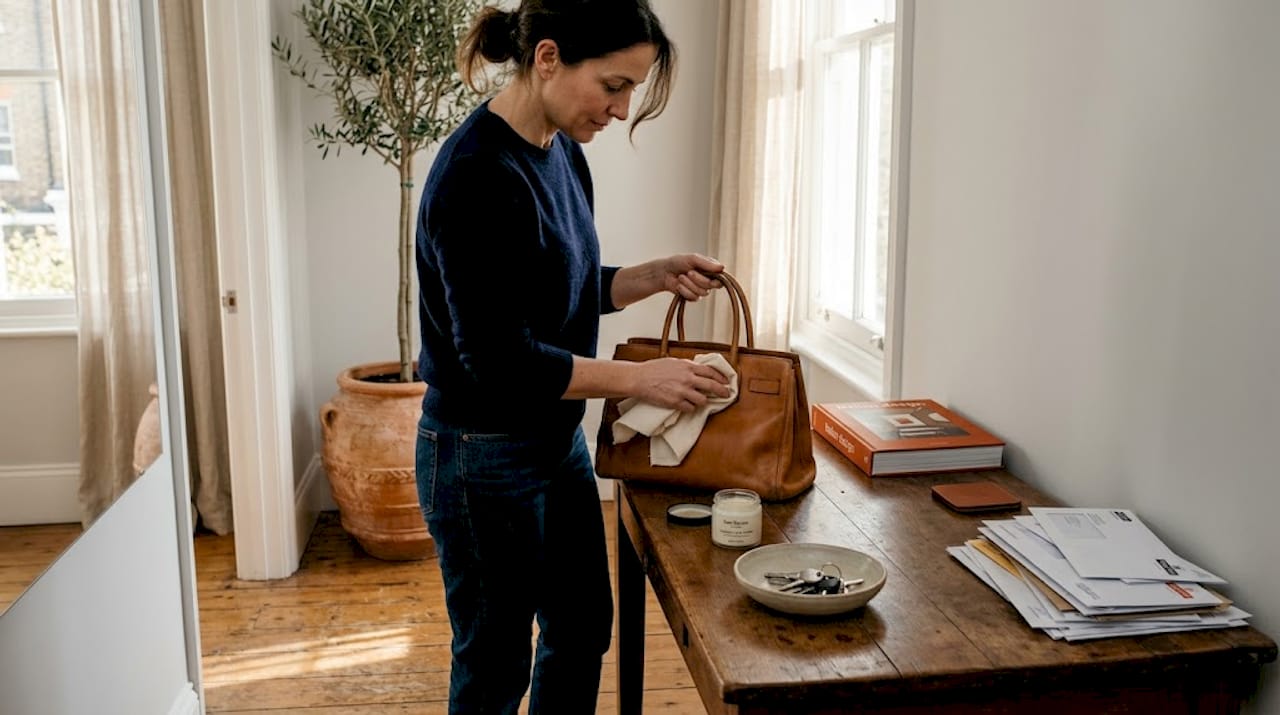
Italian brands and small ateliers have long understood this. Whether you are looking at a structured tote from a Florentine leather workshop or a hand-stitched crossbody from a Neapolitan family atelier, the philosophy is consistent: make something so well that it never needs to be replaced.
Compare this with the mass-market luxury segment, where handbags are produced in enormous volumes, often in countries with lower labour costs, and finished by machine to create a superficial uniformity. The difference is not always visible at first glance, which is precisely why understanding the hallmarks matters.
| Feature | Boutique craftsmanship | Mass-market luxury |
|---|---|---|
| Production volume | Small batch, limited runs | Thousands of identical units |
| Leather type | Full-grain, natural variations | Corrected grain or bonded leather |
| Finishing method | Hand-burnished, hand-stitched | Machine-finished |
| Provenance | Fully traceable | Often opaque |
| Longevity | Decades with proper care | Seasons to a few years |
| Value over time | Develops patina, may appreciate | Depreciates with use |
| Slow fashion alignment | Strong | Weak |
For those choosing well-made leather handbags, the table above makes the case plainly. Boutique craftsmanship is not simply a premium price point. It is a fundamentally different approach to what a handbag is and what it should do over the course of its life.
From a slow fashion perspective, boutique handbags also carry a social dimension. By purchasing from small ateliers, you are directly supporting artisans whose livelihoods depend on the continuation of their craft. You are contributing to the preservation of regional leatherworking traditions that would otherwise disappear under pressure from industrial production. This is why understanding the quality of Italian quality leather matters beyond the aesthetic.
Here is what the boutique handbag choice supports:
- Artisan livelihoods: Skilled leatherworkers in small workshops depend on discerning buyers who value their expertise
- Regional traditions: Tuscan, Venetian, and Campanian leatherworking each carry distinct methods that are preserved through continued demand
- Ethical supply chains: Small-batch producers are more likely to source leather from tanneries with transparent, ethical practices
- Reduced waste: Fewer pieces made with higher quality means less material ending up in landfill
- Cultural memory: Each artisan technique is a form of cultural knowledge that only survives if it is practised and passed on
The slow fashion movement has made this increasingly visible to consumers, and affluent women in particular are leading the shift. Rather than accumulating many average handbags, the intelligent approach is to acquire fewer, better pieces that carry genuine meaning.
The hallmarks of authenticity and traceability
With the value of boutique handbags established, the next question is a practical one: how do you know if a handbag is genuinely made through boutique craftsmanship, and how can you verify its origins? Authenticity and traceability are not abstract concepts. They have concrete, observable markers.
Small-batch production is the foundation of traceability. When a workshop produces fifty handbags rather than fifty thousand, it is possible to track every material input, every artisan involved, and every stage of construction. This level of documentation is simply not feasible at industrial scale. As artisanal craft scholarship confirms, small-batch production enables traceability through tools including NFC chips and provenance passports, and aligns with slow fashion by prioritising ethical sourcing and cultural heritage preservation.
The Italian leather tradition has embraced these traceability tools with particular enthusiasm. NFC chips, small near-field communication devices embedded discreetly in the lining or handle of a handbag, allow you to verify the bag’s origin, the tannery where the leather was processed, and sometimes even the name of the artisan who constructed it. Provenance passports serve a similar function: a physical or digital document that accompanies the handbag and records its complete history.
Here are the primary authenticity markers to look for when assessing a boutique handbag:
- Natural grain texture: Full-grain leather has visible pores, subtle variations in tone, and occasional natural marks. If the surface is perfectly uniform, the leather has been corrected or coated.
- Hand-stitched seams: Boutique handbags use saddle stitching or other hand-applied techniques. Look for slight variations in stitch spacing and tension, which indicate human work.
- Burnished edges: The edges of straps and flaps on authentic boutique pieces are painted and burnished by hand, resulting in a slightly imperfect but richly finished edge.
- Interior construction: Check the lining attachment, the base corners, and the handle anchors. Hand-finished interiors show precise but human workmanship.
- Hardware weight: Boutique bags use solid brass or bronze hardware that has genuine weight and develops its own patina over time.
- NFC chip or provenance passport: Premium boutique makers increasingly include digital verification tools that allow you to confirm authenticity instantly.
- Maker’s mark: Look for a discreet stamp inside the bag indicating the workshop, the region of production, and sometimes the year or batch number.
| Authenticity marker | What to look for | What it tells you |
|---|---|---|
| Leather grain | Natural variation, visible pores | Full-grain, uncorrected leather |
| Stitching | Slight variation in spacing | Hand-applied saddle stitch |
| Edge finishing | Layered paint, hand-burnished | Artisan edge treatment |
| Hardware | Solid, heavy, develops patina | Genuine brass or bronze |
| Interior | Precise but human workmanship | Hand-finished construction |
| Traceability | NFC chip or provenance passport | Verified small-batch origin |
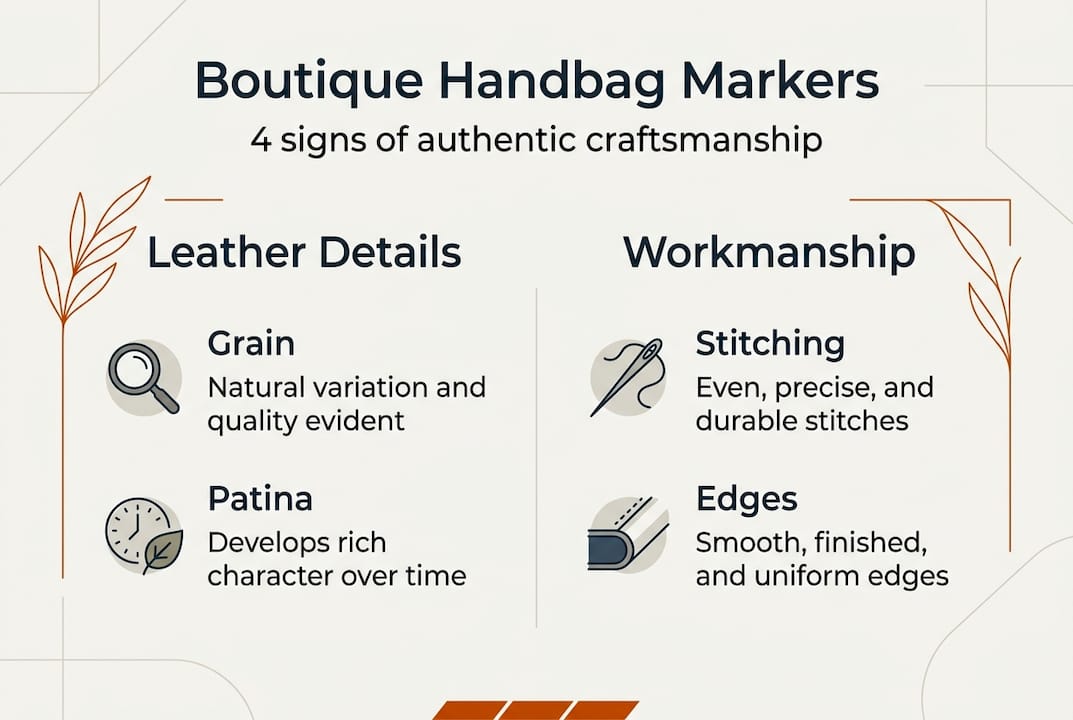
Reviewing the history of Italian bags reveals that many of these markers have been consistent across centuries of Italian leatherworking. The tools change but the values do not. Artisans in Florence and Vicenza today use the same burnishing techniques that their predecessors employed in the fifteenth century. That continuity is itself a form of authentication.
Pro Tip: Ask the retailer for documentation of the leather’s tannery of origin. Italian tanneries, particularly those certified by the Vera Pelle Italiana Conciata al Vegetale (genuine Italian vegetable-tanned leather) standard, issue certificates that accompany their hides. A boutique maker worth trusting will have this information readily available.
Boutique craftsmanship in practice: Choosing your investment piece
Knowing what boutique craftsmanship looks like is enormously useful. Knowing how to apply that knowledge when you are standing in front of a beautifully displayed handbag is where the real skill lies. Here is a practical framework for choosing an investment-quality boutique piece.
Start by asking the right questions before you even look at the bag itself. The sourcing story matters. Brands who put craftsmanship at the centre of their identity will speak fluently and enthusiastically about their artisans and materials. Vague answers about production locations or materials should give you pause.
Follow these steps when evaluating a boutique handbag:
- Ask where the leather was tanned. Italian vegetable-tanned leather from the Santa Croce sull’Arno district is among the world’s finest. A knowledgeable retailer should be able to name the tannery.
- Ask who made the bag. Not just the brand, but the workshop, the region, and ideally the individual artisan or small team. Understanding how Italian handbags are made helps you ask the right questions and interpret the answers.
- Request provenance documentation. Whether digital via NFC or physical via a provenance passport, this documentation is becoming standard among serious boutique makers.
- Handle the bag before you buy. Feel the weight of the hardware, the suppleness of the leather, and the precision of the stitching. A quality piece has a particular solidity and warmth that is immediately apparent.
- Consider the design longevity. Ask yourself honestly whether this silhouette and colour will still feel relevant in fifteen years. Boutique investment pieces should be chosen for their timelessness, not their trendiness.
- Understand the care requirements. Full-grain leather requires occasional conditioning. If a retailer cannot advise you on care, that is a sign they may not truly understand what they are selling.
Beware of certain common pitfalls. Mass-market replicas and “inspired by” pieces sometimes adopt the language of boutique craftsmanship without the substance. Watch for these warning signs:
- Leather that smells synthetic or chemical rather than naturally earthy
- Hardware that feels lightweight or leaves marks on clothing (a sign of low-quality plating)
- Stitching that is perfectly uniform in every dimension (machine-stitched)
- Inability of the retailer to answer questions about production origin
- Prices that seem too low to be consistent with genuine hand-finishing and premium materials
The journey of a handmade Italian leather bag from hide to finished piece typically involves many hours of skilled labour, which is reflected in its price. If you encounter a “handmade Italian leather” bag at a price that seems remarkably affordable, scrutinise it closely.
Slow fashion principles are genuinely useful here. Rather than thinking about how many bags you can acquire, think about how much joy, utility, and meaning a single exceptional piece will bring over twenty or thirty years. That reframing makes it easier to invest thoughtfully rather than reactively. Some boutique retailers, such as those who prioritise eco-conscious packaging and presentation, signal their values through every aspect of their customer experience, including the way they present and deliver their products.
Pro Tip: Keep a small notebook or digital file of the handbags you admire over time. Note what specifically appeals to you: the proportion, the hardware, the leather colour, the structure. Patterns will emerge that reveal your authentic taste, which is a far better guide to an investment purchase than seasonal trend reports.
Our perspective: Timeless value goes beyond the label
Here is something we believe strongly, and it runs counter to much of what the luxury market wants you to think. The most valuable thing about a boutique handbag is not its price tag, its brand recognition, or even the technical brilliance of its construction. It is the relationship you develop with it over time.
We have worked closely with Italian artisans for years, and one thing they all understand instinctively is that each piece they make carries a signature. Not always a visible one, but a presence. A slight decision about how a handle is wrapped, a particular tension in a stitch, a choice of burnishing technique. These small decisions accumulate into an object that is genuinely individual.
This is precisely why we find the obsession with perfection so misguided. Consumers are sometimes seduced by handbags that look immaculate but feel hollow, because they were made to impress in a glass display case rather than to be carried daily and loved for decades. The real test of a boutique piece is how it ages and how it makes you feel five years into ownership, not five minutes.
The history of Italian handbag making supports this perspective entirely. Italian leatherworking has always been about creating objects that enter daily life and become part of a personal story. Florentine artisans did not make bags for museums. They made them for women who worked, travelled, entertained, and lived fully.
Slow fashion, at its most meaningful, is about exactly this kind of relationship with objects. It asks you to invest attention and care, not just money. When you choose a boutique handbag with genuine provenance and artisan heritage, you are choosing to participate in a living tradition rather than simply purchasing a status symbol. That distinction is worth every penny of the difference in price.
Discover Italian boutique craftsmanship with San Rocco Italia
If this exploration of boutique craftsmanship has resonated with you, we would love to show you what it looks like in practice.

At San Rocco Italia, we are a woman-owned boutique entirely committed to the kind of craftsmanship this article describes. Every handbag and leather good in our collection is proudly made in Italy by skilled artisans using premium full-grain leather and traditional techniques. We know the workshops, we know the artisans, and we can tell you the story behind every piece. The remainder of our curated collection is sourced from trusted European makers chosen for their quality, authenticity, and enduring style. If you are ready to invest in a handbag that will become more beautiful and more meaningful with every year you carry it, we warmly invite you to explore our collection at San Rocco Italia.
Frequently asked questions
How does boutique craftsmanship differ from mass production?
Boutique craftsmanship involves small-batch production by skilled artisans using traditional techniques, with visible natural grain variations and traceability tools like NFC chips and provenance passports, while mass production relies on automation to create perfectly uniform items at high volume.
Why do boutique handbags gain value over time?
Full-grain leather and artisan construction develop a rich patina with use, meaning these investment pieces gain value over time through their craftsmanship, heritage, and materials rather than depreciating like factory-made goods.
What are signs of authentic boutique craftsmanship in a handbag?
Look for natural leather grain with visible pore variation, hand-stitched seams with slight irregularities, burnished edges, solid hardware, and traceability tools, as small-batch production enables the kind of provenance documentation that verifies genuine artisan origin.
How does boutique craftsmanship support slow fashion?
Boutique craftsmanship directly supports slow fashion by prioritising timeless design, ethical sourcing, and reduced consumption, creating pieces designed to last decades rather than seasons and preserving the cultural heritage of regional artisan traditions.
